
Things to do in Zakopane include visiting Morskie Oko, riding the cable car to Kasprowy Wierch, taking the Gubałówka funicular, hiking through Tatra National Park, exploring Krupówki Street, discovering traditional Góral culture and relaxing in the thermal baths near Zakopane. First-time visitors should spend at least two or three days here because many famous attractions lie outside the town center and require separate transport. Whether you are planning a Kraków day trip, a winter holiday or a summer hiking adventure, the best itinerary depends on your available time, fitness level and the mountain weather.
Zakopane at a Glance
Zakopane sits at the foot of the Polish Tatra Mountains in the Podhale region of southern Poland. Often described as the winter capital of Poland, it is known for mountain scenery, skiing, wooden architecture, thermal pools and the traditions of the local Góral highlanders.
Use this quick comparison to choose the right experiences:
| Attraction | Best for | Time needed | Physical effort | Book ahead? |
|---|---|---|---|---|
| Morskie Oko | Iconic Tatra scenery | Full day | Long but not technical | Parking recommended |
| Kasprowy Wierch | High-mountain views | 3–4 hours | Easy by cable car | Recommended |
| Gubałówka | Families and short visits | 1–2 hours | Easy | Usually optional |
| Krupówki Street | Food and atmosphere | 1–2 hours | Easy | No |
| Kościeliska Valley | Beginner-friendly hiking | Half or full day | Easy–moderate | No |
| Chochołowska Valley | Long valley walks | Half or full day | Easy–moderate | No |
| Thermal baths | Relaxation and rainy days | 3–5 hours | Easy | Peak periods |
| Tatra Museum | Culture and bad weather | 1–2 hours | Easy | Usually no |
| Wielka Krokiew | Families and sports fans | 1 hour | Easy | Usually no |
If you only have one day, prioritize Gubałówka, Old Zakopane and Krupówki. If the mountain forecast is clear, replace Gubałówka with Kasprowy Wierch for a more dramatic alpine experience.
Zakopane Town and the Surrounding Tatras
One of the most important things to understand is that many attractions described as being “in Zakopane” are actually spread across the surrounding region.
Attractions in central Zakopane
These places can normally be combined on foot:
- Krupówki Street
- Pęksowy Brzyzek Cemetery
- The Old Church
- Tatra Museum
- Villa Koliba
- Wielka Krokiew
- Termy Zakopiańskie
Attractions requiring transportation
These places require a minibus, taxi, cable-car connection or private vehicle:
- Kuźnice and Kasprowy Wierch
- Morskie Oko
- Kościeliska Valley
- Chochołowska Valley
- Chochołów village
- Chochołowskie Thermal Baths
- Terma Bania
- Dunajec River and the Pieniny Mountains
A location may appear close on a map, but traffic, parking, queues and trail walking can turn a short distance into a full-day excursion.
Best Things to Do in Zakopane
1. See Morskie Oko—But Allow a Full Day
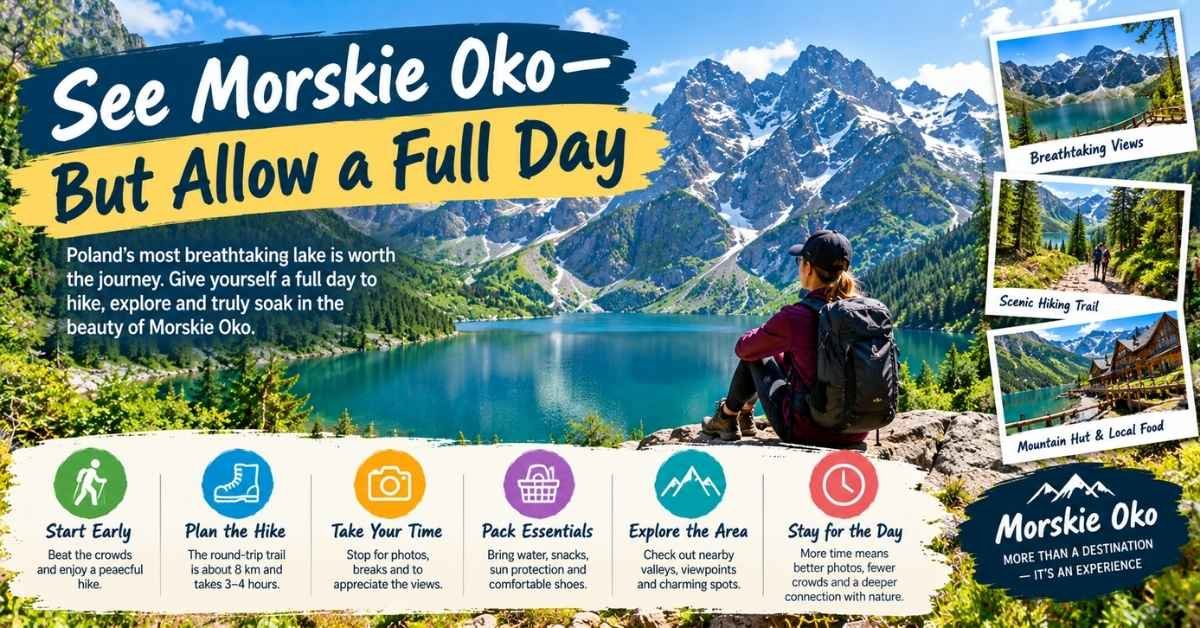
Best for: First-time visitors, photographers and active families Time needed: 6–9 hours from Zakopane Location: Tatra National Park Difficulty: Technically easy but physically long
Morskie Oko, meaning “Eye of the Sea,” is the most famous lake in the Polish Tatras. It sits beneath a dramatic amphitheater of peaks, including the slopes below Rysy, Poland’s highest mountain.
The standard route begins at Palenica Białczańska, not in central Zakopane. From there, visitors follow a paved uphill road for roughly eight kilometers to the lake. The surface is straightforward, but the continuous incline and long return journey make this more demanding than many listicles suggest.
Allow approximately two to three hours each way, depending on your pace, conditions and stops. The route passes Wodogrzmoty Mickiewicza waterfalls before reaching the PTTK mountain shelter beside the lake.
Parking near the trailhead can sell out, particularly during summer weekends and holidays. Reserve official parking in advance or use a minibus from Zakopane. Save your ticket offline because mobile reception can be unreliable.
Should You Continue to Czarny Staw?
Strong walkers can continue around Morskie Oko and climb to Czarny Staw pod Rysami. The extension is steeper and more strenuous than the paved approach, but it offers elevated views and fewer casual visitors.
Attempt it only when:
- The weather is stable
- You have enough daylight
- You are wearing suitable footwear
- You still have energy for the return journey
Skip the extension if the path is icy, visibility is deteriorating or anyone in your group is already tired.
2. Ride the Cable Car to Kasprowy Wierch
Best for: Dramatic mountain views without a long climb Time needed: 3–4 hours Location: Cable car from Kuźnice Weather sensitivity: Very high
Kasprowy Wierch rises to approximately 1,987 meters and provides one of the easiest ways to experience the high-altitude landscape of the Tatras. The cable car departs from Kuźnice, an area with restricted private-car access, so most visitors arrive by local transport, taxi or on foot.
The cable-car journey takes about 20 minutes in one direction and includes a change at Myślenickie Turnie. At the upper station, you can admire views across the Polish and Slovak sides of the Tatra Mountains.
The main risk is visibility. Conditions in central Zakopane may appear pleasant while the summit is cold, windy and hidden inside cloud. Check:
- Summit visibility
- Wind conditions
- Cable-car status
- Temperature at altitude
- Available return times
Ticket prices change according to the season and ticket type. In busy periods, popular departures can sell out, so advance booking is sensible—but only after checking the forecast.
Choose Kasprowy Wierch on the clearest day of your visit. If the summit is covered by dense cloud, spend the day in a valley or explore Zakopane’s cultural attractions instead.
3. Take the Gubałówka Funicular
Best for: Families, short visits and easy panoramas Time needed: 1–2 hours Location: Near the lower end of Krupówki Difficulty: Easy
Gubałówka is the most convenient mountain viewpoint in Zakopane. A funicular carries passengers from near the town center to an elevation of roughly 1,126 meters in only a few minutes.
On a clear day, the upper ridge offers a broad panorama of Zakopane and the Tatra skyline. You will also find cafés, restaurants, souvenir stalls and seasonal family attractions at the top.
The experience is much more commercial than Kasprowy Wierch. That can be enjoyable for families, but travelers expecting a peaceful alpine summit may find the stalls and crowds distracting.
Visit early in the morning or later in the afternoon for a calmer atmosphere. Sunset can be beautiful when the mountains remain visible.
Gubałówka or Kasprowy Wierch?
Choose Gubałówka when you:
- Have limited time
- Are traveling with toddlers
- Want an easier and less expensive outing
- Prefer restaurants and family attractions
- Are staying close to Krupówki
Choose Kasprowy Wierch when you:
- Want a genuine high-mountain environment
- Have clear weather
- Do not mind paying more
- Can allow several hours
- Want more dramatic scenery
You can visit both in one day, but most travelers will have a better experience by choosing one and leaving enough time to enjoy it.
4. Walk Along Krupówki Street
Best for: Food, shopping, people-watching and evening atmosphere Time needed: 1–2 hours Location: Central Zakopane
Krupówki is Zakopane’s best-known pedestrian street. It runs through the heart of town and is lined with restaurants, cafés, shops, market stalls and street performers.
This is where you can try regional food, buy souvenirs and experience Zakopane at its busiest. In winter, lights and snow can create a festive atmosphere. During summer weekends and holiday periods, however, the street can become intensely crowded.
Krupówki is worth visiting, but it should not consume an entire day. Much of the street is commercial, and some restaurants rely more on location than quality.
Look for a traditional karczma serving regional dishes rather than automatically choosing the busiest restaurant. Krupówki works particularly well:
- After returning from a hike
- Before an evening meal
- During light rain
- On an arrival or departure day
Explore it for its energy, but venture beyond the main street to understand Zakopane’s history and architecture.
5. Discover Old Zakopane at Pęksowy Brzyzek
Best for: History, art and a quieter cultural experience Time needed: 45–75 minutes Location: Near the lower end of Krupówki
The Cemetery of Distinguished People at Pęksowy Brzyzek is one of Zakopane’s most meaningful cultural landmarks. Its carved wooden and stone memorials commemorate artists, writers, mountaineers and other figures connected with the region.
The cemetery feels completely different from busy Krupówki. Its folk-art headstones and forested setting reveal how strongly local identity is connected with the mountains.
Beside the cemetery stands the Old Church of Our Lady of Częstochowa, Zakopane’s oldest wooden church. The two attractions can easily be visited together before walking toward Villa Koliba or central Krupówki.
Remember that this remains an active religious and memorial site. Speak quietly, dress respectfully and avoid treating unusual graves as novelty photo props.
6. See Zakopane Style at Villa Koliba
Best for: Architecture, design and rainy days Time needed: Around 1 hour Location: Kościeliska Street
Villa Koliba is one of the most important examples of Zakopane Style architecture, developed by Polish artist and architect Stanisław Witkiewicz.
The design combines local highlander building traditions with decorative woodwork, steep roofs and carefully crafted interiors. Once you understand its features, you will begin noticing elements of Zakopane Style throughout the town.
This small museum is especially valuable because it explains why Zakopane looks different from other Polish mountain destinations. It also provides a calm indoor alternative when rain or poor visibility makes mountain activities less appealing.
Combine Villa Koliba with:
- Pęksowy Brzyzek Cemetery
- The Old Church
- Krupówki Street
- A traditional regional lunch
7. Learn About the Region at the Tatra Museum
Best for: Local context, families and bad-weather days Time needed: 1–2 hours Location: Several branches around Zakopane
The Tatra Museum explores the natural environment, ethnography, art and history of the Polish Tatras. Its collections help visitors understand the wildlife, geology, pastoral traditions and mountaineering culture behind the scenery.
The museum operates through several buildings, so check which exhibitions are open before arriving. Some branches focus on regional art and architecture, while others examine nature or historical events.
This is not merely an emergency rainy-day attraction. Visiting before a hike can make the landscape more meaningful by explaining:
- Góral pastoral traditions
- Tatra wildlife
- Regional clothing and tools
- Early mountain tourism
- The development of Zakopane
- The relationship between people and the national park
8. Look Down the Wielka Krokiew Ski Jump
Best for: Sports fans and families Time needed: Around 1 hour Location: South of central Zakopane
Wielka Krokiew is Poland’s most famous ski-jumping hill and a major symbol of Zakopane’s winter-sports culture. International competitions here attract passionate crowds and transform the surrounding area.
When visitor access and the chairlift are operating, you can travel toward the top and look down the steep inrun from an athlete’s perspective. Even visitors who do not follow ski jumping may be surprised by the scale and angle of the structure.
Check the schedule before visiting because competitions, maintenance or training can affect access. Wielka Krokiew can be combined with Dolina Białego, the neighboring sports area or a walk toward Kuźnice.
9. Walk Through Kościeliska Valley
Best for: Beginner hikers and scenic family walks Time needed: 3–6 hours Location: West of Zakopane Difficulty: Easy to moderate
Kościeliska Valley is one of the best easy walks near Zakopane. Its broad route follows a mountain stream between limestone cliffs, forest and open clearings.
You do not have to complete the entire valley to enjoy it. Visitors can turn around after an hour, continue to Polana Pisana or walk farther to the Ornak mountain shelter.
Depending on the season and official openings, side attractions may include caves and rocky gorges. These extensions can involve darkness, wet surfaces, narrow passages or steeper terrain, so they should not be treated as part of an effortless family stroll.
Kościeliska is a good choice when Kasprowy Wierch is cloudy but lower-level weather remains safe. Wear shoes with reliable grip and carry a light layer even on a warm day.
10. Spend a Day in Chochołowska Valley
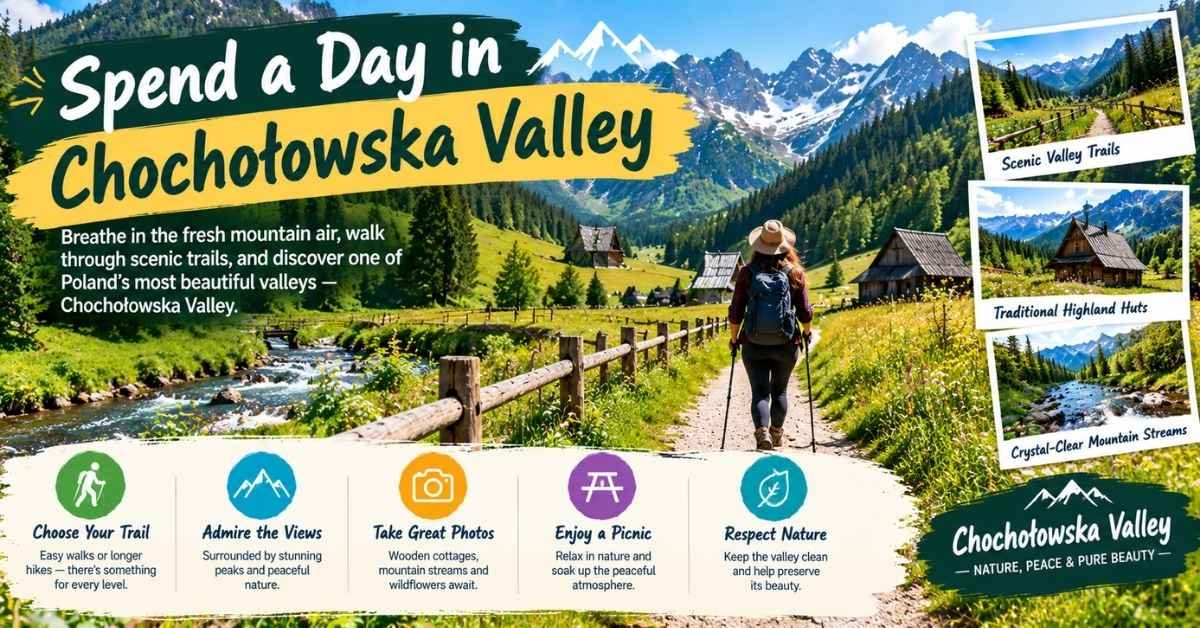
Best for: Long relaxed walks, cycling and spring crocuses Time needed: 4–7 hours Location: West of Zakopane Difficulty: Easy to moderate
Chochołowska Valley is the longest major valley in the Polish Tatras. Its wide route is less technically demanding than many mountain trails, although reaching the upper section still requires significant time and distance.
The valley is particularly famous for its spring crocuses. During the brief flowering period, it can attract enormous crowds, so an early weekday visit is preferable.
The upper valley contains traditional shepherd-related landscapes and a mountain shelter where hikers can rest and buy food. Seasonal cycling and local transport arrangements may reduce part of the walking, but availability should be checked before visiting.
Kościeliska or Chochołowska Valley?
Choose Kościeliska Valley for:
- More varied limestone scenery
- Optional caves and gorges
- A slightly more compact experience
- First-time family hiking
Choose Chochołowska Valley for:
- A longer outing
- Spring crocuses
- Broad landscapes
- Cycling where permitted
- A spacious upper-valley experience
11. Walk to Siklawica Waterfall Through Strążyska Valley
Best for: Short hikes and first-time walkers Time needed: 2–3 hours Location: Close to Zakopane Difficulty: Easy to moderate
Strążyska Valley is one of the most accessible short hikes from Zakopane. Its forested trail follows a stream toward Polana Strążyska, an open clearing beneath the distinctive outline of Giewont.
From the clearing, a short extension leads to Siklawica Waterfall. The final section can be wet or slippery, especially after rain or during colder months.
This route provides a satisfying taste of the Tatras without requiring the full-day commitment of Morskie Oko or Chochołowska Valley.
Experienced hikers can consider longer connections toward Sarnia Skała, but the increased ascent and terrain should be evaluated separately. Do not continue simply because a map makes the extension appear close.
12. Follow the Stream Through Dolina Białego
Best for: Families, flexible walks and arrival days Time needed: 1–3 hours Location: Near the southern edge of town Difficulty: Easy to moderate
Dolina Białego, or Białego Valley, follows a lively stream through a narrow forested gorge. Small cascades, bridges and shaded scenery make it appealing to families and travelers who do not want a long mountain expedition.
The route is flexible. You can walk for 30 or 60 minutes and return the same way without feeling that the outing was wasted. This makes it particularly useful on:
- Arrival days
- Departure mornings
- Uncertain-weather afternoons
- Family days with young children
- Recovery days between longer hikes
The path can become muddy and slippery during rain, so “short” should not be confused with “suitable for every shoe.”
13. Relax in the Thermal Baths Near Zakopane
Best for: Rainy days, families, couples and post-hike recovery Time needed: 3–5 hours Location: Zakopane and surrounding towns
Thermal baths are among the most popular activities in Zakopane, particularly during winter. However, the largest complexes are near Zakopane rather than in its center.
Chochołowskie Termy
Choose Chochołowskie Termy if you want a large complex with indoor and outdoor pools, family areas, relaxation facilities and an extensive sauna section. It pairs naturally with Chochołów village or Chochołowska Valley.
Terma Bania
Located in Białka Tatrzańska, Terma Bania works especially well for families who want slides, play areas and a livelier aquapark experience.
Termy Bukovina
This is a strong choice for couples and adults seeking a more relaxation-focused visit, although it also welcomes families.
Termy Zakopiańskie
This complex is the most convenient option for visitors staying near central Zakopane. It is smaller than the major regional facilities but requires less travel.
| Thermal bath | Best for | Atmosphere | Transport need |
|---|---|---|---|
| Chochołowskie Termy | Variety and longer visits | Large and lively | Car, transfer or bus |
| Terma Bania | Families and slides | Aquapark-style | Regional transport |
| Termy Bukovina | Couples and relaxation | Spa-oriented | Regional transport |
| Termy Zakopiańskie | Convenience | Compact and practical | Walkable for some visitors |
Book ahead during Christmas, New Year, school holidays and busy weekends. Check whether your selected ticket includes the sauna area, as separate rules and charges may apply.
14. Taste Authentic Oscypek
Best for: Food lovers and cultural travelers Time needed: 20 minutes to 2 hours
Oscypek is a firm, smoked sheep’s-milk cheese associated with the highland pastoral culture of the Tatra region. Small grilled pieces are commonly served with cranberry sauce along Krupówki and at regional markets.
However, not every decorative smoked cheese sold in Zakopane is protected, authentic oscypek. Traditional production is seasonal and subject to specific methods. Look for proper labeling or buy from a reputable bacówka, a shepherd’s hut connected with regional cheese production.
A demonstration or farm-style tasting adds more value than simply buying a piece from a souvenir stall. It helps you understand the relationship between sheep grazing, mountain pastures and Góral food traditions.
Other dishes to try include:
- Kwaśnica: Sour cabbage soup, often served with meat
- Moskole: Regional potato cakes
- Pierogi: Filled Polish dumplings
- Grilled trout
- Szarlotka: Polish apple cake
- Highlander-style tea
15. Eat in a Traditional Karczma
A karczma is a traditional-style Polish inn or restaurant. In Zakopane, these spaces often feature heavy timber interiors, fireplaces, regional decoration and live Góral music.
The busiest restaurant on Krupówki is not automatically the best. Look beyond decoration and check whether the menu contains genuine regional dishes rather than only international tourist food.
Consider:
- Whether live music is included
- Portion size and price
- Reservation requirements
- Vegetarian choices
- Whether the restaurant welcomes children
- Distance from the busiest section of Krupówki
After a long day outside, a warm bowl of kwaśnica or a plate of pierogi can be more memorable than another hurried attraction.
16. Visit Jaszczurówka Chapel
Best for: Architecture and photography Time needed: 20–40 minutes Location: East of central Zakopane
The Chapel of the Sacred Heart of Jesus at Jaszczurówka is one of Zakopane’s most beautiful wooden buildings. Designed by Stanisław Witkiewicz, it displays the steep roofs, carved details and highlander influences associated with Zakopane Style.
The chapel is small, so it works best as part of a wider route rather than a standalone half-day activity. Combine it with:
- Kuźnice
- Nosal
- A scenic drive
- Another architectural stop
It remains a place of worship, so enter quietly and avoid visiting during private ceremonies unless invited.
17. Explore the Wooden Village of Chochołów
Best for: Regional architecture and a slower cultural stop Time needed: 45–90 minutes Location: West of Zakopane
Chochołów is known for rows of traditional timber houses that preserve the appearance of a historic Podhale village. Many homes remain occupied, making it a living community rather than an open-air museum.
Park responsibly, remain on public paths and avoid photographing residents through windows. A short walk is more rewarding than simply driving through because it allows you to notice the construction details and village layout.
Chochołów combines naturally with:
- Chochołowskie Thermal Baths
- Chochołowska Valley
- An oscypek tasting
- A western Podhale driving route
18. Choose a Ski Area That Matches Your Ability
Skiing is one of the best things to do in Zakopane in winter, but Zakopane is not one enormous interconnected ski resort. The region contains separate ski areas, each with different terrain and facilities.
Beginners should prioritize:
- Gentle learning slopes
- English-speaking ski schools
- Equipment rental near the lift
- Reliable snowmaking
- Easy transportation from accommodation
Nosal and several smaller areas are associated with beginner lessons, while larger resorts around Białka Tatrzańska and Bukowina Tatrzańska offer more extensive facilities.
Kasprowy Wierch delivers a more serious alpine environment and is better suited to experienced skiers who understand natural mountain conditions. Its cable-car ticket and high-altitude operations also differ from standard beginner-resort arrangements.
Always check which lifts and slopes are operating. Snow in the surrounding peaks does not guarantee ideal skiing across every lower resort.
19. Try a Guided Winter Activity
Zakopane winter activities extend well beyond skiing and snowboarding. Depending on snow and weather conditions, visitors can try:
- Snowshoeing
- Winter hiking
- Cross-country skiing
- Ice skating
- Ski touring
- Snowmobile excursions
- Evening bonfires
- Guided photography walks
A local certified guide becomes particularly valuable when snow, ice or avalanche conditions complicate mountain routes. Before booking, confirm:
- Required experience
- Equipment included
- Clothing recommendations
- Group size
- Transportation
- Insurance expectations
- Cancellation terms
- Alternative activity if snow is insufficient
Avoid operators that promise a fixed mountain route without considering current conditions.
20. Experience a Traditional Kulig Responsibly
A kulig is a traditional winter sleigh ride, often combined with torches, a bonfire, food and folk music. In suitable snow, it can be one of Zakopane’s most atmospheric winter experiences.
Not every carriage ride through central Zakopane is a genuine kulig. Rural experiences in or near the valleys usually provide a more meaningful setting.
Choose an operator that:
- Limits the horses’ workload
- Uses equipment in good condition
- Provides adequate rest
- Avoids unsuitable road surfaces
- Does not operate in unsafe weather
- Clearly explains what the package includes
Because the activity depends on snow, some companies substitute wheeled carriages. Check this before paying if a traditional sleigh is important to you.
21. Take a Day Trip to the Dunajec River and Pieniny Mountains
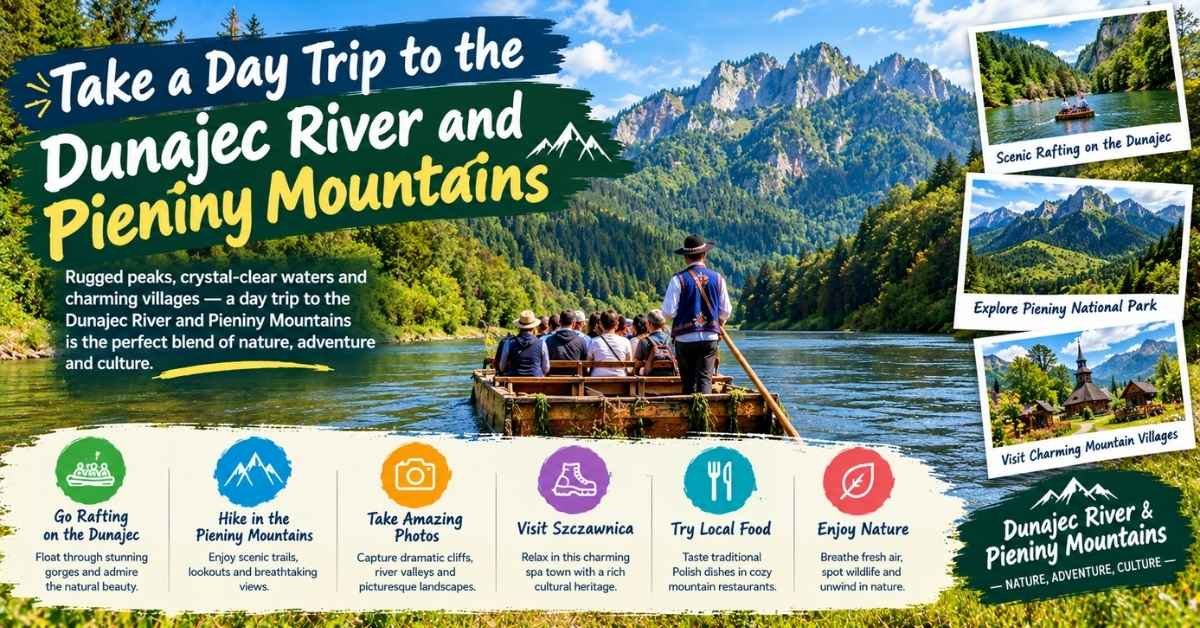
Best for: Visitors staying four days or longer Time needed: Full day Location: Outside the immediate Zakopane area
Traditional wooden rafting through the Dunajec Gorge provides a completely different landscape from the high Tatras. The river passes beneath the forested peaks of the Pieniny Mountains, often with views toward Trzy Korony.
This is a regional excursion rather than an attraction in central Zakopane. It requires transportation and operates seasonally, so it should not replace Morskie Oko or a Tatra valley on a short first visit.
Consider adding:
- Niedzica Castle
- Czorsztyn
- A cycling route
- Chochołów village
If you only have two days in Zakopane, remain closer to the Tatras. Add the Dunajec when you have enough time to explore beyond the essential sights.
What to Do in Zakopane Without Hiking
You do not need to be a serious hiker to enjoy Zakopane. The best non-hiking activities include:
- Riding the Gubałówka funicular
- Taking the Kasprowy Wierch cable car
- Exploring Krupówki
- Visiting Villa Koliba
- Touring the Tatra Museum
- Seeing Pęksowy Brzyzek and the Old Church
- Visiting Wielka Krokiew
- Tasting oscypek
- Relaxing in thermal baths
- Exploring Chochołów village
- Eating in a traditional karczma
- Joining a responsible winter kulig
For mountain scenery with minimal effort, choose Gubałówka for convenience or Kasprowy Wierch for a more impressive high-altitude experience.
Things to Do in Zakopane When It Rains
Rain in town can mean colder, windier and more dangerous conditions in the mountains. Do not assume a high-elevation cable car remains worthwhile simply because it is operating.
For one or two hours
- Tatra Museum
- Villa Koliba
- Oscypek demonstration
- Old Church
- Traditional café or restaurant
For half a day
- Termy Zakopiańskie
- Chochołowskie Termy
- Terma Bania
- Termy Bukovina
During light rain
If official conditions remain safe, consider:
- Krupówki
- Chochołów village
- A short section of Dolina Białego
- Old Zakopane’s architectural sites
Carry waterproof clothing and wear shoes with grip. Wet rock, leaves, mud and wooden steps can become slippery even on easy trails.
Best Things to Do in Zakopane by Season
Zakopane in Winter
Winter is best for:
- Skiing and snowboarding
- Snowshoeing
- Kulig sleigh rides
- Thermal baths
- Winter viewpoints
- Ice skating
- Cozy regional restaurants
Zakopane is called Poland’s winter capital, but snow is never guaranteed on a particular December date, especially at town level. Build a plan that still works during a warmer spell.
Zakopane in Spring
Spring brings:
- Melting-snow waterfalls
- Crocuses in Chochołowska Valley
- Quieter weekdays
- Lower-valley walks
- Cultural sightseeing
Conditions can include mud, rain and lingering high-altitude snow. Some seasonal trails or caves may remain closed.
Zakopane in Summer
Summer is ideal for:
- Morskie Oko
- Mountain hiking
- Kościeliska Valley
- Kasprowy Wierch
- Longer daylight
- Dunajec rafting
- Outdoor dining
July and August can be extremely busy. Start early and remain alert for changing afternoon weather.
Zakopane in Autumn
Autumn offers:
- Colorful forests
- Cooler hiking temperatures
- Quieter trails
- Landscape photography
- A calmer town atmosphere
The disadvantages are shorter daylight, rapidly changing weather and reduced operation of some seasonal attractions.
One-Day Zakopane Itinerary
A realistic one-day itinerary from Kraków should focus on the town and one easy viewpoint.
Morning
- Arrive as early as possible.
- Walk through the local market.
- Take the Gubałówka funicular.
- Spend time at the viewpoint.
Afternoon
- Visit Pęksowy Brzyzek Cemetery.
- See the Old Church.
- Walk through Krupówki.
- Try oscypek or eat in a karczma.
Evening
Return to Kraków or add a thermal-bath visit if transportation and admission have already been arranged.
If the weather is exceptionally clear and you have advance tickets, visit Kasprowy Wierch instead of Gubałówka. Do not try to combine Morskie Oko, Kasprowy Wierch, Gubałówka and central Zakopane in one comfortable day.
Two-Day Zakopane Itinerary
Day One: Town and Easy Panorama
- Pęksowy Brzyzek
- Old Church
- Villa Koliba
- Krupówki
- Gubałówka
- Traditional dinner
Day Two: Choose One Major Experience
Choose one:
- Morskie Oko for iconic scenery
- Kasprowy Wierch and Kuźnice for alpine views
- Kościeliska Valley for a less complicated hiking day
- Chochołowska Valley for a longer relaxed walk
End with a thermal bath only if you still have enough time and energy.
Three-Day Zakopane Itinerary
Day One: Culture and Gubałówka
Explore Old Zakopane, Villa Koliba, Krupówki and Gubałówka.
Day Two: Morskie Oko
Depart early, walk to the lake and add Czarny Staw only if conditions and fitness allow.
Day Three: Kasprowy and Thermal Baths
Use a clear morning for Kasprowy Wierch, then recover at a thermal complex.
If the third day is cloudy, replace Kasprowy with the Tatra Museum, Chochołów village and thermal baths.
How to Choose the Right Zakopane Experience
| Your priority | Best choice |
|---|---|
| Famous mountain lake | Morskie Oko |
| Dramatic views without a long climb | Kasprowy Wierch |
| Easy viewpoint near town | Gubałówka |
| Beginner valley walk | Kościeliska Valley |
| Short nature experience | Dolina Białego |
| Waterfall walk | Strążyska Valley |
| Local history | Old Zakopane and Tatra Museum |
| Family entertainment | Gubałówka and Terma Bania |
| Relaxation | Chochołowskie Termy |
| Architecture | Villa Koliba and Jaszczurówka |
| Regional food | Bacówka and traditional karczma |
| Rainy day | Museums and thermal baths |
Getting from Kraków to Zakopane
Zakopane is frequently visited as a day trip from Kraków, but the best transportation depends on your schedule.
By train
The train provides a comfortable journey and avoids some road-traffic uncertainty. Check the current timetable because journey times and departure frequency vary.
By bus
Buses and coaches operate between Kraków and Zakopane. They are often convenient and affordable, but weekend or holiday traffic can lengthen the journey.
By car
A rental car provides flexibility for Chochołów, thermal baths and regional attractions. The disadvantages include traffic, parking and restrictions around places such as Kuźnice.
By guided tour
An organized Zakopane day trip from Kraków can include transportation, Gubałówka, cheese tasting and thermal baths. It suits travelers who value convenience, although the schedule may feel rushed and provide little independence.
Stay overnight if you want to visit Morskie Oko, explore a major valley or experience Zakopane without constantly watching the return time.
Getting Around Zakopane Without a Car
Central Zakopane is reasonably walkable, but the broader attraction area is not.
Visitors can use:
- Local minibuses
- Public buses
- Taxis
- Organized transfers
- Funiculars and cable cars
- Walking routes
Minibuses connect the town with major trailheads, although schedules and boarding arrangements can be less obvious than formal urban transit systems. Confirm the final return, carry some cash and avoid relying on the last possible departure.
Private cars cannot simply drive to every mountain entrance. Kuźnice has access restrictions, while Morskie Oko requires a separate parking or public-transport plan.
What to Book Before Visiting Zakopane
Reserve in advance
- Peak-season Kasprowy Wierch tickets
- Official Morskie Oko parking
- Popular thermal-bath sessions
- Christmas and New Year accommodation
- Guided winter activities
- Ski lessons
- High-demand Kraków transfers
Check before leaving your accommodation
- Mountain weather
- Trail closures
- Cable-car status
- Avalanche information
- Ski-lift operations
- Daylight and return transport
Keep flexible
- Krupówki
- Old Zakopane
- Most museum visits
- Short town walks
- Regional meals
- Gubałówka outside peak periods
Avoid booking every hour of the trip. Flexibility is valuable in mountain destinations, where the clearest day should determine your main outdoor activity.
How Much Does Zakopane Cost?
Zakopane can suit budget and premium travelers. Your largest costs will usually come from cable cars, thermal baths, skiing, guided tours and transportation.
Budget day
- Walk around central Zakopane
- Visit the Old Church and cemetery
- Take a short valley walk
- Buy food from a bakery or casual restaurant
- Use public transport
Mid-range day
- Add the Gubałówka funicular
- Eat in a traditional karczma
- Visit a museum
- Use a thermal pool or paid attraction
Premium day
- Book a private transfer
- Reserve Kasprowy Wierch tickets
- Join a guided hike or winter activity
- Visit a large thermal complex
- Eat at a highly rated regional restaurant
Prices change by season and demand. Verify current charges through official attraction websites rather than relying on an old fixed amount in a travel blog.
Tatra Mountain Safety
The Tatras are compact, but they are real mountains. Conditions can change rapidly, and an easy summer trail can become hazardous in snow or ice.
Before hiking:
- Check the official Tatra National Park conditions.
- Review the mountain—not only town—forecast.
- Wear shoes with suitable grip.
- Carry water, food and extra layers.
- Pack rain protection.
- Allow enough daylight.
- Stay on marked trails.
- Turn back when conditions deteriorate.
- Do not depend on one mobile navigation app.
- Use a certified guide for technical or advanced winter routes.
Do not treat Giewont, Rysy or high-level ridge walks as casual extensions to a sightseeing day. Research them as separate mountain objectives.
Responsible Travel in Tatra National Park
Help protect the Polish Tatras by following park regulations:
- Carry all rubbish out.
- Remain on designated trails.
- Do not feed or approach wildlife.
- Do not swim in mountain lakes.
- Do not pick flowers or remove natural objects.
- Avoid loud music.
- Do not light fires outside designated areas.
- Recreational drones are prohibited.
- Dogs are generally prohibited on Tatra National Park trails, apart from applicable assistance-dog provisions.
- Follow seasonal closures and access restrictions.
Responsible behavior protects wildlife while making the experience more enjoyable for other visitors.
Is Zakopane Worth Visiting?
Zakopane is worth visiting if you want Tatra Mountain scenery, hiking, accessible viewpoints, winter activities and distinctive Polish highlander culture. The town is less suitable for travelers expecting a quiet alpine village during the busiest summer and winter periods.
The strongest reasons to visit are:
- Easy access to the Polish Tatras
- Activities for hikers and non-hikers
- Year-round scenery
- Thermal baths
- Regional food
- Unusual wooden architecture
- Convenient connections from Kraków
For the best experience, stay for two or three days, explore beyond Krupówki and avoid trying to visit every major attraction in one rushed itinerary.
Frequently Asked Questions
What are the best things to do in Zakopane?
The best things to do in Zakopane are visiting Morskie Oko, riding the Kasprowy Wierch cable car, taking the Gubałówka funicular, hiking through Kościeliska Valley, exploring Krupówki, discovering Zakopane Style architecture and relaxing in the nearby thermal baths.
How many days do you need in Zakopane?
Most first-time visitors need two or three days. Two days allow you to explore the town and choose one major mountain experience. Three days provide enough time for Morskie Oko, Kasprowy Wierch and Zakopane’s cultural attractions.
Can you visit Zakopane in one day from Kraków?
Yes, but focus on central Zakopane and one accessible viewpoint. Gubałówka, Krupówki and Old Zakopane fit comfortably into a day trip. Combining the town with Morskie Oko or several distant attractions can feel rushed.
Is Zakopane walkable?
Central Zakopane is walkable, including Krupówki, the Old Church, Pęksowy Brzyzek and several museums. Major attractions such as Morskie Oko, Kościeliska Valley and the regional thermal baths require transportation.
Do you need a car in Zakopane?
No. Trains, buses, local minibuses, taxis and organized transfers cover the main visitor routes. A car is useful for regional exploration but introduces traffic and parking complications.
Is Gubałówka or Kasprowy Wierch better?
Gubałówka is better for families, budgets and short visits. Kasprowy Wierch is better for dramatic alpine views and a genuine high-mountain atmosphere. Kasprowy is more expensive and more dependent on clear weather.
Is the Morskie Oko walk difficult?
The standard Morskie Oko route is paved and not technically difficult, but it is long and steadily uphill. The return distance, weather and additional journey from Zakopane make it a full-day activity.
What can you do in Zakopane without hiking?
Non-hiking activities include Gubałówka, the Kasprowy cable car, Krupówki, Tatra Museum, Villa Koliba, Wielka Krokiew, oscypek tastings, thermal baths, regional restaurants and Chochołów village.
What can you do in Zakopane when it rains?
Visit the Tatra Museum, Villa Koliba, an oscypek demonstration, Termy Zakopiańskie or one of the larger thermal baths near Zakopane. Light rain may still allow cultural walks around town.
What is the best time to visit Zakopane?
Visit from June to September for hiking, from January to March for the best chance of winter sports, in spring for crocuses and in autumn for quieter trails. Conditions vary, so no single month is best for every visitor.
Is snow guaranteed in Zakopane in December?
No. December can bring beautiful snow, but mild periods occur, especially in town. High-altitude areas may have snow when central Zakopane does not.
What should you book in advance?
Book peak-season Kasprowy Wierch tickets, Morskie Oko parking, popular thermal baths, ski lessons and holiday accommodation. Leave weather-sensitive hiking plans flexible.
Are dogs allowed in Tatra National Park?
Dogs are generally prohibited on Tatra National Park trails because they disturb wildlife. Check current official regulations and applicable assistance-dog provisions before visiting.
Is Zakopane expensive?
Zakopane can be affordable when you use public transport, walk in the valleys and eat away from the busiest parts of Krupówki. Cable cars, private tours, thermal baths and winter sports can increase the daily cost considerably.
What food should you try in Zakopane?
Try oscypek, kwaśnica, moskole, pierogi, grilled trout and szarlotka. A reputable bacówka or traditional karczma provides more cultural value than an ordinary souvenir stall.
Final Thoughts
The best Zakopane itinerary combines one major mountain experience with one cultural or relaxing activity each day. Use clear weather for Morskie Oko or Kasprowy Wierch, choose the easier valleys when you want a gentler outdoor experience and save museums or thermal baths for poor conditions.
Do not spend your entire visit on Krupówki, and do not treat every attraction around Podhale as if it were within walking distance. Check official trail and cable-car information, reserve only the experiences that require advance booking and leave enough flexibility to follow the weather. That approach will give you a safer, calmer and far more rewarding experience in Zakopane.










1 thought on “21 Best Things to Do in Zakopane: First-Time Visitor Guide”