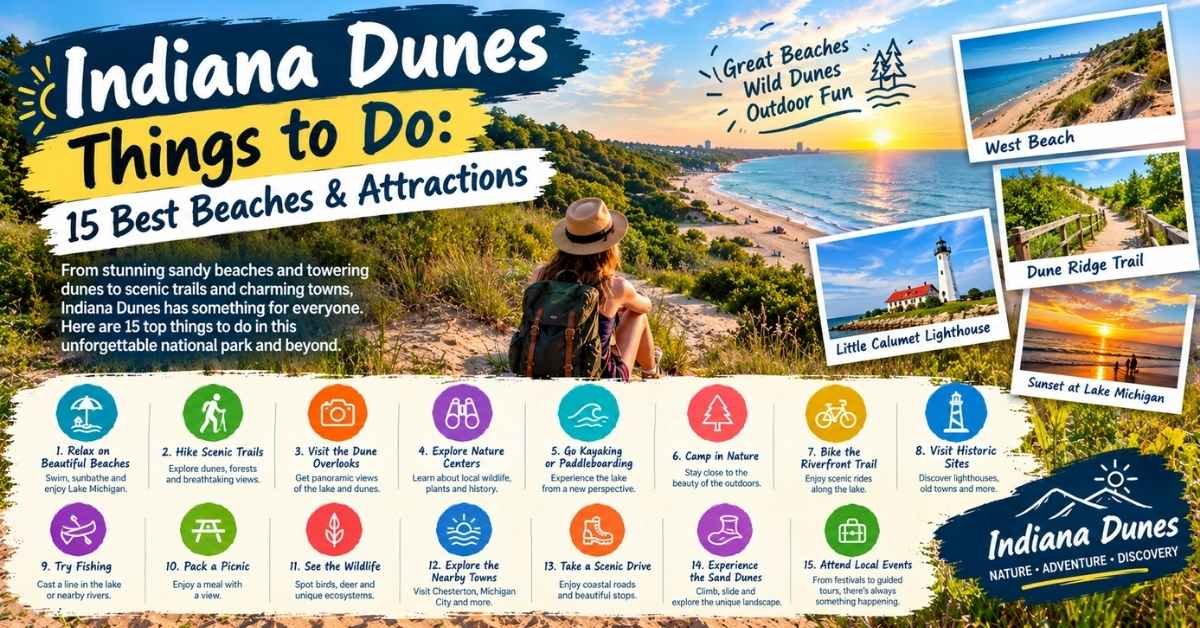
Indiana Dunes things to do include exploring Lake Michigan beaches, hiking through towering sand dunes, watching birds in wetlands, discovering historic sites, and enjoying peaceful nature walks. Whether you are planning a family vacation, a quick afternoon outdoors, or a full day of hiking and beach time, Indiana Dunes offers a variety of experiences for different interests and activity levels.
Located along the southern shore of Lake Michigan in Indiana, this destination combines sandy beaches, wooded trails, wetlands, historic landmarks, and small communities worth exploring. The key to enjoying your visit is choosing activities that fit your available time rather than trying to see everything in one trip.
One important detail to know before planning: Indiana Dunes National Park and Indiana Dunes State Park are separate parks with different entrance fees and management. Understanding that difference can help you choose the right beach, trail, and itinerary.
The Best Things to Do at Indiana Dunes at a Glance
If you are visiting for the first time, start with one or two experiences that match your interests.
| Activity | Best for | Time to allow |
|---|---|---|
| Visit West Beach | Beach lovers and scenic views | 1–3 hours |
| Explore Indiana Dunes State Park Beach | Swimming when conditions permit and relaxing | 1–3 hours |
| Hike the Dune Succession Trail | Nature enthusiasts and first-time visitors | Allow 1–2 hours |
| Walk the Portage Lakefront and Riverwalk | Waterfront scenery and a shorter outing | 30 minutes–1.5 hours |
| Explore Bailly Homestead and Chellberg Farm | History and culture | 1–2 hours |
| Hike Cowles Bog Trail | Experienced hikers seeking varied landscapes | Several hours |
| Photograph Lake Michigan | Photographers and sunset seekers | 30 minutes–2 hours |
| Visit the Paul H. Douglas Center | Families and nature learners | 30 minutes–2 hours |
These are flexible planning estimates, not guaranteed completion times. Trail conditions, parking, weather, walking speed, and seasonal access can change how long an activity takes.
1. Visit the Best Indiana Dunes Beaches

The beaches are among the biggest reasons people visit Indiana Dunes. The wide shoreline, Lake Michigan views, fresh air, and changing light make it easy to spend hours by the water without following a demanding itinerary.
However, not every beach offers the same experience. Some visitors want a traditional swimming and sunbathing day, while others prefer a quiet shoreline walk or a place to watch the waves.
West Beach: Enjoy the Shoreline and Dune Scenery
West Beach is a strong choice for visitors who want to combine time beside Lake Michigan with an introduction to the area’s dune landscape. It is part of Indiana Dunes National Park and offers beach access alongside opportunities to explore nearby trails.
You can relax on the sand, watch the lake, take photographs, or make your visit more active by exploring the West Beach Dune Succession Trail.
The important thing to remember is that a beach visit here can involve more walking than simply getting out of the car and sitting beside the water. Check current access information, facilities, and trail conditions before arriving.
Best for: First-time visitors, beach lovers, photographers, and people who want to combine a shoreline stop with a nature walk.
Indiana Dunes State Park Beach: Plan a Classic Beach Day
Indiana Dunes State Park is another popular destination for enjoying Lake Michigan. Its broad beach and surrounding dunes make it appealing to visitors who want to swim when conditions allow, relax in the sand, and spend a summer day outdoors.
The park also has hiking trails that pass through wooded areas and dune landscapes. This gives you the option of combining a beach visit with a short walk or a more challenging hike.
Swimming availability can depend on weather, staffing, and posted conditions. Do not assume that the lake is safe for swimming simply because other people are in the water.
Remember that the State Park has its own entrance fee, separate from Indiana Dunes National Park.
Best for: Families, groups of friends, beachgoers, and visitors who want a traditional summer outing.
Central Avenue Beach: Explore a More Nature-Focused Shoreline
Central Avenue Beach is worth considering if you want to experience the natural side of the Indiana Dunes shoreline. It is associated with a more nature-oriented visit, making it a useful option for people who enjoy walking, observing the landscape, and photographing the meeting point between sand, water, and vegetation.
Beach conditions and access can vary, so check current park information before making it the main stop on your itinerary.
Best for: Nature enthusiasts, shoreline walkers, and visitors who prefer exploring the landscape rather than spending the entire day swimming.
Portage Lakefront and Riverwalk: Enjoy Lake Views Without a Long Hike
Portage Lakefront and Riverwalk is a useful option if you want to enjoy the water without committing to a strenuous dune trail. The area features a waterfront walkway, a pavilion, a fishing pier, and views of Lake Michigan.
It can be a particularly good choice for a shorter visit, a relaxed afternoon, or a break between other activities.
The National Park Service also identifies this area as one of its locations with accessibility features, including a paved trail and a seasonal beach mat. Check the current accessibility information to understand which facilities are available during your visit.
Best for: Short visits, photographers, families, and visitors looking for a waterfront experience with less demanding walking.
How to Choose the Right Indiana Dunes Beach
Before choosing a beach, ask yourself what kind of day you want.
- For a combination of beach scenery and dune exploration, consider West Beach.
- For a traditional state park beach day, consider Indiana Dunes State Park Beach.
- For a waterfront walk with accessibility features, investigate Portage Lakefront and Riverwalk.
- For a quieter, nature-focused outing, explore Central Avenue Beach and other designated shoreline access points.
Check parking, facilities, swimming conditions, and current restrictions before leaving. A little planning can save you from driving to a beach that does not suit your needs.
2. Hike the Indiana Dunes Trails for Lake Michigan Views
Hiking is one of the best ways to understand why Indiana Dunes is more than a beach destination. The landscape includes sandy hills, oak forests, wetlands, prairie, and unusual transitions between different habitats.
One thing surprises many first-time hikers: a short dune trail can feel harder than its mileage suggests. Walking uphill through loose sand, climbing stairs, and hiking in direct sunlight all require extra effort.
Dune Succession Trail: Learn How the Dunes Change
The West Beach Dune Succession Trail is an excellent choice if you want to understand the landscape as well as enjoy it. The route and boardwalk help visitors observe how vegetation changes across the dune environment.
Rather than seeing the dunes as piles of sand, you begin to notice the relationship between plants, soil, wind, and the movement of the shoreline.
This is particularly rewarding for families and visitors who enjoy learning something about the places they explore.
Allow enough time to stop, read interpretive information, take photographs, and enjoy the surroundings. Check the current trail conditions before visiting.
Best for: First-time visitors, nature enthusiasts, and people interested in the science behind the landscape.
Dune Ridge Trail: Explore Forest and Dune Landscapes
Dune Ridge Trail offers an opportunity to experience the transition between wooded areas and dune environments. It can be a good choice for visitors who want a nature walk that feels different from a simple beach stroll.
Bring water and wear shoes that provide adequate grip. Depending on conditions, sandy or uneven sections may require more attention than a paved walking path.
Use an official trail map to confirm the route and current access details before setting out.
Best for: Hikers who enjoy varied scenery, wooded paths, and opportunities to observe local plants.
Cowles Bog Trail: Choose a More Demanding Outdoor Adventure
Cowles Bog Trail is a rewarding option for visitors who want a longer hike through varied natural habitats. The landscape includes wetlands, wooded areas, and dune terrain, offering a different perspective on the ecological diversity of Indiana Dunes National Park.
This is not the best choice for every visitor. The National Park Service describes the route as rugged, and its full length can require several hours depending on pace and conditions.
Before hiking, check the current official trail description, mileage, weather, and any closures. Carry sufficient water and avoid underestimating the effort needed to walk through sand and uneven terrain.
Best for: Experienced hikers, outdoor enthusiasts, and visitors who have enough time for a substantial walk.
Find an Easier Nature Walk
You do not need to tackle a long hike to enjoy Indiana Dunes. A short trail, a designated overlook, or a paved waterfront route can offer plenty of scenery.
Consider Portage Lakefront and Riverwalk or accessible areas near the park’s visitor facilities if you want a less demanding outing. Some areas provide accessible surfaces or viewing opportunities, but accessibility varies by location.
If you have mobility concerns, are visiting with young children, or are planning a trip with someone who cannot comfortably walk on sand, check the official accessibility guide rather than relying only on trail distance.
How to Choose the Right Trail
Use these questions before choosing your route:
- How much time do you have? A short interpretive walk and a rugged multi-mile hike require very different schedules.
- What is the terrain like? Sand, stairs, exposed sections, and uneven surfaces can increase difficulty.
- Who is joining you? Choose a trail that suits the least experienced or least mobile member of your group.
- What is the weather doing? Heat, wind, rain, and limited daylight can affect comfort and safety.
- What do you want to see? Select a route for its scenery, wildlife, wetlands, or dune features rather than choosing by name alone.
3. Explore Wetlands, Forests, and Wildlife
If you spend your entire visit beside the lake, you will miss another important part of Indiana Dunes: its diverse natural habitats.
The area includes wetlands, forests, prairies, oak savannas, and other landscapes that support a wide range of plants and wildlife. These environments also change with the seasons, making repeat visits worthwhile.
Go Bird-Watching
Indiana Dunes is a rewarding place for bird-watching, particularly during spring and fall migration. Different habitats attract different species, so you may see different birds near wetlands, wooded trails, and the shoreline.
Bring binoculars if you have them, move slowly, and listen for calls instead of focusing only on what you can see. Early mornings can be productive, although sightings depend on season, weather, and conditions.
Do not expect guaranteed encounters with a particular species. Wildlife is unpredictable, and the experience is better when you treat sightings as a bonus rather than a promise.
Discover Wetlands and Dune Ecosystems
Wetlands are an important part of the region’s natural character. They help create habitat diversity and support plants and animals that are not found in the same way on open beaches.
Choose a designated trail or viewing area to explore these environments without damaging sensitive vegetation. Stay on marked routes and avoid entering closed or restricted areas.
If you are visiting with children, encourage them to notice differences in plants, soil, water, and animal activity. A simple observation game can make an ordinary walk feel like a small nature expedition.
Visit the Paul H. Douglas Center for Environmental Education
The Paul H. Douglas Center is a useful stop for visitors interested in learning more about the park’s natural environment. It also provides access to the Miller Woods area and nearby walking opportunities.
Check current hours, programs, and exhibits before planning your day around a visit. You can combine the center with a nature walk or use it as a learning-focused stop during a family trip.
4. Discover Indiana Dunes’ Historic and Cultural Attractions
The region’s story extends beyond its natural landscape. Historic homes, farms, and other cultural sites offer a different way to understand how people have lived and worked in the area.
These stops are especially useful if you want to break up a day of hiking or beach time with an activity that does not revolve entirely around the weather.
Explore Bailly Homestead and Chellberg Farm
Bailly Homestead and Chellberg Farm provide opportunities to learn about the area’s settlement and agricultural history. The surrounding trail system also lets visitors experience the landscape around the historic sites.
This combination makes the area appealing to people who enjoy both history and nature. Instead of treating the sites as isolated buildings, you can explore their relationship with the land and nearby habitats.
Before visiting, check which buildings, grounds, programs, or tours are open. Access to historic structures and ranger-led activities can vary.
See the Century of Progress Historic Homes
The Century of Progress homes in Beverly Shores connect Indiana Dunes with the 1933 Chicago World’s Fair. These historic houses are a distinctive feature of the region and offer a different experience from the parks’ beaches and hiking trails.
The National Park Service includes viewing the homes from Lake Front Drive among its suggested short-visit activities. However, seeing the homes from the road does not necessarily mean that their interiors are open to the public.
Check official information before expecting a tour or building access. Respect residential areas and any posted restrictions.
Learn About the Region’s Layered History
The history of Indiana Dunes involves more than one period of settlement. A fuller understanding includes Indigenous connections to the land, later settlement and farming, industrial development, and efforts to preserve the region’s distinctive natural landscapes.
If you enjoy learning about the places you visit, use interpretive displays, ranger programs, and official historical resources to explore these connections.
Planning tip: Pair one historic stop with a nearby trail or beach rather than adding several distant locations to an already crowded itinerary.
5. Find Family-Friendly Things to Do at Indiana Dunes
Indiana Dunes can be a memorable family destination because children can play in the sand, observe wildlife, explore nature trails, and learn about the environment in one trip.
The key is not to plan too much. Children may be happy spending a long time at the beach, while adults may want to fit in several hikes and historic sites. A balanced itinerary gives everyone time to enjoy the visit.
Plan a Beach Visit With Children
A beach day gives children room to play, build sandcastles, and explore the shoreline. Bring sun protection, drinking water, snacks, towels, and a change of clothes.
Before swimming, check posted warnings and current lake conditions. Lake Michigan can develop dangerous currents and waves, and conditions can change quickly. Follow lifeguard instructions where lifeguards are present, and never assume a beach is supervised at all times.
Choose a Short Trail or Nature Activity
A short interpretive walk can turn a family outing into an outdoor learning experience. Look for opportunities to identify plants, notice different types of habitat, or observe bird activity.
Choose the route according to your children’s ages, stamina, and comfort with sand and stairs. A shorter trail that everyone enjoys is often a better choice than a long route that becomes exhausting halfway through.
Make the Visit Educational
The park’s visitor facilities, historic sites, and interpretive trails can help children understand how dunes form and why wetlands and forests matter.
You can also create a simple scavenger hunt. Ask children to find different leaf shapes, notice where plants grow, listen for birds, or describe how the beach changes from one section to another. Avoid collecting plants, disturbing wildlife, or removing natural objects where prohibited.
A Practical Family Planning Tip
Build your day around one main activity and one optional extra. For example, spend the morning at the beach and add a short walk later if everyone still has energy.
Keep snacks and water accessible, plan restroom breaks, and have an indoor or shorter alternative in case the weather changes. This flexible approach often makes the day more enjoyable than trying to visit every attraction.
6. Enjoy Indiana Dunes Without a Full-Day Hike
Not every visitor wants a strenuous outdoor adventure. You can still enjoy the scenery if you have limited time, prefer gentle walks, or need to plan around mobility considerations.
Consider these alternatives:
- Walk a paved waterfront route: Portage Lakefront and Riverwalk provides a way to enjoy lake views without committing to a long sandy hike.
- Spend time at a designated beach: Choose a shoreline access point based on current conditions and the facilities you need.
- Visit an interpretive or visitor center: Learn about the region without spending the entire day outdoors.
- Choose a picnic area: Enjoy the surroundings at a relaxed pace and take a short walk if you feel comfortable.
- Look for accessible viewpoints: The National Park Service lists locations with accessible facilities and seasonal beach-access features.
Accessibility does not look the same at every location. A route may have an accessible paved section but still lead to sand, uneven ground, or other barriers. Consult the park’s official accessibility information before making a final decision.
7. Photograph Lake Michigan and the Indiana Dunes Landscape
Indiana Dunes offers plenty of photographic opportunities, from wide lake views to close-up details of plants, sand, and changing vegetation.
You do not need professional equipment to capture memorable images. The most useful approach is to give yourself enough time to notice the light and surroundings instead of rushing from one viewpoint to another.
Capture Lake Michigan’s Shoreline
Wide shoreline photographs can communicate the scale of the lake and the openness of the beach. Try photographing the water from different angles, including views that show the curve of the shoreline or the contrast between sand and vegetation.
Keep your equipment protected from wind-blown sand and moisture. Even on a calm-looking day, conditions beside the lake can change.
Photograph the Dune Landscape
Look for details that tell the story of the environment: plants growing in sand, the transition from open dunes to forest, or the patterns created by wind.
Stay on designated trails and avoid stepping on fragile vegetation to get a better angle. Protecting the landscape matters more than capturing a particular photograph.
Plan Around the Light
Early morning and late afternoon can create softer light, while changing cloud cover can produce interesting views across the water. Sunset can be beautiful, but the result depends on weather and visibility.
Check the forecast and sunset time before planning a late visit. Also confirm parking and access arrangements so you do not find yourself at a closed or restricted location after dark.
8. Experience Indiana Dunes in Every Season
Indiana Dunes is not just a summer beach destination. Different seasons bring different opportunities, and the best time to visit depends on whether you prefer swimming, hiking, bird-watching, or quieter nature experiences.
Summer: Beaches and Outdoor Adventures
Summer is the traditional season for beach visits, sunbathing, picnics, and swimming where conditions permit. Longer daylight hours also make it easier to combine multiple outdoor activities.
The trade-off is that popular beaches can be busy, and heat can make strenuous hikes less comfortable. Start early when possible, carry water, and leave flexibility in your schedule.
Spring: Wildflowers and Bird Migration
Spring brings changing vegetation and opportunities to observe migratory birds. The National Park Service highlights spring wildflowers along the Little Calumet River and bird-watching during migration periods.
Weather can be unpredictable, so pack layers and check trail conditions after wet weather. A nature-focused outing may be more rewarding than planning the entire day around swimming.
Fall: Colorful Landscapes and Comfortable Hiking
Fall is a good time to explore trails, observe changing foliage, and enjoy cooler outdoor conditions. The National Park Service identifies late September through October as a period when fall colors can be enjoyed, although timing varies with the weather.
If you prefer fewer crowds, consider a weekday visit when your schedule allows. Popular locations may still attract visitors during pleasant autumn weekends.
Winter: A Quieter Side of the Dunes
Winter transforms the shoreline and trails. Depending on conditions, visitors may enjoy scenic walks, wildlife tracks, snowshoeing, or cross-country skiing where appropriate.
Dress for cold wind, watch for icy surfaces, and check which facilities and trails are open. Winter conditions can change quickly, so do not assume that a route suitable in summer will be equally safe in colder weather.
What Is the Best Time to Visit Indiana Dunes?
For a classic beach vacation, summer is usually the most suitable choice. For hiking and fall scenery, autumn can be appealing. Spring is attractive for wildflowers and bird migration, while winter offers a quieter and more weather-dependent experience.
There is no single best season for everyone. Choose the season according to the activities you actually want to do, and check current park information before finalizing your plans.
9. Indiana Dunes National Park vs. Indiana Dunes State Park
One of the most important planning details is understanding that Indiana Dunes National Park and Indiana Dunes State Park are separate destinations.
Although they share the Indiana shoreline and similar landscapes, they have different management, access points, facilities, and entrance-fee arrangements.
| Feature | Indiana Dunes National Park | Indiana Dunes State Park |
|---|---|---|
| Management | National Park Service | Indiana Department of Natural Resources |
| Main experiences | Beaches, diverse trail systems, wetlands, historic sites, and nature programs | Beach recreation, dune hiking, and state park facilities |
| Access | Multiple park areas and access points | Separate state park entrance |
| Fees | National Park entrance fees apply at designated fee locations | Separate state park fees and rules apply |
| Planning | Check National Park Service alerts, maps, and trail information | Check the Indiana DNR’s state park page and property map |
Neither park’s pass automatically covers the other. The National Park Service explicitly states that their fees and passes are separate. Check the current fee schedules before your visit because charges and arrangements may change.
Can You Visit Both Parks in One Day?
Yes, visiting both can be possible if you have enough time, but you should not treat them as a single site with one entrance.
Choose the experiences you most want to enjoy, confirm the locations, and estimate driving and walking time between stops. If your priority is a relaxed beach day, staying in one area may be more satisfying than repeatedly moving between access points.
If you are visiting for only a few hours, choose one park and explore it properly. You can always save the other for a future trip.
10. Plan Your Indiana Dunes Visit by the Time You Have
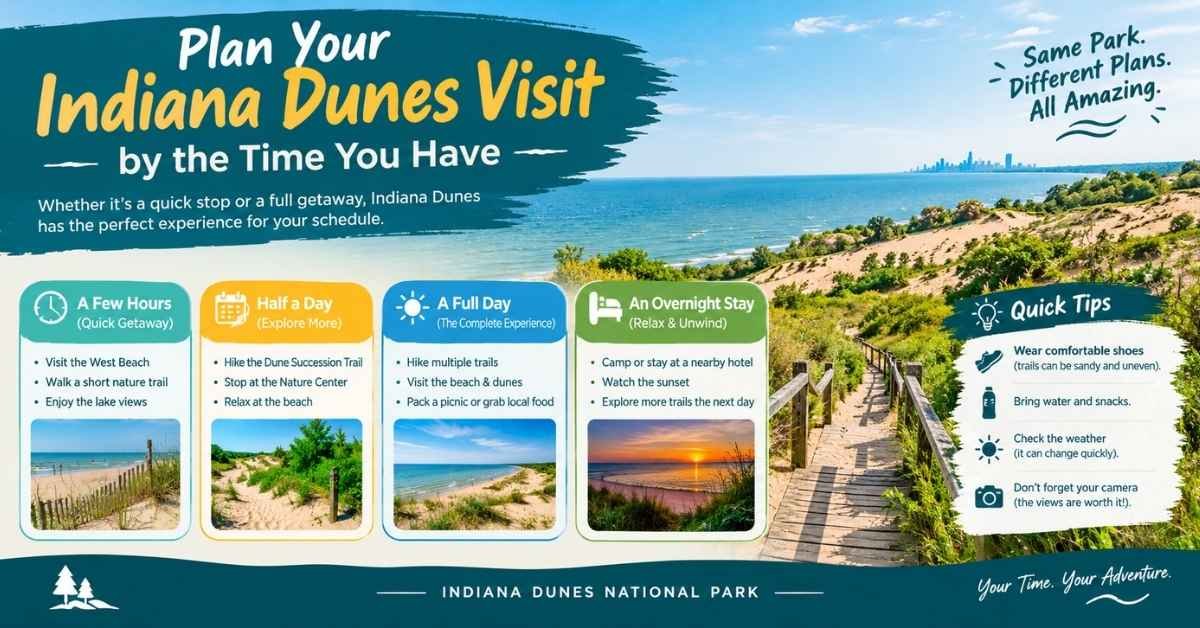
A good itinerary balances travel time with the experience itself. It also accounts for practical details such as parking, meals, weather, and the walking distance between a vehicle and the attraction.
If You Have Two to Three Hours
Choose one main experience rather than trying to cover the entire area.
Option A: Beach visit
- Arrive at a suitable beach access point.
- Spend time walking along the shoreline or relaxing beside the lake.
- Leave time to return to your vehicle without rushing.
Option B: Short nature outing
- Explore the West Beach Dune Succession Trail if current access allows.
- Take time to learn about the dune landscape.
- Finish with a short beach visit if time permits.
Option C: Waterfront walk
- Visit Portage Lakefront and Riverwalk.
- Enjoy the lake views and walk the accessible paved sections.
- Check current facilities and seasonal beach access before setting out.
The National Park Service also suggests short visits to the visitor center and viewing the Century of Progress homes from Lake Front Drive.
If You Have Half a Day
A half-day visit gives you room to combine two complementary activities.
One option is to spend the first part of the visit at a beach, followed by a short nature trail. Another is to explore Bailly Homestead and Chellberg Farm, then walk a nearby trail if conditions and time permit.
If you are visiting in summer, avoid assuming you can fit a long hike, a full beach afternoon, and several distant attractions into the same half-day window.
If You Have One Full Day
For a balanced first visit, choose one major outdoor activity, one secondary stop, and time for a meal or picnic.
A practical structure might look like this:
- Morning: Start with a hike or a nature-focused trail before the day becomes too hot.
- Midday: Take a break for lunch, water, and rest.
- Afternoon: Spend time at a beach or explore a historic site.
- Late afternoon: Enjoy the shoreline or take photographs if weather and access permit.
This is a planning framework, not a fixed route. Choose locations that make geographical sense, and check current conditions before deciding which stops to combine.
If You Have a Weekend
A weekend allows you to explore different parts of the region without rushing.
Day one: Focus on beaches, a scenic walk, and time beside Lake Michigan.
Day two: Explore a different trail system, wetlands, bird-watching areas, or historic attractions.
You could also investigate nearby towns, local dining, or regional activities if you have extra time. Keep in mind that attractions outside the parks may have their own hours, admission costs, and seasonal schedules.
The advantage of a longer visit is not just seeing more places. It is being able to spend time in each one without constantly checking the clock.
11. Practical Indiana Dunes Travel Tips That Can Save Your Day
Even a simple nature trip can become frustrating if you arrive without checking access, weather, or parking arrangements. A few basic preparations can make the visit easier.
Check Park Alerts and Trail Conditions
Before leaving, review official park alerts, maps, weather forecasts, and trail information. Seasonal closures, beach conditions, construction, and facility schedules can affect your plans.
Start with the National Park Service’s Indiana Dunes planning page and the Indiana Dunes State Park website.
Understand Entrance Fees
Indiana Dunes National Park and Indiana Dunes State Park have separate fee systems. The National Park Service lists its current standard entrance options and explains which passes are accepted.
Do not assume that an annual pass for one park covers the other. Verify current fees and payment arrangements before leaving.
Confirm the Exact Parking Location
The Indiana Dunes area includes multiple beaches, trails, and access points. Entering only the name of the general destination into a navigation app may take you to a different location than the one you intended.
Choose the exact beach, trailhead, or visitor facility and confirm its address using the official map. This is particularly important if you are combining activities in different parts of the region.
Pack for Changing Conditions
For most outdoor visits, consider bringing:
- Drinking water and snacks
- Comfortable walking shoes
- Sun protection and a hat
- Layers for changing temperatures and lake breezes
- A towel and change of clothes for beach outings
- A charged phone and an offline or downloaded map
- Binoculars if you enjoy bird-watching
For longer hikes, bring enough water and supplies for the full route rather than assuming that services will be available along the trail.
Follow Lake Michigan Safety Guidance
Lake Michigan can look calm while still presenting dangerous swimming conditions. Waves, currents, cold water, and changing weather can create risks.
Follow posted warnings, obey lifeguard instructions where lifeguards are present, and never swim in prohibited areas. Check current water conditions before entering the lake.
Check Pet Rules and Restrictions
Pet access varies by location and activity. Before bringing a dog, check the current rules for the specific beach, trail, or facility you plan to visit. Keep pets under control and clean up after them.
Do not assume that a pet-friendly trail means dogs are permitted at every beach or in every building.
Consider Accessibility Before You Arrive
The National Park Service provides accessibility information for visitor facilities, trails, beaches, and equipment. Some locations have paved routes, accessible parking, or seasonal beach mats, while others include sand, stairs, or uneven terrain.
Review the official Indiana Dunes National Park accessibility guide and contact the park if you need clarification about a specific route or facility.
12. Where to Eat and What to Explore Near Indiana Dunes
If you have extra time, the surrounding region can add another dimension to your visit. Nearby communities offer dining, local attractions, and other activities that can complement a day outdoors.
Plan a Meal Between Activities
A meal break can be a useful part of your itinerary, especially if you are spending several hours on the beach or hiking.
Check local restaurant hours and location before committing to a plan. If you want to eat outdoors, verify picnic-area rules and facilities rather than assuming that every beach access point has suitable tables or shelters.
Explore Nearby Communities
The towns around Indiana Dunes can provide dining, shopping, and additional regional experiences. Choose stops based on your route and interests instead of adding locations simply because they appear on a list.
If you are considering an attraction outside the parks, confirm its distance, operating hours, and admission requirements. This helps prevent confusion between activities inside Indiana Dunes National Park and those elsewhere in the region.
Decide Whether to Stay Overnight
An overnight stay makes sense if you want to explore several trail systems, spend substantial time at the beaches, or enjoy the area at a slower pace.
The National Park Service identifies Dunewood Campground as an overnight camping option, with seasonal operation. Check current availability, reservation requirements, and dates before planning to camp.
Other lodging options may be available in surrounding communities, depending on your budget and travel preferences.
13. Common Indiana Dunes Planning Mistakes to Avoid
A little realistic planning can make a bigger difference than adding another attraction to your list.
Trying to Visit Too Many Beaches
Moving between beaches takes time, and each stop may involve parking, walking, and finding your way to the shoreline. Choose one main beach and add another only if it genuinely fits your schedule.
Underestimating Dune Trails
Sand and elevation changes can make a short route more tiring than expected. Read the official trail description, consider the abilities of everyone in your group, and carry enough water.
Confusing the Two Parks
Indiana Dunes National Park and Indiana Dunes State Park have separate management and fee arrangements. Confirm which park contains your intended destination before driving there.
Assuming Every Beach Is Suitable for Swimming
Beach access does not guarantee safe swimming conditions, lifeguard coverage, or identical facilities. Check current warnings and follow all posted restrictions.
Ignoring Seasonal Changes
Weather, daylight, trail conditions, and facility hours change throughout the year. A plan that works in July may not be suitable in winter or early spring.
Planning Without a Backup
Outdoor plans are affected by rain, wind, heat, and unexpected closures. Have an alternative, such as a shorter walk, a visitor center, or a historic stop, so changing conditions do not ruin the day.
The best rule is simple: choose fewer activities, allow enough time, and stay flexible.
Frequently Asked Questions About Indiana Dunes
What are the best things to do at Indiana Dunes?
Some of the best things to do at Indiana Dunes include visiting Lake Michigan beaches, hiking dune trails, exploring wetlands, watching birds, discovering historic sites, and enjoying scenic waterfront walks. The best choices depend on your available time, interests, and preferred activity level.
Is Indiana Dunes worth visiting?
Yes, Indiana Dunes can be well worth visiting if you enjoy beaches, hiking, nature, wildlife, or outdoor photography. Its combination of Lake Michigan shoreline, dune landscapes, wetlands, forests, and historic attractions offers more variety than a typical beach destination.
Can you visit Indiana Dunes in one day?
Yes. One day is enough to enjoy a beach, a hike or nature walk, and one additional attraction if you plan carefully. Choose stops that make geographical sense, allow time for parking and meals, and avoid trying to visit every beach and trail.
What is the difference between Indiana Dunes National Park and Indiana Dunes State Park?
Indiana Dunes National Park is managed by the National Park Service, while Indiana Dunes State Park is managed by the Indiana Department of Natural Resources. Both offer outdoor recreation, but they have separate entrance fees, access arrangements, and park information.
Which Indiana Dunes beach is best for a first-time visitor?
West Beach is a useful option for visitors who want to combine shoreline scenery with dune exploration. Indiana Dunes State Park Beach suits a traditional beach day, while Portage Lakefront and Riverwalk is worth considering for waterfront views and a paved walking route. The best choice depends on your plans and current conditions.
Are there easy hikes at Indiana Dunes?
Yes. The area includes shorter walks, interpretive trails, and routes with less demanding surfaces. However, sand, stairs, and uneven ground can make some routes harder than expected. Check official trail descriptions and accessibility information before choosing a hike.
Is Indiana Dunes suitable for families with kids?
Yes. Families can enjoy beach time, nature walks, wildlife observation, and educational stops. Choose activities based on children’s ages and stamina, pack water and snacks, and build in breaks rather than filling the day with too many stops.
Is there an entrance fee for Indiana Dunes?
Indiana Dunes National Park has entrance fees at designated fee locations, and Indiana Dunes State Park has a separate fee system. Current fees and accepted passes can change, so check the official websites before your visit.
Can you swim in Lake Michigan at Indiana Dunes?
Swimming is possible at designated locations when conditions permit. However, Lake Michigan can have dangerous waves and currents, and conditions may change quickly. Always check posted warnings and follow lifeguard instructions where available.
Are dogs allowed at Indiana Dunes?
Pet rules depend on the specific beach, trail, and facility. Check current regulations for your intended destination before bringing a dog, and follow leash requirements and other posted restrictions.
What is the best time of year to visit Indiana Dunes?
Summer is popular for beach activities, spring offers opportunities for wildflowers and bird migration, fall is appealing for hiking and foliage, and winter provides a quieter landscape when conditions allow. The best season depends on your interests and tolerance for changing weather.
What should you bring to Indiana Dunes?
Bring water, snacks, comfortable footwear, sun protection, weather-appropriate layers, and a phone with navigation available. Beach visitors may also want towels and a change of clothes, while hikers should carry supplies appropriate to their route and expected conditions.
Are there accessible trails and beach facilities at Indiana Dunes?
Yes, some locations have accessible facilities, paved paths, accessible parking, or seasonal beach-access features. Accessibility varies across the area, so review the official accessibility guide and confirm the facilities available at your intended destination.
Final Thoughts: Make the Most of Your Indiana Dunes Visit
The best Indiana Dunes things to do are the ones that match the kind of experience you want. You might spend the day relaxing beside Lake Michigan, challenge yourself on a dune trail, watch birds in a wetland, or explore historic sites that reveal another side of the region.
If this is your first visit, start with one main activity and one complementary stop. Give yourself enough time to enjoy the landscape, take breaks when needed, and leave room for unexpected discoveries.
Before setting out, check official park maps, entrance fees, trail conditions, beach warnings, and seasonal access details. With a realistic plan and a little flexibility, you can enjoy Indiana Dunes without feeling that you have to see everything in one day.