
Best things to do in Antigua include exploring Nelson’s Dockyard, watching the sunset from Shirley Heights, relaxing on a beach suited to the day’s conditions, sailing or snorkelling along the coast, tasting Antiguan food and—if your schedule allows—visiting Barbuda. This guide covers Antigua and Barbuda in the Caribbean, not Antigua in Guatemala, and will help you decide what is genuinely worth your time.
Antigua looks compact on a map, but winding roads and tempting beach stops can turn a straightforward sightseeing day into a rushed one. The most enjoyable trips are not built around visiting the largest possible number of attractions. They focus on one area of the island at a time, leave room for changing weather and combine beach time with the history, food and culture that make Antigua more than a resort destination.
Quick answer: On your first visit, prioritise Nelson’s Dockyard and English Harbour, Shirley Heights, one carefully chosen beach, a sailing or snorkelling trip and a local food or cultural experience. Add Barbuda only if you can give it enough time.
Five Experiences First-Time Visitors Should Prioritise
| Experience | Best for | Time needed | Cost level | Book ahead? |
|---|---|---|---|---|
| Nelson’s Dockyard and English Harbour | History and first visits | 2–4 hours | £ | Usually not |
| Shirley Heights | Views, music and sunset | 1–4 hours | £–££ | Recommended for events |
| A beach suited to the conditions | Families, couples and relaxation | Half or full day | Free–£ | Usually not |
| Sailing or snorkelling | Coastline and adventure | Half or full day | ££–£££ | Yes |
| Antiguan food and culture | A more meaningful island experience | 2–4 hours | £–££ | Activity dependent |
If you have only one day, resist the temptation to drive around the entire island. English Harbour, Nelson’s Dockyard, Shirley Heights and Pigeon Point Beach form a natural route. Cruise passengers can follow a shortened version, provided they leave a conservative return-to-ship buffer.
Choose the Right Antigua Experiences for Your Trip
The same attraction can feel perfect to one visitor and disappointing to another. A couple looking for a peaceful afternoon will judge Dickenson Bay differently from a family that needs food, toilets, shade and easy water access.
Best for First-Time Visitors
Build your first sightseeing day around Nelson’s Dockyard, Dow’s Hill, Shirley Heights and a nearby beach. This combination provides history, scenery and swimming without hours of unnecessary driving.
Best for Couples and Honeymooners
Choose a quiet west-coast beach, a small-group sunset sail or an unhurried meal overlooking English Harbour. Shirley Heights can be romantic outside the busiest period, but its famous Sunday gathering is energetic rather than intimate.
If privacy matters more than entertainment, visit the viewpoint on a quieter day.
Best for Families with Children
Prioritise a sheltered beach with shade, food and toilets, then add one short cultural stop such as Dow’s Hill. Before booking a boat trip, ask about:
- Life jackets for children
- Shaded seating
- Boat-ladder access
- Minimum ages
- Toilet facilities
- Length of time at sea
A general “family-friendly” label means little unless those details suit your children.
Best for Cruise Passengers
Focus on one part of the island. A south-coast excursion can combine Nelson’s Dockyard, Shirley Heights and Pigeon Point Beach.
If you travel independently, agree on the fare and collection time with your driver before leaving St John’s. Do not use the ship’s departure time as your target return time.
Best for Active Travellers
Look beyond the beaches to the Middle Ground Trail, Wallings Nature Reserve, Signal Hill, sailing lessons, kayaking and Cades Reef.
Heat and exposure can make a short hike harder than its distance suggests. Start early and carry more water than you expect to need.
Best for Budget Travellers and Non-Swimmers
Public beaches, St John’s market, Fort James and self-guided heritage stops can keep costs manageable.
Non-swimmers can enjoy Antigua through Nelson’s Dockyard, Betty’s Hope, scenic drives, local food, museums, cricket and coastal viewpoints.
English Harbour: Antigua’s Best First-Day Route
Southern Antigua contains the island’s most rewarding concentration of attractions. In one area, you can explore a UNESCO-listed dockyard, learn about Antiguan history, walk between old fortifications, swim at Pigeon Point and finish above English Harbour at sunset.
1. Explore Nelson’s Dockyard National Park
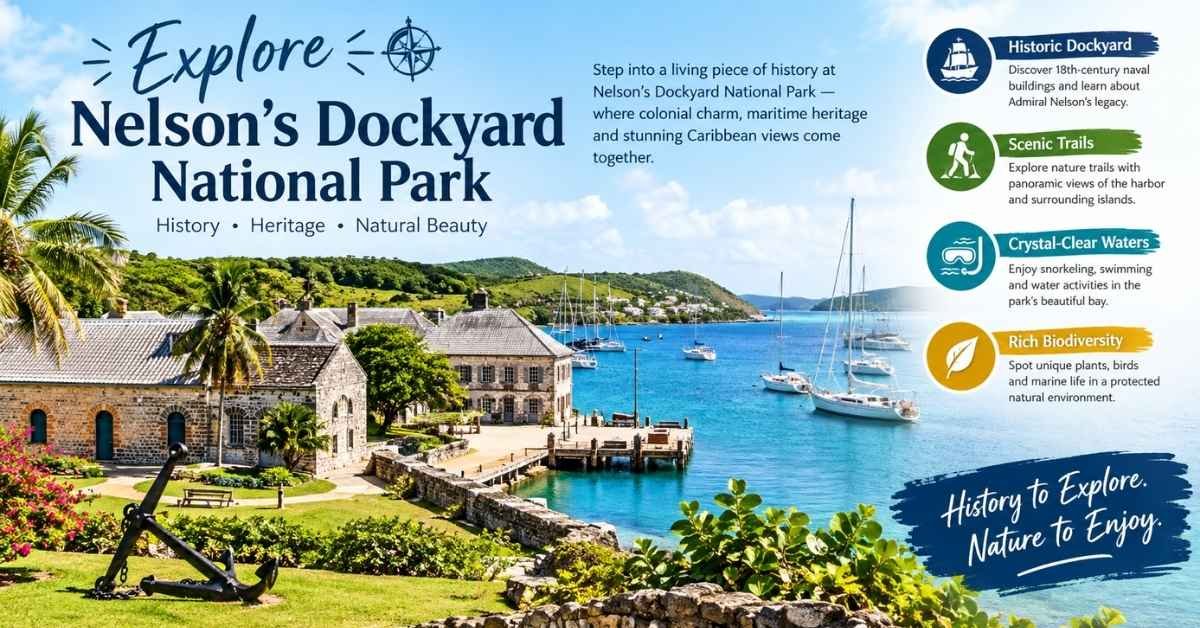
Nelson’s Dockyard is arguably the best answer to what to do in Antigua beyond the beach. The restored Georgian naval buildings now contain a museum, shops, restaurants, accommodation and working marina facilities.
Yachts continue to use English Harbour, which makes the dockyard feel like a living part of the island rather than an abandoned historical monument.
Allow at least two hours for the central dockyard. Stay longer if you enjoy maritime history, want lunch beside the water or plan to visit other locations within the national park.
Morning is generally more comfortable for walking, especially when the midday heat becomes intense.
Understand the History Beyond Admiral Nelson
The dockyard should not be presented only as a story about Admiral Horatio Nelson or British naval achievement.
Its construction and operation depended on the labour and skills of generations of enslaved Africans. The naval base also helped protect British interests connected to Antigua’s profitable sugar economy.
Take time to read the historical interpretation and learn about the people who built, maintained and supplied the dockyard. This context provides a more truthful understanding of both the site and Antigua’s colonial past.
Best for: First-time visitors, history, architecture and photography Time needed: Two to four hours Combine with: Dow’s Hill, Pigeon Point and Shirley Heights Good to know: Historic surfaces may be uneven
Visitors with limited mobility should ask about step-free entrances, toilets and transport between the national park’s separate locations rather than assuming every section is fully accessible.
2. Visit Dow’s Hill Interpretation Centre
Dow’s Hill provides the context many hurried island tours miss. Its multimedia presentation introduces Antigua’s history and geography, while the elevated setting helps you understand why English and Falmouth Harbours were strategically important.
It is particularly useful for families, non-hikers and first-time visitors. The experience also makes the later view from Shirley Heights more meaningful because you can recognise the landscape below.
Combine Dow’s Hill with Nelson’s Dockyard rather than treating it as a separate excursion. Admission arrangements and opening hours can change, so verify the latest information before travelling.
3. Watch the Sunset from Shirley Heights
The view from Shirley Heights is one of Antigua’s defining sights. English Harbour curves below, Falmouth Harbour sits beyond it and green hills frame the southern coastline.
There are several ways to experience Shirley Heights:
- Visit during a quiet period for the view and photographs.
- Walk or hike up if you are comfortable with heat and uneven ground.
- Attend the famous Sunday gathering for music, barbecue and a lively crowd.
The Sunday event is ideal if you want atmosphere, steel-pan music and a social evening. It may not suit visitors who dislike queues, loud music or busy viewpoints.
Arrive well before sunset, arrange your return transport in advance and confirm the current event schedule rather than relying on an old travel article.
Best for: Sunset, music, first-time visitors and groups Time needed: One to four hours Book ahead: Sensible during popular events Skip the event if: You prefer a peaceful or intimate evening
4. Walk the Middle Ground Trail
The Middle Ground Trail connects the Pigeon Point area with historic fortifications overlooking English Harbour. It rewards walkers with coastal views, military ruins and a close look at the terrain that helped protect the harbour.
Do not underestimate the trail because it appears short. Exposed sections, uneven ground and tropical heat can make it demanding.
Wear proper walking shoes, start early, carry water and turn back if the conditions or footing feel unsafe. A viewpoint reached by road is a better alternative for visitors with limited mobility or uncertain fitness.
5. Relax at Pigeon Point Beach
Pigeon Point is one of the easiest beaches to combine with an English Harbour sightseeing day. Its location saves you from driving across Antigua after visiting Nelson’s Dockyard.
The beach’s relatively sheltered setting often suits families and casual swimmers. Food and facilities nearby make it possible to stop for lunch or stay for the afternoon.
Pigeon Point can become busier at weekends and during major sailing events. If you want a quieter experience, arrive earlier or continue to another nearby beach after checking the access and water conditions.
6. Snorkel Near Galleon Beach and the Pillars of Hercules
Galleon Beach has a quieter character and sits near the Pillars of Hercules, dramatic limestone formations at the entrance to English Harbour.
Experienced swimmers may be able to explore suitable snorkelling areas from shore. Less-confident swimmers should join a reputable guided trip.
Underwater visibility and safety depend on wind, swell and currents. Do not treat attractive photographs online as evidence of current conditions. Ask locally before entering the water and never expect guaranteed turtle or fish sightings.
A Practical English Harbour Day
For a balanced full day:
- Visit Nelson’s Dockyard in the morning.
- Continue to Dow’s Hill.
- Have lunch or swim at Pigeon Point Beach.
- Travel to Shirley Heights before sunset.
Active visitors can replace part of their beach time with the Middle Ground Trail. This route is more rewarding than attempting a rushed circuit of the entire island.
Which Antigua Beach Is Right for You?
Antigua is often promoted as having 365 beaches, but that does not mean every beach offers the same experience.
The best Antigua beach depends on whether you want calm swimming, snorkelling, restaurants, shade, sunset, water sports, solitude or convenient access from your accommodation.
| Beach | Best for | General character | Facilities | Main consideration |
|---|---|---|---|---|
| Dickenson Bay | Activities and convenience | Lively and developed | Extensive | Can become busy |
| Valley Church | Couples and relaxation | Soft sand and easy-going | Good | Popular on cruise days |
| Ffryes Beach | Swimming and sunset | Spacious west-coast setting | Some services | Vendors can be seasonal |
| Darkwood Beach | Convenient beach stop | Open views and casual atmosphere | Some services | Conditions can vary |
| Pigeon Point | Families and English Harbour | Often sheltered and social | Good nearby | Busier at weekends |
| Galleon Beach | Scenery and snorkelling | Quieter harbour setting | Limited | Check water conditions |
| Long Bay | Families and east-coast visitors | Reef-protected sections | Useful services | Excursion traffic |
| Half Moon Bay | Dramatic scenery | Wild and Atlantic-facing | Limited | Rough water is possible |
| Rendezvous Bay | Seclusion and adventure | Remote and undeveloped | None | Difficult access |
7. Choose Dickenson Bay for Convenience
Dickenson Bay is a practical choice if you want restaurants, water sports and easy access from northern Antigua.
You can arrange activities, find food and spend the day on the beach without planning a complicated excursion. This convenience makes Dickenson Bay popular with families and social travellers.
The trade-off is atmosphere. It can feel busy when nearby hotels and cruise visitors are active. If you want a remote, undeveloped beach, choose another part of the island.
8. Spend a Day on the West-Coast Beaches
Valley Church, Ffryes and Darkwood are close enough to compare without losing most of your day to transportation.
Valley Church Beach is a strong option for couples and visitors who appreciate nearby refreshments and loungers. Its soft sand and relaxed setting make it easy to spend several hours there.
Ffryes Beach feels broad and photogenic, with an attractive west-facing position that works well for a late-afternoon visit.
Darkwood Beach is convenient for a shorter stop and fits naturally into a southwest-coast drive.
Choose one beach as your main base and treat another as an optional stop. Beach-hopping sounds productive, but repeatedly finding parking, moving bags and renting new loungers becomes tiring.
9. Experience Half Moon Bay’s Wilder Setting
Half Moon Bay offers one of Antigua’s most memorable coastal landscapes. Its sweeping crescent and Atlantic location feel wilder than the island’s more developed resort beaches.
It is a good choice for scenic walks, photography and a quieter beach day when conditions are favourable.
Because Half Moon Bay is exposed, waves can be stronger than those at sheltered Caribbean-facing beaches. Families with young children and uncertain swimmers should assess the water after arriving and be prepared to visit Long Bay instead.
10. Make the Journey to Rendezvous Bay

Rendezvous Bay appeals to visitors who value remoteness more than convenience. Reaching it may require rough-road driving, hiking or boat transportation.
There are no dependable facilities, so carry:
- Drinking water
- Food
- Sun protection
- Suitable footwear
- Offline directions
- Anything required for the return journey
Confirm the current access route locally. Do not climb through fences or enter private land because an old blog describes an unofficial shortcut.
Rendezvous Bay can be highly rewarding when you are prepared. It is not a sensible spontaneous choice for families, visitors with mobility limitations or cruise passengers with restricted time.
How Public Beach Access Works in Antigua
Antigua’s beaches are generally public, but public shoreline access does not automatically include permission to use a resort’s loungers, pools, toilets or other facilities.
Entrances can also be difficult to identify where hotels occupy the waterfront. Ask politely for the recognised public access route, follow local signs and expect to pay separately for facilities where required.
Check Conditions Before Choosing a Beach
Wind, waves, rain and sargassum can change a beach considerably.
Atlantic-facing locations may experience stronger surf, while sheltered Caribbean bays can offer gentler swimming. Conditions can still vary from one day to another.
Ask your accommodation, lifeguards or local operators about the current situation instead of automatically driving to the most famous beach.
Water Experiences Worth Booking
Water activities dominate most lists of Antigua attractions, but the format of the excursion matters.
A crowded round-island catamaran with music offers a completely different experience from a quiet sailing trip, even when both tours advertise snorkelling, drinks and lunch.
11. Sail Around Antigua’s Coast
Sailing is closely connected to Antigua’s identity. English Harbour and Falmouth Harbour attract yachts from around the world, while Antigua Sailing Week reinforces the island’s international sailing reputation.
Choose the type of trip that matches your preferred pace:
- Round-island catamaran: Best for energetic groups and seeing more coastline
- Small-group sailing: Better for space, conversation and a quieter day
- Sunset cruise: Ideal for couples who do not want a full day at sea
- Private charter: Useful for families and groups wanting control over stops
- Sailing lesson: A memorable choice for travellers who want to participate
Before booking, check:
- Maximum group size
- Amount of shade
- Snorkelling time
- Boat-ladder design
- Food and drinks
- Hotel or port transfers
- Cancellation conditions
- Toilet availability
If you experience motion sickness, a shorter trip in more sheltered water may be more enjoyable than a complete island circuit.
12. Snorkel or Dive at Cades Reef
Cades Reef is one of Antigua’s best-known marine areas and is normally reached by boat.
A guided snorkelling tour can provide transportation, equipment and knowledge of suitable entry points. Certified divers should compare dive profiles and safety procedures. Beginners should determine whether the trip includes genuine instruction or expects guests to be confident in open water.
Ask practical questions before choosing an operator:
- Are flotation devices available?
- Is equipment included and properly fitted?
- How many guests does each guide supervise?
- Is there shade on the boat?
- What happens if the sea becomes rough?
- Are transfers included?
- How much time is actually spent snorkelling?
A high customer rating does not automatically answer those questions.
13. Kayak or Paddleboard in Sheltered Water
Kayaking and stand-up paddleboarding provide a quieter way to explore Antigua’s coves, lagoons and mangrove environments.
They are good choices for travellers who want gentle outdoor adventure without spending a full day on a large boat.
Wind makes a significant difference. A route that appears effortless in promotional photographs can become exhausting when you are paddling against a strong breeze.
Beginners should choose sheltered water, remain with the guide and wear the provided buoyancy equipment—even when the water looks shallow.
Should You Visit Stingray City Antigua?
Stingray City is widely promoted as a memorable, family-friendly wildlife experience. However, responsible travellers should understand what happens during the activity before booking.
Ask whether:
- Stingrays are fed or touched
- Animals can leave the area freely
- Large groups enter the water simultaneously
- Guides prevent guests from chasing wildlife
- The operator contributes to conservation
- Non-participants have an alternative activity
Some visitors enjoy the close encounter. Others prefer observing marine life without feeding or handling it. Neither decision needs to be presented as universally correct.
| Water activity | Best for | Swimming confidence | Time | Cost level |
|---|---|---|---|---|
| Catamaran cruise | Social travellers | Basic to moderate | Full day | ££–£££ |
| Small-group sailing | Couples and quiet groups | Activity dependent | Half or full day | £££ |
| Cades Reef snorkelling | Reefs and marine life | Moderate | Half day | ££ |
| Scuba diving | Certified divers and supervised beginners | Activity specific | Half day | £££ |
| Kayaking or SUP | Gentle adventure | Basic water confidence | 2–4 hours | ££ |
History and Culture Beyond English Harbour
Antigua’s historical attractions are frequently treated as quick photography stops. Taking time to understand them changes the experience.
The island’s forts, plantations, harbours and trade routes reveal how colonial control and the sugar industry shaped Antigua.
14. Visit Betty’s Hope
Betty’s Hope was one of Antigua’s early large sugar plantations. Its restored windmills are visually striking, but the site’s importance lies in the human history behind the estate.
Enslaved Africans produced the wealth associated with sugar under violent and coercive conditions. Visitors should allow enough time to read the available interpretation instead of photographing the mills and immediately leaving.
Betty’s Hope combines naturally with Devil’s Bridge and an east-coast beach. This makes it a useful part of a wider route without reducing it to a roadside attraction.
15. Explore St John’s Beyond the Cruise Shops
St John’s deserves more than a walk through its duty-free shopping area.
Begin at the Museum of Antigua and Barbuda, look towards St John’s Cathedral and then explore the public market, Redcliffe Quay and Heritage Quay.
The public market provides a more local view of the capital, especially when produce and craft vendors are active. Redcliffe Quay feels more polished, with restored buildings, shops and restaurants. Heritage Quay is closely connected to cruise tourism.
Exploring these areas together reveals the difference between everyday St John’s and the visitor-focused waterfront.
Cruise passengers can explore much of central St John’s independently. If time permits, add Fort James Beach by taxi—but arrange the return journey before leaving the city.
16. Taste Antiguan Food and Experience Local Culture
Leaving an all-inclusive resort for one local meal can tell you more about Antigua than another afternoon beside the same pool.
Look for traditional dishes and ingredients such as:
- Fungi and pepperpot
- Ducana
- Saltfish
- Conch
- Grilled fish
- Lobster when available
- Tamarind products
- Local hot sauces
- Antigua Black pineapple
A food tour or cooking class can justify its cost when it provides cultural context and introduces locally owned businesses. Independent travellers can also find memorable meals at markets, roadside vendors and neighbourhood restaurants.
Ask about ingredients if you have allergies or dietary restrictions. Traditional recipes vary between families and cooks.
Antigua’s culture also comes alive through cricket, sailing, Carnival, art and music. Check the island’s official event calendar before travelling.
Antigua Sailing Week can transform English Harbour, while Carnival changes local schedules, transportation demand and nightlife. Cricket fans should look for current fixtures rather than assuming a stadium visit will include a match.
17. Take a Meaningful Trip to Barbuda

Barbuda is not simply another Antigua excursion. It is a separate island with its own communities, landscapes and rhythm.
Its best-known experiences include the pink-tinged beaches around Princess Diana Beach, Codrington Lagoon and the Frigate Bird Sanctuary.
The real question is whether Barbuda fits your schedule.
A day trip can work when transportation runs smoothly and you are comfortable following a structured itinerary. However, it may feel rushed if you want to spend longer on the beach, explore with a local guide or experience the island after the day visitors leave.
| Option | Best for | Main advantage | Main limitation |
|---|---|---|---|
| Ferry day trip | Visitors with one available day | Accessible packaged option | Sea and schedule dependent |
| Flight day trip | Time-conscious travellers | Shorter journey | Higher cost |
| Organised tour | First-time visitors | Coordinated logistics | Less flexibility |
| Overnight stay | Nature and slow travel | More time and quieter hours | Requires additional planning |
Choose an overnight stay if Barbuda is one of your main reasons for visiting Antigua and Barbuda.
Choose a day trip if it is an interesting addition to a longer Antigua holiday.
Confirm the latest ferry or flight schedule, ground transportation, sanctuary access and cancellation policy before departure. Weather and sea conditions can disrupt the plan.
Explore Inland Antigua
Antigua’s interior is greener and more varied than its familiar beach imagery suggests.
Fig Tree Drive winds through villages and tropical vegetation, with roadside fruit stalls appearing when produce is available. “Fig” is a local term commonly used for banana, so the road is not named after European fig orchards.
Combine Fig Tree Drive with the southwest beaches rather than making it a separate cross-island journey. Stop only where it is safe, carry small amounts of cash and remember that roadside stalls may not follow fixed opening hours.
For hiking, Wallings Nature Reserve and Signal Hill reveal another side of the island. Trail conditions, signs and guide availability can change. Ask locally, begin early and do not assume a walk is easy simply because the distance appears short.
Things to Do in Antigua at Night
Antigua’s evening entertainment is spread between resorts, English Harbour, organised events and local venues rather than concentrated in a single nightlife district.
Shirley Heights on Sunday
This is the island’s best-known evening gathering. Visit for music, food, sunset views and a lively atmosphere. Arrange return transportation before arriving.
English Harbour After Dark
English Harbour offers restaurants, marina bars and live music, particularly during the sailing season. The atmosphere can be much quieter outside major events.
Sunset Sailing
A sunset sail is a calmer alternative for couples and small groups. Check the amount of sailing time, drinks, seating, group size and transfer arrangements.
Food and Cultural Events
Fish nights, culinary events and community celebrations can provide a more local evening. Schedules change, so confirm the event directly before making a special journey.
A Quiet Evening for Couples
A west-coast sunset, harbour dinner or small-group cruise may be more romantic than attending the island’s busiest party.
Transport matters after dark. Do not assume local buses will provide a dependable late-night return.
Learn More: 22 Best Things to Do With Kids in Puerto Rico (2026)
Antigua Itineraries That Avoid Unnecessary Driving
One Day in Antigua from a Cruise Ship
Follow this route when your port schedule allows:
- Leave St John’s after confirming the ship’s all-aboard time.
- Travel to Nelson’s Dockyard.
- Add Dow’s Hill or Shirley Heights—but not every nearby attraction.
- Stop at Pigeon Point Beach for lunch or a swim.
- Return to St John’s with a substantial time buffer.
If the port call is short, remain closer to St John’s and visit Fort James Beach. A simple plan is better than spending the afternoon anxiously checking the time.
Three Days in Antigua
Day 1: English Harbour
Visit Nelson’s Dockyard, Dow’s Hill, Pigeon Point and Shirley Heights.
Day 2: West-Coast Beaches
Choose Valley Church or Ffryes Beach, drive part of Fig Tree Drive and eat at a locally owned restaurant.
Day 3: Water or Culture
Book a sailing or Cades Reef snorkelling excursion. Non-swimmers can explore St John’s and Betty’s Hope.
Five Days in Antigua
Follow the three-day itinerary and add:
Day 4: Antigua’s East Coast
Visit Betty’s Hope, Devil’s Bridge and Long Bay or Half Moon Bay.
Day 5: A Flexible Activity Day
Choose hiking, kayaking, a second beach or an excursion postponed by weather.
Seven Days in Antigua and Barbuda
Use the five-day itinerary, then add a Barbuda day trip or overnight stay.
Keep one slower day for food, art, cricket, another beach or an unplanned discovery. This spare time prevents one rainy morning or cancelled boat trip from disrupting the entire holiday.
Things to Do in Antigua When It Rains
Tropical rain does not necessarily continue all day. Keep a flexible list that includes:
- Museum of Antigua and Barbuda
- Dow’s Hill presentation
- Antiguan cooking class
- Rum or food experience
- Art galleries
- Long restaurant lunch
- Spa or covered resort activity
Do not begin a remote hike or boat trip simply because the forecast appears slightly better. Confirm local conditions first.
Getting Around Antigua
There is no universally best way to travel around Antigua. Your ideal option depends on your accommodation, group size, driving confidence and planned activities.
| Situation | Best option | Why |
|---|---|---|
| Couple taking one organised day out | Taxi or group tour | No need to manage a car all week |
| Family exploring multiple areas | Rental car or private driver | Greater flexibility |
| Cruise passenger | Guaranteed-return excursion or planned taxi | Protects the port schedule |
| Budget traveller with spare time | Bus and taxi combination | Lower cost but less predictable |
| Visitor uncomfortable driving | Taxi or island tour | Removes navigation stress |
Renting a Car in Antigua
Antigua drives on the left.
Ask the rental company about:
- Current local permit requirements
- Insurance
- Security deposits
- Fuel policy
- Breakdown assistance
- Additional driver fees
- Roadside support
Road quality varies, signs can be limited and night-time driving may feel unfamiliar. Download offline navigation before leaving reliable Wi-Fi.
A rental car makes the most sense when you intend to explore several areas over two or more days. It offers less value if you will remain at your resort and take only one excursion.
Using Taxis and Private Drivers
Confirm the price, currency, waiting time and return arrangements before beginning the journey.
For families or small groups, a private driver may compare favourably with purchasing several individual tour places. It also gives you greater control over how long you spend at each stop.
Taking Local Buses
Local buses can reduce transportation costs, but routes are designed primarily for residents rather than tourists following sightseeing circuits.
Many connections pass through St John’s, evening service can be limited and waiting times are unsuitable for tightly scheduled cruise visits.
Use buses when flexibility is part of your plan—not when every minute matters.
How Much Do Antigua Activities Cost?
Prices change according to the season, supplier, pickup point, group size and currency. Use general cost levels while planning:
- Free or inexpensive: Public beaches, markets, viewpoints, town walks and some historic remains
- £: Museums, national park admission, local meals and short taxi journeys
- ££: Guided land tours, kayaking, food experiences and some snorkelling trips
- £££: Full-day sailing, private drivers, scuba diving and Barbuda excursions
Look beyond the advertised price. Ask whether an experience includes:
- Resort or cruise-port transfers
- Attraction admission
- Lunch and drinks
- Snorkelling equipment
- Beach chairs
- Gratuities
- Taxes
- Cancellation protection
A cheaper tour can become more expensive after essential extras are added.
Paying more may be worthwhile for a small-group sailing trip, qualified diving instructor, private family driver or carefully organised Barbuda itinerary. It is rarely necessary for an ordinary public beach day.
See More: Hilo Hawaii Things to Do: 21 Best Attractions and Day Trips
When to Book Antigua Activities
Book in Advance
Reserve these experiences early, particularly during busy travel periods:
- Barbuda transportation
- Small-group sailing
- Private island tours
- Scuba diving
- Popular Sunday events
- Special restaurants
- Cruise excursions with limited availability
Check Conditions the Day Before
Remain flexible with:
- Snorkelling
- Paddleboarding
- Remote beaches
- Exposed hiking routes
- Devil’s Bridge
- Ferry and boat travel
Decide Locally
You can usually remain flexible about public beach visits, St John’s walks and self-guided sightseeing—provided you confirm current opening arrangements.
This approach protects the experiences with limited capacity without locking every day into a schedule that ignores the weather.
When Is the Best Time to Visit Antigua?
The drier and busier part of the year generally offers more predictable beach weather, but it also brings higher prices, full hotels and increased demand for popular excursions.
Quieter and wetter months may offer better value and fewer visitors. However, rain, tropical storms and sea-transport disruption become more significant considerations.
There is no universally bad month. The best time depends on whether you prioritise weather, price, events or quiet.
Travellers concerned about tropical storms or disrupted ferry journeys should examine seasonal risks carefully, monitor official travel advice and purchase insurance covering their planned activities.
If Carnival, Antigua Sailing Week, a culinary celebration or cricket match matters to you, plan around the official dates for your specific travel year. Do not rely on last year’s calendar.
Safety, Accessibility and Responsible Travel
Most Antigua activities require sensible preparation rather than anxiety.
- Stay away from exposed edges and blowholes at Devil’s Bridge.
- Check local advice before swimming.
- Carry water and sun protection while hiking.
- Wear suitable footwear on historic and rocky surfaces.
- Confirm life jackets and safe boarding arrangements on boats.
- Keep a conservative return buffer on cruise days.
- Arrange transportation before attending late-night events.
- Ensure your insurance covers water sports, hiking and planned excursions.
Accessibility information should be precise. “Accessible” may mean a vehicle can reach the entrance while the attraction contains gravel, steps, sand or an awkward boat ladder.
Ask about:
- Step-free entrances
- Surface type
- Accessible toilets
- Seating and shade
- Wheelchair handling
- Boat boarding
- Advance assistance
- Distance from parking
Travel responsibly by supporting local guides and restaurants, avoiding contact with coral, taking rubbish away from remote beaches and treating heritage sites as places of living memory.
Question wildlife activities involving touching, feeding or crowding animals before participating.
Mistakes That Can Waste Your Antigua Holiday
Visiting Too Many Beaches
You do not need to experience a different beach every day. Choose two or three serving different purposes: one convenient, one scenic and one quiet.
Ignoring Geography
Group nearby attractions. Nelson’s Dockyard, Shirley Heights and Pigeon Point belong in one route. Betty’s Hope and Devil’s Bridge fit naturally into another.
Treating Barbuda as a Last-Minute Certainty
Sea conditions, flight availability and local transportation can affect the trip. Plan early and retain a backup day.
Trusting Undated Prices and Schedules
Taxi fares, event times, restaurants and ferry services change. Confirm practical information shortly before visiting.
Booking According to Ratings Alone
A highly rated excursion may still be too crowded, too long or unsuitable for your swimming ability. Read the inclusions and limitations carefully.
Filling Every Day
Unscheduled time has value in Antigua. Leave room for weather changes, a long lunch or a beach you did not expect to enjoy.
Frequently Asked Questions About Antigua
What Is the Number-One Thing to Do in Antigua?
For most first-time visitors, Nelson’s Dockyard and English Harbour provide the best combination of history, scenery, restaurants and nearby beaches. Visitors interested primarily in swimming may prefer a west-coast beach day.
What Is Antigua Most Famous For?
Antigua is best known for its beaches, sailing culture, Nelson’s Dockyard, Shirley Heights and Caribbean climate. It is also associated with cricket, Carnival, Antiguan food and the neighbouring island of Barbuda.
How Many Days Do You Need in Antigua?
You need at least three days to see the main attractions. Five days offers a better balance of beaches, heritage and water activities. Seven days provides enough time for Barbuda, variable weather and a more relaxed pace.
Is Antigua Worth Exploring Outside the Resort?
Yes. Exploring beyond the resort introduces you to historic harbours, villages, markets, local food and coastlines that feel very different from a hotel beach. Even one day around English Harbour adds considerable depth to the holiday.
Is Shirley Heights Worth Visiting When It Is Not Sunday?
Yes. A quieter visit makes it easier to appreciate and photograph the views of English and Falmouth Harbours. Sunday is better for music, barbecue and a lively social atmosphere.
Can You Visit Nelson’s Dockyard Without a Tour?
You can generally explore Nelson’s Dockyard independently. However, a knowledgeable guide can provide deeper historical context. Confirm current admission and opening information before travelling.
What Can Cruise Passengers Do Independently?
Cruise passengers can explore St John’s, visit the museum and market or take a pre-arranged taxi to Fort James Beach. Independent south-coast sightseeing is possible during a longer port call, but it requires careful return planning.
Are Antigua’s Beaches Free?
Antigua’s beaches are generally public. Resorts and independent businesses may charge for loungers, umbrellas, parking, toilets or other facilities. The recognised public access route may not pass through a hotel’s main entrance.
Is Antigua Suitable for Families?
Antigua can be excellent for families when you choose sheltered beaches, short transfers and activity operators with appropriate safety equipment. Confirm water conditions, shade, toilets, food and age restrictions before visiting.
Is Barbuda Worth Visiting for One Day?
Barbuda is worth a day trip if you have enough time, favourable transportation conditions and a strong interest in nature or quiet beaches. An overnight stay is better for travellers who want flexibility and a slower experience.
Do You Need a Rental Car in Antigua?
You do not need a rental car if you intend to remain mainly at your resort and take one or two organised excursions. A car becomes more useful when you want to explore several coastlines independently over multiple days.
What Are the Best Free Things to Do in Antigua?
The best free things to do in Antigua include visiting public beaches, exploring St John’s market, seeing Fort James, enjoying a public sunset viewpoint and walking in suitable coastal areas. Transportation, parking or facilities may still cost extra.
What Is Truly Worth Doing in Antigua?
The best Antigua holiday does not require a frantic tour of dozens of beaches. Choose one meaningful heritage experience, one beach suited to your needs, one water activity and one local food or cultural experience.
Add Barbuda when you have enough time and flexibility to enjoy it properly.
Start with your accommodation area, group nearby attractions and reserve only the experiences that genuinely require advance booking. You will spend less time travelling, avoid unnecessary costs and leave space for the unplanned moments that often become the best part of an Antigua holiday.










1 thought on “Best Things to Do in Antigua: 17 Must-See Experiences”