
Things to do in Madeira Portugal include exploring Funchal, riding the cable car to Monte, hiking a levada, watching sunrise at Pico do Areeiro, reaching Pico Ruivo, swimming in the Porto Moniz lava pools, walking through Fanal Forest, and discovering coastal villages such as Seixal and Câmara de Lobos. Most first-time visitors need five to seven days to combine Madeira’s mountains, gardens, food, natural pools, and scenic drives without rushing.
Madeira rewards flexible travelers. It can be sunny beside the ocean while wind, rain, or fog covers the mountains. Plan around regions rather than an oversized checklist, keep one day flexible, and check current trail conditions before every hike.
Madeira at a Glance
| Planning question | Quick answer |
|---|---|
| Best for | Hiking, scenery, road trips, gardens, food, and outdoor adventure |
| Ideal trip length | Five to seven days |
| Best first-time base | Funchal |
| Do you need a car? | Helpful, but not essential |
| Best easy walk | Vereda dos Balcões |
| Best mountain experience | Pico do Areeiro or Pico Ruivo |
| Best natural swim | Porto Moniz |
| Best garden | Monte Palace Tropical Garden |
| Best family activity | Funchal Cable Car and Monte Palace |
| Best non-hiking day | Funchal, Monte, wine, and Câmara de Lobos |
| Main planning challenge | Madeira’s rapidly changing microclimates |
| Advance booking | Official PR trails and popular guided activities |
Is Madeira Worth Visiting?
Madeira is worth visiting if you enjoy dramatic landscapes, mountain walks, botanical gardens, coastal villages, scenic drives, and local food. The island offers more variety than its compact size suggests.
You can spend the morning above the clouds, eat lunch in a fishing village, and swim in a volcanic pool before sunset. That contrast is what makes the island memorable.
However, Madeira is not the right destination for everyone. Its terrain is steep, many of its best experiences depend on the weather, and Madeira Island does not have the long golden beaches associated with some European resort destinations.
Madeira is ideal if you enjoy:
- Mountain and ocean scenery
- Hiking and levada walks
- Coastal road trips
- Botanical gardens
- Traditional villages
- Whale and dolphin watching
- Wine and regional food
- Active vacations
- Mild winter destinations
Madeira may disappoint you if you expect:
- Long sandy beaches across the island
- Flat and effortless driving
- Guaranteed clear mountain views
- A nightlife-centered vacation
- Attractions requiring no advance planning
How many days do you need in Madeira?
Five to seven days is ideal for a first trip. It allows you to visit Funchal, explore both sides of the island, complete at least one hike, and keep a day flexible for changing weather.
- Three days: Funchal and two regional excursions
- Five days: Major attractions with one hiking day
- Seven days: Balanced mountains, levadas, villages, pools, and culture
- Ten days: Slower exploration, multiple hikes, and an optional Porto Santo trip
Best Madeira Experiences by Travel Style
| Traveler | Best Madeira experiences |
|---|---|
| First-time visitor | Funchal, Monte, Pico do Areeiro, Porto Moniz, and Santana |
| Couple | Wine tasting, sunrise viewpoint, coastal dinner, and tropical gardens |
| Family | Cable car, Monte Palace, Balcões, Santana, and developed natural pools |
| Serious hiker | Pico Ruivo, Caldeirão Verde, Ponta de São Lourenço, and PR trails |
| Non-hiker | Gardens, scenic viewpoints, villages, food, wine, and boat tours |
| Car-free traveler | Funchal, guided tours, buses, taxis, and hiking transfers |
| Cruise visitor | Funchal, Monte, Câmara de Lobos, or Cabo Girão |
| Limited-mobility traveler | Drive-up viewpoints and cultural attractions with confirmed access |
Best Things to Do in Funchal and Monte
1. Explore Funchal Old Town
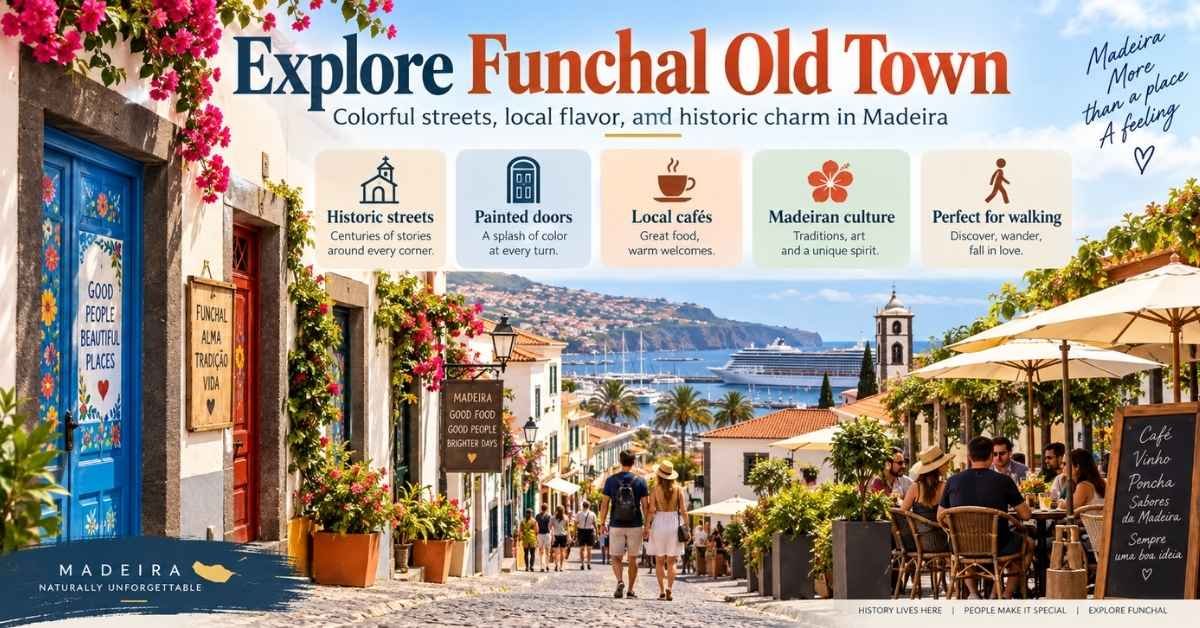
Funchal Old Town, or Zona Velha, is the best place to begin your Madeira trip. Walking through the capital helps you understand the island before heading into its mountains and villages.
Start around Rua de Santa Maria, known for its painted doors, and continue toward Sé Cathedral, the waterfront, marina, and surrounding shopping streets. The center contains enough restaurants and cafés to fill an afternoon without requiring a strict schedule.
Funchal is also one of the easiest places to explore without a rental car.
Best for: First-time visitors, food lovers, couples, and cruise passengers Time needed: Half a day Car needed: No Best combined with: Mercado dos Lavradores, the cable car, or a wine tasting
Visit early for quieter streets, then return in the evening when the restaurants and outdoor spaces become livelier.
2. Visit Mercado dos Lavradores Carefully
Mercado dos Lavradores is Funchal’s best-known market. Its flower stalls, tropical fruit, produce, and fish hall create an energetic introduction to Madeira’s agricultural and maritime culture.
The building is worth seeing, even if you do not plan to buy anything. Arrive earlier in the day if you want to see more activity in the fish section.
The market is also heavily visited by tourists, and some produce can be expensive. Ask the price before accepting samples, compare several stalls, and do not assume everything sold inside represents good value.
Best for: Food photography, local produce, and a quick cultural stop Time needed: 30–60 minutes Cost: Free to browse Local tip: Enjoy the atmosphere, but compare prices before purchasing fruit or packaged products.
3. Ride the Funchal Cable Car to Monte
The Funchal Cable Car connects the lower city with Monte, climbing above terracotta rooftops toward Madeira’s greener hills.
The ride is both transportation and sightseeing. It provides broad views over Funchal, its harbor, and the surrounding slopes without requiring a difficult climb.
Before buying a return ticket, decide whether you intend to take the traditional wicker toboggan downhill. The toboggan does not return riders directly to the waterfront, so your transport plan matters.
Best for: Families, couples, photographers, and non-hikers Time needed: Approximately 15–20 minutes each way, plus possible queues Car needed: No Best combined with: Monte Palace Tropical Garden and the Monte toboggan
Cruise-ship days and busy mornings can produce longer lines.
4. Wander Through Monte Palace Tropical Garden
Monte Palace Tropical Garden is one of the finest Madeira attractions for visitors who prefer nature without a demanding hike.
Its sloping grounds combine tropical plants, lakes, waterfalls, decorative tiles, sculptures, mineral displays, and Asian-inspired garden areas. Peacocks, koi, and other animals add interest for children.
Allow at least two or three hours. The grounds contain steep paths and steps, so comfortable shoes remain important even though this is a cultivated garden rather than a hiking trail.
Best for: Garden lovers, families, photographers, and couples Time needed: Two to three hours Physical demand: Moderate walking on sloping paths Best combined with: Funchal Cable Car and Monte Church
If you only have time for one major garden in Madeira, Monte Palace is usually the stronger first-time choice because it combines plants, art, water features, and elevated views.
5. Decide Whether the Monte Toboggan Ride Is Worth It
The Monte wicker toboggan ride is one of Madeira’s most unusual traditions. Two carreiros guide a wicker basket down the road using their boots to steer and control its speed.
The ride is short, tourist-oriented, and relatively expensive for its duration. It is still a memorable experience for travelers who value novelty and local tradition.
The most important practical detail is the ending point. The sled does not take you all the way back to central Funchal, so you may need to walk, use a taxi, or arrange other transportation afterward.
Best for: First-time visitors and families with older children Skip it if: You dislike fast downhill movement or feel the price outweighs the novelty Planning tip: Confirm current operating hours, prices, and weather conditions before queuing.
6. Taste Madeira Wine
Madeira’s fortified wine is not a single flavor. Styles range from dry to rich and sweet, making a guided tasting more useful than ordering an unfamiliar glass at random.
Traditional production exposes the wine to heat and oxygen, creating flavors that can include caramel, dried fruit, nuts, citrus peel, and spice.
Several wine lodges in Funchal explain the production process and offer tastings. A structured session can help you distinguish styles such as Sercial, Verdelho, Bual, and Malvasia.
Best for: Couples, food travelers, and rainy afternoons Time needed: One to two hours Car needed: No if tasting in Funchal Important: Do not combine several tastings with driving.
South Coast and Mountain-Valley Experiences
7. Walk Through Câmara de Lobos
Câmara de Lobos is a fishing community west of Funchal, known for its harbor, colorful boats, narrow streets, and connection with Winston Churchill, who painted the bay.
The town is frequently treated as a brief photo stop, but it deserves time for a slow waterfront walk, lunch, or a glass of poncha. Visiting beyond the main viewpoint gives you a better sense of the working community.
Best for: Food, photography, couples, and relaxed coastal walks Time needed: One to three hours Best combined with: Cabo Girão Car needed: Helpful, although tours and other transportation are available
Choose a waterfront meal if your itinerary allows. The experience is more satisfying when you stop rather than photograph the harbor and immediately leave.
8. Stand Above the Coast at Cabo Girão
The Cabo Girão Skywalk projects over a high coastal cliff, offering a glass-bottom view toward the fields and ocean below.
It is an easy way to experience Madeira’s vertical landscape without hiking. The visit itself is relatively short, which makes it suitable for a south-coast route rather than a separate day.
Best for: Viewpoints, short stops, and non-hikers Time needed: 30–60 minutes Physical demand: Low Potential drawback: Crowds can change the atmosphere, particularly when tour groups arrive.
Visitors with a strong fear of heights may prefer enjoying the conventional viewing area without spending much time on the glass platform.
9. Look Into Curral das Freiras
Curral das Freiras, commonly translated as the Valley of the Nuns, sits inside a deep mountain basin. The landscape feels dramatically different from Funchal and Madeira’s coastal resorts.
Begin at a high viewpoint such as Eira do Serrado when conditions are clear, then continue into the village if time permits. Curral das Freiras is associated with chestnuts, which appear in soups, cakes, liqueurs, and seasonal dishes.
Curral das Freiras and Câmara de Lobos are distinct destinations. They should not be treated as different names for the same place.
Best for: Mountain scenery, cultural context, and regional food Time needed: Half a day Weather sensitivity: High because clouds can obscure the valley Best combined with: A relaxed return to Funchal
10. Watch Sunrise at Pico do Areeiro

Pico do Areeiro is one of Madeira’s highest and most accessible mountain viewpoints. A road leads close to the summit, allowing non-hikers to experience the high-altitude landscape.
Sunrise can produce orange light, moving clouds, and views across sharp ridgelines. It can also produce darkness, fog, strong wind, cold, and no view at all.
Visiting the viewpoint is different from starting the PR1 mountain trail. You can enjoy the summit area without committing to the full hike.
Best for: Sunrise, mountain views, photographers, and hikers Time needed: Two to three hours including travel from Funchal Bring: Warm layers, wind protection, and a backup plan Avoid if: You are uncomfortable driving mountain roads in darkness
Trail access can change because of weather, maintenance, or safety restrictions. Check the official status shortly before leaving.
11. Reach Pico Ruivo From Achada do Teixeira
At approximately 1,862 meters, Pico Ruivo is Madeira’s highest summit. The route from Achada do Teixeira provides a more manageable way to reach it than a longer traverse from Pico do Areeiro.
The trail still requires climbing, suitable footwear, water, and respect for mountain conditions. The final section can feel strenuous, particularly in heat, wind, or low visibility.
Best for: Active first-time hikers who want to reach Madeira’s highest point Time needed: Approximately three to four hours, depending on pace Difficulty: Moderate Weather sensitivity: Very high Reservation: Check the current official requirement and route status
Do not assume coastal sunshine means good summit weather. Madeira’s mountain conditions can be entirely different.
Madeira’s Best Levadas and Forest Walks
Levadas are narrow irrigation channels originally built to move water across Madeira’s steep terrain. Their maintenance paths now form some of the island’s most distinctive walking routes.
12. Walk Levada das 25 Fontes and Risco
The 25 Fontes trail leads through the Rabaçal area to a waterfall basin fed by multiple springs. Nearby Risco Waterfall can often be included in the same outing.
This is one of Madeira’s most popular levada areas, which means narrow sections can become congested. Starting early may improve the experience, but timed trail-entry rules should determine your final schedule.
The approach and return can involve more effort than a basic distance figure suggests. Include transportation, access-road walking or shuttle arrangements, and time at both waterfalls.
Best for: Classic levada scenery and waterfalls Time needed: Half a day Difficulty: Moderate Bring: Grippy shoes, waterproof layer, water, and offline confirmation Main drawback: Crowding on narrow paths
13. Hike to Caldeirão Verde
Caldeirão Verde is one of the best levada walks in Madeira for travelers who want forest, tunnels, narrow paths, and a dramatic waterfall destination.
The route begins near Queimadas and follows the levada through dense vegetation and several dark tunnels. Bring a head torch rather than relying only on a phone light. Water can drip from tunnel ceilings, and the path may be muddy.
Although the route has limited steep climbing compared with a mountain ascent, its length, narrow sections, darkness, and exposure require concentration.
Best for: Classic levada hiking and forest scenery Time needed: Most of a day when transportation is included Difficulty: Moderate Not ideal for: Visitors uncomfortable with tunnels, darkness, or narrow exposed paths
Check parking, trail status, and reservation requirements before departure.
14. Take the Easier Vereda dos Balcões Walk
Vereda dos Balcões, beginning near Ribeiro Frio, is one of the best Madeira hikes for beginners. The relatively short forest route ends at a balcony-like viewpoint over the island’s central mountains.
It is a good choice for families, non-hikers, and visitors who want mountain scenery without spending most of the day on a trail.
Short does not mean completely accessible. The route can have uneven ground, and fog may hide the view.
Best for: Beginners, families, birdwatchers, and short itineraries Time needed: About one to two hours Difficulty: Easy Best combined with: Santana, Porto da Cruz, or another northeast attraction
15. Experience the Ancient Laurisilva at Fanal Forest
Fanal Forest is part of Madeira’s UNESCO-listed Laurisilva ecosystem. Its twisted trees and frequent mist create one of the island’s most distinctive landscapes.
The famous fog is not guaranteed. On a clear day, the forest feels open and pastoral; in mist, it becomes quieter and more atmospheric.
Expect cooler temperatures than on the coast. Mud, wind, free-roaming cattle, and limited parking can also affect the visit.
Best for: Photography, easy exploration, forest scenery, and short walks Time needed: One to three hours Car needed: Usually the easiest option Bring: Layers, waterproof shoes, and respect for the fragile landscape
Do not climb on ancient trees or leave marked paths merely to recreate social-media photographs.
Eastern and Northern Madeira
16. Walk the Ponta de São Lourenço Peninsula
Ponta de São Lourenço reveals a drier and more volcanic side of Madeira. Its exposed ridges, layered rock, and ocean views contrast sharply with Fanal’s damp green forest.
The route has little shade. Wind, sun, and repeated elevation changes can make it feel harder than expected.
Best for: Coastal hiking, geology, and sunrise Time needed: Half a day Difficulty: Moderate Bring: Water, sun protection, windproof layer, and suitable footwear Main risk: Exposure to heat and strong wind
Follow current trail rules and do not approach unstable cliff edges for photographs.
17. See Santana’s Traditional Houses
Santana is known for its palheiros, the brightly painted triangular houses often used as symbols of Madeira.
The central display area is easy to visit, but it is relatively small and partly commercial. You do not need an entire day for the houses alone.
The stop becomes more worthwhile when combined with Ribeiro Frio, Queimadas, Porto da Cruz, or another northeast attraction.
Best for: Families, architecture, culture, and photography Time needed: 30–90 minutes Cost: Generally low or free to explore the central exterior area Honest verdict: Interesting cultural stop, but not a full-day destination by itself
18. Explore São Vicente and the North Coast
São Vicente sits between steep green mountains near Madeira’s northern coast. Its church, village streets, and surrounding landscape provide a quieter alternative to Funchal.
The north receives more moisture than the south, contributing to its waterfalls and lush slopes. That also means rain is more common.
Older guides frequently mention the São Vicente caves. Confirm their current operating status before planning a visit around them.
Best for: Scenic driving, villages, photography, and slow travel Time needed: One to three hours Best combined with: Seixal, Porto Moniz, or Encumeada
Northwest Madeira and Natural Swimming
19. Swim at Porto Moniz Natural Pools
The Porto Moniz Natural Swimming Pools use volcanic rock formations to create protected swimming areas beside the Atlantic.
The developed complex usually provides more facilities than Madeira’s informal natural pools, making it a practical choice for families and travelers who want changing rooms and managed access.
Sea conditions still matter. Strong waves or maintenance can affect availability, even when the weather looks sunny.
Best for: Swimming, families, and relaxed road trips Time needed: Two to four hours Best arrival: Earlier on warm, busy days Best combined with: Seixal, Ribeira da Janela, or São Vicente
Treat Porto Moniz as the anchor of a northwest-coast day rather than a rushed photograph between multiple distant stops.
20. Visit Seixal Beach and Natural Pools
Seixal Beach is one of Madeira’s most photogenic coastal locations. Its black sand, green cliffs, and mountain backdrop create a setting unlike a conventional European resort beach.
The beach is relatively small, and parking can become difficult during busy periods. Ocean conditions may also affect safe swimming.
Seixal has nearby natural-pool options, but the experience is generally less developed than the main Porto Moniz complex.
Best for: Photography, black-sand scenery, and swimming when conditions allow Time needed: One to three hours Best combined with: Porto Moniz and São Vicente Practical tip: Arrive early and do not block local roads while parking.
21. Ride the Achadas da Cruz Cable Car
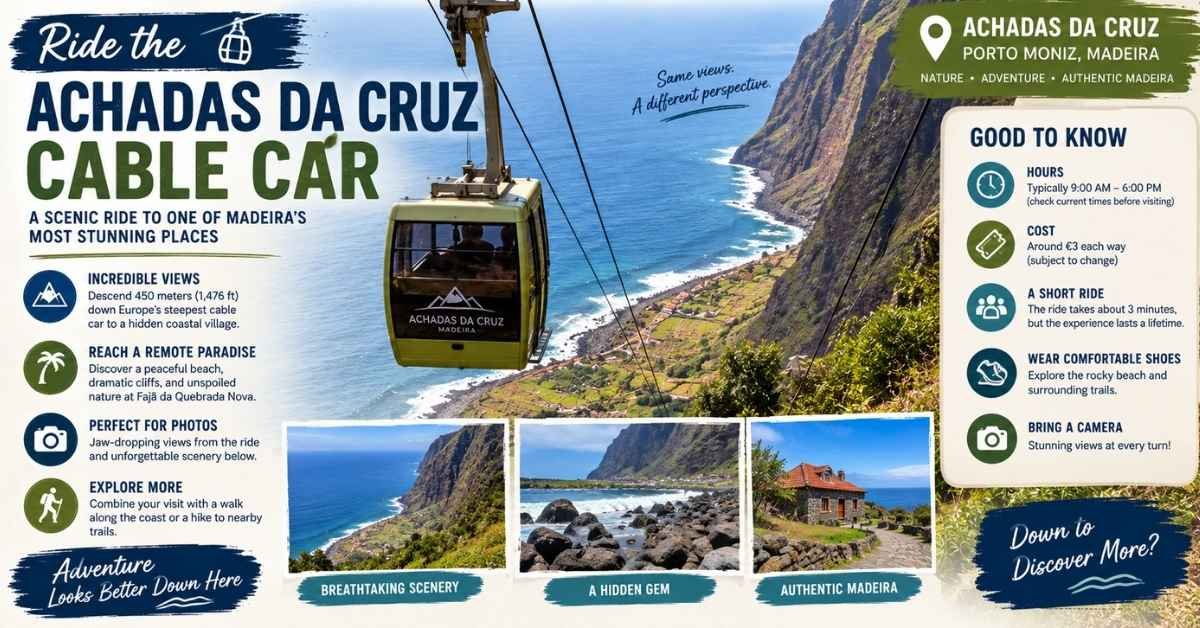
The Achadas da Cruz cable car descends an extremely steep slope toward Fajã da Quebrada Nova, a quiet strip of agricultural land between cliffs and sea.
The ride itself is the main attraction. At the bottom, expect a peaceful landscape rather than a developed entertainment area.
Operations can be affected by wind, maintenance, and scheduling. Confirm that the cable car is running before driving across the island.
Best for: Remote landscapes, unusual cable-car experiences, and photography Time needed: Two to three hours Not ideal for: Travelers with a serious fear of heights Bring: Water, sun protection, and enough time to avoid worrying about the final ascent
Learn More: 17 Best Things to Do in Idaho City: 2026 Travel Guide
More Memorable Madeira Activities
Go Whale and Dolphin Watching
Madeira’s deep surrounding waters support year-round marine life, making boat trips one of the island’s most popular commercial activities.
Choose a licensed operator with clear wildlife policies. Sightings are never guaranteed, and an ethical company should not promise close physical interaction.
Consider sea conditions, motion sickness, shade, boat size, and cancellation policies before booking.
Try Canyoning
Canyoning combines hiking, rappelling, swimming, and moving through waterfalls or narrow ravines. Madeira’s terrain makes it one of the island’s best advanced activities.
Book with a qualified guide who provides suitable equipment and adjusts the route to participants’ experience.
This activity is not suitable for everyone. Ask about swimming ability, heights, water temperature, fitness, and exit options before paying.
Visit Madeira Botanical Garden
The Madeira Botanical Garden offers city views and a broad plant collection. It can be visited independently or paired with other Funchal attractions.
If your time is limited, compare it with Monte Palace rather than trying to fit both into a rushed morning. Monte Palace generally offers a more varied first-time experience, while the Botanical Garden may appeal more strongly to dedicated plant enthusiasts.
Learn About Sugarcane Rum and Poncha
Sugarcane shaped Madeira’s agricultural and economic history. Local rum also forms the alcoholic base of poncha, traditionally mixed with honey and citrus.
A distillery or tasting experience adds cultural context that a quick bar order cannot provide. Remember that traditional poncha is stronger than its sweet flavor suggests.
Visit the CR7 Museum
The CR7 Museum in Funchal celebrates Madeira-born footballer Cristiano Ronaldo. Its displays focus on trophies, career milestones, and personal memorabilia.
It is a worthwhile specialist stop for football fans but not an essential Madeira attraction for every visitor.
Consider a Porto Santo Trip
Porto Santo is a separate island, not a stop on a Madeira road trip. It is best known for its long sandy beach and drier landscape.
Reaching it requires a ferry or flight, so a day trip can consume considerable time. It makes more sense when you have at least seven to ten days or want to stay overnight.
Madeira Hiking Comparison
| Trail | General difficulty | Typical time | Exposure | Tunnels | Best for |
|---|---|---|---|---|---|
| Balcões | Easy | 1–2 hours | Low | No | Families and beginners |
| 25 Fontes and Risco | Moderate | Half day | Some narrow areas | Limited | Waterfalls |
| Caldeirão Verde | Moderate | Half to full day | Narrow paths | Yes | Classic levada experience |
| Ponta de São Lourenço | Moderate | Half day | Wind and sun | No | Coastal scenery |
| Pico Ruivo from Achada do Teixeira | Moderate | 3–4 hours | Mountain terrain | No | Reaching the highest peak |
| Pico do Areeiro route | Challenging | Route dependent | Significant | Route dependent | Experienced hikers |
A trail’s distance does not determine its complete difficulty. Consider elevation, exposure, wind, tunnels, darkness, crowding, and transportation.
Madeira’s 2026 Trail Reservations
Access to Madeira’s classified PR walking trails now requires advance reservation through the SIMplifica platform. Visitors select an entry period and pay the applicable fee before starting.
General visitor admission is currently usually €4.50, although prices and exemptions should be checked before booking. Trail status can also change among open, restricted, and closed. Official Madeira hiking information
Before every official hike:
- Find the route’s official PR number.
- Check whether it is open, restricted, or closed.
- Review mountain weather—not only the Funchal forecast.
- Reserve the appropriate entry time.
- Save confirmation offline.
- Arrange transportation to and from the trail.
- Recheck the route shortly before departure.
Never cross a closure barrier because an old blog, social-media post, or downloaded map says the route should be open.
Do You Need a Car in Madeira?
You do not strictly need a car in Madeira, but a rental vehicle provides the greatest flexibility for weather-dependent sightseeing.
Rent a car if you:
- Want to visit remote viewpoints
- Plan sunrise trips
- Prefer independent road trips
- Need to change regions when the weather shifts
- Have accommodation with parking
- Feel comfortable with steep roads
Visit without a car if you:
- Plan to stay in Funchal
- Prefer guided east- and west-island tours
- Can book hiking transfers
- Feel uncomfortable driving narrow roads
- Have only three or four days
- Want to avoid parking problems
| Transportation | Best for | Main limitation |
|---|---|---|
| Rental car | Flexible exploration | Steep roads and parking |
| Public bus | Budget travel | Limited access to remote trails |
| Guided tour | First-time sightseeing | Fixed schedule |
| Hiking transfer | One-way or remote routes | Advance coordination |
| Taxi, Uber, or Bolt | Short journeys | Higher cost over long distances |
| Private driver | Families and groups | Expensive for solo travelers |
Uber and Bolt currently operate in Madeira, while the airport-to-Funchal journey generally takes around 20–25 minutes. Visit Madeira travel information
If renting a car, consider an automatic transmission and an engine capable of handling steep gradients comfortably.
See More: 20 Best Things to Do in Winthrop WA: 2026 Travel Guide
Realistic Madeira Itineraries
Three Days in Madeira
Day 1: Funchal and Monte
- Funchal Old Town
- Mercado dos Lavradores
- Cable car
- Monte Palace
- Madeira wine or dinner
Day 2: Eastern Madeira
- Pico do Areeiro viewpoint if clear
- Balcões
- Santana
- Porto da Cruz
The Day 3: Northwest Madeira
- São Vicente
- Seixal
- Porto Moniz
- Câmara de Lobos on the return
Three days provides an introduction, not complete island coverage.
Five Days in Madeira
- Day 1: Funchal and Monte
- Day 2: Pico Ruivo or Pico do Areeiro
- Day 3: Northwest coast
- Day 4: Ponta de São Lourenço and Santana
- Day 5: Levada walk, whale watching, or weather-backup activity
Seven Days in Madeira
- Day 1: Funchal Old Town and wine
- Day 2: Monte, garden, and Câmara de Lobos
- Day 3: Mountain hike
- Day 4: Seixal and Porto Moniz
- Day 5: Caldeirão Verde or 25 Fontes
- Day 6: Ponta de São Lourenço and Santana
- Day 7: Flexible wildlife, food, relaxation, or weather-recovery day
Madeira Without a Car
A practical car-free itinerary could include:
- Two days exploring Funchal and Monte
- One guided west-island tour
- One guided east-island tour
- One hike using a dedicated transfer
- One whale-watching or food experience
- One flexible day based on weather
Madeira Cruise-Port Itinerary
Four-hour Funchal visit
Walk through the Old Town, ride the cable car, visit Monte or taste Madeira wine, and return with a generous boarding buffer.
Six-hour excursion
Choose either Monte and Câmara de Lobos or a professionally operated regional excursion. Avoid attempting a distant hike during a short port call.
What to Do When Madeira’s Weather Changes
Madeira’s mountainous geography creates distinct microclimates. The south is generally warmer and drier, while the north and highlands receive more wind and rain. Fog can hide a mountain summit while the coast remains sunny. Official Madeira weather guidance
Plan A: Clear mountains
Choose:
- Pico do Areeiro
- Pico Ruivo
- Curral das Freiras
- High viewpoints
Plan B: Cloudy mountains but clear coast
Choose:
- Seixal
- Porto Moniz
- Ponta do Sol
- Câmara de Lobos
- Coastal villages
Plan C: Rain or strong wind
Choose:
- Madeira wine tasting
- Funchal museums
- Old Town
- Traditional lunch
- Food tour
- CR7 Museum
- Spa or hotel facilities
The smartest Madeira itinerary leaves one day flexible rather than assigning every hour before arrival.
Things to Do in Madeira by Season
Spring
Spring suits gardens, flowers, levada walks, and mild sightseeing. Rain remains possible, particularly in the mountains and north.
Summer
Summer brings warmer swimming conditions and longer daylight. Popular pools, viewpoints, and hiking routes also become busier. Carry more water on exposed trails.
Fall
Fall often provides comfortable walking temperatures with fewer peak-summer visitors. Days gradually shorten, so begin longer hikes early.
Winter
Madeira remains mild at sea level, making it a popular winter-sun destination. Mountain conditions can still be cold, wet, foggy, and windy.
Pack for the activity’s elevation rather than relying on the Funchal temperature.
Madeira for Families, Couples, and Non-Hikers
Madeira with young children
Good choices include:
- Funchal Cable Car
- Monte Palace
- Balcões
- Santana
- Developed natural pools
- Short drive-up viewpoints
Check stroller suitability, barriers, toilets, food availability, and pool conditions individually.
Madeira with teenagers
Consider:
- Ponta de São Lourenço
- Whale watching
- Canyoning
- Jeep tours
- Mountain hiking
- Snorkeling or diving
Match the activity with the teenager’s actual fitness and comfort around heights.
Madeira for couples
A memorable couples’ itinerary can combine:
- Mountain sunrise
- Madeira wine tasting
- Monte Palace
- Coastal dinner
- Ponta do Sol sunset
- Boutique accommodation
Madeira for non-hikers
You can enjoy Madeira through:
- Funchal
- Botanical gardens
- Câmara de Lobos
- Cabo Girão
- Santana
- Scenic drives
- Natural pools
- Food and wine
- Cable cars
- Whale watching
Madeira with limited mobility
Look for:
- Drive-up viewpoints
- Step-free cultural attractions
- Nearby parking
- Accessible toilets
- Managed swimming facilities
- Cable-car boarding assistance
- Attractions with seating
Historic streets, gardens, and viewpoints can still contain steep slopes or uneven surfaces. Verify current accessibility directly rather than relying on a broad “accessible” label.
What to Eat and Drink in Madeira
Espetada
Espetada is beef seasoned with garlic and salt, traditionally cooked on a skewer. It is often served with bread, salad, or fried cornmeal.
Bolo do caco
Despite its name, bolo do caco is bread rather than cake. It is commonly served warm with garlic butter and works equally well as a snack or sandwich base.
Black scabbardfish
Black scabbardfish is one of Madeira’s most recognizable seafood dishes. It is famously paired with banana, although other preparations are available.
Limpets
Limpets are often served sizzling with garlic, butter, and lemon. They suit adventurous seafood lovers but have a firmer texture than many shellfish.
Poncha
Traditional poncha combines sugarcane spirit, honey, and citrus. Regional variations may use different fruits.
Its sweetness can hide its strength, so drink slowly—especially if driving is part of your day.
Madeira wine
Taste more than one style before deciding whether you like Madeira wine. Dry Sercial and Verdelho can feel very different from richer Bual and Malvasia.
Where to Stay in Madeira
Funchal
Choose Funchal for:
- First-time visits
- Car-free travel
- Restaurants
- Nighttime convenience
- Tour departures
- Cultural attractions
Caniço
Choose Caniço for:
- Quieter coastal accommodation
- Diving
- Airport convenience
- Resort facilities
Ponta do Sol or Ribeira Brava
Choose the south coast for:
- Warmer and drier conditions
- Central road-trip access
- Couples’ stays
- Slower evenings
São Vicente or Seixal
Choose the north for:
- Lush scenery
- Forest access
- Quieter surroundings
- A road-trip-focused visit
Porto Moniz
Choose Porto Moniz for:
- Natural-pool access
- Northwest exploration
- Quiet evenings
- A slower itinerary
Should you split your stay?
Splitting accommodation can save driving on trips lasting seven days or longer. For shorter visits, changing hotels may waste more time than it saves.
Madeira Budget and Booking Priorities
| Experience | Cost level | Reserve ahead? |
|---|---|---|
| Scenic viewpoints | Free to low | Usually no |
| Official PR trails | Low | Yes |
| Gardens | Moderate | Helpful in busy periods |
| Cable car | Moderate | Sometimes useful |
| Natural pools | Low | Usually no |
| Whale watching | Moderate to high | Yes |
| Canyoning | High | Yes |
| Rental car | Variable | Yes |
| Guided island tour | Moderate to high | Yes |
Book these first
- Flights
- Accommodation
- Rental car, if needed
- High-demand guided activities
- Hiking transportation
- Official trail entry
- Selected restaurant reservations
Do not book every day rigidly. Weather flexibility has real value in Madeira.
Common Madeira Planning Mistakes
Trying to see the entire island in one day
Madeira looks small, but mountain roads, parking, tunnels, viewpoints, and weather slow travel.
Choosing hikes by distance alone
Elevation, exposure, tunnels, wind, mud, and transport matter as much as kilometers.
Ignoring trail reservations
A saved map does not replace current permission or an official trail-status check.
Expecting long sandy beaches
Madeira Island is better known for rocky coastline, black sand, and natural pools. Porto Santo offers the archipelago’s major sandy-beach experience.
Following GPS down unsuitable roads
Navigation systems may choose extremely steep or narrow local roads. Stay on appropriate main routes if an alternative looks unsafe.
Renting the cheapest possible car
A small engine or unfamiliar manual transmission can make steep roads stressful. Choose a vehicle that matches your confidence.
Filling every day with fixed plans
Keep one flexible day for mountain weather, boat conditions, or trail changes.
Calling every famous place a hidden gem
Fanal, Seixal, and major levadas can become crowded. Visit responsibly and do not expect solitude simply because an article uses that phrase.
Frequently Asked Questions
What are the best things to do in Madeira Portugal?
The best things to do in Madeira Portugal include exploring Funchal, visiting Monte Palace, hiking a levada, seeing Pico do Areeiro and Pico Ruivo, swimming at Porto Moniz, visiting Seixal and Fanal Forest, walking Ponta de São Lourenço, and tasting Madeiran food and wine.
How many days do you need in Madeira?
Most first-time visitors need five to seven days. Five days covers the main highlights, while seven days allows multiple hikes, regional road trips, and flexibility for changing weather.
Do you need a car in Madeira?
A car is helpful but not essential. Stay in Funchal and use guided tours, buses, taxis, and hiking transfers if you prefer not to drive.
Is driving in Madeira difficult?
Driving can be challenging because of steep gradients, narrow village streets, unfamiliar junctions, and limited parking. Main highways and tunnels make longer journeys easier.
Can you visit Madeira without hiking?
Yes. Non-hiking activities include Funchal, Monte Palace, cable cars, wine tasting, whale watching, scenic tours, coastal villages, natural pools, markets, museums, and viewpoints.
Is Madeira suitable for children?
Madeira works well for families when activities match the children’s ages. Gardens, cable cars, Santana, Balcões, whale watching, and developed natural pools are among the strongest choices.
Do Madeira hikes require reservations?
Official classified PR trails require advance reservations through SIMplifica. Check the specific route, applicable fee, available entry time, and current trail status before departure.
Which Madeira walk is best for beginners?
Vereda dos Balcões is one of the best beginner-friendly walks because it is relatively short and leads to a major mountain viewpoint. Weather and trail conditions should still be checked.
Does Madeira have sandy beaches?
Madeira has several beaches, including Seixal’s distinctive black sand, but it is not primarily a sandy-beach destination. Nearby Porto Santo is better suited to travelers seeking a long golden beach.
What is the best time to visit Madeira?
Madeira is a year-round destination. Spring suits gardens and flowers, summer favors swimming, fall provides comfortable hiking, and winter offers mild coastal temperatures with wetter mountain conditions.
What can you do in Madeira when it rains?
Rainy-day options include Madeira wine tasting, Funchal Old Town, museums, regional food experiences, the CR7 Museum, cafés, and hotel spa facilities. The coast may also be clear when the mountains are wet.
Is Porto Santo worth visiting?
Porto Santo is worth visiting for its sandy beach and slower atmosphere, but it requires a ferry or flight. Add it when you have at least seven to ten days or plan to stay overnight.
Plan Your Madeira Trip Around Regions and Weather
The best Madeira itinerary is not the one containing the most attractions. It is the one that matches your interests, fitness, transportation, and the island’s changing conditions.
Choose Funchal and Monte for culture and convenience. Add Pico Ruivo or a levada walk for outdoor adventure. Visit Seixal and Porto Moniz for coastal scenery and swimming. Choose gardens, food, wine, villages, and whale watching if hiking is not your priority.
Reserve regulated trails, group nearby attractions together, and protect one flexible day. That simple strategy will help you experience Madeira’s mountains, forests, villages, and ocean without turning the trip into a race.










1 thought on “21 Best Things to Do in Madeira Portugal: 2026 Guide”