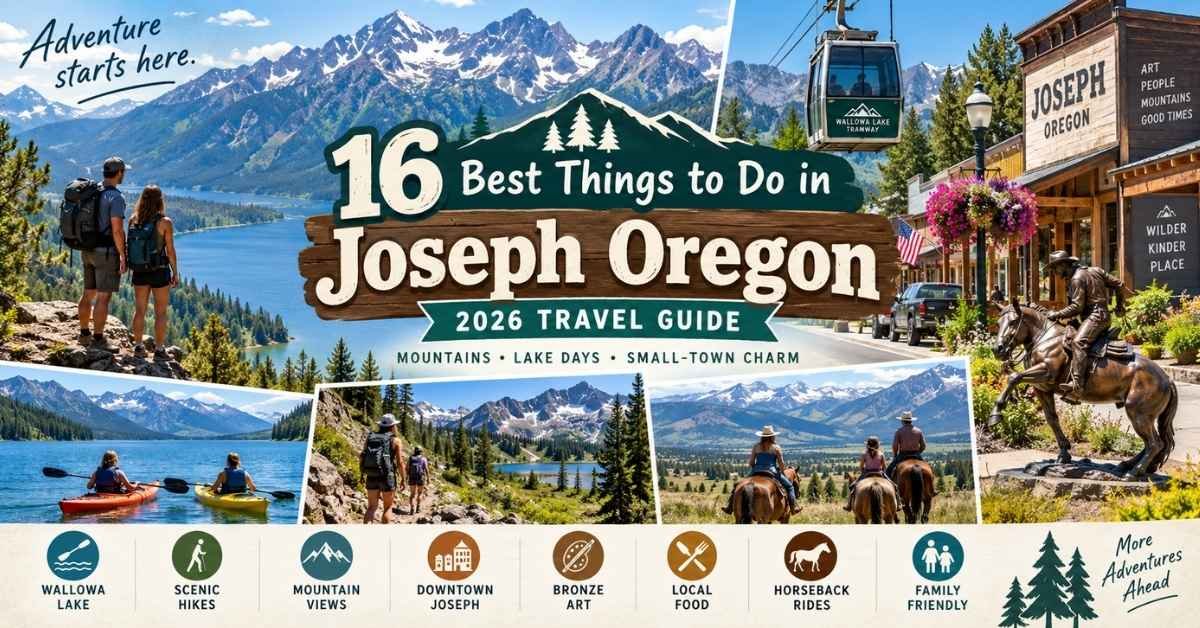
things to do in joseph oregon include riding the Wallowa Lake Tramway, exploring Wallowa Lake, walking the bronze-lined Main Street, learning about Nez Perce history, riding the Joseph Branch Railriders and hiking near the Eagle Cap Wilderness. First-time visitors should spend at least two days in Joseph, although three days is better if you want to hike or take a day trip to Hells Canyon or Zumwalt Prairie.
Joseph is a small mountain town, but the destination extends well beyond its downtown limits. Some attractions are within walking distance of Main Street, while others sit near Wallowa Lake or require a half- or full-day drive. Knowing these differences will save you from building an exhausting itinerary.
Season also matters. The tram, marina, Railriders and many local businesses operate seasonally. High-elevation trails can remain covered in snow well into summer, and forest roads may close during winter. Use this guide to choose experiences that match your available time, budget, interests and physical ability.
Joseph, Oregon at a Glance
| Experience | Best for | Time needed | Cost level | Best season | Effort |
|---|---|---|---|---|---|
| Downtown Joseph | Art, food and relaxed sightseeing | 2–3 hours | Free–$ | Year-round | Easy |
| Josephy Center | Art and rainy-day visits | 1–2 hours | Free–$ | Year-round | Easy |
| Wallowa County Museum | Local history | 1–2 hours | $ | Summer–early fall | Easy |
| Iwetemlaykin | Families, culture and easy walking | 1–2 hours | Free | Year-round | Easy |
| Wallowa Lake | Families and outdoor recreation | Half day | Free–$$ | Summer–fall | Easy |
| Wallowa Lake Tramway | Mountain views without climbing | 2–4 hours | $$$ | Mid-May–September | Easy–moderate |
| Joseph Branch Railriders | Families, couples and groups | 1–4 hours | $$–$$$ | Seasonal | Easy–moderate |
| Eagle Cap Wilderness | Hikers and backpackers | Half day–multiple days | $ | Summer–fall | Moderate–hard |
| Zumwalt Prairie | Wildlife and photography | Half/full day | Free–$ | Spring–fall | Easy |
| Hells Canyon | Scenic driving and remote landscapes | Full day | $$ | Summer–early fall | Easy physically |
Understand the Joseph and Wallowa Lake Area
A common planning mistake is assuming that every attraction described as being “in Joseph” is located inside town.
Downtown Joseph is compact and walkable. This is where you will find the bronze sculptures, galleries, Josephy Center, Wallowa County Museum, shops, restaurants and cafés.
The northern end of Wallowa Lake begins just south of Joseph. The state park, marina, campground, Wallowa Lake Village and tramway are farther south along the lake. You will need a vehicle or bicycle to move comfortably between downtown and the main recreation area.
Other places, including Enterprise, Zumwalt Prairie, Imnaha and Hells Canyon, belong to the wider Wallowa County experience. They are worthwhile, but they should not be treated as quick downtown stops.
1. Walk Joseph’s Bronze-Lined Main Street
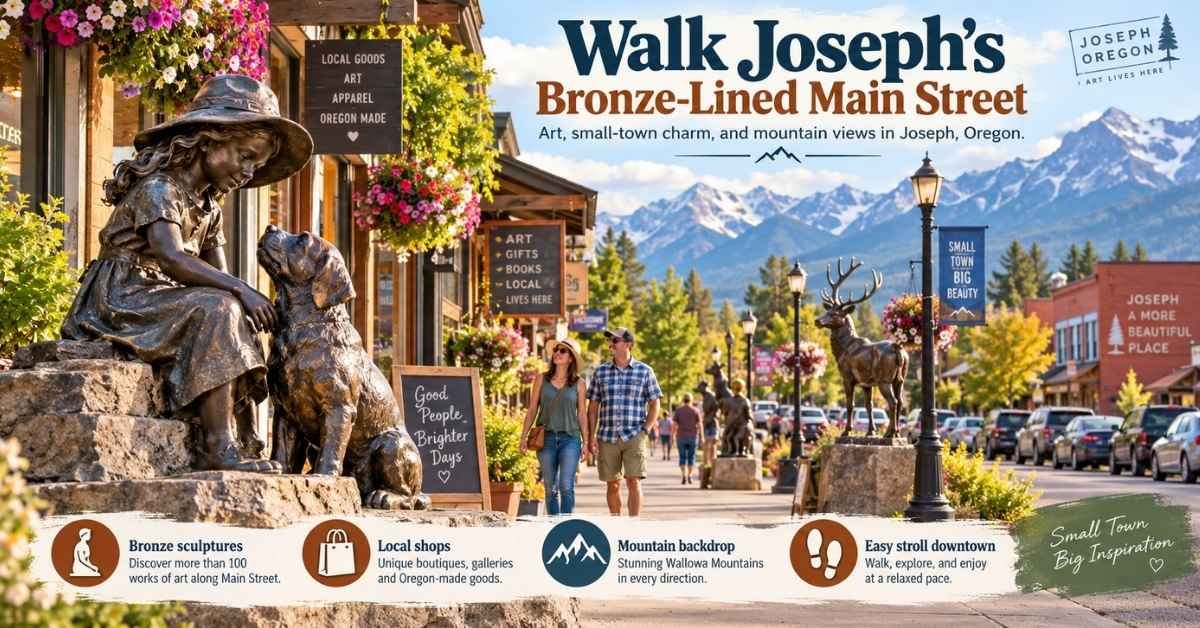
A walk along Main Street is the easiest introduction to Joseph. The town is known for its life-size bronze sculptures, which appear between local shops, galleries, cafés and historic buildings.
The self-guided Joseph Oregon Artwalk reflects the town’s connection to bronze casting and sculpture. Joseph developed a thriving art community after local foundries began operating in the area. Today, artwork depicting wildlife, Western life and regional history gives the town a visual identity that feels unusual for a community of its size.
Allow approximately two hours for a relaxed walk, longer if you plan to visit galleries or stop for lunch. Main Street is generally easy to explore on foot, although individual businesses may have different accessibility arrangements.
Look beyond the sculptures as you walk. One of downtown Joseph’s best features is the view of the Wallowa Mountains rising beyond the street. Early morning usually offers quieter sidewalks, while late afternoon can provide warmer light for photography.
The Artwalk is also one of the best free things to do in Joseph, Oregon.
2. Visit the Josephy Center for Arts and Culture
The Josephy Center for Arts and Culture explains why Joseph has become such an important creative community in northeastern Oregon.
The center presents rotating exhibitions, regional artwork, cultural programs, talks, workshops and performances. Its schedule changes, so check the current calendar rather than assuming a particular exhibition will be available.
The center is named after Alvin Josephy, a writer and historian known for his work concerning Native American history. That connection gives the institution a role beyond displaying art. It also provides a place for visitors to think more deeply about the region’s cultural landscape.
Allow one to two hours, depending on the exhibition. The Josephy Center works particularly well on a rainy afternoon, during wildfire smoke or when you need a break from strenuous outdoor activities.
Combine it with the Artwalk and Wallowa County Museum for an easy half-day downtown itinerary without repeatedly moving your car.
3. Explore the Wallowa County Museum
The Wallowa County Museum occupies the historic First Bank of Joseph building, constructed in 1888. The building was added to the National Register of Historic Places in 1978 and is an attraction in its own right.
Inside, exhibits cover different parts of Wallowa County’s human history. Collections include household objects, photographs, agricultural artifacts and material connected with the Nez Percé people. The building’s original architectural features help visitors imagine Joseph before tourism became central to its economy.
The museum normally operates from Memorial Day weekend through late September. Its posted 2026 schedule lists opening from 10 a.m. to 4 p.m., Wednesday through Monday, with Tuesday closure. Off-season visits may be arranged in advance.
Current listed admission is inexpensive: $6 for adults, $5 for seniors and active military, $2 for students aged 7–17, and free for children six and younger. Confirm these details before visiting because seasonal schedules and prices can change.
Plan for approximately 60–90 minutes.
4. Learn About the Landscape at Wallowology
If you want to understand what you are seeing outside, visit the Wallowology Natural History Discovery Center.
Its exhibits and programs focus on the geology, wildlife, ecosystems and natural history of the Wallowa region. The center helps explain the relationship among the Wallowa Mountains, Wallowa Lake, Zumwalt Prairie and Hells Canyon.
This is particularly useful for families. Children can learn why the landscape looks the way it does before encountering it on a trail, scenic drive or lake visit. Wallowology also provides an indoor alternative when heat, rain or smoke makes outdoor plans less appealing.
Hours and programs can be seasonal, so check the current schedule before building your day around it. If the center is closed, the Josephy Center and Wallowa County Museum are the strongest nearby alternatives.
5. Walk Through Iwetemlaykin State Heritage Site
Iwetemlaykin State Heritage Site is one of the most meaningful places to visit near Joseph. Its name means “at the edge of the lake,” and the 62-acre property lies between Joseph and Wallowa Lake.
The landscape includes open grassland, gentle gravel paths and expansive views toward the Wallowa Mountains. The trails are considerably easier than most Eagle Cap hikes, making this a good choice for families, non-hikers and visitors who want a peaceful walk.
Iwetemlaykin is more than a scenic recreation site. The Wallowa Valley is an ancestral homeland of the Nez Perce, or Nimiipuu, and the land continues to hold cultural and spiritual significance. Approach it as a place for reflection rather than simply another photography stop.
Stay on established paths, keep noise low and do not remove plants, stones or other objects. Read the available interpretation and allow the setting to communicate its significance.
The site is open for day use throughout the year. Most visitors need one to two hours.
6. Visit the Old Chief Joseph Gravesite Respectfully
The Old Chief Joseph Gravesite sits near the north end of Wallowa Lake, close to Iwetemlaykin. It deserves more than a hurried photograph.
Old Chief Joseph was the father of Young Chief Joseph, the Nez Perce leader widely associated with the 1877 flight toward Canada. Articles often confuse the two men or reduce their history to a few romanticized sentences. A responsible visit should recognize both the region’s deep Indigenous history and the forced removal that separated the Wallowa band from its homeland.
Keep your voice low, remain within designated areas and treat the gravesite as a place of remembrance. Avoid climbing on memorial elements or treating the location as a decorative roadside attraction.
A visit may take only 20–30 minutes, but it becomes more meaningful when paired with Iwetemlaykin and interpretation from the Nez Perce Wallowa Homeland or Josephy Center.
7. Spend Half a Day at Wallowa Lake
Wallowa Lake is the natural centerpiece of a Joseph vacation. The long alpine lake sits beneath steep mountain slopes and gives visitors access to picnicking, swimming, boating, fishing, camping and wildlife viewing.
The lake has several distinct areas:
- The north end is closest to Joseph.
- Wallowa Lake County Park provides another access point.
- Wallowa Lake State Park occupies the southern end.
- The marina, campground, village and tramway are also near the southern end.
The state park has a day-use area, beach, picnic facilities, boat access and overnight camping. A parking permit is required in the fee area. In 2026, standard Oregon State Parks day-use rates are $10 for Oregon residents and $12 for non-residents, although you should verify the current rate before arriving.
Spend at least half a day here. Bring food, layers, sun protection and water shoes. The lake remains worthwhile even if you do not rent a boat. A shoreline picnic and slow walk can be more enjoyable than trying to fit several paid activities into one afternoon.
Check current park notices before leaving town. Water levels, fire restrictions, dock access and campground services can change.
8. Kayak, Paddleboard, Swim or Fish
The best Wallowa Lake activity depends on how active you want to be and how much you want to spend.
Kayaking and paddleboarding
The marina normally offers seasonal rentals, including kayaks, canoes, paddleboards and small boats. Equipment and operating periods vary, so verify availability directly.
For a more structured experience, JO Paddle has offered guided clear-bottom kayak trips, including evening adventures using illuminated kayaks. These tours combine paddling with stories, geology, wildlife and dark-sky views. They can be particularly appealing to couples and families who want something more memorable than an hourly rental.
Swimming
You can swim in Wallowa Lake, but the water can remain surprisingly cold, even when the air feels hot. Use designated swimming areas, supervise children closely and remain aware of boat traffic.
Water shoes help on rocky or uneven shorelines. Enter gradually rather than assuming warm summer weather means warm water.
Fishing
The lake is associated with trout and kokanee, a landlocked form of sockeye salmon. Check current Oregon fishing regulations and license requirements before casting from shore or a boat.
Wear a life jacket whenever appropriate and check wind conditions before heading onto open water.
9. Ride the Wallowa Lake Tramway
The Wallowa Lake Tramway is one of the most recognizable Joseph-area attractions. Its four-person gondolas climb approximately 3,700 vertical feet from Wallowa Lake Village to Mount Howard in about 15 minutes.
From the upper terminal, visitors can enjoy expansive views across the Wallowa Valley, surrounding mountains and distant parts of Oregon, Washington and Idaho. Interpretive signs and approximately two miles of rustic summit trails help visitors explore beyond the terminal. The Summit Grill and Alpine Patio provides food when operating.
The tram typically operates from select dates in mid-May through September. Official 2026 day-pass prices are:
- Adults aged 18–64: $50
- Seniors aged 65 and older: $47
- Military with identification: $47
- Students aged 12–17: $30
- Children aged 4–11: $25
- Children three and younger: free
Hours vary by month, so check the official operating calendar.
Is the Wallowa Lake Tramway worth it?
For first-time visitors, photographers and travelers who cannot hike thousands of feet uphill, the tram usually provides strong value. However, it becomes expensive for a family, and visitors afraid of heights may find the steep ascent uncomfortable.
The lower terminal has an ADA-approved access ramp, and staff may provide boarding assistance or a loaner wheelchair. However, most summit trails are rustic dirt paths with changing slopes and are not generally suitable for wheelchairs.
If clouds obscure the summit or the tram is closed, choose Iwetemlaykin, East Moraine or a lake-level scenic day instead.
10. Ride the Joseph Branch Railriders

The Joseph Branch Railriders offers one of the most unusual things to do near Joseph. Visitors pedal four-wheeled rail bikes along sections of a historic railway through the Wallowa Valley.
The Joseph routes travel through open countryside at the base of the Wallowa Mountains. Instead of concentrating on steering, riders can follow the rails and enjoy the landscape. Joseph departures currently include electric-assist equipment, which makes the experience more manageable for different ages and fitness levels.
Trips vary in length, and Joseph is not the company’s only departure location. Some rides begin in Minam, which offers a different river-and-canyon setting. Confirm that you are booking the intended route before paying.
Ask the operator about:
- Total duration
- Minimum age or seating requirements
- Electric assistance
- Weather cancellation policies
- Pedaling expectations
- Group seating
- What to wear
Bring water, sun protection and a light layer. Even an easy rail ride can feel exposed during hot, windy or cool weather.
Reserve ahead during summer weekends and major events.
11. Choose an Easy Walk Before a Mountain Hike
Joseph has walks suitable for beginners, but “short” does not always mean easy in mountainous terrain.
The best approachable options include:
- Iwetemlaykin State Heritage Site
- Lake-level paths inside Wallowa Lake State Park
- Selected routes at East Moraine
- Short summit walks from the tram
- A partial out-and-back from a longer trailhead
Iwetemlaykin is the most dependable choice for visitors who want gentle terrain and open views. The summit paths on Mount Howard begin close to the tram, but they remain uneven and can involve slopes, exposed sections and high-elevation weather.
If you begin a longer trail, decide on a turnaround time before setting out. Carry water, navigation and a weather layer even if you intend to walk for only an hour.
Families should evaluate trails by distance, elevation gain, surface, exposure and turnaround options, not by labels such as “kid-friendly.” A trail that works for an active eight-year-old may not suit a toddler or stroller.
12. Hike Into the Eagle Cap Wilderness
The Eagle Cap Wilderness covers more than 360,000 acres of the Wallowa Mountains. It contains alpine lakes, granite peaks, forests, waterfalls and hundreds of miles of trails.
This is not one single attraction. Its routes range from moderate out-and-back walks to demanding backpacking trips requiring several days.
Hurricane Creek Trail
Hurricane Creek is a useful choice for visitors who want to experience the wilderness without immediately committing to a high alpine destination. The scenery improves as you continue, and hikers can turn around when time, weather or energy requires.
Chief Joseph Mountain Trail
This route provides mountain views relatively early, but it climbs steadily. Some visitors walk only the lower portion, while experienced hikers continue farther toward alpine terrain.
Ice Lake Trail
Ice Lake Trail is one of the region’s most photographed hikes, but it is not a casual lake walk. The round trip is roughly 15 miles with substantial elevation gain. It demands an early start, strong fitness and appropriate mountain preparation.
Maxwell Lake and longer routes
Maxwell Lake and the Wallowa River backpacking routes suit experienced hikers who have researched mileage, elevation, snow, permits and camping requirements.
Before entering the wilderness:
- Check Forest Service trail reports
- Confirm permits and parking-pass requirements
- Download offline maps
- Carry water or a treatment method
- Pack weather layers
- Store food responsibly
- Follow Leave No Trace principles
- Tell someone where you are going
- Turn back when conditions deteriorate
High-elevation snow can remain into July. Never assume that clear streets in Joseph mean clear mountain trails.
13. See the Lake from East Moraine
The East Moraine Community Forest provides a different perspective on Wallowa Lake. Rather than standing at water level, visitors can look across the lake and understand the glacial landforms surrounding it.
A moraine consists of rock and sediment left behind by a glacier. Seeing the lake from this elevated landscape makes its shape and geological setting easier to appreciate.
The area is especially rewarding for walking, landscape photography and quiet observation. Some sections can be exposed to sun and wind, so carry water and avoid the hottest part of the day during summer.
Follow posted access rules and respect adjoining property. Motorized vehicles are not allowed in the community forest. Trail conditions and entry points can change, so review the current map before setting out.
East Moraine is an excellent free alternative when you want lake views but do not plan to pay for the tram.
14. Look for Wildlife at Zumwalt Prairie
Zumwalt Prairie is one of the largest remaining areas of intact bunchgrass prairie in North America. It lies northeast of Enterprise and should be treated as a dedicated excursion rather than a quick Joseph attraction.
Visitors come for wide-open landscapes, quiet roads, wildflowers, elk and birds of prey. The area is particularly appealing to wildlife watchers, photographers and travelers who enjoy solitude.
Parts of the prairie are protected by The Nature Conservancy, while other areas remain working ranchland or private property. Stay on permitted routes, avoid blocking gates and never enter private land without permission.
Facilities are limited. Carry:
- Food and drinking water
- A full or well-supplied fuel tank
- Offline maps
- Sun and wind protection
- Binoculars
- A telephoto lens for wildlife
- Emergency supplies
Roads may be unpaved, dusty or muddy depending on conditions. The prairie rewards patience; it is less suitable for visitors expecting shops, formal attractions or constant entertainment.
15. Give Hells Canyon a Full Day
Hells Canyon appears on almost every Joseph attractions list, but it is often explained poorly. It is not a quick roadside stop.
The Hells Canyon Scenic Byway forms a long regional route, while Forest Road 39 provides seasonal access toward the Hells Canyon Overlook. Although the overlook is approximately 44 miles from Joseph, winding mountain roads make the trip considerably slower than the mileage suggests.
The overlook offers a broad canyon panorama, but you generally cannot see the Snake River from it. Visitors expecting a straight-down view to the river may feel disappointed.
Hat Point provides a different perspective and can include a distant river view, but access may involve a rougher unpaved road. Check whether your vehicle and the current conditions are suitable.
For a true river-level experience, consider a professionally guided jet-boat, rafting or fishing trip. These require more time and money but reveal a different side of Hells Canyon.
Before leaving Joseph:
- Fill your fuel tank
- Pack lunch and water
- Download offline directions
- Check Forest Road 39
- Review weather and wildfire conditions
- Leave enough daylight for the return
- Do not rely solely on mobile service
If you have only one day in Joseph, skip Hells Canyon and concentrate on downtown and Wallowa Lake.
16. Eat, Drink and Shop Locally

Joseph’s food scene is small, so quality local stops add welcome variety to an outdoor trip.
Arrowhead Chocolates is known for handcrafted chocolates and coffee. It works well before a downtown walk or as an afternoon stop after returning from the lake.
Other names commonly associated with Joseph dining include The Blythe Cricket, Embers Brewhouse and Stein Distillery. Menus, days and hours can change, especially outside summer, so check current information before arriving hungry.
In nearby Enterprise, Terminal Gravity Brewing offers another option for local beer and casual food. Remember that Enterprise is a separate town, not a downtown Joseph stop.
Joseph’s shops sell artwork, outdoor goods, gifts and locally made products. Buying from independent businesses supports an economy where seasonal tourism plays an important role.
Do not overplan every meal. Instead, select one or two priority restaurants and keep a backup option. During events such as Chief Joseph Days, restaurants and lodging can become considerably busier.
Learn More: 18 Best Things to Do in North Bend WA: Complete 2026 Guide
Best Joseph Activities for Different Travelers
| Traveler | Best choices |
|---|---|
| Families with young children | Artwalk, city park, Wallowology, Iwetemlaykin, Wallowa Lake and a shorter Railrider trip |
| Couples | Galleries, tramway, evening paddle, lake sunset and local dining |
| Non-hikers | Downtown, museums, lake viewpoints, tram, Railriders and scenic drives |
| Seniors | Artwalk, Josephy Center, museum, Iwetemlaykin and electric-assist Railriders |
| Experienced hikers | Eagle Cap Wilderness, Ice Lake and longer backcountry routes |
| Budget travelers | Downtown sculptures, Iwetemlaykin, East Moraine, lake access and self-guided photography |
| Photographers | Main Street, East Moraine, Mount Howard, Zumwalt Prairie and Wallowa Lake |
| Winter visitors | Galleries, quiet downtown, snowshoeing, Nordic skiing and Ferguson Ridge |
How to Spend One Day in Joseph
A one-day visit should focus on Joseph and Wallowa Lake rather than distant regional excursions.
Morning: Downtown Joseph
Start with coffee and walk the Joseph Oregon Artwalk. Visit the Josephy Center or Wallowa County Museum, depending on current hours.
Midday: Indigenous History and Landscape
Drive south to Iwetemlaykin and the Old Chief Joseph Gravesite. Give these places appropriate time and attention rather than treating them as rushed roadside stops.
Afternoon: Wallowa Lake
Continue to Wallowa Lake State Park. Choose the tramway, a boat rental or a relaxed shoreline visit.
Evening: Return to Joseph
Have dinner downtown or book an evening paddling experience when available.
This itinerary works because the route moves naturally south from downtown instead of repeatedly crossing the area.
Two Days in Joseph and Wallowa Lake
Day One: Art, History and the Lake
- Downtown Artwalk
- Josephy Center
- Wallowa County Museum
- Iwetemlaykin
- Wallowa Lake
- Tramway or lake-level alternative
Day Two: Choose One Main Adventure
Select one activity based on your interests:
- Joseph Branch Railriders
- Hurricane Creek or another moderate hike
- Kayaking or paddleboarding
- East Moraine and Enterprise
- Zumwalt Prairie
Avoid scheduling two distant excursions on the same day. A slower itinerary leaves space for changing weather, limited restaurant hours and unplanned stops.
Three-Day Joseph Outdoor Itinerary
Day One: Joseph Orientation
Explore downtown, visit local cultural attractions and spend the afternoon at Wallowa Lake.
Day Two: Wallowa Mountains
Choose an Eagle Cap Wilderness hike suitable for your fitness and current trail conditions. Non-hikers can ride the tram and explore lake-level paths.
Day Three: Regional Excursion
Dedicate your last day to Hells Canyon, Zumwalt Prairie or the Railriders. Do not attempt to combine all three.
Best Time to Visit Joseph, Oregon
Spring
Spring brings fewer visitors, green landscapes, snowmelt and cold evenings. Lower-elevation walks may be available while high trails remain snow-covered. Some seasonal businesses will not yet be open.
Spring can be good for rafting, photography and quiet downtown visits, but flexibility is essential.
Summer
Summer provides the broadest access to Wallowa Lake activities, the tramway, Railriders and mountain trails. July through September is usually the most dependable period for high-elevation hiking.
This is also the busiest season. Reserve campsites and lodging early, especially around holidays and Chief Joseph Days. Check for wildfire smoke and fire restrictions before traveling.
Fall
Early fall can offer clear days, cooler temperatures and fewer crowds. September is especially attractive because many summer operations may still be running.
By October, businesses can reduce their hours, the tram season ends and snow may affect higher roads or trails. Confirm everything before making the long drive.
Winter
Winter transforms Joseph into a quieter mountain destination. Potential activities include snowshoeing, Nordic skiing, snowmobiling and skiing at Ferguson Ridge when conditions and operations permit.
Expect limited business hours and reduced park services. Carry winter-driving equipment and check road conditions.
Do not assume that Wallowa Lake is safe for walking, skating or cycling simply because its surface appears frozen. Only consider ice activity when qualified local authorities have confirmed safe conditions.
Where to Stay: Downtown Joseph or Wallowa Lake?
Stay in downtown Joseph if you want:
- Walkable restaurants and shops
- Easy access to galleries and museums
- A small-town evening atmosphere
- Less driving after dinner
Downtown works particularly well for couples, first-time visitors and travelers visiting outside the main lake season.
Stay near Wallowa Lake if you want:
- Early access to the water
- Proximity to the tramway
- Camping, cabins or yurts
- Easier access to Eagle Cap trailheads
- Quiet evenings near the mountains
The lake area is ideal for families, campers and outdoor-focused visitors.
Consider Enterprise if you want:
- Additional services and dining
- Alternative accommodation
- A central base for exploring Wallowa Valley
- Easier access to Zumwalt Prairie
What Should You Book First?
Reserve experiences in this order:
- Accommodation or campsite
- Joseph Branch Railriders
- Guided kayaking or paddling
- Tramway tickets for busy dates
- Rafting, fishing or horseback guides
- Special-event tickets
- Important restaurant reservations
Wallowa Lake State Park reservations can fill well ahead of summer weekends. Event periods require even earlier planning.
Leave space for spontaneous activities such as the Artwalk, galleries, heritage walks and shoreline time.
Practical Tips for Visiting Joseph
Driving to Joseph
Most visitors arrive by car using Oregon Route 82 through La Grande and Enterprise. Approximate driving times are:
- Portland: around 5½ hours
- Boise: around 4 hours
- La Grande: around 1½ hours
- Lewiston: around 2 hours, depending on route and conditions
Rattlesnake Grade is scenic but winding. Drivers uncomfortable with steep or curving roads should allow extra time and avoid rushing.
Fuel and supplies
Joseph has essential services, but selection is smaller and prices may be higher than in larger towns. Buy specialized hiking supplies and major groceries before entering the most remote parts of the trip.
Fill your tank before driving toward Hells Canyon, Hat Point or Zumwalt Prairie.
Mobile service and navigation
Do not assume reliable mobile service in mountain, prairie or canyon areas. Download:
- Offline maps
- Accommodation details
- Activity confirmations
- Trail information
- Emergency contacts
Wallowa Lake State Park does not provide public Wi-Fi.
Weather and wildfire conditions
Before leaving, check:
- Oregon State Parks notices
- ODOT TripCheck
- National Weather Service
- Wallowa-Whitman National Forest
- AirNow
- InciWeb
- Wallowa County emergency information
A clear forecast for Joseph does not guarantee similar weather on Mount Howard or inside the Eagle Cap Wilderness.
What to pack
Bring:
- Layered clothing
- Rain and wind protection
- Sun hat and sunscreen
- Refillable water bottle
- Hiking shoes
- Water shoes
- Insect repellent
- Portable battery
- Offline maps
- Food for remote drives
- Winter traction equipment when appropriate
Accessibility and Safety
Downtown Joseph is compact, but individual buildings may have steps or older entrances. Confirm accessibility directly when a particular museum, lodging property or restaurant is essential to your visit.
Iwetemlaykin has gradual gravel trails, but gravel can still present challenges for some mobility devices. The tram’s lower terminal has accessible boarding provisions, while most summit paths remain uneven and unsuitable for wheelchairs.
At the lake:
- Use designated swimming areas
- Wear life jackets when boating
- Supervise children closely
- Expect cold water
- Watch changing wind
- Stay clear of boat traffic
On trails:
- Carry navigation
- Start early
- Treat water
- Pack additional layers
- Check snow and wildfire conditions
- Store food appropriately
- Turn around before weather becomes dangerous
Is Joseph, Oregon Worth Visiting?
Joseph is worth visiting if you enjoy mountain scenery, local art, Indigenous history, outdoor recreation and quiet small-town travel. Its strongest appeal comes from the combination of a walkable creative town and immediate access to Wallowa Lake and the Wallowa Mountains.
It may be less suitable for travelers seeking nightlife, extensive shopping, luxury-resort services or tightly scheduled entertainment.
Spend two days for downtown, cultural sites and Wallowa Lake. Plan three or more days if you want to hike, paddle, ride the Railriders or explore Hells Canyon and Zumwalt Prairie.
Frequently Asked Questions
What is Joseph, Oregon best known for?
Joseph is known for the Wallowa Mountains, Wallowa Lake, bronze sculptures, art galleries, Chief Joseph history and access to the Eagle Cap Wilderness. The town is sometimes called Oregon’s Little Switzerland because of its mountain setting.
How many days do you need in Joseph?
Most first-time visitors need two or three days. One day is enough for downtown and Wallowa Lake, but it leaves little time for hiking or regional excursions.
Is Wallowa Lake in Joseph?
Wallowa Lake is immediately south of Joseph. The lake’s north end is close to town, while Wallowa Lake State Park, the marina, village and tramway are farther south.
When is the best time to visit Joseph?
July through September offers the most dependable access to high-elevation hiking and seasonal attractions. June can be excellent for lake activities, although snow may remain on mountain trails. Early fall offers fewer crowds but reduced operating schedules.
Is the Wallowa Lake Tramway worth the price?
The tram is usually worth it for first-time visitors who want high mountain views without a strenuous climb. Budget travelers and large families may prefer the free views from East Moraine or Iwetemlaykin.
What can you do in Joseph without hiking?
Non-hiking activities include the Main Street Artwalk, Josephy Center, Wallowa County Museum, Wallowology, tramway, Railriders, Wallowa Lake, scenic drives, shopping and local dining.
What are the best free things to do in Joseph?
The best free activities include:
- Walking the Joseph Artwalk
- Visiting Iwetemlaykin
- Seeing the Old Chief Joseph Gravesite
- Exploring lake viewpoints
- Walking in East Moraine
- Browsing local galleries
- Enjoying self-guided photography
Some locations may charge for parking even when admission is free.
Can you swim in Wallowa Lake?
Yes, but the water can remain cold. Use designated swimming areas, wear water shoes and supervise children carefully.
Is Joseph suitable for families?
Yes. Family-friendly activities include Wallowa Lake, the city park, Wallowology, easy heritage walks, shorter Railrider trips and the tramway. Always check age, seating and safety requirements before booking.
What is open in Joseph during winter?
Downtown businesses, galleries and lodging may remain available, but hours can be reduced. Winter recreation can include skiing at Ferguson Ridge, snowshoeing and Nordic skiing. The tramway and many lake services normally close for winter.
Can you visit Hells Canyon from Joseph in one day?
Yes, but it should be a dedicated full-day trip. Check seasonal roads, fill your fuel tank and carry offline directions. Do not combine it with a full Joseph and Wallowa Lake itinerary.
Do you need reservations in Joseph?
Reservations are strongly recommended for summer lodging, Wallowa Lake camping, Railriders, guided paddling and special events. Downtown walking, heritage sites and many scenic viewpoints do not require reservations.
Is downtown Joseph walkable?
Yes. Most downtown shops, galleries, sculptures and museums are within a compact area. Allow two or three hours for a relaxed visit.
Are dogs allowed near Wallowa Lake?
Dogs are allowed in many outdoor areas when leashed, but regulations vary by park, trail, lodging property and business. Confirm current rules and always remove pet waste.
Final Planning Checklist
Before your trip:
- Choose activities appropriate for the season
- Confirm tramway and Railrider schedules
- Reserve accommodation
- Select only one major excursion per day
- Check trail and forest-road conditions
- Review state park notices
- Download offline maps
- Check weather, wildfire smoke and air quality
- Pack layers, food and water
- Keep a flexible backup plan
Joseph rewards travelers who slow down. Choose one signature experience, one quiet local activity and one flexible alternative for each day. That approach gives you time to appreciate the art, history and mountain landscape rather than simply racing through a list of attractions.










2 thoughts on “16 Best Things to Do in Joseph Oregon (2026 Travel Guide)”