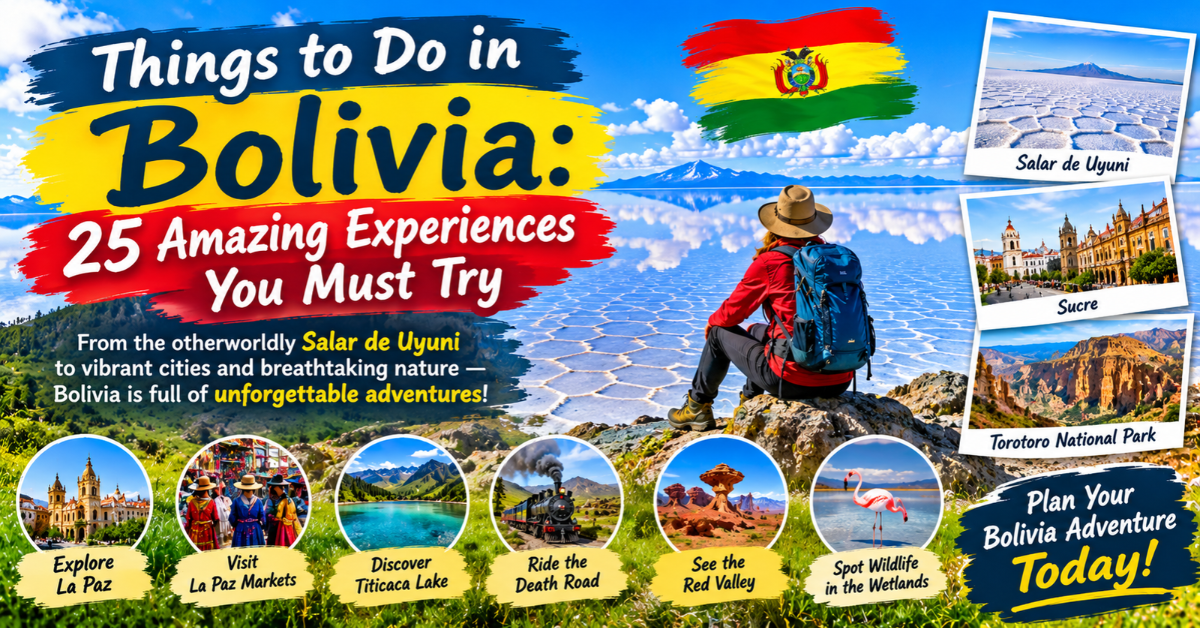
things to do in Bolivia range from exploring the enormous white salt flats of Salar de Uyuni and riding the famous cable cars of La Paz to discovering ancient civilizations, hiking through the Andes, and spotting wildlife in the Amazon rainforest. Bolivia is one of South America’s most geographically diverse destinations, offering experiences that feel completely different from one region to another.
Some travelers come for the surreal landscapes of the Altiplano, while others want to explore colonial cities, experience traditional Andean culture, or escape into remote rainforests. The country has something for almost every travel style, but choosing where to go can be challenging. Distances are considerable, altitude can affect your plans, and the best time to visit depends on the experiences you want.
This guide covers the best things to do in Bolivia, from famous attractions to less-visited cultural and natural destinations. You will also find practical advice on transportation, costs, seasonal conditions, safety, and how much time to spend in each region. Whether you are planning your first South American adventure or returning to explore beyond the usual tourist route, these experiences will help you make the most of your trip.
The 25 Best Things to Do in Bolivia
Bolivia rewards travelers who look beyond its most famous landmarks. Its landscapes change dramatically between the high Andes, the tropical lowlands, the Amazon basin, and historic cities. The following experiences combine the country’s essential attractions with opportunities to understand its culture, history, and natural environment.
1. Explore the Otherworldly Salar de Uyuni
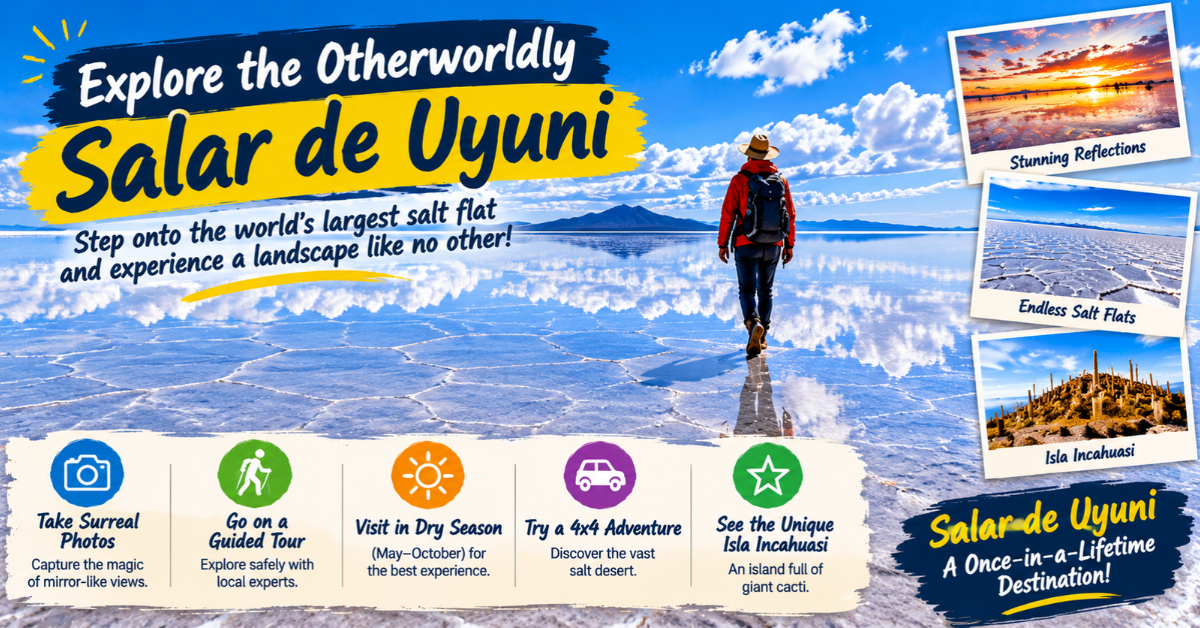
Visiting Salar de Uyuni is one of the most unforgettable things to do in Bolivia. Covering an enormous area of the southwestern Altiplano, this remarkable salt flat looks almost endless. Its bright white surface stretches toward distant mountains, creating a landscape that can make it difficult to judge distance or perspective.
The experience changes dramatically with the seasons. During parts of the rainy season, a thin layer of water can cover the salt crust and reflect the sky. This creates the famous mirror effect, making the horizon appear to disappear. During the dry season, the surface is generally more exposed, revealing distinctive polygonal salt patterns that are excellent for photography.
A typical visit may include several memorable stops:
- Isla Incahuasi: A rocky island rising from the salt flat, known for its giant cacti and panoramic views.
- Salt formations: Explore the geometric patterns created as the surface dries.
- Salt hotels: See buildings and structures made using blocks of salt.
- Train Cemetery: Visit the historic railway remains near Uyuni, often included in local excursions.
- Sunset viewpoints: Watch the changing colors across the vast white landscape.
Travelers can choose a one-day Salar de Uyuni tour or a longer 4×4 expedition through the surrounding high-altitude desert. Multi-day trips may also include colorful lagoons, flamingos, volcanic scenery, and the Eduardo Avaroa Andean Fauna National Reserve.
Practical tips: Choose a tour based on its route, vehicle condition, guide quality, accommodation, meals, and included stops rather than price alone. Bring sunglasses, sunscreen, warm layers, and a camera. If the mirror effect is your priority, check recent local conditions before booking because water coverage varies.
Best for: Photographers, couples, nature lovers, adventure travelers, and anyone visiting Bolivia for the first time.
2. Ride the Cable Cars Across La Paz
La Paz is unlike many other capital cities. Built into a dramatic Andean valley, it is surrounded by steep hills and high-altitude landscapes. One of the best ways to appreciate its unusual geography is by riding Mi Teleférico, the city’s extensive urban cable car network.
The cable cars are more than a tourist attraction. They form an important part of public transportation, connecting different neighborhoods and linking La Paz with the neighboring city of El Alto. As the cabins move above the city, passengers get impressive views of rooftops, busy streets, markets, and distant mountain peaks.
For visitors, the ride offers a convenient introduction to the city’s layout. It also provides a different perspective on everyday life in Bolivia, particularly when traveling between central areas and the higher neighborhoods.
After your ride, consider exploring:
- Plaza Murillo: An important central square surrounded by historic buildings.
- Mercado de las Brujas: A traditional market known for medicinal herbs, spiritual objects, and ceremonial offerings.
- Valle de la Luna: An unusual landscape of eroded clay formations outside the city center.
- El Alto: A neighboring urban area with its own markets, viewpoints, and cultural identity.
Practical tips: Check current operating information and ticket arrangements before traveling. Take time to adjust to the altitude before combining cable car sightseeing with strenuous walking. Clear weather generally offers better mountain views, although conditions can change quickly.
Best for: First-time visitors, photographers, budget-conscious travelers, and anyone interested in urban culture.
3. Discover Lake Titicaca and Isla del Sol
High in the Andes, Lake Titicaca is one of South America’s most remarkable natural landmarks. Its deep blue water, mountain backdrop, and traditional lakeside communities create an atmosphere very different from the busy streets of La Paz.
One of the most popular ways to explore the Bolivian side of the lake is to travel to Copacabana and take a boat toward Isla del Sol. The island is associated with Inca traditions and offers scenic walking routes, archaeological remains, and views across the lake.
Visitors can spend time exploring the island’s traditional settlements, enjoying the peaceful surroundings, and learning about the cultural importance of the region. Those with additional time may also look into Isla de la Luna, another island with historical associations.
The experience is not only about sightseeing. Walking through the island’s paths and small communities offers a glimpse into the relationship between local life, the lake, and the surrounding Andean environment.
Things to do around Lake Titicaca include:
- Take a boat trip from Copacabana.
- Explore the walking routes on Isla del Sol.
- Visit local archaeological and cultural sites.
- Enjoy fresh trout and other regional food.
- Photograph the lake and surrounding mountains.
- Learn about traditional Andean beliefs and local history.
Practical tips: Boat schedules can vary, so check departure and return arrangements before setting out. Bring sun protection, water, and comfortable walking shoes. Remember that the lake is at high altitude, and even a relatively easy walk can feel tiring if you have not acclimatized.
Best for: Cultural travelers, couples, hikers, photographers, and visitors looking for a slower-paced experience.
4. Explore the Amazon Rainforest in Madidi National Park
Bolivia is not all mountains and dry highland landscapes. In the country’s northern lowlands, Madidi National Park protects an extraordinary range of tropical ecosystems. It is one of the most exciting destinations for travelers interested in rainforest biodiversity, wildlife, and conservation.
The park’s environments include tropical forests, rivers, and areas that change with elevation. This variety supports an impressive range of plants, birds, mammals, and other wildlife. A guided excursion offers a better chance of understanding the ecosystem than simply entering the forest without local knowledge.
Many travelers use Rurrenabaque as a gateway for organized excursions into the region. Depending on the itinerary, visitors may travel by river, walk through forest trails, observe birds, and learn about traditional uses of rainforest plants.
Wildlife sightings are never guaranteed, which is part of the reality of visiting a natural environment. A responsible guide can explain animal behavior, habitat protection, and the importance of conservation.
What to expect:
- Guided rainforest walks.
- Birdwatching and wildlife observation.
- River journeys through tropical landscapes.
- Opportunities to learn about local ecosystems.
- Community-based tourism and conservation experiences.
Practical tips: Pack lightweight clothing, insect repellent, waterproof protection, and comfortable footwear. Ask tour operators about group size, accommodation, environmental practices, and the activities included. Allow enough travel time to reach the region rather than treating an Amazon excursion as a quick side trip.
Best for: Wildlife enthusiasts, nature photographers, birdwatchers, and travelers interested in ecotourism.
5. Visit the Red and Green Lagoons of Eduardo Avaroa National Reserve
The Eduardo Avaroa Andean Fauna National Reserve is one of Bolivia’s most spectacular high-altitude destinations. Located in the country’s southwestern region, it is known for colorful lagoons, flamingos, volcanic landscapes, and remote desert scenery.
One of its best-known attractions is Laguna Colorada, a striking red-toned lake where flamingos can often be seen feeding in the shallow water. The lagoon’s appearance changes with light, weather, and natural conditions, creating a landscape that feels almost unreal.
Another major highlight is Laguna Verde, famous for its greenish color and dramatic mountain setting. The wider reserve also contains geysers, hot springs, unusual rock formations, and vast open landscapes.
Many visitors explore this region as part of a multi-day 4×4 journey from Uyuni. Combining the reserve with Salar de Uyuni makes sense because the attractions form part of a wider high-altitude travel route.
Highlights include:
- Photographing flamingos at Laguna Colorada.
- Visiting Laguna Verde.
- Exploring volcanic and desert landscapes.
- Seeing geysers and geothermal activity.
- Experiencing the remote scenery of the southwestern Altiplano.
Practical tips: The region is extremely high, and temperatures can drop sharply, especially at night. Bring warm clothing, sun protection, and any personal medication you may need. Choose an experienced operator and discuss altitude, accommodation, and road conditions before departure.
Best for: Landscape photographers, wildlife lovers, and travelers seeking remote natural scenery.
6. Cycle the Famous Death Road
For adventure seekers, cycling the North Yungas Road, commonly known as Death Road, is one of the most famous activities in Bolivia. The route has a dramatic reputation because of its steep terrain, narrow sections, and history of dangerous road conditions.
Today, guided mountain-biking excursions allow visitors to experience sections of the route as an adventure activity. The journey typically descends from high-altitude mountain scenery toward greener, more humid landscapes.
The changing environment is part of what makes the experience memorable. At the beginning, riders may encounter cold mountain air and wide views. As the route descends, the surroundings become increasingly green and tropical.
However, this is not an activity to book casually. The quality of the operator, the condition of the bicycle, the guide’s experience, and the safety briefing all matter.
Before booking, check:
- Whether helmets and protective equipment are provided.
- The condition and maintenance of the bicycles.
- The experience and training of the guides.
- The operator’s emergency procedures.
- What the tour includes and excludes.
- Whether your fitness and cycling experience are suitable.
Practical tips: Do not choose a tour simply because it is the cheapest. Follow your guide’s instructions, ride within your ability, and avoid taking unnecessary risks for photographs. Travelers who are uncomfortable with steep downhill cycling can enjoy other mountain experiences instead.
Best for: Confident cyclists, adventure enthusiasts, and travelers looking for an active experience.
7. Wander Through the Historic Streets of Sucre
Often admired for its white colonial buildings and relaxed atmosphere, Sucre is one of the most appealing cities to visit in Bolivia. Its historic center is a UNESCO World Heritage Site and provides a fascinating introduction to the country’s colonial history and independence movement.
Unlike the high-energy streets of La Paz, Sucre often feels more relaxed. Visitors can spend hours walking through its plazas, exploring churches, visiting museums, and stopping at cafés.
One of the city’s most important landmarks is Casa de la Libertad, where visitors can learn about the events surrounding Bolivia’s independence. The building provides valuable historical context for understanding the country’s political development.
Other experiences worth including are:
- Exploring the historic central streets.
- Visiting museums and colonial churches.
- Enjoying traditional Bolivian food.
- Exploring local markets.
- Spending time in the city’s plazas and cafés.
Practical tips: Sucre is a good destination for travelers who enjoy walking and cultural sightseeing. Give yourself enough time to explore beyond the main square, and consider a guided historical walk if you want a deeper understanding of the city’s architecture and history.
Best for: History enthusiasts, architecture lovers, couples, and travelers who enjoy relaxed city exploration.
8. Discover Potosí and the History of Cerro Rico
The historic city of Potosí offers a very different experience from Bolivia’s natural attractions. Its history is closely connected to Cerro Rico, the mountain whose silver deposits played a major role in the Spanish colonial economy.
For centuries, silver mining shaped the city’s wealth, architecture, and social structure. The story of Potosí is also a difficult one, involving forced labor, exploitation, and the human cost of colonial extraction. Understanding this history makes a visit more meaningful than simply viewing the city’s old buildings.
A major attraction is the Casa Nacional de la Moneda, a historic mint where visitors can learn about silver processing, currency production, and the city’s economic importance.
Travelers may also encounter tours that explore the mining heritage of Cerro Rico. These experiences require careful consideration because working mines can involve difficult conditions and safety concerns.
Practical tips: Potosí sits at a very high elevation. Allow time to acclimatize, avoid rushing into strenuous activities, and research the safety and ethical implications of any mine visit. A museum visit and guided historical tour can provide valuable context without requiring an underground excursion.
Best for: History enthusiasts, cultural travelers, and visitors interested in colonial-era South America.
9. Step Back in Time at Tiwanaku
Long before the Inca Empire became dominant in the Andes, the Tiwanaku civilization developed an influential cultural and political center near Lake Titicaca. Today, the archaeological site of Tiwanaku is one of Bolivia’s most important historical destinations.
The ruins include ceremonial structures, carved stone monuments, and remains that reveal the sophistication of the ancient society. The famous Gate of the Sun is among the site’s best-known features.
A visit offers more than an opportunity to photograph old stones. It provides a chance to understand how ancient Andean communities organized religious life, architecture, agriculture, and regional exchange.
Tiwanaku is commonly visited on a day trip from La Paz, making it a useful addition to a highland itinerary.
Practical tips: Consider hiring a knowledgeable guide or using reliable interpretive resources. The site’s historical importance is easier to appreciate when you understand its relationship with the wider Andean world. Bring sun protection and water, as the high-altitude environment can be exposed.
Best for: Archaeology enthusiasts, history lovers, and travelers interested in pre-Columbian civilizations.
10. Walk Among the Unusual Formations of Valle de la Luna
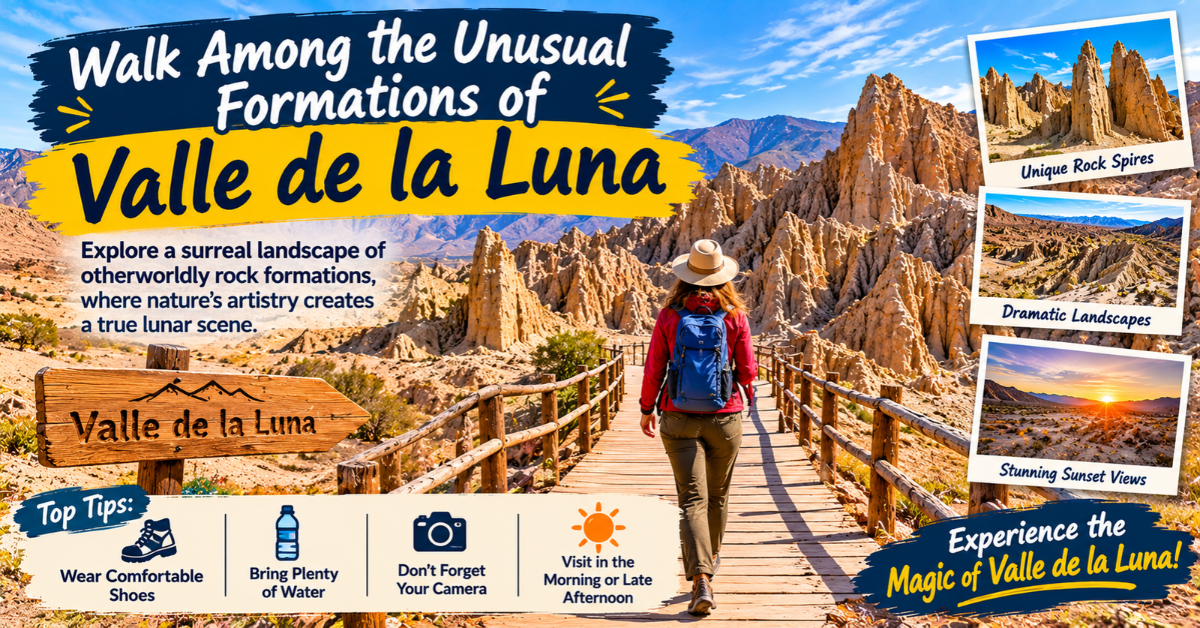
Just outside La Paz, Valle de la Luna, or Moon Valley, is known for its unusual formations of eroded clay and sandstone. The landscape contains pointed formations, narrow paths, and ridges shaped by natural erosion.
It is a relatively accessible excursion for visitors staying in La Paz and offers a striking contrast with the city’s crowded streets. Walking along the designated paths allows visitors to see the formations from different angles and understand how wind and water have gradually shaped the terrain.
The site is particularly appealing to photographers because the changing light can emphasize the textures and shadows across the landscape.
Practical tips: Wear comfortable walking shoes, stay on marked routes, and check local access information before visiting. The excursion does not usually require a full day, so it can be combined with other activities around La Paz.
Best for: Photographers, casual walkers, families, and travelers with limited time.
11. Experience Wildlife and River Excursions Around Rurrenabaque
The small town of Rurrenabaque is an important gateway to Bolivia’s tropical lowlands. It is particularly popular with travelers planning excursions into rainforest and river environments.
Depending on the tour, visitors may explore forest trails, travel along rivers, or visit wetland areas often associated with pampas-style wildlife excursions. These experiences offer a different perspective on Bolivia from the high-altitude destinations most first-time visitors recognize.
Wildlife enthusiasts may have opportunities to observe birds, monkeys, caimans, and other animals in their natural habitats. Sightings depend on the season, location, and conditions, so a responsible operator should never promise guaranteed encounters.
Practical tips: Compare rainforest and pampas excursions before booking. They offer different environments and experiences. Ask about transport arrangements, accommodation, group sizes, wildlife practices, and what happens if weather disrupts the itinerary.
Best for: Nature lovers, wildlife photographers, and travelers interested in Bolivia’s tropical ecosystems.
12. Explore the Historic Jesuit Missions of Chiquitos
Eastern Bolivia offers a different kind of cultural experience through the Jesuit Missions of Chiquitos. These historic settlements are known for their distinctive church architecture and their place in the complex history of religious missions and local communities.
The churches combine European architectural influences with regional craftsmanship, creating buildings that reflect the cultural interactions of the colonial period. The wider region is also associated with a musical heritage that continues to attract cultural visitors.
Exploring the missions can involve traveling between several towns, so this experience is best suited to travelers with time to explore eastern Bolivia rather than those on a very short trip.
Practical tips: Plan transport and accommodation in advance, particularly if you want to visit multiple settlements. A local guide can help explain the architectural details and the history behind the missions.
Best for: Architecture lovers, history enthusiasts, and travelers seeking cultural experiences beyond the main tourist circuit.
13. Visit El Fuerte de Samaipata
Near the pleasant town of Samaipata lies El Fuerte de Samaipata, an archaeological site recognized for its monumental carved rock. The complex reflects a long history of cultural use and contains features associated with different pre-Columbian societies.
Its enormous carved stone surface is the main attraction. The site also offers a chance to understand how the region connected different cultural traditions and geographic areas.
Samaipata itself makes a worthwhile base for exploring the surrounding countryside. Its location provides a contrast with Bolivia’s high-altitude plateau, and travelers can enjoy a slower pace after visiting larger cities.
Practical tips: Check transport options and site access before traveling. Wear comfortable shoes and allow enough time to explore the archaeological area rather than treating it as a quick photo stop.
Best for: Archaeology enthusiasts, cultural travelers, and visitors interested in lesser-known historic places.
14. Relax in Copacabana and Enjoy the Lakefront
Situated on the Bolivian shore of Lake Titicaca, Copacabana is a popular stop for travelers heading toward Isla del Sol. It is also worth exploring in its own right.
The town has a relaxed lakeside atmosphere, with restaurants, markets, accommodation, and views across the water. Its most prominent landmark is the Basilica of Our Lady of Copacabana, an important religious site that attracts both visitors and pilgrims.
Spend some time walking along the waterfront, trying local trout dishes, and exploring the town’s streets. If you have additional time, Copacabana can serve as a comfortable base for boat excursions to nearby islands.
Practical tips: Check boat departure times before planning an island visit. Give yourself enough time to return, especially if you are connecting to onward transport. The town’s altitude can also make physical activity more tiring than expected.
Best for: Couples, cultural travelers, relaxed explorers, and Lake Titicaca visitors.
15. Experience Traditional Life at Tarabuco Market
For travelers interested in traditional culture, Tarabuco Market offers a memorable opportunity to see regional textiles, handicrafts, clothing, and everyday commerce.
Located within reach of Sucre, Tarabuco is particularly known for its cultural heritage and traditional weaving. The market provides an opportunity to learn about local craftsmanship and the importance of textiles in regional identity.
Rather than treating the market as simply a shopping stop, take time to observe how people interact, how products are made, and how local traditions are represented through clothing and design.
Practical tips: Confirm the market day and local transport arrangements before traveling. Ask permission before photographing people, and consider purchasing directly from artisans when possible. Respectful interaction makes cultural visits more rewarding.
Best for: Cultural travelers, photographers, shoppers, and visitors interested in traditional craftsmanship.
16. Discover Bolivia’s Remote Altiplano Landscapes
The Altiplano is one of the defining landscapes of Bolivia. This vast high plateau contains open plains, mountains, salt flats, volcanic formations, and remote communities. Traveling through it can feel like moving between different worlds.
The region is especially rewarding for travelers who enjoy dramatic scenery and wide-open spaces. Depending on the route, you may encounter llamas, alpacas, vicuñas, small settlements, and landscapes shaped by extreme altitude and changing weather.
The Altiplano is not a single attraction but a wider geographical experience. It connects many of Bolivia’s best-known destinations, including Uyuni, the colorful lagoons, and parts of the Andean highlands.
Practical tips: Remote travel requires preparation. Carry water, warm clothing, sun protection, and essential supplies. Use reliable transport and avoid assuming that services will be available in isolated areas.
Best for: Landscape photographers, road-trip enthusiasts, and travelers interested in remote nature.
17. Explore Sajama National Park
Sajama National Park is a rewarding destination for travelers who want to explore Bolivia’s high-altitude wilderness. The park is home to Nevado Sajama, the country’s highest mountain, as well as volcanic landscapes, highland wetlands, and distinctive Andean ecosystems.
Visitors can enjoy mountain scenery, observe wildlife, explore traditional settlements, and visit natural hot springs. The park also provides opportunities to understand how communities live in an environment shaped by cold temperatures, altitude, and limited resources.
This destination is less convenient than attractions close to La Paz, so it is best suited to travelers with enough time to plan a dedicated excursion.
Practical tips: Acclimatize before attempting strenuous walks or climbing activities. Check road conditions and accommodation availability, and consider a local guide for remote routes.
Best for: Hikers, nature enthusiasts, photographers, and travelers seeking quieter destinations.
18. Discover Santa Cruz and Its Tropical Side
Santa Cruz de la Sierra offers a different experience from Bolivia’s Andean cities. Located in the eastern lowlands, it has a warmer climate, a lively urban atmosphere, and a strong connection to the country’s tropical regions.
The city is a useful place to experience regional food, explore markets, and understand another side of Bolivian life. Visitors can spend time around its central square, discover local restaurants, and use the city as a gateway to nearby destinations.
Santa Cruz also works as a contrast to high-altitude travel. After spending time in La Paz or the Altiplano, its lower elevation and warmer conditions can feel like a significant change.
Practical tips: Consider the climate when planning activities, especially during hotter or wetter periods. If you are using Santa Cruz as a transport gateway, leave enough time for connections.
Best for: Food lovers, urban explorers, and travelers interested in eastern Bolivia.
19. See the Prehistoric Footprints at Cal Orck’o
Near Sucre, Cal Orck’o is one of Bolivia’s most unusual attractions. This site is famous for its extensive dinosaur footprints preserved on a limestone wall, offering a fascinating glimpse into prehistoric life.
The footprints are associated with the region’s geological history and have made the site an important destination for visitors interested in paleontology. The nearby Cretaceous Park provides additional educational context and makes the visit more accessible to families.
It is a particularly interesting stop for travelers who want something different from colonial architecture, mountain scenery, and archaeological ruins.
Practical tips: Check current visiting arrangements and guided tour availability. An interpretive visit can help explain how the footprints were preserved and why the site is scientifically significant.
Best for: Families, science enthusiasts, and travelers interested in prehistoric history.
20. Taste Traditional Bolivian Food and Explore Local Markets
Food is one of the most enjoyable ways to experience Bolivia’s regional identity. Traditional dishes vary across the country, reflecting differences in climate, local ingredients, and cultural influences.
One popular snack is the salteña, a baked pastry filled with a savory mixture. Other foods worth trying include anticuchos, regional soups, and local potato-based dishes. In highland areas, markets often provide a good introduction to everyday ingredients and traditional cooking.
Exploring local markets in La Paz, Sucre, and other cities can be just as interesting as visiting formal attractions. You can discover seasonal produce, regional specialties, traditional drinks, and handmade products.
Food experiences to look for include:
- Salteñas for a popular local snack.
- Anticuchos, commonly served as street food.
- Regional soups and traditional highland dishes.
- Fresh trout around Lake Titicaca.
- Local drinks such as api, often enjoyed with pastries.
Practical tips: Choose busy food stalls with good food turnover, pay attention to food hygiene, and use safe drinking water. If you have dietary restrictions, learn a few useful Spanish phrases before visiting local restaurants.
Best for: Food lovers, budget travelers, and anyone interested in everyday Bolivian culture.
21. Discover the Witches’ Market in La Paz
The Witches’ Market, or Mercado de las Brujas, is one of La Paz’s most distinctive cultural attractions. Its stalls sell traditional herbs, ritual objects, handmade products, and items connected with Andean spiritual practices.
For visitors unfamiliar with these traditions, the market can be surprising. However, it is best approached with curiosity and respect rather than as a novelty. The objects sold there are connected to cultural beliefs and practices that have meaning within local communities.
Exploring the market with an informed local guide can provide useful context about traditional offerings, spiritual customs, and the role of indigenous beliefs in contemporary Bolivian life.
Practical tips: Ask before photographing vendors or their products, and avoid handling ceremonial objects without permission. Combine the visit with a walk through the surrounding historic streets.
Best for: Cultural explorers, photographers, and visitors interested in Andean traditions.
22. Experience Bolivia’s Andean Culture and Traditional Festivals
Bolivia’s cultural identity is deeply connected to its indigenous communities, regional traditions, music, clothing, and celebrations. The Aymara and Quechua peoples have played important roles in shaping the country’s history and cultural life.
Traditional festivals provide opportunities to see this heritage expressed through dance, music, costumes, food, and religious celebrations. Customs differ from one region to another, and many events combine indigenous traditions with influences introduced during the colonial period.
Travelers may encounter traditional celebrations in cities, villages, and rural communities. The experience can be especially meaningful when visitors understand the event’s cultural significance rather than treating it as a performance created for tourists.
Practical tips: Festival dates can change, so confirm local calendars before planning your trip around a particular event. Be respectful during ceremonies, follow local guidance, and ask permission before taking close-up photographs.
Best for: Cultural travelers, photographers, and visitors interested in local traditions.
23. Go Hiking and Mountaineering in the Cordillera Real
The Cordillera Real is one of Bolivia’s most impressive mountain ranges. Its rugged peaks, glacial landscapes, high-altitude valleys, and trekking routes attract hikers and mountaineers from around the world.
There are options for different levels of experience, but altitude should never be underestimated. A scenic day walk is very different from a technical mountain climb, and destinations such as Huayna Potosí require appropriate preparation, equipment, and guidance.
Travelers who are new to high-altitude environments should build up gradually rather than immediately attempting demanding routes.
Before hiking or climbing:
- Allow time for acclimatization.
- Research the route’s elevation and difficulty.
- Check current weather and trail conditions.
- Use qualified guides for technical climbs.
- Carry suitable clothing, food, and water.
- Be willing to change plans if conditions become unsafe.
Best for: Experienced hikers, mountaineers, and adventure travelers.
24. Discover Bolivia’s Amazon for Nature and Conservation Experiences
The Bolivian Amazon is an important part of the country’s natural heritage. Its forests, rivers, wetlands, and protected areas support rich biodiversity and provide livelihoods for many communities.
A well-planned visit can offer more than wildlife photography. Travelers can learn about rainforest ecology, conservation challenges, traditional knowledge, and the importance of protecting natural habitats.
Community-based tourism can also provide opportunities to support local livelihoods. When selecting an excursion, look for operators that explain their environmental practices and treat wildlife responsibly.
Practical tips: Choose experiences that prioritize observation rather than animal handling or guaranteed close encounters. Ask how guides minimize disturbance to wildlife and whether the excursion supports local communities.
Best for: Responsible travelers, wildlife enthusiasts, and visitors interested in conservation.
25. Find Bolivia’s Lesser-Known Villages and Natural Escapes
Some of Bolivia’s most memorable experiences happen away from the famous attractions. Smaller villages, rural communities, regional markets, and quiet natural areas can offer a deeper understanding of the country’s diversity.
These destinations may not have the infrastructure or convenience of major tourist centers, but they can reward travelers who are willing to slow down and explore responsibly.
Consider visiting smaller communities near established destinations, learning about local crafts, trying regional food, or joining a community-led excursion. These experiences can make a trip feel more personal while helping visitors understand how daily life differs across Bolivia.
Practical tips: Research transport and accommodation carefully. Carry enough cash, learn basic Spanish phrases, and ask local people or guides about appropriate behavior in community spaces. Avoid entering private land or photographing residents without permission.
Best for: Slow travelers, cultural explorers, and visitors who want to move beyond the standard tourist route.
Learn More: Things to Do in Tulum: 20 Best Beaches, Cenotes & Activities
Which Bolivia Experiences Are Worth Prioritizing?
With so many places to visit in Bolivia, deciding what deserves your time can be harder than choosing where to go. The best attractions depend on your interests, available days, budget, and comfort with long journeys or high altitude.
Rather than trying to see everything, choose a few experiences that offer different sides of the country.
Best Things to Do in Bolivia for First-Time Visitors
If this is your first trip, begin with a combination of Bolivia’s most recognizable landscapes and cultural destinations.
Consider prioritizing:
- Salar de Uyuni: For extraordinary salt-flat scenery and photography.
- La Paz: For urban culture, markets, cable cars, and Andean views.
- Lake Titicaca: For traditional communities, island excursions, and lakeside scenery.
- Sucre: For colonial architecture and Bolivian history.
These destinations provide a useful introduction to Bolivia’s natural and cultural diversity. However, they are not all close together, so check transport connections before deciding how many to include.
Best Experiences for Adventure Seekers
Bolivia has plenty to offer travelers who enjoy physical challenges and outdoor activities. The most appealing options include Death Road cycling, trekking in the Cordillera Real, mountaineering around Huayna Potosí, and exploring remote sections of the Altiplano.
The Amazon also offers a different type of adventure through river excursions, rainforest walks, and wildlife observation.
Choose activities according to your actual experience and fitness level. High altitude can make even familiar activities more demanding, while technical climbs and downhill cycling require appropriate equipment and professional guidance.
Best Places in Bolivia for Nature and Wildlife Lovers
Nature enthusiasts should look beyond Salar de Uyuni and explore the country’s protected areas and contrasting ecosystems.
- Madidi National Park: For rainforest biodiversity and guided wildlife experiences.
- Rurrenabaque: For river journeys and access to tropical excursions.
- Sajama National Park: For high-altitude landscapes, mountain scenery, and Andean wildlife.
- Eduardo Avaroa National Reserve: For colorful lagoons, flamingos, and volcanic terrain.
- The Bolivian Amazon: For conservation-focused travel and tropical ecosystems.
Remember that wildlife sightings depend on natural conditions. A responsible tour operator will explain what visitors might see without guaranteeing encounters with specific animals.
Best Experiences for History and Culture Enthusiasts
Travelers interested in history should make time for Bolivia’s archaeological sites, colonial cities, and traditional communities.
Tiwanaku introduces visitors to an influential ancient Andean civilization, while Potosí reveals the impact of colonial silver mining. In Sucre, Casa de la Libertad provides important context about independence, and the Jesuit Missions of Chiquitos offer a distinctive architectural and cultural experience.
For a more contemporary understanding of local traditions, visit Tarabuco Market or explore La Paz’s traditional markets with a knowledgeable guide.
Best Things to Do in Bolivia for Couples and Photographers
Bolivia’s landscapes offer excellent opportunities for memorable photographs and relaxed experiences together.
The mirror effect at Salar de Uyuni is particularly popular with photographers, while Lake Titicaca offers beautiful mountain and lakeside scenery. Sucre’s white colonial streets provide a different setting, and the colorful lagoons of the southwestern Altiplano are especially striking.
For couples, a slower itinerary may be more enjoyable than moving between destinations every day. Allow time to appreciate each place rather than turning the trip into a race to collect photographs.
Best Free and Budget-Friendly Experiences
Bolivia can be explored on different budgets, and some of its most enjoyable experiences do not require expensive tours.
Consider walking through historic city centers, exploring public plazas, visiting local markets, and enjoying viewpoints around La Paz. Mi Teleférico can also be an affordable way to experience the city from above, depending on the route and current fares.
However, remote attractions such as multi-day Uyuni expeditions and Amazon excursions usually require organized transport or specialist services. Saving money should not mean compromising on vehicle condition, guide quality, or safety.
When Is the Best Time to Visit Bolivia?
The best time to visit Bolivia depends on where you are going. The country has several climate zones, so conditions in the high-altitude Andes can be very different from those in the tropical lowlands.
The dry and rainy seasons are especially important when planning a trip to Salar de Uyuni, the Altiplano, and remote mountain destinations.
Visiting Bolivia During the Dry Season
The dry season generally falls during the cooler months of the Southern Hemisphere winter, although exact conditions vary by region and year.
For many highland destinations, drier weather can make roads and outdoor activities easier to manage. The salt flats around Uyuni may reveal their distinctive geometric patterns, and clear conditions can provide excellent mountain views.
The main trade-off is that nights in high-altitude areas can be extremely cold. Travelers should also remember that dry-season conditions do not guarantee clear skies every day.
Visiting Bolivia During the Rainy Season
The rainy season generally occurs during the warmer months, with rainfall often affecting travel conditions in parts of the highlands.
This period is especially associated with the famous Salar de Uyuni mirror effect. When a thin layer of water covers the salt surface, the sky can appear reflected across the landscape.
However, the effect is not guaranteed. Water levels, rainfall, road access, and local conditions influence what visitors can experience. Some routes may become difficult or inaccessible, and tour itineraries can change.
If the mirror effect is your main reason for visiting Uyuni, contact operators for recent conditions rather than relying only on general seasonal descriptions.
Best Time to Visit Bolivia by Destination
| Destination | What to consider |
|---|---|
| Salar de Uyuni | Rainy-season water can create reflections; drier conditions reveal salt patterns |
| Lake Titicaca | Clearer, drier conditions can be helpful for outdoor sightseeing |
| La Paz and the Altiplano | Cold nights and altitude matter throughout the year |
| Madidi and the Amazon | Rainfall, river conditions, insects, and access affect excursions |
| Sucre | Milder conditions can make walking and city sightseeing comfortable |
| Santa Cruz | Tropical heat and rainfall should influence activity planning |
What to Know About Bolivia’s Weather and Temperature Changes
Bolivia’s geography creates significant differences between regions. La Paz and the Altiplano experience high-altitude conditions, while Santa Cruz and the Amazon lowlands are generally warmer.
Even within the Andes, temperatures can change considerably between sunny afternoons and cold nights. Strong sunlight at altitude can also make the air feel warmer than it is.
Pack clothing in layers, use sun protection, and check forecasts for individual destinations rather than relying on one national weather forecast.
How Many Days Do You Need in Bolivia?
The ideal amount of time depends on the number of regions you want to explore. Bolivia may look compact on a map compared with some larger South American countries, but long-distance road journeys, mountain terrain, and remote attractions can make travel slower than expected.
A realistic itinerary should include time for transportation, altitude acclimatization, and unexpected disruptions.
Bolivia in 3 to 5 Days: Focus on One Region
A short visit is best spent exploring one main area rather than attempting to cover the entire country.
One option is to base yourself in La Paz and visit nearby attractions such as Valle de la Luna and Tiwanaku. Another is to travel to Uyuni for a focused salt-flat excursion.
Trying to combine La Paz, Lake Titicaca, Uyuni, Sucre, and the Amazon in just a few days will leave very little time to enjoy the destinations.
Bolivia in 7 Days: Combine Major Highlights
With approximately one week, you can begin combining a few major experiences.
A possible approach is to explore La Paz and nearby attractions, visit Lake Titicaca, and then travel to Uyuni if transport connections fit your schedule.
Another option is to focus on the southwestern highlands and spend more time exploring the salt flats and colorful lagoons.
Choose one route based on your interests rather than assuming every major attraction can fit comfortably into seven days.
Bolivia in 10 Days: Add Culture and Nature
Ten days offer more flexibility. You may be able to combine the highland highlights with a historic city such as Sucre or Potosí.
You could also consider a dedicated Amazon excursion, although reaching the lowlands adds travel time and may require a different transport plan.
The important decision is whether you prefer more destinations or deeper experiences. A trip with fewer stops often feels more rewarding because it allows time for walking, local food, and cultural exploration.
Bolivia in 14 Days: Explore More of the Country
Two weeks provide a better opportunity to experience different parts of Bolivia.
Depending on transport schedules, a longer itinerary might combine:
- La Paz and nearby archaeological attractions.
- Lake Titicaca and Copacabana.
- Salar de Uyuni and Eduardo Avaroa.
- Sucre and Potosí.
- An additional destination in the Amazon or eastern lowlands.
You should still avoid trying to include every region. Domestic flights can save time on some routes, while buses may be more economical where connections are practical.
How to Plan a Bolivia Trip Without Wasting Time
A little planning can make a major difference in Bolivia. The country has dramatic changes in elevation, long distances between some attractions, and transport conditions that may affect your schedule.
Understand Bolivia’s Geography Before Choosing Your Route
Bolivia contains several distinct geographical regions.
The Altiplano is a high plateau that includes destinations such as La Paz and Uyuni. The Andes contain mountain ranges, valleys, and trekking areas. The eastern lowlands are generally warmer, while the Amazon basin supports extensive tropical ecosystems.
This geography explains why a journey between two places that appear relatively close on a map may take longer than expected.
Before booking accommodation, tours, or onward transport, check the actual travel route and elevation of each destination.
Choose Between Buses, Flights, Private Transport, and Organized Tours
Different transport options suit different parts of Bolivia.
Long-distance buses can be economical for travel between major cities, but journeys may take many hours. Check the operator, departure location, arrival time, and current road conditions.
Domestic flights can save time on longer routes, especially when connecting distant regions. However, schedules and availability vary, so allow room for delays or changes.
Private transport may be useful for travelers with limited time or those visiting destinations that are difficult to reach independently.
Organized tours are often practical for remote attractions such as multi-day Uyuni expeditions, certain Amazon excursions, and specialist mountain activities.
The best option is not always the cheapest or fastest. Consider safety, reliability, location, and the amount of time you have available.
Know Which Experiences Need Advance Booking
Some activities are easier to arrange after arrival, while others benefit from advance planning.
Consider booking ahead for:
- Multi-day Salar de Uyuni expeditions.
- Death Road cycling tours with reputable operators.
- Amazon lodge stays and guided excursions.
- Technical mountaineering and specialist trekking.
- Accommodation during popular travel periods.
Before paying, check what the price includes. Confirm transport, meals, accommodation, equipment, guide services, and any additional fees.
Understand Road Conditions, Strikes, and Travel Disruptions
Road conditions, weather, and local disruptions can affect travel in Bolivia. Demonstrations, roadblocks, and transport changes may interrupt planned journeys.
Avoid arranging important international departures immediately after a long overland transfer. Keep some flexibility in your schedule and check current local information before traveling.
A realistic itinerary is not a sign of poor planning. It is one of the best ways to protect your trip from unnecessary stress.
How Much Does a Trip to Bolivia Cost?
Bolivia is often considered a relatively budget-friendly destination compared with some other South American travel destinations. However, your total spending depends on accommodation, transport, food, activities, and how many remote excursions you include.
There is no single daily budget that works for every traveler, so compare the costs of your planned experiences rather than relying on one general estimate.
Daily Travel Costs for Different Budgets
Backpackers can reduce expenses by choosing hostels, eating at local markets, using public transport, and limiting expensive private excursions.
Mid-range travelers may prefer comfortable hotels, a mix of buses and flights, and selected guided activities.
Comfort-focused travelers can choose private transfers, higher-end accommodation, and more personalized excursions. Remote destinations may still involve long journeys and basic facilities.
For accurate budgeting, check current accommodation rates, transport fares, and tour prices for your travel dates.
Tour Costs and Major Experiences
Some of Bolivia’s most famous attractions involve organized activities.
Salar de Uyuni tours can vary according to duration, accommodation, vehicle arrangements, and the number of stops. Amazon excursions depend on the lodge, transport, group size, and length of stay. Death Road cycling prices can vary according to bicycle quality, protective equipment, and operator reputation.
Lake Titicaca boat trips and guided archaeological visits may be less expensive than multi-day expeditions, but costs still depend on the route and services included.
Compare what you receive, not just the advertised price. A cheaper tour may exclude meals, accommodation, entrance fees, or essential equipment.
How to Save Money Without Missing the Best Experiences
A few practical choices can help you control your budget:
- Use public transport where it is convenient and reliable.
- Stay near the attractions or transport connections you plan to use.
- Eat at reputable local restaurants and markets.
- Compare several tour operators before booking.
- Avoid paying extra for unnecessary services.
- Carry some local currency for smaller businesses and remote areas.
- Reserve part of your budget for unexpected transport or accommodation changes.
Do not compromise on safety to save a small amount, especially for mountain activities, cycling excursions, and remote 4×4 journeys.
Safety, Altitude, and Health: What Travelers Should Know
The city of La Paz with the iconic Illimani mountain in the background, Bolivia
Bolivia is an exciting destination, but its geography requires preparation. Many popular attractions are located at high elevations, while tropical destinations present different health and environmental considerations.
Understanding these challenges before departure can help you make better decisions throughout your trip.
How to Prepare for Bolivia’s High Altitude
Altitude is one of the most important considerations when visiting destinations such as La Paz, Potosí, Uyuni, and the Altiplano.
At high elevations, the body receives less oxygen with each breath. Some travelers experience headaches, tiredness, dizziness, nausea, or difficulty sleeping.
To reduce the risk of altitude-related problems:
- Allow time to acclimatize after arriving at high elevation.
- Avoid strenuous exercise immediately after arrival.
- Stay hydrated and get adequate rest.
- Increase activity gradually.
- Learn the symptoms of altitude sickness before traveling.
- Seek medical advice if symptoms become concerning.
Severe altitude sickness can be dangerous. Do not continue ascending when experiencing worsening symptoms, and seek medical care when needed. Consult a healthcare professional before travel if you have medical concerns or a history of altitude-related problems.
Staying Safe on Roads and Adventure Excursions
Adventure activities can be rewarding, but operator quality matters.
For Death Road cycling, inspect the bicycle and protective equipment, listen carefully to the guide, and make sure the tour has an appropriate safety plan.
For mountaineering, use qualified guides, suitable equipment, and realistic routes. Check weather conditions and do not underestimate the effect of altitude.
For long-distance transport, use reputable operators and keep important belongings secure.
Health and Practical Travel Precautions
Health preparation should reflect the regions you plan to visit.
In the highlands, sun exposure and cold conditions deserve attention. In tropical areas, insect protection and safe food and water practices become more important.
Before departure, consult a qualified travel-health professional about vaccinations, mosquito-borne diseases, personal medication, and other destination-specific health precautions.
Travel insurance should cover the activities you intend to undertake. Some policies exclude mountaineering, cycling, or activities above particular elevations unless additional coverage is purchased.
Respecting Local Communities and Cultural Traditions
Responsible travel is part of a good Bolivia experience.
Ask permission before photographing people, particularly during ceremonies or in traditional communities. Respect religious sites and local customs, and avoid treating spiritual practices as entertainment.
Where possible, support local guides, artisans, and community-led tourism initiatives. Choose wildlife experiences that prioritize observation and conservation rather than handling or disturbing animals.
What Should You Pack for a Trip to Bolivia?
Bolivia’s varied geography makes packing a little more complicated than preparing for a single-climate destination. A traveler exploring La Paz, Uyuni, and the Amazon may experience cold highland nights, intense sunlight, rain, and warm tropical conditions on the same trip.
Clothing for the Andes and Altiplano
For high-altitude destinations, pack clothing that can be layered.
Useful items include:
- Warm base layers.
- A fleece or insulating jacket.
- A windproof and waterproof outer layer.
- Comfortable walking trousers.
- Warm socks.
- Sturdy walking shoes.
- A hat, sunglasses, and sunscreen.
Nights around Uyuni and other high-altitude areas can be particularly cold, so do not rely only on daytime temperatures when choosing clothing.
Essentials for Uyuni, the Amazon, and Adventure Activities
For the salt flats, bring sunglasses, sun protection, and camera protection. Reflected light can be intense when water covers the surface.
For the Amazon, lightweight clothing, insect repellent, waterproof bags, and suitable footwear are useful.
For hiking and cycling, use equipment appropriate to the activity. Check with your tour operator about what is supplied and what you need to bring yourself.
Documents, Money, and Useful Travel Items
Keep your passport, relevant entry documents, insurance details, and important bookings accessible. Carry a backup copy of essential documents separately from the originals.
It is also useful to have:
- Some local currency.
- A bank card and an alternative payment method.
- Offline maps.
- A power bank.
- Personal medication.
- Emergency contact information.
Do not assume that card payments or reliable internet access will be available in remote areas.
Common Mistakes to Avoid When Visiting Bolivia
Even a well-planned trip can become stressful when travelers underestimate the country’s geography or overlook important practical details.
Trying to Visit Too Many Destinations in One Trip
One of the most common mistakes is attempting to fit every famous attraction into a short itinerary.
Travel between La Paz, Uyuni, Sucre, the Amazon, and other destinations can take significant time. Choose a manageable route and allow time to enjoy each place.
Ignoring Altitude Acclimatization
Arriving in La Paz and immediately attempting strenuous hiking or climbing can be a poor start to your trip.
Give your body time to adjust, understand the symptoms of altitude sickness, and avoid pushing through worsening symptoms.
Booking Tours Without Checking What Is Included
A tour’s advertised price may not include everything you expect.
Before booking, confirm transport, meals, accommodation, equipment, entrance fees, guide services, and any additional charges. For adventure activities, investigate safety standards and the operator’s experience.
Choosing the Wrong Season for Your Main Experience
Travelers who visit Uyuni expecting the mirror effect may be disappointed if conditions are unsuitable. Others may arrive during wet weather without allowing flexibility for road or tour changes.
Research seasonal conditions for your main destination rather than choosing travel dates based only on a general national weather guide.
Underestimating Travel Time and Local Disruptions
Long road journeys, weather, and local disruptions can affect connections. Avoid scheduling every day tightly and leave a buffer before important flights or international departures.
A flexible schedule gives you a better chance of enjoying Bolivia without constantly worrying about the next transfer.
Frequently Asked Questions About Things to Do in Bolivia
What are the most popular things to do in Bolivia?
Some of the most popular things to do in Bolivia include exploring Salar de Uyuni, riding La Paz’s cable cars, visiting Lake Titicaca and Isla del Sol, exploring the Amazon, and discovering the historic cities of Sucre and Potosí. Adventure travelers also enjoy Death Road cycling and trekking in the Andes.
What is Bolivia best known for?
Bolivia is best known for Salar de Uyuni, the world’s largest salt flat, as well as its Andean landscapes, Lake Titicaca, indigenous cultures, historic silver-mining city of Potosí, and Amazon biodiversity. Its combination of natural and cultural attractions makes it one of South America’s most distinctive destinations.
Is Bolivia worth visiting?
Yes, Bolivia can be an excellent destination for travelers interested in nature, culture, history, and adventure. Its salt flats, high-altitude landscapes, archaeological sites, traditional markets, and tropical rainforests offer experiences that are difficult to find in one other country. It is particularly rewarding for travelers who enjoy exploring beyond major tourist centers.
What are the most unique experiences in Bolivia?
Some of Bolivia’s most distinctive experiences include seeing the mirror effect at Salar de Uyuni, exploring the colorful lagoons of Eduardo Avaroa, riding cable cars above La Paz, visiting traditional communities around Lake Titicaca, and exploring the Amazon rainforest. Each offers a different view of the country’s geography and culture.
What should first-time visitors do in Bolivia?
First-time visitors should consider prioritizing La Paz, Salar de Uyuni, Lake Titicaca, and Sucre. These destinations provide a varied introduction to Bolivia’s landscapes, history, and everyday culture. The best combination depends on the number of days available and the transport connections.
How many days are enough to explore Bolivia?
Around 10 to 14 days can provide a useful introduction to several major regions, although the ideal duration depends on your itinerary. A three-to-five-day visit is better focused on one region, while longer trips allow more time for the Amazon, historic cities, and remote natural attractions.
What is the best month to visit Bolivia?
There is no single best month for every destination. The drier part of the year can be convenient for many highland activities, while the rainy season around Uyuni can create opportunities to see the mirror effect. Check conditions for your chosen destinations before booking.
Is Salar de Uyuni worth visiting?
Salar de Uyuni is widely considered one of Bolivia’s most remarkable attractions. Its vast white landscape, seasonal reflections, unusual salt formations, and surrounding high-altitude scenery make it especially appealing to photographers and nature lovers. A longer expedition can offer a broader experience of the region.
Can you visit Salar de Uyuni without a tour?
It may be possible to reach Uyuni independently, but exploring the salt flats and remote surrounding areas generally requires suitable transport, local knowledge, and careful planning. Many visitors choose an organized 4×4 tour because routes, road conditions, and remote locations can make independent exploration challenging.
Is Bolivia safe for tourists?
Many travelers visit Bolivia successfully, but safety conditions vary by location and time. Use normal precautions with valuables, check current travel advisories, choose reputable transport and tour operators, and stay informed about local demonstrations or roadblocks. Adventure activities and remote journeys require additional preparation.
Is Bolivia expensive to visit?
Bolivia can be relatively affordable for budget travelers, particularly when using local transport and accommodation. However, multi-day tours, private transfers, flights, and remote excursions can increase costs. Compare current prices and the services included before booking.
What are the best adventure activities in Bolivia?
Popular adventure activities include Death Road mountain biking, trekking in the Cordillera Real, climbing Huayna Potosí with appropriate guidance, exploring the Altiplano, and joining guided Amazon excursions. Choose activities based on your experience, fitness, and ability to handle altitude.
Can you visit the Amazon rainforest in Bolivia?
Yes. Travelers can explore parts of the Bolivian Amazon through destinations such as Madidi National Park and excursions from Rurrenabaque. Guided rainforest walks, river trips, birdwatching, and conservation-focused experiences are among the main activities.
Do you need to acclimatize before visiting La Paz?
Acclimatization is important because La Paz is located at a high elevation. Travelers should take it easy after arrival, avoid strenuous activity at first, and understand the symptoms of altitude sickness. Anyone experiencing severe or worsening symptoms should seek medical attention.
What should you not miss in Bolivia?
If your schedule is limited, consider prioritizing Salar de Uyuni, La Paz, Lake Titicaca, and at least one historic or cultural destination such as Sucre, Potosí, or Tiwanaku. Travelers with more time should also consider Madidi National Park, Eduardo Avaroa, and the country’s lesser-known communities.
Final Thoughts: Make Your Bolivia Trip About More Than the Famous Sights
Bolivia is a country that rewards curiosity. Its famous salt flats and Andean mountains are unforgettable, but its character also comes through in traditional markets, historic streets, remote villages, rainforest communities, and everyday encounters with local culture.
The best things to do in Bolivia depend on what you want from your journey. Photographers may build their plans around Salar de Uyuni, while adventure seekers may prefer mountain routes and outdoor activities. History enthusiasts can explore Tiwanaku, Sucre, and Potosí, while nature lovers may find their favorite experiences in Madidi or the wider Amazon region.
Rather than trying to see everything, choose destinations that fit your interests, allow enough time to travel between them, and prepare for the country’s changing elevations and climates. With a realistic itinerary and a willingness to explore beyond the obvious attractions, Bolivia can become much more than a collection of famous sights—it can be a genuinely rewarding travel experience.