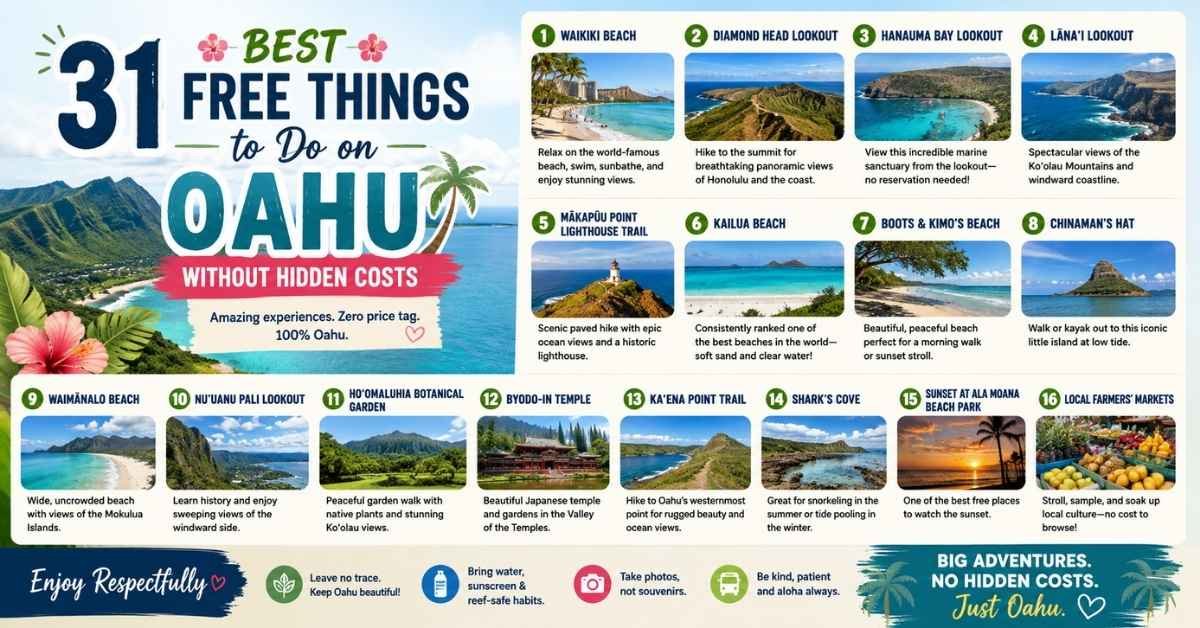
Free things to do on Oahu include walking Waikīkī Beach, exploring tropical botanical gardens, visiting Pearl Harbor’s free museums, watching North Shore surfers, joining complimentary Hawaiian cultural classes and hiking scenic coastal trails. Many of these experiences cost nothing, but some involve parking, transportation, reservations or equipment. This guide explains those possible expenses upfront, so you can enjoy Oʻahu on a budget without unpleasant surprises.
Oʻahu can be expensive, especially once accommodation, meals and transportation enter the picture. Fortunately, some of the island’s most memorable experiences—sunsets, coastal walks, historic sites and public beaches—do not require an expensive ticket.
Opening hours, event schedules, parking policies, trail access and ocean conditions can change. Confirm important details before leaving your accommodation, particularly when visiting beaches, hiking trails or scheduled cultural events.
Free Oahu Activities at a Glance
| Activity | Region | Time needed | Best for | Car needed? | Possible extra cost |
|---|---|---|---|---|---|
| Waikīkī Historic Trail | Waikīkī | 1–2 hours | History and walking | No | None |
| Royal Hawaiian Center classes | Waikīkī | 1 hour | Culture and families | No | None |
| Capitol Modern | Honolulu | 1–2 hours | Art and rainy days | No | Transportation |
| Pearl Harbor grounds | Central Oʻahu | 2–3 hours | History | No | Parking or reservation fee |
| Makapuʻu Point Trail | East Oʻahu | 1.5–2 hours | Coastal views | Helpful | Transportation |
| Hoʻomaluhia Botanical Garden | Windward Oʻahu | 2–3 hours | Nature | Helpful | Transportation |
| Waimea Bay | North Shore | Half day | Beaches and surf | Helpful | Transportation |
| Banzai Pipeline | North Shore | 1 hour | Winter surf watching | Helpful | Transportation |
| Ko Olina Lagoons | Leeward Oʻahu | Half day | Families | Helpful | Food or transportation |
Best without a car: Waikīkī Historic Trail Best with children: Ala Moana Beach Park Best for couples: Magic Island at sunset Best cultural experience: Royal Hawaiian Center classes Best historical attraction: Pearl Harbor National Memorial Best easy scenic walk: Makapuʻu Point Lighthouse Trail Best winter activity: Watching surfers on the North Shore Best rainy-day option: Capitol Modern Best botanical garden: Hoʻomaluhia Botanical Garden
What Does “Free” Mean in This Guide?
A place with free admission does not always provide a completely free visit. You may still need to pay for parking, catch a bus, rent snorkeling equipment or make a reservation.
For every activity, consider the FREE Cost Check:
- F — Fee: Is there an admission charge?
- R — Reservation: Is advance booking required?
- E — Equipment: Do you need to bring or rent anything?
- E — Extras: Could parking, transportation or food increase the cost?
Activities involving nothing more than walking from your Waikīkī accommodation are the easiest true zero-cost experiences. More remote attractions may be free at the entrance but require a rental car, fuel or a long bus journey.
Free Things to Do in Waikīkī and Honolulu
1. Walk Waikīkī Beach Before the Crowds Arrive
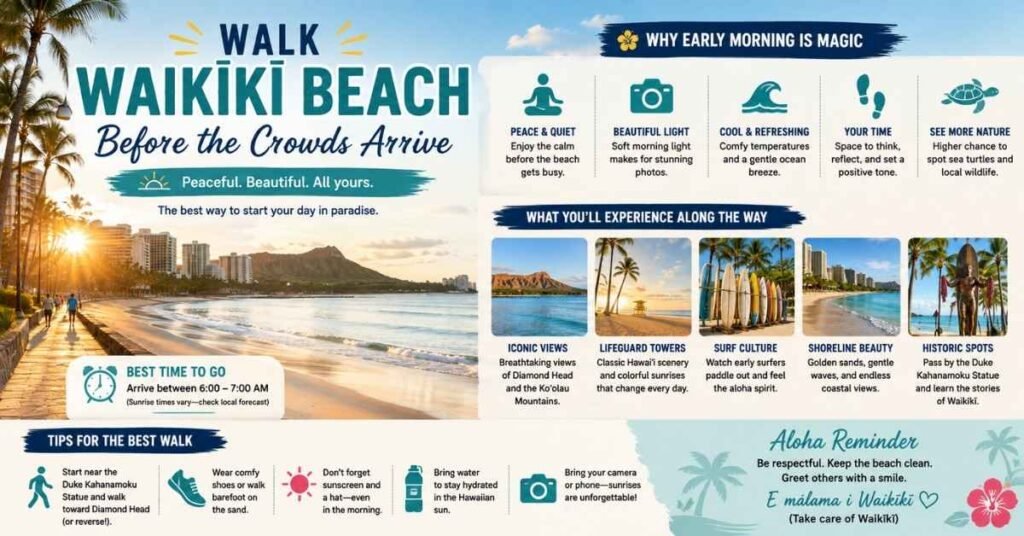
Waikīkī is busiest from late morning through sunset, but early morning reveals a quieter side of this famous shoreline. You will see surfers paddling out, walkers following the water and Diamond Head catching the first light.
Start around Kūhiō Beach and continue along the beachfront as far as your energy allows. The walk itself is free, and several public sections have showers, restrooms and lifeguards.
Early morning is especially convenient if jet lag has you awake before breakfast. Bring water and only the valuables you genuinely need. Never leave a phone, wallet or hotel key unattended on the sand, even for a quick swim.
Best for: First-time visitors, couples and solo travelers Potential cost: None when walking from Waikīkī Best time: Early morning
2. Follow the Waikīkī Historic Trail
The Waikīkī Historic Trail turns an ordinary beach walk into a self-guided history lesson. Its surfboard-shaped markers explain the area’s connections with Hawaiian royalty, surfing, historic hotels and important local figures.
One of the most recognizable stops is the Duke Kahanamoku Statue near Kūhiō Beach. Duke was an Olympic swimmer who helped introduce surfing to an international audience, but the trail provides a broader view of Waikīkī than this single landmark.
Allow one to two hours if you want to read the markers instead of rushing between them. The route is mostly easy to follow, although heat and crowded pavements can make midday walking uncomfortable.
This is one of the most rewarding free things to do in Waikiki because it adds cultural meaning to an area many visitors see only as a beach district.
Best for: History, photography and walking Potential cost: None Practical tip: Begin early or later in the afternoon
3. Slow Down in Kapiʻolani Park
When central Waikīkī begins to feel crowded, Kapiʻolani Park offers room to breathe. The large green space sits near the beach with views toward Lēʻahi, commonly known as Diamond Head.
You can walk, jog, stretch, read under a tree or bring a simple picnic. Families have room to relax without being surrounded by hotel traffic, while couples can use the park as a quieter break between beach activities.
Free concerts and community events occasionally take place here, but schedules change. Treat any event as a bonus rather than building your entire day around an unconfirmed listing.
Combine the park with Kūhiō Beach or the Waikīkī Historic Trail for an easy half-day that requires no rental car.
Best for: Picnics, families and low-energy days Potential cost: None Time needed: 30 minutes to two hours
4. Watch the Friday Fireworks from Waikīkī Beach
The Friday fireworks near Hilton Hawaiian Village are one of the most popular free things to do on Oahu at night. You do not normally need to stay at the resort to watch from the public beach.
Arrive before sunset, choose a comfortable place on the sand and turn the evening into a simple picnic date. The display itself is short, so the best experience combines the sunset, beach atmosphere and fireworks.
The show is traditionally held on Friday evenings, but schedules, start times and cancellations can change. Verify the current program before making a special journey.
If you are staying in Waikīkī, walking is usually easier than searching for parking. After the show, remain aware of your surroundings and use well-lit routes back to your hotel.
Best for: Couples, families and evening entertainment Potential cost: None when walking Important: Confirm the current schedule
5. Join a Free Hawaiian Cultural Class
The Royal Hawaiian Center regularly offers complimentary cultural programming. Depending on the current calendar, options may include hula, lei making, ʻukulele, music or Hawaiian language activities.
These classes are not simply free entertainment. A good instructor will explain the meaning behind a movement, word, song or tradition, giving you a more thoughtful connection with Hawaiian culture.
Popular sessions may be first-come, first-served. Arrive early, listen respectfully and avoid treating the experience only as an opportunity to collect a free souvenir.
Schedules can change by day and season, so check the center’s current calendar. This is one of the best free activities in Waikīkī when you want a break from the beach or midday sun.
Best for: Culture, families and solo travelers Potential cost: None Practical tip: Arrive before registration begins
6. Visit the U.S. Army Museum of Hawaiʻi
Located at Fort DeRussy, the U.S. Army Museum of Hawaiʻi explores military history in the islands. Exhibits cover subjects ranging from early Hawaiian warfare to the Second World War and later conflicts.
Admission is generally free, although donations may be welcomed. Security procedures, operating days and access rules can change, so check before visiting.
The museum is compact enough to explore without losing an entire day. It also makes a practical indoor option when rain interrupts a beach plan or when the midday heat becomes uncomfortable.
Because it sits close to Waikīkī Beach, you can combine the museum with a shoreline walk without needing a car.
Best for: History and rainy days Potential cost: Optional donation Time needed: One to two hours
7. Spend the Afternoon at Ala Moana Beach Park
Ala Moana Beach Park provides a different atmosphere from Waikīkī. It has a long beach, broad lawns, picnic spaces and room for walking or jogging.
Families appreciate the facilities, while budget travelers can bring lunch instead of eating at a beachfront restaurant. Restrooms and outdoor showers make it easier to spend several hours here.
The water can appear calmer than at more exposed beaches, but no ocean is automatically safe. Check current conditions, choose a lifeguarded area and remain within your ability.
Parking may be free in designated areas, but spaces can fill during weekends and events. If you bring valuables, keep them with you rather than leaving them unattended on the beach or visible inside a vehicle.
Best for: Families, picnics and relaxed beach days Potential cost: Transportation or food Time needed: Two hours to half a day
8. Walk to Magic Island for Sunset
Magic Island is a man-made peninsula connected to Ala Moana Beach Park. Its walking paths provide views of the ocean, Waikīkī skyline and Lēʻahi.
It is an easy place to extend an afternoon at Ala Moana into sunset. Bring a reusable water bottle, a light picnic and something comfortable to sit on.
The area works well for couples who want a free date idea on Oahu, but it is equally suitable for families and solo travelers. Joggers, photographers and local residents also use the paths, so remain aware of other people rather than stopping in the middle of busy sections.
Wind and cloud cover can change the sunset experience, but the open coastline remains enjoyable even when the sky is not dramatic.
Best for: Sunsets, couples and photography Potential cost: None after reaching the park Best time: Late afternoon
9. See Contemporary Art at Capitol Modern
Capitol Modern, formerly known as the Hawaiʻi State Art Museum, is one of the strongest free rainy-day attractions in Honolulu. Its galleries feature contemporary art connected with Hawaiʻi and the wider Pacific.
The museum offers more depth than a quick escape from the rain. Exhibitions can introduce you to local perspectives, history, identity and environmental issues that beach-focused itineraries often overlook.
Allow one or two hours. Confirm current opening days before visiting, as museums may close on certain weekdays or holidays.
Capitol Modern can be combined with the Hawaiʻi State Capitol, ʻIolani Palace grounds and King Kamehameha I Statue for a low-cost cultural day in central Honolulu.
Best for: Art, culture and rainy weather Admission: Free Time needed: One to two hours
10. Take a Self-Guided Civic Center Walk
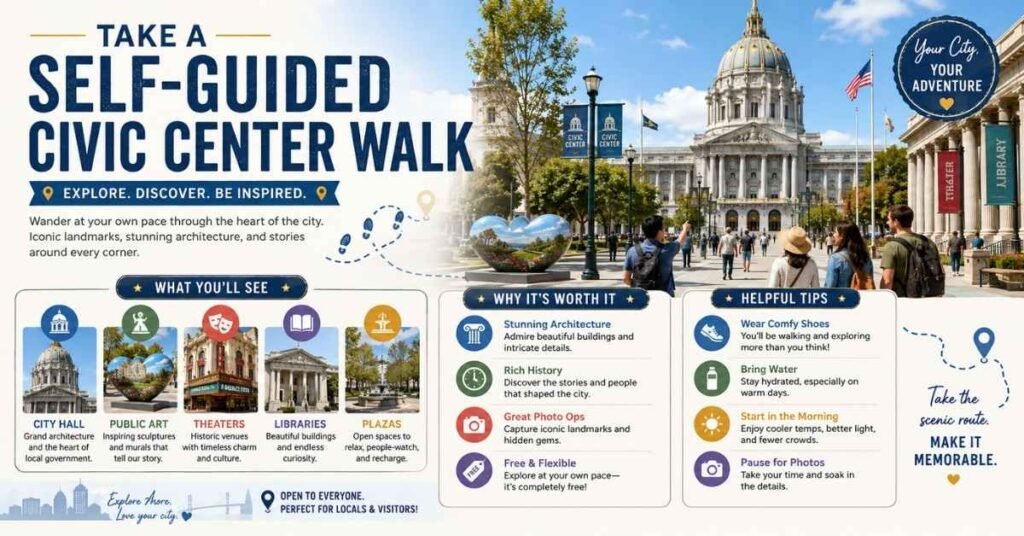
Honolulu’s civic district brings several important historic and political landmarks within walking distance.
A practical route can include:
- Hawaiʻi State Capitol
- ʻIolani Palace grounds
- King Kamehameha I Statue
- Aliʻiōlani Hale
- Kawaiahaʻo Church exterior
- Honolulu Hale
You can view the exteriors and public grounds without buying a tour. However, entering ʻIolani Palace requires paid admission, so do not confuse a free exterior visit with a palace tour.
This walk is most valuable when you understand the history behind what you are seeing. Hawaiʻi was an independent kingdom before its overthrow and later annexation by the United States. Approach the area with curiosity and respect rather than treating each building as another photograph.
Best for: Hawaiian history and architecture Potential cost: None for exterior viewing Time needed: Two to three hours
11. Visit Punchbowl Cemetery Respectfully
The National Memorial Cemetery of the Pacific occupies Punchbowl Crater above Honolulu. It honors members of the United States Armed Forces and contains memorials connected with conflicts across the Pacific.
The elevated setting also offers broad views, but this is first and foremost a cemetery and place of remembrance. Speak quietly, follow posted rules and avoid treating graves or memorials as props.
Driving is generally the simplest way to visit. Accessibility is better than on most hikes, although the size of the grounds and heat can still affect visitors with limited mobility.
A thoughtful visit usually takes about an hour, depending on how much time you spend reading the memorials.
Best for: History and reflection Potential cost: Transportation Important: Maintain respectful behavior
12. Find the Murals of Kakaʻako
Kakaʻako is known for large-scale murals covering walls, warehouses and commercial buildings. Walking through the district is one of the more creative free activities in Honolulu.
The artwork changes over time, so an old photograph may lead you to a completely different mural—or a blank wall. That changing character is part of the experience.
Explore during daylight, remain aware of vehicles and avoid blocking business entrances while taking photographs. The district is active rather than a purpose-built outdoor museum.
You can combine the murals with nearby parks or continue toward Ala Moana. Shopping and cafés are optional; seeing the public art costs nothing.
Best for: Art, photography and urban walks Potential cost: None Time needed: One to two hours
Free Things to Do on East and Windward Oahu
13. Walk the Makapuʻu Point Lighthouse Trail
The Makapuʻu Point Lighthouse Trail follows a paved uphill route to wide coastal views. On a clear day, the ocean seems to stretch endlessly beyond the cliffs.
The route is roughly two miles round trip. Although paved, it is continuously uphill and has very little shade. Start early, carry water and use sun protection. A paved trail in tropical heat can still be demanding.
During whale season, viewpoints along the route may offer a chance to spot humpback whales. Sightings are never guaranteed, so treat them as a bonus.
Parking is usually free, but spaces can fill. Check current access and weather conditions before leaving.
Best for: Beginners with reasonable fitness and coastal views Potential cost: Transportation Time needed: 1.5–2 hours
14. Watch the Ocean at Halona Blowhole Lookout
Halona Blowhole is a quick coastal stop where waves force water through an opening in the volcanic rock. The height and frequency of the spray depend on the ocean conditions.
Stay at the official viewing area. Wet rocks, sudden waves and steep terrain make climbing toward the water far more dangerous than it appears from above.
The stop usually requires 15–30 minutes. Parking is limited, so be patient rather than stopping unsafely along the road.
Halona combines naturally with Makapuʻu Point, Koko Crater Botanical Garden or Waimānalo. It is most useful as part of an East Oʻahu route rather than a separate cross-island journey.
Best for: Scenic drives and short stops Potential cost: Transportation Safety: Remain behind designated barriers
15. Explore Koko Crater Botanical Garden
Koko Crater Botanical Garden offers a quieter alternative to Oʻahu’s famous rainforest gardens. Its dry environment supports plumeria, cacti, succulents and plants adapted to arid climates.
The walking route is natural rather than polished. Expect sun, uneven ground and limited facilities. Carry water and wear shoes suitable for loose or dusty surfaces.
Do not confuse the botanical garden with the Koko Crater Railway Trail, a much more strenuous climb on the outside of the crater. The garden provides a calmer experience focused on plants rather than physical achievement.
Admission is free, making it one of the more unusual free attractions on Oahu.
Best for: Plants, photography and quiet walks Potential cost: Transportation Important: Expect limited shade
16. Spend a Few Hours at Hoʻomaluhia Botanical Garden
Hoʻomaluhia Botanical Garden sits beneath the dramatic Koʻolau Mountains in Kāneʻohe. Its tropical collections, walking areas and lake make it one of the best free places to visit on Oahu.
The entrance road became famous through social media, but visitors should not stop vehicles or stand in the roadway for photographs. The better experience begins deeper inside, where you can walk, observe the plant collections and enjoy the mountain scenery at a slower pace.
The garden is approximately 400 acres, not the 4,000 acres claimed by some travel pages. It currently observes a weekly closure day, and holiday arrangements can vary, so check the schedule before driving across the island.
Windward weather changes quickly. Bring a light rain layer and expect damp paths after showers.
Best for: Nature, photography and families Admission: Free Time needed: Two to three hours
17. Relax at Waimānalo Bay
Waimānalo Bay is known for its long shoreline, pale sand and views backed by the Koʻolau landscape. It often feels less commercial than Waikīkī, but it remains part of a living community rather than a private tourist playground.
Use designated parking, keep noise reasonable and take all rubbish with you. Do not block homes, gates or local access points.
Ocean conditions can change, and occasional jellyfish or Portuguese man-of-war warnings may affect swimming. Check signs and speak with lifeguards when available.
The beach is free, although reaching it may require a car or a long bus journey.
Best for: Beach walks and picnics Potential cost: Transportation Local etiquette: Respect residents and public facilities
18. Visit Kailua Beach Park
Kailua Beach Park combines a broad shoreline with useful public facilities. It is a practical option for families because visitors can access restrooms, showers, picnic areas and grassy spaces.
Swimming, walking and relaxing on the beach are free. Kayaks, paddleboards and lessons are not, so bring your own approved equipment if you want a true zero-cost day.
Parking can become difficult, especially on weekends. Arriving early reduces stress and gives you more time before the afternoon wind strengthens.
Kailua Beach is often easier for visitors than nearby Lanikai because it has clearer public facilities and more straightforward access.
Best for: Families and longer beach days Potential cost: Transportation or equipment Time needed: Two hours to half a day
19. Visit Lanikai Beach Respectfully
Lanikai Beach is beautiful, but reaching it requires more care than many travel articles explain. The beach sits beside a residential neighborhood, and public access is through designated pathways.
There are no major public beach-park facilities directly on the sand. Restrooms, showers and dependable visitor parking are limited or absent. Parking restrictions are enforced, and blocking driveways creates legitimate frustration for residents.
If legal parking is unavailable, continue to Kailua Beach rather than circling residential streets indefinitely. Keep voices low during sunrise visits and carry out everything you bring.
Lanikai is a free beach, but it is not necessarily the easiest free beach experience.
Best for: Quiet beach walks and sunrise Potential cost: Transportation Reason to skip: Parking or access pressure
20. Picnic at Kualoa Regional Park
Kualoa Regional Park provides open lawns, a beachfront setting and a clear view toward Mokoliʻi, sometimes called Chinaman’s Hat. Behind the park, the Koʻolau Mountains create one of Windward Oʻahu’s most recognizable landscapes.
The public park is separate from Kualoa Ranch, where movie tours, horseback riding and other experiences require payment. You can enjoy the scenery and picnic areas without purchasing a ranch activity.
Bring food, water and a camera, then allow one or two hours. Check park hours if you plan to arrive early or remain near sunset.
This is one of the best free attractions on Oahu for families who want space without committing to a demanding hike.
Best for: Picnics, families and mountain views Potential cost: Transportation Time needed: One to three hours
21. Hike the ʻAiea Loop Trail
The ʻAiea Loop Trail begins in Keaīwa Heiau State Recreation Area and passes through a forested landscape above Central Oʻahu.
The loop is substantially longer than a quick viewpoint walk. Allow several hours, expect elevation changes and prepare for mud after rain. Supportive shoes, water and basic trail awareness are essential.
Keaīwa Heiau has cultural significance, so remain on appropriate paths and treat structures respectfully. Do not climb, move stones or leave objects behind.
Check current weather and trail access before going. This is a free hike, but it is best suited to prepared visitors rather than anyone simply looking for an easy hour outdoors.
Best for: Hikers and forest scenery Potential cost: Transportation Time needed: Three to four hours
Free Things to Do in Central and North Shore Oahu
22. Walk Through Wahiawā Botanical Garden
Wahiawā Botanical Garden offers a cooler, greener environment in Central Oʻahu. Its tropical plants and shaded paths make it a pleasant stop on the way to the North Shore.
The garden receives fewer social-media-driven crowds than Hoʻomaluhia. That makes it appealing when you want to walk without constantly waiting for photographs.
Some paths are steep or uneven, so visitors with mobility limitations should review current accessibility information. Rain can also make sections slippery.
Admission is free. Allow about an hour, then continue toward Haleʻiwa or the North Shore beaches.
Best for: Plants, shade and quieter walks Potential cost: Transportation Time needed: One hour
23. See What Is Free at Dole Plantation
Entering the main Dole Plantation visitor area is generally free. You can browse displays, walk around the public areas and see the heavily commercial side of Oʻahu’s pineapple story.
The train, garden maze and several featured attractions require paid tickets. Food, souvenirs and Dole Whip also cost extra.
This is not an untouched agricultural experience, and visitors expecting a peaceful historic farm may find it too commercial. However, it can work as a short stop between Wahiawā and the North Shore.
Spend 30–45 minutes if you are committed to a free day. Longer visits usually lead toward paid attractions or shopping.
Best for: Families and first-time visitors Potential cost: Optional food, shopping and attractions Honest verdict: Convenient, but not essential
24. Walk Around Historic Haleʻiwa
Haleʻiwa has historic buildings, galleries, surf shops and the recognizable Rainbow Bridge. Walking through town is free, although the smell of shave ice and garlic shrimp may test your budget.
Use public parking and remain attentive around busy roads. The town receives heavy visitor traffic, particularly around lunchtime and on weekends.
Window shopping is free, but remember that local shops are businesses rather than public attractions. If your budget allows, making one small purchase from a local business can be a more responsible choice than spending exclusively at international chains.
Combine Haleʻiwa with Waimea Bay, Puʻu o Mahuka Heiau or a North Shore surf stop.
Best for: Local atmosphere and walking Potential cost: Optional food and shopping Time needed: One to two hours
Learn More: 31 Best Things to Do Alone in Los Angeles (2026 Guide)
25. Spend the Day at Waimea Bay
Waimea Bay can feel like two different places depending on the season. During calmer periods, visitors may find a broad beach suitable for sunbathing and carefully considered swimming. During major winter surf, the bay becomes a place to watch the ocean from shore.
Parking is limited and can fill early. Restrooms, lifeguard services and beach facilities make it practical for a longer stop, but availability and conditions should still be checked.
Some guides promote cliff jumping as a standard free activity. That advice ignores changing depth, surf and individual ability. Watching from the beach is the safer choice for most visitors.
Best for: Beach days and seasonal surf watching Potential cost: Transportation Important: Follow lifeguard instructions
26. Watch Surfers at Banzai Pipeline and Sunset Beach
The North Shore’s winter surf is one of the island’s greatest free spectacles. At Banzai Pipeline and Sunset Beach, experienced surfers take on waves that can be powerful even when viewed from shore.
Major competitions take place only when conditions cooperate. Dates and start times can change, so check the current surf and event schedule.
Use designated parking, stay clear of the roadway and respect residents. Photographers and surfers may need working space near established access points.
In summer, the same beaches may look completely different. Never assume the water is safe because other people are swimming. Your ability, posted warnings and current conditions should determine your decision.
Best for: Winter visitors and photography Potential cost: Transportation Time needed: One to two hours
27. Snorkel at Shark’s Cove Only When Conditions Allow
Shark’s Cove is frequently recommended for free snorkeling on Oahu, but it is highly dependent on the ocean. Calmer summer periods can create suitable opportunities, while winter surf may make entering the water completely inappropriate.
The shoreline is rocky. Water shoes can help, and you will need to bring your own mask and snorkel to keep the experience free.
Check current conditions, use a lifeguarded area when possible and remain within your swimming ability. If the water looks questionable, observe the coastline rather than entering it.
Parking fills quickly, particularly on summer weekends. Food trucks and rentals are available nearby, but both turn the stop into a paid experience.
Best for: Prepared snorkelers during suitable conditions Potential cost: Equipment, food or transportation Safety: Never snorkel during large surf
28. Visit Puʻu o Mahuka Heiau
Puʻu o Mahuka Heiau is the largest surviving heiau on Oʻahu. Its hilltop setting overlooks Waimea and adds essential cultural depth to a North Shore day.
This is a sacred historic place, not merely a scenic viewpoint. Remain outside protected structures, follow signs and never climb on walls, move stones or leave inappropriate offerings.
The site does not require a long visit, but reading about its meaning before arriving will make the experience more valuable. Combine it with Waimea Bay rather than making a separate cross-island journey.
Road and parking conditions may be less polished than at a major commercial attraction. Drive carefully and verify current access.
Best for: Hawaiian history and culture Admission: Free Time needed: 30–45 minutes
29. Visit the Lāʻie Hawaiʻi Temple Visitors’ Center
The Lāʻie Hawaiʻi Temple grounds and visitors’ center provide a quiet cultural and religious stop on the northeastern side of the island.
Visitors can learn about the site, walk through public garden areas and view the architecture without paying admission. The temple itself is sacred and access is restricted, so distinguish between the public visitors’ center and worship areas.
Dress and behave respectfully. Confirm current opening hours, particularly around holidays or special religious events.
This stop works best when combined with a North Shore or Windward Coast route.
Best for: Architecture, gardens and religious history Admission: Free Time needed: 45–60 minutes
Free Things to Do in Central and Leeward Oahu
30. Explore Pearl Harbor National Memorial’s Free Areas
Pearl Harbor National Memorial offers some of Oʻahu’s most meaningful free historical experiences. The visitor-center grounds, National Park Service museums and interpretive exhibits can be explored without a general entrance charge.
The USS Arizona Memorial program is also free, but advance reservations are recommended. Online reservations currently carry a small management fee, and on-site parking is paid. Limited standby access may be available, but it should not be treated as guaranteed.
Commercial websites sell Pearl Harbor tours, but you do not need to buy an expensive package simply to enter the National Park Service visitor center.
Allow at least two or three hours. Review the bag policy before arriving and leave time to absorb the exhibits rather than treating the site as a quick photograph.
Best for: History, families and first-time visitors Admission: Free Possible costs: Reservation fee, parking or transportation
31. Find Public Access at the Ko Olina Lagoons
The Ko Olina resort area contains four landscaped lagoons connected by a coastal path. The shoreline is publicly accessible, but day visitors must use designated public access and parking.
Lagoon 4 is generally the most practical option because it has the clearest public day-use arrangement. Even there, parking is limited and can fill early.
The lagoons appear calm, making them popular with families, but normal ocean precautions still apply. Restrooms and walking areas make it possible to stay for several hours.
Respect resort boundaries and do not assume that pools, loungers or other guest amenities are public. If the designated parking is full, choose another beach rather than using restricted spaces.
Best for: Families, walking and calmer scenery Admission: Free Potential cost: Transportation or food
Popular Oahu Attractions That Are Not Completely Free
Several older travel articles place these attractions in free lists. They may be worthwhile, but they do not belong in a list of completely free experiences.
Hanauma Bay Nature Preserve
Hanauma Bay is not generally free for adult nonresidents. Current costs include a $25 nonresident admission fee, an online service charge and parking.
Children aged 12 and under, qualified Hawaiʻi residents and certain military visitors may receive free admission under current rules. Reservations are strongly recommended, and the preserve follows a limited weekly schedule.
Lēʻahi–Diamond Head
Nonresident visitors must normally pay admission to hike Diamond Head, and parking costs extra. Advance reservations are also required for nonresidents.
The views may justify the price, but it is a budget-friendly paid hike, not a free Oʻahu activity.
Byodo-In Temple
Byodo-In Temple is peaceful and visually impressive, but it charges admission. Parking may also involve an additional fee under current arrangements.
It can be included in a low-cost Windward Oʻahu itinerary, but describing it as free is misleading.
Mānoa Falls
Access to the trail may not require an admission ticket, but many drivers use paid parking. Transportation and suitable footwear can add further expense.
Rain makes the trail muddy, while heavy weather can create more serious risks. Check conditions rather than visiting solely because an old article describes it as an easy free hike.
Nuʻuanu Pali Lookout
Viewing the landscape may not require an admission ticket, but nonresident parking charges can apply. The exposed location is also extremely windy.
Verify current parking arrangements before adding it to a free itinerary.
Waimea Valley
Waimea Valley is a paid botanical and cultural attraction. Do not confuse it with Waimea Bay, the public beach across the road.
The valley may be worthwhile if you want maintained gardens, cultural interpretation and regulated waterfall swimming, but it is not free.
How to Explore Oahu for Free Without a Car
You can enjoy many free activities without renting a vehicle, especially if you stay in Waikīkī or central Honolulu. The key is accepting that a bus-based trip moves more slowly.
Build a Walkable Waikīkī Day
A strong no-car day can include:
- Waikīkī Beach at sunrise
- Waikīkī Historic Trail
- Kapiʻolani Park
- Royal Hawaiian Center cultural class
- U.S. Army Museum of Hawaiʻi
- Friday fireworks, if scheduled
This route delivers beach time, culture, history and evening entertainment without paying for parking.
Use TheBus for Honolulu and Pearl Harbor
TheBus connects Waikīkī with Ala Moana, downtown Honolulu and Pearl Harbor. Longer routes also reach other parts of the island, but journey times and transfers can consume much of the day.
Use a current trip planner and build extra time into your schedule. Attempting Waikīkī, the Windward Coast and the North Shore in one bus-based day is rarely enjoyable.
Know When a Car Saves Time
A car becomes useful for:
- Hoʻomaluhia Botanical Garden
- Kualoa Regional Park
- Multiple North Shore stops
- Remote trailheads
- Early-morning coastal walks
Instead of renting for the entire vacation, consider using a car for one or two region-focused days. Compare the rental price with parking, fuel and the time saved.
Four Free Oahu Itineraries You Can Follow
A Completely Free Morning in Waikīkī
7:00 a.m.: Walk Waikīkī Beach 8:00 a.m.: Follow part of the historic trail 9:30 a.m.: Stop at the Duke Kahanamoku Statue 10:00 a.m.: Walk or rest in Kapiʻolani Park
This route is easy, flexible and suitable for your first morning on the island.
A Free Culture and History Day in Honolulu
Morning: Visit Capitol Modern Late morning: Walk around the Hawaiʻi State Capitol Midday: See ʻIolani Palace grounds and King Kamehameha I Statue Afternoon: Explore Kakaʻako murals Evening: Watch sunset from Magic Island
Bring water and check museum opening hours before beginning.
A Free Windward Oahu Day
Early morning: Makapuʻu Point Lighthouse Trail Mid-morning: Halona Blowhole Lookout Lunch: Picnic at Waimānalo Bay Afternoon: Hoʻomaluhia Botanical Garden
Check the garden’s closing time before planning the route in this order.
A Free North Shore Day
Morning: Wahiawā Botanical Garden Late morning: Walk through Haleʻiwa Afternoon: Waimea Bay Late afternoon: Puʻu o Mahuka Heiau Sunset: Sunset Beach
During winter, prioritize shore-based surf watching. During calmer summer conditions, beach and snorkeling options may be more suitable.
Choose the Right Free Activity for Your Trip
| Traveler or mood | Strongest choices |
|---|---|
| Families with children | Ala Moana, Kapiʻolani Park and Kualoa Regional Park |
| Couples | Magic Island, Waikīkī fireworks and Makapuʻu |
| Solo travelers | Capitol Modern, Waikīkī Historic Trail and botanical gardens |
| Seniors | Pearl Harbor grounds, Capitol Modern and Kapiʻolani Park |
| Hikers | Makapuʻu and ʻAiea Loop |
| Non-swimmers | Surf watching, museums, gardens and historic walks |
| Rainy-day visitors | Capitol Modern, Army Museum and Pearl Harbor exhibits |
| No-car travelers | Waikīkī, Ala Moana and downtown Honolulu |
| Culture-focused visitors | Civic district, historic trail and Puʻu o Mahuka |
Safety and Local Respect
Check the Ocean Every Day
Ocean conditions can change rapidly. Surf, currents and shorebreak that look exciting from land may be dangerous once you enter the water.
Choose lifeguarded beaches, read warning signs and ask lifeguards about current conditions. Being a confident pool swimmer does not automatically prepare you for Hawaiʻi’s ocean.
Protect Your Belongings
Avoid bringing unnecessary valuables to beaches and trails. Keep important items with you and do not leave bags unattended under a towel.
Never leave wallets, luggage, cameras or shopping bags visible inside a parked vehicle. Secure belongings before reaching the destination rather than rearranging them in the parking area.
Confirm Trail Access and Weather
A trail appearing on social media does not prove that it is legal, open or appropriate for visitors.
Check current access, rain, heat and flood risks. Wear suitable shoes and turn around if the weather or trail becomes unsafe.
Give Wildlife Space
Sea turtles, monk seals and whales are wild animals. Sightings are never guaranteed.
Never touch, chase or feed wildlife. Follow posted viewing distances, listen to local volunteers and avoid blocking an animal’s path back to the water. Snorkelers should not stand on coral.
Respect Neighborhoods and Cultural Sites
Some famous beaches and trail access points sit beside residential communities. Use designated parking, keep noise low and do not block driveways.
At heiau and other cultural places, follow signs and leave structures untouched. Pack out everything you bring and practice mālama ʻāina—caring for the land.
What to Bring for a Free Day on Oahu
Packing properly prevents a free outing from becoming an expensive emergency shopping trip.
Bring:
- Refillable water bottle
- Hat and sun protection
- Lightweight rain jacket
- Supportive footwear
- Swimwear and towel
- Snacks or picnic
- Personal snorkeling equipment when appropriate
- Waterproof phone pouch
- Offline map
- Portable charger
- Small rubbish bag
- Respectful clothing for memorial and religious sites
Frequently Asked Questions
What are the best completely free things to do on Oahu?
Strong choices include the Waikīkī Historic Trail, Kapiʻolani Park, Capitol Modern, Hoʻomaluhia Botanical Garden, Makapuʻu Point Trail, Wahiawā Botanical Garden and watching surfers from North Shore beaches. Transportation and optional purchases may still create expenses.
Is Pearl Harbor free?
The Pearl Harbor National Memorial visitor-center grounds, museums and USS Arizona Memorial program are free. However, online reservations for the USS Arizona currently carry a small management fee, and parking is paid. Separate partner attractions charge their own admission.
Are Oahu beaches free?
Many Oʻahu beaches and shoreline areas are publicly accessible without admission. However, parking, transportation and equipment may cost money. Public access also does not give visitors permission to use private resort facilities or park in residential and restricted spaces.
What can I do for free near Waikiki?
Walk Waikīkī Beach, follow the Waikīkī Historic Trail, visit Kapiʻolani Park, attend a cultural class, explore the U.S. Army Museum and watch the Friday fireworks when scheduled. Most of these activities are accessible on foot from central Waikīkī.
Can I explore Oahu without renting a car?
Yes. Waikīkī, Ala Moana, downtown Honolulu and Pearl Harbor are accessible through walking and public transportation. Remote gardens, trailheads and multiple North Shore stops are more time-consuming without a car, so plan one geographic area per day.
What are the best free things to do on Oahu with kids?
Ala Moana Beach Park, Kapiʻolani Park, Kualoa Regional Park, Royal Hawaiian Center classes and Pearl Harbor’s visitor-center exhibits are strong family options. Check facilities, shade, ocean conditions and walking difficulty before choosing.
What can I do for free when it rains?
Visit Capitol Modern, the U.S. Army Museum of Hawaiʻi or Pearl Harbor’s indoor exhibits. A passing shower may not ruin an outdoor plan, but avoid exposed trails and waterways during heavy rain or flood warnings.
Where can I see sea turtles for free?
Sea turtles may appear along various Oʻahu shorelines, but sightings are never guaranteed. Observe them from a respectful distance, never touch or feed them and follow instructions from wildlife volunteers. Avoid crowding an animal for photographs.
Are there free hikes on Oahu?
Yes. Makapuʻu Point Lighthouse Trail and ʻAiea Loop are examples of trails without standard admission charges, although transportation, parking or equipment may create expenses. Always verify current access and weather before hiking.
Which free activities require reservations?
Some cultural classes have limited first-come capacity, while the USS Arizona Memorial program strongly recommends advance reservations. Special museum programs, concerts and community events may also require free registration.
What are the best free things to do on Oahu at night?
Watch the Waikīkī fireworks when scheduled, enjoy sunset at Magic Island or attend a verified free cultural or community event. Transportation and parking become more complicated after dark, so confirm your return plan before leaving.
How many free attractions can I visit in one day?
Plan three to five nearby activities rather than crossing the island repeatedly. A Waikīkī walking day may include more stops, while a North Shore or Windward trip should prioritize fewer experiences with longer travel and parking time.
Final Thoughts
The best free things to do on Oahu are not consolation prizes for travelers avoiding expensive tours. Beaches, historic walks, tropical gardens, cultural classes and North Shore surf can become some of the most memorable parts of your trip.
The secret is to plan by region, understand the possible hidden costs and check current conditions. Choose two or three places that genuinely match your interests instead of racing across the island to complete a checklist.
Most importantly, leave enough time to stop, look around and enjoy where you are.










1 thought on “31 Best Free Things to Do on Oahu Without Hidden Costs”