
things to do at school include reading, organizing assignments, drawing, playing quiet paper games, joining clubs, helping classmates, exercising during breaks, or starting a creative project. The right choice depends on whether you are in a lesson, have finished your work, are sitting in study hall, or have free time during lunch. Whatever you choose, it should follow school rules and avoid distracting your teacher or classmates.
A slow class period can feel endless, especially when your phone is unavailable or your friends are busy. You do not need an elaborate activity to make the time useful. Many of the best school activities require nothing more than a notebook, pencil, book, or a few minutes of focused attention.
This guide organizes ideas by time, materials, noise level, group size, and school-day situation, helping you find something appropriate without scrolling through an unfiltered list.
Find the Right School Activity in Seconds
| Your situation | Good activities to try |
|---|---|
| The lesson feels boring | Improve your notes, write questions, summarize the topic |
| You finished your work | Check your answers, read, draw, or start an extension task |
| You are in study hall | Complete homework, review notes, or organize assignments |
| Phones are unavailable | Read, draw, solve puzzles, or play paper games |
| You are alone at lunch | Visit the library, journal, walk, or explore a club |
| You are with friends | Play a quiet game or start a creative challenge |
| You need movement | Walk, stretch, or join a supervised recess game |
| School has ended | Join a club, sport, creative group, or volunteer project |
Important: If your teacher is explaining something, focus on the lesson. Save unrelated activities for approved free time or after you complete your assigned work.
Are You Bored, Confused, Tired, or Finished?
Before finding a new activity, ask yourself what is actually happening. Boredom does not always mean you need entertainment.
The work feels too easy
If you understand the lesson and need more challenge, you can:
- Ask for an extension activity
- Create a harder example
- Apply the idea to a real problem
- Explain the concept in your own words
- Read ahead
- Help another student—with permission
A respectful request such as, “I finished the task. Is there a challenge activity I can try?” works better than telling your teacher the lesson is boring.
The work feels confusing
Confusion sometimes feels like boredom because it becomes difficult to stay engaged. Instead of silently giving up:
- Identify the exact step where you became lost.
- Reread the instructions.
- Compare the task with a completed example.
- Write one specific question.
- Ask your teacher when appropriate.
“I do not understand anything” is difficult to answer. “Why did the sign change in step three?” gives the teacher a clear place to begin.
You are mentally tired
A long day, poor sleep, stress, or sitting still for too long can reduce concentration. Try:
- Sitting upright
- Taking several slow breaths
- Drinking water when permitted
- Resting your eyes briefly
- Dividing the task into smaller steps
- Asking for an approved movement break
You genuinely finished everything
Check your work once, submit it properly, and choose an approved early-finisher activity.
Things to Do After Finishing Your Work
1. Check Your Answers One More Time
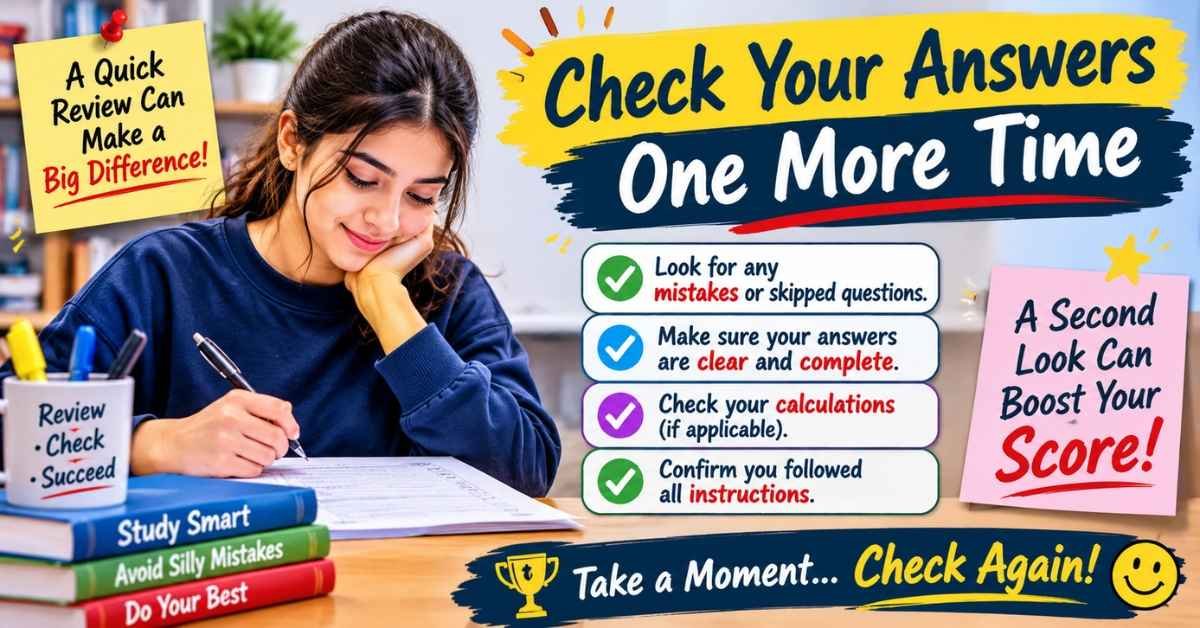
Checking your work does not mean repeatedly staring at the same page. Use a simple system:
- Confirm that you followed every instruction.
- Look for skipped questions.
- Recheck calculations.
- Correct spelling and punctuation.
- Make sure your name is on the work.
- Review any required formatting.
This two-minute habit can catch avoidable mistakes before they affect your grade.
Best time: Immediately after finishing Materials: Your assignment Noise level: Silent Benefit: Accuracy
2. Write a Three-Sentence Summary
Summarize the lesson using three sentences:
- State the main idea.
- Give one useful example.
- Write one remaining question.
This is more useful than copying the textbook because it forces you to remember and reorganize the information.
Best for: Any academic subject Time: Three to five minutes Benefit: Memory and comprehension
3. Create a More Difficult Question
Turn an ordinary assignment into a personal challenge.
For math, change the values or add another condition. For history, ask what might have happened if one decision had changed. In science, apply the concept to a real-life situation. In English, rewrite a sentence using a different tone.
Best for: Students who finish quickly Permission: Usually not needed if you remain quiet Benefit: Deeper learning
4. Read Ahead
Preview the next textbook page or chapter. Study headings, diagrams, key terms, and review questions rather than trying to memorize everything.
When the class reaches that material, it will already feel familiar.
Time: Five to fifteen minutes Materials: Textbook or approved course material Benefit: Preparation
5. Make Five Flash Cards
Select only the five ideas most likely to require review. Put a word, formula, date, or question on one side and its explanation on the other.
Avoid making flash cards for facts you already know. The goal is to strengthen weak areas, not create a bigger pile of paper.
6. Draw a Concept Map
Write the main topic in the center of a page. Connect it to:
- Definitions
- Examples
- Causes
- Effects
- People
- Dates
- Related ideas
Concept maps work particularly well for science, history, literature, and social studies.
7. Improve Your Class Notes
Instead of recopying every sentence, improve what is already there. Add:
- Clear headings
- Missing steps
- Short definitions
- Examples
- Diagrams
- Questions to ask later
This turns messy notes into a useful study resource.
8. Begin Homework From Another Subject
If your teacher and school allow it, use spare time to complete work from another class. Begin with something due soon rather than automatically choosing the easiest task.
Even ten focused minutes can reduce the amount of homework waiting after school.
9. Read a Book
A physical book is one of the most reliable phone-free school activities. Keep something in your bag that you genuinely enjoy.
You might choose:
- A novel
- Graphic novel
- Biography
- Short-story collection
- Science or history book
- Poetry
- Magazine approved by your school
Reading should feel like a worthwhile option, not a punishment for finishing early.
10. Use an Early-Finisher Choice Board
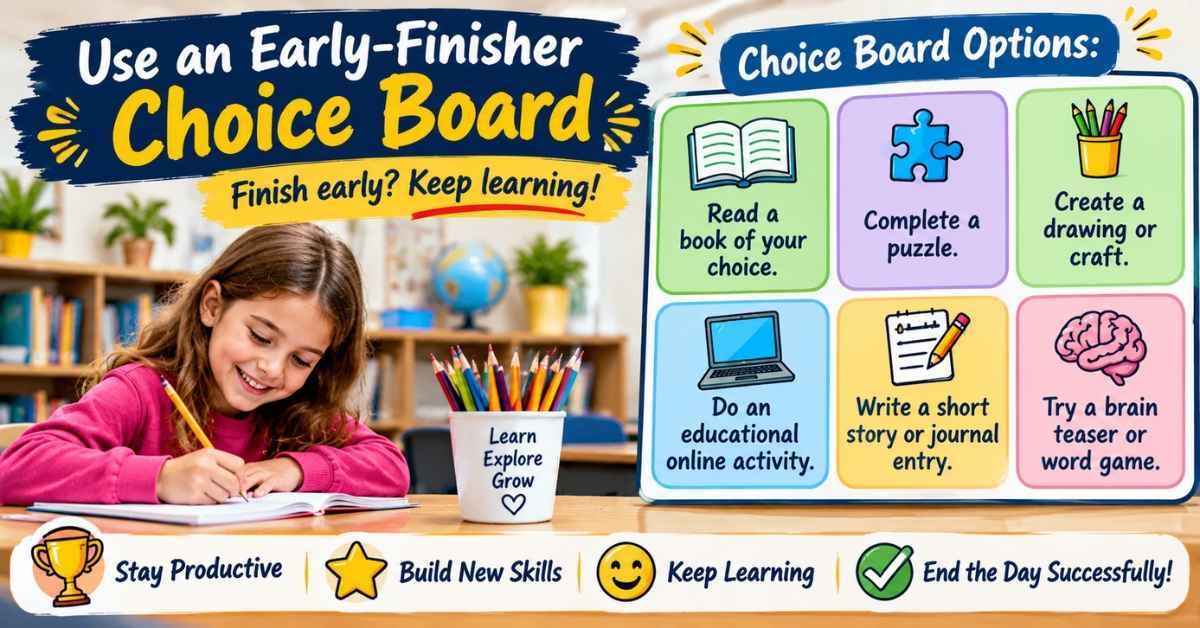
Some classrooms provide a menu of activities for students who complete their assignments. Options may include reading, puzzles, enrichment questions, creative writing, or independent projects.
If your classroom does not have one, ask whether you can create a personal list of approved options.
What to Do When a Lesson Feels Boring
These ideas are designed to help you re-engage with the lesson, not secretly ignore it.
11. Change the Way You Take Notes
If ordinary note-taking feels passive, switch formats.
Try:
- Cornell notes for questions and summaries
- Mind maps for connected ideas
- Timelines for historical events
- Diagrams for scientific processes
- Sketch notes for visual learning
- Question-and-answer notes for test preparation
Changing the format gives your mind a more active job.
12. Turn the Lesson Into Quiz Questions
As you listen, write questions a teacher could include on a test. For example:
- What caused this event?
- How does this formula work?
- What is the difference between these two ideas?
- Why is this character important?
- What evidence supports the conclusion?
Answer the questions later without looking at your notes.
13. Find One Real-Life Connection
Ask how the lesson appears outside school.
Percentages relate to discounts and budgeting. Physics explains sports and transportation. Biology connects with health. Writing skills affect emails, job applications, and online communication.
A lesson often becomes more interesting when you understand why it matters.
14. Predict What Comes Next
Before the teacher completes an example or explanation, quietly predict the next step. Write your answer, then compare it with what happens.
Prediction works well in:
- Mathematics
- Science experiments
- Stories
- Historical events
- Grammar exercises
- Demonstrations
15. Keep a Confusion List
Create a small section in your notebook for unclear points. Write the word, step, or idea that needs explanation.
At the end of the lesson, choose the most important question to ask. This keeps a difficult class from becoming a blur of half-understood information.
16. Explain the Topic to an Imaginary Beginner
Pretend you must teach the idea to someone who has never studied it. Use plain language and one clear example.
If your explanation becomes confusing, you have probably found the part you need to review.
17. Set a Five-Minute Focus Challenge
Tell yourself, “For the next five minutes, I will identify three useful points.”
Short focus periods feel more manageable than trying to force perfect concentration for an entire lesson. After five minutes, begin another small challenge.
18. Volunteer an Answer or Ask a Question
Participating can make a slow lesson feel more active. If speaking without preparation feels uncomfortable, write your answer or question first.
You do not need to become the most talkative student in the room. One thoughtful contribution can help you reconnect with the topic.
Productive Things to Do During Study Hall
19. Create a Complete Assignment List
Write down:
- Subject
- Assignment
- Due date
- Estimated time
- Required materials
- Current progress
Keeping every deadline in one place reduces the stress of trying to remember everything.
20. Complete the Shortest Urgent Task
Choose a task you can realistically finish during the available time. Completing one short, urgent assignment can build momentum for larger work.
Do not spend the whole period completing minor tasks simply to avoid an important project.
21. Break a Large Project Into Steps
A large project feels easier when it becomes a series of small actions:
- Understand the instructions.
- Select a topic.
- Conduct research.
- Create an outline.
- Write the first draft.
- Add visuals.
- Edit the work.
- Submit the final version.
Estimate how long each part will take and place it on your schedule.
22. Review Notes From Today
Same-day review helps you identify gaps while the lesson is still fresh. Close the notebook and write what you remember before looking at the page.
This active recall is more effective than simply rereading every sentence.
23. Prepare for Tomorrow
Check tomorrow’s timetable and prepare:
- Books
- Homework
- Sports clothing
- Art materials
- Permission forms
- Questions
- Required devices or chargers
Five minutes of preparation can prevent a stressful morning.
24. Organize Your Binder or Backpack
Remove rubbish, file loose worksheets, replace missing supplies, and separate completed work from unfinished assignments.
Keep the cleanup quiet and contained. Study hall should not become a complete backpack explosion across the desk.
25. Visit the School Library
The school library offers more than required reading. You can:
- Borrow a book
- Research an assignment
- Use reference materials
- Ask for reading recommendations
- Learn about school programs
- Find a quiet place to work
Ask permission before leaving study hall or another supervised area.
26. Form a Focused Study Pair
Work with one classmate who wants to complete the same task. Agree on a simple structure:
- Choose one goal.
- Work quietly for ten minutes.
- Compare answers.
- Discuss difficult points.
- Return to independent work.
A study pair works only if the conversation remains connected to the assignment.
Phone-Free Things to Do at School
27. Play a Mental Alphabet Game
Choose a category and think of one example for each letter.
Possible categories include:
- Countries
- Animals
- Foods
- Historical figures
- Scientific terms
- Book characters
You can play silently or compare answers with a friend during an approved break.
28. Build a Memory Palace
Imagine a familiar place, such as your home or school hallway. Mentally place each fact you need to remember in a different location.
For example, picture a historical date written on the front door and the related person sitting in the kitchen. Strange mental images are often easier to recall.
29. Write a Six-Word Story
Tell a complete story using only six words:
The final bell rang. Nobody moved.
Try writing one that feels funny, mysterious, sad, or hopeful. The limit forces you to choose every word carefully.
30. Create a Specific Gratitude List
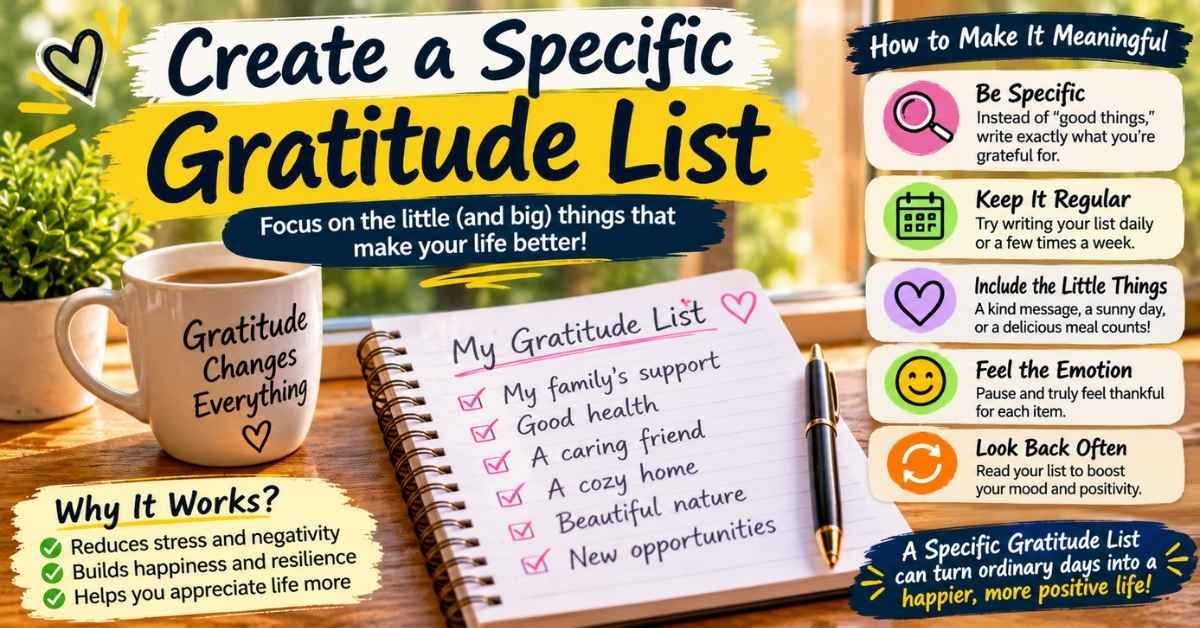
Write three positive moments from the day. Keep them specific:
- A friend saved you a seat.
- You understood a difficult equation.
- Someone made you laugh before class.
Gratitude can improve perspective, but it is not a replacement for speaking with a trusted adult about persistent stress or sadness.
31. Practice Silent Breathing
Breathe in slowly, pause naturally, and breathe out without forcing the breath. Repeat several times.
Avoid breath-holding competitions or extreme breathing exercises. The purpose is a brief focus reset, not a physical challenge.
32. Observe and Describe an Ordinary Object
Choose a pencil, chair, window, shoe, or backpack. Describe its:
- Shape
- Color
- Texture
- Material
- Purpose
- Condition
This small observation exercise can become a writing prompt or drawing challenge.
33. Plan the Rest of Your Day
Write what needs to happen after school, including homework, chores, exercise, meals, and rest.
Keep the list realistic. A schedule containing three hours of homework, a complete room makeover, five hobbies, and a workout is unlikely to survive the afternoon.
34. Memorize a Short Passage
Choose a poem, quotation, formula, speech, definition, or vocabulary set. Read one line, cover it, and repeat it from memory.
Add the next line only after recalling the first correctly.
Learn More: Antigua Guatemala Things to Do: 23 Best Experiences (2026)
Quiet Creative Activities at School
35. Draw a Three-Panel Comic
Divide a small section of paper into three boxes:
- Introduce a problem.
- Show the character’s reaction.
- Finish with a solution or punchline.
Stick figures are completely acceptable. A clear idea matters more than perfect artwork.
36. Redesign a Book Cover
Create a new cover for a book you have read. Use the story’s setting, conflict, mood, or main theme instead of copying the existing artwork.
Add a title, author name, central image, and short tagline.
37. Write an Alternate Ending
Choose a story, film, historical event, or class text and change one important decision.
Then explain:
- What happens next?
- Who benefits?
- Who faces a new problem?
- Does the original message change?
38. Invent a New School Club
Design a club students would genuinely join. Decide:
- Its name
- Purpose
- Meeting schedule
- Activities
- Membership
- Required supplies
- Staff sponsor
If the idea remains interesting after planning it, ask your school how new clubs are approved.
39. Design Your Ideal Study Space
Draw a floor plan for a place where you could concentrate. Consider:
- Lighting
- Noise
- Seating
- Storage
- Technology
- Wall colors
- Distractions
- Break area
The project combines drawing, design, and self-awareness.
40. Write a Short Poem
Use an ordinary school moment as the subject:
- A crowded hallway
- An empty classroom
- The final bell
- A difficult test
- A forgotten lunch
- A new friendship
Do not worry about making every line rhyme.
41. Create a Mini Magazine Page
Design one page containing:
- Headline
- Short article
- Illustration
- Caption
- Fact box
- Page number
Possible topics include school news, sports, books, fashion, science, student opinions, or fictional events.
42. Fold a Simple Paper Creation
Try making:
- An origami animal
- Bookmark
- Paper box
- Fortune teller
- Decorative shape
Use scrap paper or ask permission before removing pages from a notebook.
Paper Games to Play at School
These quiet games work best during lunch, indoor recess, study hall breaks, or approved free time.
43. Dots and Boxes
Create rows of evenly spaced dots. Players take turns joining two neighboring dots with one line. Completing the fourth side of a box earns that box and another turn.
The player with the most completed boxes wins.
Players: Two Materials: Paper and two pencils Noise: Quiet
44. Expanded Tic-Tac-Toe
Make ordinary tic-tac-toe more challenging by using a five-by-five grid and requiring four marks in a row.
You can also create a larger board made from nine smaller tic-tac-toe games.
45. Word Ladders
Start with one word and change one letter at a time until it becomes another word. Every step must remain a real word.
Example:
CAT → COT → DOT → DOG
Try creating longer ladders for a friend to solve.
46. Categories
Choose a letter and several categories, such as:
- Person
- Place
- Food
- Animal
- School subject
- Object
Each player writes one answer for every category. Agree on how unique and duplicate answers will be scored.
47. Collaborative Storytelling
One person writes an opening sentence. Each participant adds one sentence before passing the paper to the next person.
Set simple rules so the story remains respectful, appropriate, and readable.
48. Paper Battleship
Each player draws two grids. Place ships secretly on one grid and use the other to record guesses.
This game takes longer to set up, so save it for lunch, study hall breaks, or indoor recess.
49. Design a Maze
Draw a starting point, destination, paths, dead ends, and obstacles. Give the maze to a friend and see how quickly they can solve it.
Start with pencil so you can correct impossible sections.
50. Create a Logic Puzzle
Invent a short mystery with several clues. For example, create four students, four clubs, and four meeting days. Write clues that allow another person to match them correctly.
Creating a fair puzzle is often harder than solving one.
Things to Do at Lunch or Recess
51. Join a Board or Card Game
Some schools provide chess, checkers, puzzles, or approved card games during lunch.
Ask to watch if joining immediately feels uncomfortable. After understanding the game, offer to play the next round.
Follow school rules regarding cards, trading, and personal belongings.
52. Walk With a Friend
Walking provides movement without requiring athletic skill or equipment. Stay within supervised school areas and follow any rules about where students can go.
A walk can make conversation feel more natural because neither person has to maintain constant eye contact.
53. Spend Lunch in the Library
If your school allows students to use the library during lunch, it can be a calm alternative to a noisy cafeteria.
Read, work, use a puzzle table, browse displays, or ask the librarian about student programs.
54. Start a Conversation With a Simple Question
You do not need an extraordinary opening line. Try:
- “What class do you have next?”
- “Have you started the assignment?”
- “What did you think of the test?”
- “Are you in any clubs?”
- “Have you read anything good recently?”
Ask something connected to the shared situation and listen to the answer.
55. Join a Lunch Club
Schools may offer lunch groups based on shared interests or student support.
Possibilities include:
- Book clubs
- Chess clubs
- Art groups
- Homework groups
- Language clubs
- Student-support groups
- Music groups
- Gaming clubs
Shared activities remove some of the pressure of making conversation from nothing.
56. Help With a School Task
Ask a teacher, librarian, or club leader whether help is needed. You might:
- Return books
- Sort classroom supplies
- Prepare an event
- Create a display
- Support a recycling project
- Welcome students to a club
Helping should be voluntary and appropriately supervised.
57. Play an Active Recess Game
Depending on available space and school rules, try:
- Four square
- Jump rope
- Basketball
- Soccer
- Walking challenges
- Supervised tag games
- Throwing and catching games
Choose an activity that includes different skill levels and does not eliminate less-confident players immediately.
58. Create a Playground Scavenger Hunt
Search for items based on observation:
- Five different colors
- Three textures
- Four geometric shapes
- Objects beginning with selected letters
- Signs of changing weather
- Natural objects already on the ground
Do not enter restricted spaces, remove living plants, or hide objects where someone could trip.
See More: 21 Best Things to Do in Placencia Belize (2026 Guide)
Things to Do After School
59. Join a Club, Team, or Creative Group
After-school activities help students develop skills, meet people, and experience school beyond formal lessons.
| If you enjoy… | Consider joining… |
|---|---|
| Building and problem-solving | Robotics, coding, engineering |
| Performing | Theater, choir, dance, debate |
| Creating | Art, photography, writing |
| Competition | Sports, chess, academic teams |
| Helping others | Tutoring, volunteering, student council |
| Reading and ideas | Book club, newspaper, debate |
| Science and nature | Environmental or science club |
Attend more than once before deciding a club is not for you. The first meeting can feel awkward because everyone else appears to know what to do.
60. Start a Student Project
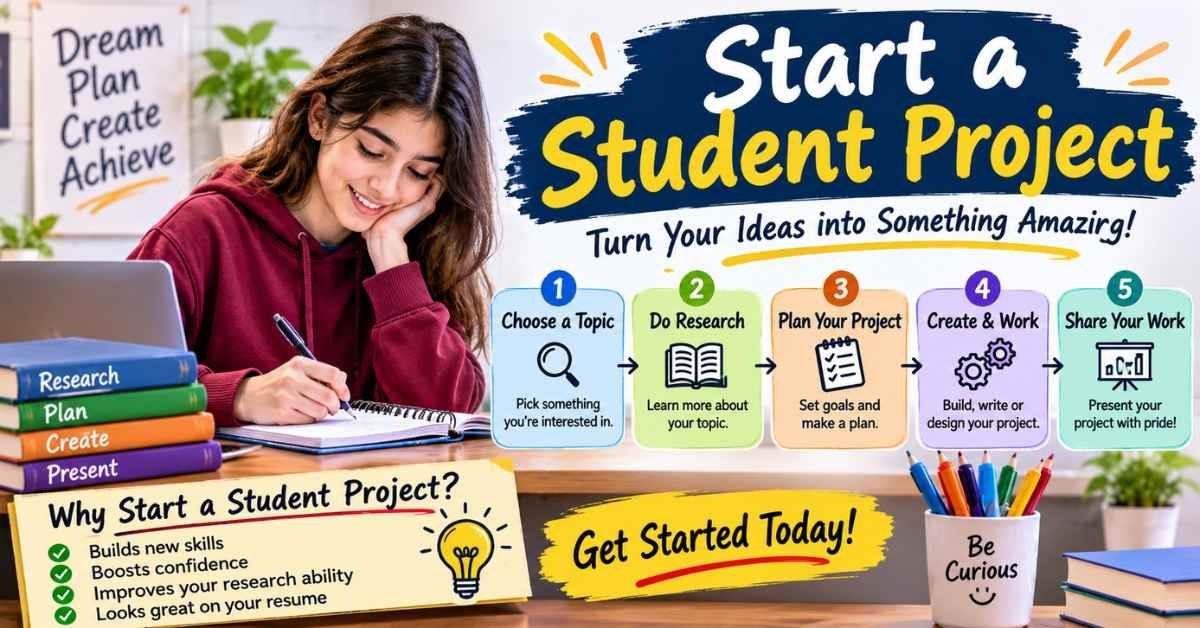
If your school does not offer an activity you want, consider proposing one.
Ideas include:
- Book exchange
- Peer study group
- Student newsletter
- Recycling campaign
- Art display
- Homework-support table
- Cultural-interest group
- Student podcast
- School garden
- Charity collection
Speak with a teacher or administrator before using school space, logos, equipment, or communication channels.
What to Do at School When You Are Alone
Being alone during one break does not automatically mean something is wrong. Some students genuinely need quiet time after several busy classes.
Comfortable solo activities include:
- Reading in the library
- Drawing
- Journaling
- Finishing homework
- Walking in a supervised area
- Solving a puzzle
- Visiting a club room
- Helping with a school task
If you want company but feel unsure about approaching people, use a low-pressure connection:
- Ask a practical question.
- Sit near an open activity.
- Bring a game another person can join.
- Attend a club built around a shared interest.
- Ask a librarian or counselor about lunch groups.
- Return to the same activity regularly.
Friendship usually develops through repeated contact, not one perfect conversation.
If loneliness becomes persistent or makes school feel unbearable, speak with a trusted teacher, counselor, parent, or another supportive adult.
Best School Activities by Age
Elementary School
Younger students often benefit from:
- Drawing
- Read-aloud activities
- Movement games
- Simple puzzles
- Building challenges
- Imaginative storytelling
- Teacher-led group games
- Hands-on crafts
Instructions should be short and materials easy to manage.
Middle School
Good middle-school activities include:
- Paper strategy games
- Comics
- Creative writing
- Assignment planning
- Collaborative challenges
- School clubs
- Art projects
- Phone-free social activities
Middle-school students usually want activities that feel independent without being childish.
High School
Useful high-school activities include:
- Homework preparation
- Independent projects
- Peer tutoring
- Academic competitions
- Student leadership
- Career exploration
- Volunteering
- School publications
- Debate and subject clubs
Teenagers are more likely to engage when activities connect with real skills, personal interests, or future goals.
Inclusive Activities for Different Needs
For students with limited mobility
Suitable options include:
- Tabletop games
- Drawing
- Puzzles
- Reading
- Creative writing
- Seated movement
- Library activities
- Student leadership
- Collaborative storytelling
Schools should offer alternatives that provide equal participation rather than placing students on the side of a physical activity.
For students with social anxiety
Lower-pressure choices include:
- Solo creative work
- Structured pair activities
- Interest-based clubs
- Written conversation prompts
- Small, predictable groups
- Library programs
- Cooperative games without public performance
For neurodivergent students
Helpful activity features may include:
- Clear instructions
- Predictable steps
- Visual timers
- Choice boards
- Low-sensory spaces
- Repetitive calming activities
- Movement options
- Permission to participate without speaking publicly
Needs differ between individuals. Students should be able to communicate what helps without being expected to represent everyone with the same diagnosis.
For students without supplies
Try:
- Mental word games
- Memory recall
- Observation challenges
- Silent storytelling
- Planning
- Breathing
- Conversation
- Approved walking
- Reviewing the lesson mentally
Teacher-Friendly Ways to Manage Student Free Time
Create an Early-Finisher Choice Board
Divide a classroom choice board into six categories:
- Review
- Read
- Create
- Solve
- Organize
- Help
Keep the choices limited, clear, and easy to begin without repeated instructions.
Prepare Five-Minute Activity Cards
Each card can include one:
- Question
- Creative prompt
- Vocabulary challenge
- Reflection activity
- Movement option
- Logic puzzle
Activity cards reduce the need to invent something whenever a lesson finishes early.
Choose Non-Elimination Games
Students who lose immediately spend most of the game watching everyone else. Choose formats where all participants remain involved.
Team puzzles, collaborative stories, whole-class drawing, category games, and group challenges can protect student belonging while maintaining engagement.
Give Students Meaningful Choice
Too many choices can create confusion. Offer a small menu and define:
- Available materials
- Noise level
- Group size
- Time limit
- Cleanup process
- Stopping signal
Look Beyond the Behavior
A student who appears bored may be:
- Underchallenged
- Confused
- Anxious
- Tired
- Overstimulated
- Socially disconnected
- Struggling with attention
- Afraid to ask for help
An extra worksheet will not solve every form of disengagement. A brief private conversation may reveal a more useful response.
Quick School Activity Selector
| Activity | Time | Materials | Group | Noise | Permission |
|---|---|---|---|---|---|
| Six-word story | 2 minutes | Paper | Solo | Silent | Usually not |
| Review five terms | 5 minutes | Notes | Solo | Silent | Usually not |
| Organize assignments | 5–10 minutes | Planner | Solo | Silent | Usually not |
| Dots and boxes | 10 minutes | Paper | Pair | Quiet | Ask first |
| Library visit | 15+ minutes | None | Solo | Silent | Often required |
| Board game | 20+ minutes | Game | Group | Quiet | Ask first |
| Walking break | 5–15 minutes | None | Solo/pair | Low | Required |
| Student club | Ongoing | Varies | Group | Varies | School approval |
Frequently Asked Questions
What can you do when you are bored at school?
When you are bored at school, first check whether you are confused, tired, or finished with your work. Appropriate options include improving your notes, reading, organizing assignments, drawing, solving a puzzle, playing a quiet paper game, visiting the library, or joining a supervised lunch activity.
What should you do after finishing your work?
Check your answers and confirm that you followed every instruction. Then choose an approved early-finisher activity such as reading, creating flash cards, drawing a concept map, completing an extension question, or organizing upcoming assignments.
What can students do without phones?
Students can read, draw, journal, create comics, solve puzzles, play paper games, practice memory recall, organize homework, join a board game, walk during recess, or participate in a school club.
What are quiet things to do in class?
Quiet classroom activities include summarizing the lesson, improving notes, reading, making flash cards, writing questions, creating a concept map, drawing, or solving a paper puzzle. Use unrelated activities only after completing assigned work or receiving permission.
What can you do at school with no materials?
Without materials, you can play a mental alphabet game, recall lesson information, create a story in your head, observe and describe an object, practice slow breathing, plan your afternoon, or talk with a classmate during an approved break.
What can you do alone during lunch?
You can read in the library, journal, complete homework, draw, solve a puzzle, walk in a supervised area, attend a lunch club, or help with an approved school task.
How can students make school more fun?
Participate in lessons, join clubs, try creative note-taking, play approved games, attend school events, talk with classmates, and connect assignments with personal interests. School becomes more engaging when you actively choose ways to participate.
Is it okay to tell a teacher you are bored?
Yes, but explain the problem respectfully and privately. Instead of saying only “I’m bored,” clarify whether the work feels too easy, confusing, repetitive, or disconnected from your interests. Then ask for help or an additional challenge.
Why do students feel bored in class?
Students may feel bored because the material is too easy, too difficult, repetitive, unclear, or personally irrelevant. Tiredness, stress, attention difficulties, low participation, and social disconnection can also contribute.
What are good teacher-approved classroom games?
Useful options include Dots and Boxes, Categories, word ladders, classroom trivia, collaborative storytelling, Four Corners, drawing challenges, non-elimination review games, and short team puzzles.
Choose an Activity That Fits the Moment
The best things to do at school depend on where you are, how much time you have, and what you are currently responsible for doing.
If a lesson feels boring, find a way to participate more actively. If you are confused, ask a specific question.And If you finish early, select a quiet extension activity. During lunch or after school, explore games, clubs, movement, creativity, and social opportunities.
Choose one quiet activity, one social activity, and one after-school option from this guide. The next time school feels slow, you will already have a plan.










1 thought on “60 Fun Things to Do at School: Smart Ideas for Students”