things to do upper west side: start with the American Museum of Natural History, walk through Central Park to Strawberry Fields, explore Riverside Park, visit Lincoln Center, and experience classic neighborhood institutions such as Zabar’s and the Beacon Theatre. For most visitors, the best plan combines one museum, one park, one local food stop, and one cultural or architectural experience. That gives you the Upper West Side’s real character without turning the day into a race between disconnected attractions.
The Upper West Side feels different from busier parts of Manhattan. It has major cultural landmarks, but it is also a lived-in neighborhood of brownstones, bookstores, bakeries, playgrounds, and tree-lined streets. You can spend a full day here without visiting Times Square or crossing to the east side of Central Park.
This guide helps you choose what is genuinely worth doing, how long each stop needs, and which places fit naturally together.
Upper West Side Experiences at a Glance
| Experience | Best for | Time needed | Cost level | Best nearby pairing |
|---|---|---|---|---|
| American Museum of Natural History | First-time visitors and families | 3–5 hours | Paid | Theodore Roosevelt Park |
| Central Park’s west side | Walkers and first-time visitors | 1–3 hours | Free | The Dakota and AMNH |
| Riverside Park | Couples, locals, and sunset seekers | 1–2 hours | Free | Zabar’s or Pier I |
| Lincoln Center | Culture and evening entertainment | 1–4 hours | Free to premium | American Folk Art Museum |
| The New York Historical | History and art lovers | 1.5–3 hours | Paid | Central Park and AMNH |
| The Dakota and Strawberry Fields | Music and architecture fans | 30–60 minutes | Free | Central Park walk |
| Beacon Theatre | Concert and comedy audiences | Event length | Paid | West 72nd Street dining |
| Grand Bazaar NYC | Vintage and local shopping | 1–2 hours | Free to browse | AMNH |
| Zabar’s | Classic New York food | 30–60 minutes | Low to moderate | Central Park picnic |
| West Side Community Garden | Quiet local discovery | 20–40 minutes | Free | Northern neighborhood walk |
If you have only two hours, stay around West 72nd–81st Streets. If you have half a day, choose either the Natural History Museum or a park-and-landmarks walk.
With a full day, begin with a museum, eat locally, walk through one park, and finish at Lincoln Center, Symphony Space, or the Beacon Theatre.
Know Where the Upper West Side Actually Is
The Upper West Side is generally understood as the part of Manhattan between West 59th and West 110th Streets, with Central Park on the east and the Hudson River on the west.
The neighborhood is long enough that poor planning can lead to unnecessary backtracking. It helps to divide it into three sections:
- Lincoln Square, West 59th–72nd Streets: Columbus Circle, Lincoln Center, public cultural spaces, and southern park entrances
- Museum and landmark district, West 72nd–86th Streets: The Dakota, Strawberry Fields, AMNH, The New York Historical, Zabar’s, and the Beacon Theatre
- Northern Upper West Side, West 86th–110th Streets: Symphony Space, community gardens, quieter residential blocks, and northern Riverside Park access
Columbia University, Tom’s Restaurant, Cathedral of St. John the Divine, and Grant’s Tomb are worthwhile nearby attractions, but they sit in or beside Morningside Heights, north of the Upper West Side’s commonly accepted boundary.
Add them as an extension rather than squeezing them into a short neighborhood visit.
1. Explore the American Museum of Natural History
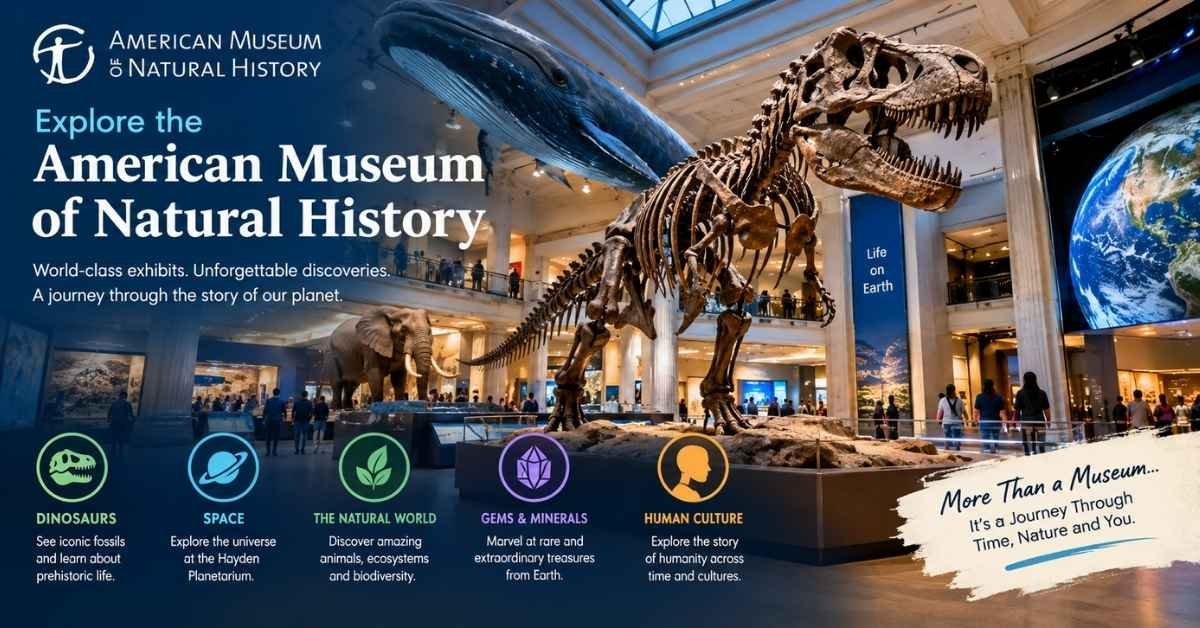
The American Museum of Natural History, usually shortened to AMNH, is the neighborhood’s most important indoor attraction. It contains dinosaur fossils, animal dioramas, gems and minerals, anthropology galleries, the Milstein Hall of Ocean Life, and the Richard Gilder Center for Science, Education, and Innovation.
The museum is too large to approach without a plan. First-time visitors can build a strong three-hour route around the dinosaur halls, the blue whale, one or two cultural galleries, and the Gilder Center.
Families may want more breaks and fewer halls. Trying to see everything usually leads to museum fatigue.
Admission has an important distinction: New York State residents can access general admission on a pay-what-you-wish basis with qualifying identification, while standard prices apply to visitors from outside the state. Ticketed exhibitions and shows can cost more. Check the official AMNH visitor page before buying tickets.
Best for: First-time visitors, families, science lovers, and rainy days.
Time needed: Three to five hours.
Pair it with: Theodore Roosevelt Park, The New York Historical, or a short Central Park walk.
2. Add the Hayden Planetarium Only If It Fits Your Day
The Hayden Planetarium is part of the Rose Center for Earth and Space at AMNH. Its space shows can be memorable, particularly for children and visitors interested in astronomy, but they require an additional timed commitment.
Do not book a show merely because it appears on every Upper West Side attractions list. Add it when astronomy is a priority or when you want a seated break during a long museum visit.
Skip it if you have only two or three hours and would rather see the fossil halls, blue whale, gems, or Gilder Center.
Check whether your selected ticket includes the desired program, then build the museum route around the showtime. Arriving at the wrong side of the building a few minutes before the performance creates unnecessary stress.
Best for: Astronomy enthusiasts and school-age children.
Planning tip: Reserve a time that divides the museum visit naturally rather than interrupting a must-see gallery.
3. Visit The New York Historical
The New York Historical offers a more focused museum experience than AMNH. Its collections and changing exhibitions examine New York and American history, while the Center for Women’s History, Tiffany lamps, and the DiMenna Children’s History Museum broaden its appeal.
Choose this museum if you prefer social history, decorative arts, politics, or a quieter cultural visit. It is also easier to fit into a half-day itinerary because the building is more manageable than AMNH.
The two museums stand close together on Central Park West, but visiting both in full on the same day can be tiring. A better plan is to give one museum priority and use the other only for a specific exhibition.
Check the official New York Historical website for current exhibitions, admission, and hours.
Best for: Adults, older children, history enthusiasts, and repeat NYC visitors.
Time needed: About two hours, longer for special exhibitions.
Pair it with: Strawberry Fields or selected AMNH highlights.
4. Take a Break in Theodore Roosevelt Park
Theodore Roosevelt Park surrounds the American Museum of Natural History and acts as a useful pause between indoor attractions. Its paths, lawns, benches, and trees provide breathing space after several hours inside the museum.
This is not a destination that needs its own morning. Its value comes from its location. Families can give children time to move, solo visitors can sit with coffee, and museum-goers can decide whether they still have enough energy for Central Park.
The park also connects the Central Park West side of AMNH with the Gilder Center entrance on Columbus Avenue. That makes it useful when meeting other people or choosing the least disruptive entrance for your museum plan.
Best for: A short rest, families, and museum visitors.
Time needed: Fifteen to forty-five minutes.
5. Enter Central Park With a Specific Destination
“Visit Central Park” is weak advice. The park covers hundreds of acres, and the correct Upper West Side entrance depends on what you want to see.
Enter around West 72nd Street for Strawberry Fields and the Imagine Mosaic. Use entrances around West 77th–81st Streets for Shakespeare Garden, Belvedere Castle, Turtle Pond, and the Great Lawn.
Enter closer to West 86th–90th Streets when the Jacqueline Kennedy Onassis Reservoir is your priority.
If you are starting near Lincoln Center or Columbus Circle, the southern entrances work better for Sheep Meadow, the Mall, or a shorter park visit. Do not cross deep into the park when your next reservation is back on Broadway or Riverside Drive.
Best for: Walkers, photographers, families, and budget travelers.
Time needed: One hour for a targeted route; several hours for broader exploration.
Expert tip: Choose the exit before choosing the entrance.
6. See the Dakota and Strawberry Fields Together
The Dakota stands at Central Park West and West 72nd Street. The landmark apartment building is known for its distinctive architecture, famous residents, connection with Rosemary’s Baby, and association with John Lennon and Yoko Ono.
The interior is private, so admire it from the sidewalk without blocking the entrance or photographing residents. From there, cross Central Park West and follow the path into Strawberry Fields, where the Imagine Mosaic serves as a memorial to Lennon.
These sites belong in one stop because they share geography and history. Early morning is usually quieter than midday, when tour groups and musicians often gather around the mosaic.
Best for: Music fans, architecture lovers, and first-time visitors.
Time needed: Thirty to sixty minutes.
Pair it with: A northbound walk to The New York Historical or a southbound walk toward Lincoln Center.
7. Find Belvedere Castle and Shakespeare Garden
Belvedere Castle and Shakespeare Garden form one of the best compact walks from the museum district. The garden contains plants connected with Shakespeare’s works, while the castle offers an elevated view across Turtle Pond and the surrounding park.
The route includes slopes and steps, so visitors with mobility concerns should check current access and choose suitable paths.
In spring and early summer, the garden provides more color. During fall, the surrounding foliage becomes the main attraction.
This is a better Central Park choice than attempting the entire reservoir loop when you also plan to visit AMNH. It adds scenery and architecture without taking over the whole day.
Best for: Couples, photographers, garden lovers, and museum visitors.
Time needed: Forty-five to ninety minutes.
Pair it with: AMNH or The New York Historical.
8. Walk or Run Around the Reservoir
The Jacqueline Kennedy Onassis Reservoir provides open skyline views and one of Central Park’s best-known running routes. Its loop is roughly 1.6 miles, but you do not need to complete the entire circuit to appreciate it.
Walkers should stay aware of posted directions and avoid blocking runners. Early mornings bring a local fitness atmosphere, while late afternoon produces softer light.
The path offers limited shade, so midday summer conditions can feel uncomfortable.
If your itinerary continues on the Upper West Side, walk part of the western edge and exit on the same side. Completing the loop may leave you farther east than expected.
Best for: Runners, walkers, skyline photography, and repeat visitors.
Time needed: Thirty to sixty minutes.
Skip it if: You want gardens, playgrounds, or cultural landmarks rather than an open exercise route.
9. Choose Riverside Park for a More Local Walk
Riverside Park runs along the Hudson River and feels calmer than the busiest parts of Central Park. Its layered paths, lawns, playgrounds, monuments, sports areas, and waterfront views attract residents walking dogs, running, cycling, and meeting friends.
The park is long, so choose a specific section. Around West 72nd–79th Streets, you can combine the river with Zabar’s and the museum district. Farther north, the paths feel quieter and connect with historic monuments.
Riverside Park South, below West 72nd Street, offers broad waterfront space and convenient access from Lincoln Square.
Entrances do not always lead directly to the water because roads, slopes, and different park levels intervene. Look at your route before descending, especially when using a stroller or wheelchair.
Best for: Couples, runners, families, cyclists, and travelers seeking a local atmosphere.
Time needed: One to two hours.
Best moment: Late afternoon through sunset.
10. Watch the Hudson River Sunset Near Pier I
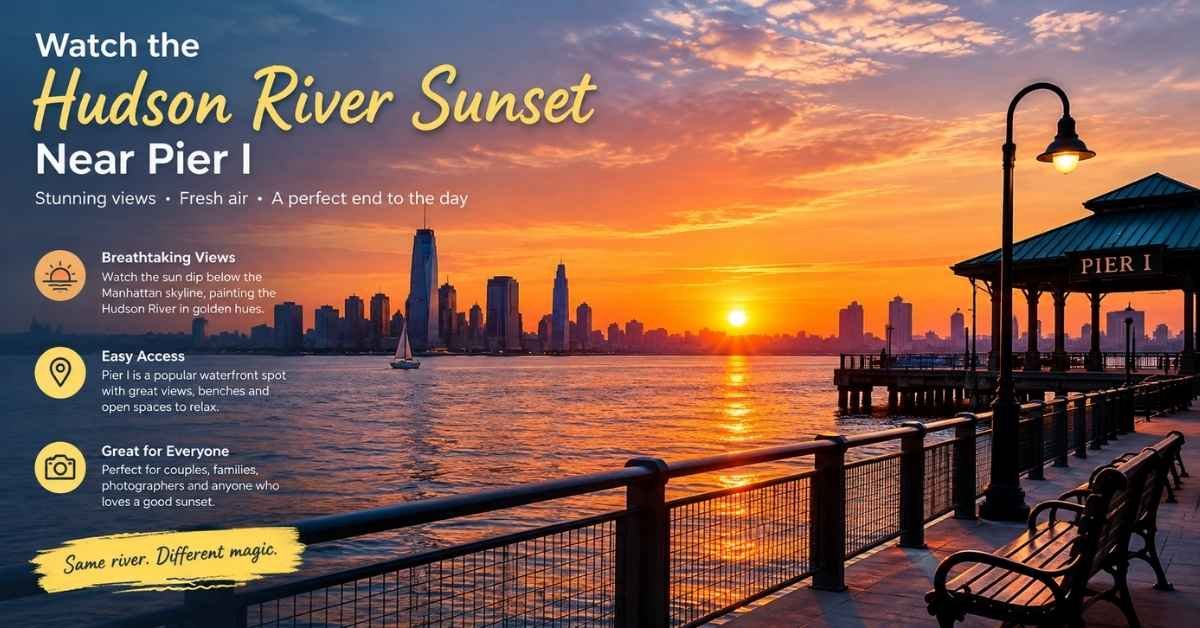
Pier I and the surrounding Riverside Park South paths create an easy sunset plan. The west-facing river view changes quickly as the light falls behind New Jersey, while lawns and seating areas make it possible to slow down without buying a ticket.
The nearby café is seasonal and weather-dependent, so do not build the entire evening around it without checking current operations. Bring a drink or picnic instead, then walk north or south along the waterfront.
This route works well after an afternoon around Lincoln Center or West 72nd Street.
Leave the more isolated park paths after dark if you are unfamiliar with the area, and return to the street through a well-used exit.
Best for: Couples, families, photographers, and free activities.
Time needed: One hour.
Weather backup: David Rubenstein Atrium or a nearby cultural venue.
11. See the Soldiers’ and Sailors’ Monument
The Soldiers’ and Sailors’ Monument rises above Riverside Drive near West 89th Street. Its classical form commemorates Union Army soldiers and sailors from the Civil War and gives an architecture-focused walk a clear destination.
The monument is most worthwhile as part of a Riverside Park or Riverside Drive route. Check current restoration or access conditions before making a special journey, because the surrounding area and interior access can change.
Continue along Riverside Drive to see apartment architecture and river views, or turn toward Broadway for cafés and subway access.
Best for: History and architecture enthusiasts.
Time needed: Fifteen to thirty minutes.
Pair it with: Riverside Park and northern Upper West Side streets.
12. Experience Lincoln Center Without Buying a Show Ticket
You do not need opera tickets to enjoy Lincoln Center. The campus includes public plazas, fountains, architecture, art, indoor gathering spaces, and areas where rehearsals or performances may be visible.
Begin at Josie Robertson Plaza, then explore the public areas around David Geffen Hall and the Metropolitan Opera House. The David Rubenstein Atrium offers an indoor place to sit and often hosts public events.
Lincoln Center also presents free and choose-what-you-pay programming throughout the year. Check the official Lincoln Center calendar instead of assuming every event requires a premium ticket.
This is one of the best free things to do on the Upper West Side when you enjoy architecture and performing arts but do not have time for a full production.
Best for: Budget travelers, architecture lovers, and short visits.
Time needed: Thirty to ninety minutes.
13. Attend a Performance at Lincoln Center
Lincoln Center is not one theater. Its campus supports opera, ballet, orchestral music, chamber music, jazz, film, drama, student performances, and public programming.
Choose by interest rather than prestige. The Metropolitan Opera suits travelers who want a grand, formal production. New York City Ballet and the New York Philharmonic offer different styles of performance.
Film at Lincoln Center, the Chamber Music Society, Jazz at Lincoln Center, and Juilliard events may suit narrower interests or smaller budgets.
Check the performance length, intermission, age recommendations, accessibility, and late-seating policy. Arrive early enough to find the correct building; “Lincoln Center” on a ticket does not tell you which entrance to use.
Best for: Couples, culture lovers, and memorable evenings.
Time needed: Two to four hours, including arrival.
Booking tip: Compare official venue calendars before using a third-party ticket marketplace.
14. Check the David Rubenstein Atrium Calendar
The David Rubenstein Atrium is one of the neighborhood’s most useful but underexplained cultural spaces. It is open to the public, offers seating, and hosts recurring community events and performances.
Lincoln Center states that entry to the Atrium is free and does not require a ticket for ordinary public access. Check current Atrium information.
The Atrium works especially well when rain interrupts a park walk or you need a comfortable pause before an evening performance. Event capacity and ticket procedures can differ, so check individual listings.
Best for: Free cultural activities, solo travelers, and rainy days.
Time needed: Twenty minutes without an event; longer for a performance.
Pair it with: Lincoln Center Plaza or the American Folk Art Museum.
15. Visit the American Folk Art Museum
The American Folk Art Museum offers a smaller, more focused alternative to Manhattan’s enormous museums. Its exhibitions explore folk and self-taught art, often through works that fall outside conventional academic traditions.
The museum is useful when you have less than an hour, want an indoor stop near Lincoln Center, or prefer a quieter gallery experience.
Admission has traditionally been free, but confirm current hours, exhibitions, and visitor policies before arriving.
Because the museum is compact, the strength of a visit depends heavily on the current exhibition. Look at what is showing instead of adding it automatically to your itinerary.
Best for: Art lovers, budget travelers, and rainy days.
Time needed: Thirty to sixty minutes.
Pair it with: Lincoln Center or Columbus Circle.
Learn More: Nicaragua Things to Do: 25 Best Attractions & Adventures
16. See a Show at the Beacon Theatre
The Beacon Theatre is a historic performance venue on Broadway near West 74th Street. Its ornate interior gives concerts and comedy shows a more intimate atmosphere than an arena.
The Beacon is only an attraction when something you want to see is scheduled. Check the official calendar, compare seating areas, and arrive early enough to clear entry procedures.
Its location near express and local subway options makes it easy to combine with dinner, the Dakota, Strawberry Fields, or a bakery stop.
Do not expect a daytime interior visit unless an official tour or event is available. The exterior alone takes only a few minutes.
Best for: Music, comedy, date nights, and evening activities.
Time needed: The full event evening.
Pair it with: Dinner around West 72nd Street.
17. See What Is Playing at Symphony Space
Symphony Space near Broadway and West 95th Street presents film, literature, music, family programs, and live conversation. It feels more neighborhood-oriented than Lincoln Center and gives visitors a reason to explore the northern Upper West Side after dark.
The calendar matters more than the building itself. Look for a performance that fits your interests, then build the evening around nearby food or a late-afternoon Riverside Park walk.
This is a strong choice for repeat NYC visitors who have already experienced Broadway and the major cultural institutions.
Best for: Literature, film, music, and local evening culture.
Time needed: Event length.
Weather suitability: Excellent for rainy or cold evenings.
18. Follow an Upper West Side Architecture Route
The neighborhood’s residential buildings create one of Manhattan’s best free architecture walks. Start near Columbus Circle or Lincoln Center and travel north without zigzagging.
Notable exteriors include:
- The Dakota at West 72nd Street
- The Ansonia on Broadway
- The Dorilton near West 71st Street
- The Apthorp between West 78th and 79th Streets
- The San Remo on Central Park West
- The Belnord near West 86th Street
Look for Beaux-Arts ornament, towers, courtyards, stonework, and the large prewar apartment buildings that shape the Upper West Side skyline.
These remain private homes. Stay on public sidewalks, avoid photographing through windows, and do not obstruct entrances.
Best for: Architecture, photography, movie fans, and free sightseeing.
Time needed: Ninety minutes to three hours.
Expert tip: Choose Central Park West for grand facades or Broadway and West End Avenue for a broader neighborhood view.
19. Find Famous Movie and Television Locations
The Upper West Side often represents an idealized version of New York on screen. A self-guided route can connect real architecture with familiar films and television shows.
See the Dakota from Rosemary’s Baby, 55 Central Park West from Ghostbusters, Zabar’s from You’ve Got Mail, and the Belnord exterior associated with Only Murders in the Building.
Central Park and Lincoln Center appear in countless productions, while the history of San Juan Hill and Lincoln Center is inseparable from the cultural background of West Side Story.
Tom’s Restaurant from Seinfeld sits north of the traditional Upper West Side boundary near Columbia University. Include it only as a Morningside Heights extension.
Best for: Film fans and repeat visitors.
Time needed: Two to four hours for a dedicated route.
Avoid: Disturbing residents or entering private property for photographs.
20. Browse Grand Bazaar NYC
Grand Bazaar NYC is a neighborhood market associated with vintage goods, art, jewelry, collectibles, crafts, and independent sellers. It works best for visitors who enjoy browsing unpredictable collections rather than shopping for one particular item.
The market does not operate like a permanent store, so confirm its day, theme, hours, and indoor or outdoor arrangements. Weather and special-event schedules can affect the experience.
Its location makes it easy to combine with AMNH, The New York Historical, Central Park, or brunch. Allow more time if a themed market matches your interests.
Best for: Vintage shoppers, art lovers, and Sunday outings.
Time needed: One to two hours.
Cost: Free to browse; purchases vary.
21. Step Into the West Side Community Garden
The West Side Community Garden is a small, resident-supported green space that feels worlds away from nearby avenues. Seasonal flowers—especially spring displays—make it one of the Upper West Side’s more photogenic hidden gems.
Opening periods can be limited, and volunteers maintain the space. Check current public hours, remain on permitted paths, keep noise low, and do not treat planted areas as a portrait studio.
The garden works as a quiet pause during a northern neighborhood walk. It is not large enough to justify crossing Manhattan on its own.
Best for: Garden lovers, photographers, and travelers seeking a peaceful local stop.
Time needed: Twenty to forty minutes.
Pair it with: Symphony Space, Broadway, or Riverside Park.
22. Browse Westsider Rare & Used Books
Westsider Rare & Used Books captures the cramped, curious character people hope to find in a Manhattan bookshop. Shelves rise through a narrow interior filled with used, rare, and out-of-print titles.
This is a better rainy-day detour than a major destination. Browse patiently, keep bags close, and remember that the compact layout may be difficult for wheelchairs, strollers, or large groups.
The store fits naturally into a Broadway walk near Zabar’s and the museum district. Even visitors who do not buy anything can appreciate how independent bookstores contribute to the Upper West Side’s literary identity.
Best for: Book lovers, solo travelers, and rainy afternoons.
Time needed: Twenty to sixty minutes.
23. Build a Central Park Picnic at Zabar’s
Zabar’s has served the Upper West Side since 1934 and remains one of its best-known food institutions. The market is associated with smoked fish, cheeses, coffee, baked goods, prepared food, and kitchenware.
It can also feel crowded and chaotic. Visit with a purpose: choose bagels, smoked fish, fruit, cheese, drinks, or prepared dishes for a Central Park or Riverside Park picnic.
The adjoining café offers a different experience from browsing the main market.
Do not expect a relaxed gourmet-store stroll during the busiest weekend periods. Go earlier, keep your order simple, and carry the food to a park bench or lawn.
Best for: Food lovers and picnic planning.
Time needed: Thirty to sixty minutes.
Pair it with: Riverside Park or the West 81st Street Central Park entrance.
24. Try One Classic Neighborhood Food Stop
The Upper West Side food scene deserves a place in your itinerary, but visiting five bakeries is not the same as exploring the neighborhood. Select one stop that matches the day.
Choose Barney Greengrass for an old-school sit-down experience centered on smoked fish and Jewish deli traditions. Choose Levain Bakery for a quick, rich cookie near West 74th Street.
Gray’s Papaya works for an inexpensive, fast New York snack, while Café Luxembourg suits a longer meal or date.
Daily Provisions and other modern cafés can be convenient near museum routes, but the best choice is usually the one closest to your next activity. Check current hours and reservations because restaurant information becomes outdated quickly.
Best strategy: Pair food with an attraction instead of building the route around social-media fame.
25. Take Younger Children to the Children’s Museum of Manhattan

The Children’s Museum of Manhattan, commonly called CMOM, is designed primarily for younger children through interactive exhibits, play, art, science, and scheduled activities.
It provides a valuable indoor alternative when a long AMNH visit would overwhelm toddlers or preschoolers.
Review the day’s programs, ticket requirements, stroller policies, and re-entry rules before visiting.
The museum’s current West 83rd Street location remains open, while its planned new home at West 96th Street and Central Park West is expected later. The museum currently states that the future building is planned to open in 2028, so guides claiming an earlier move are outdated. See CMOM’s official project update.
Best for: Toddlers, preschoolers, and early elementary-age children.
Time needed: Two to three hours.
Pair it with: A playground, simple lunch, or short Riverside Park visit.
Best Free Things to Do on the Upper West Side
You can build a rewarding Upper West Side day without paying for a major attraction. Good free options include:
- Walk through Central Park
- Watch the Hudson River sunset in Riverside Park
- Visit Strawberry Fields
- View the Dakota from the sidewalk
- Explore Lincoln Center’s public spaces
- Check for free events at the David Rubenstein Atrium
- Visit the American Folk Art Museum when free admission remains available
- Follow an architecture and movie-location route
- Browse Grand Bazaar NYC
- Visit West Side Community Garden during public hours
“Free” does not always include special exhibitions, performances, food, transportation, or optional donations. Check individual policies before visiting.
Best Indoor and Rainy-Day Activities
A rainy day does not require leaving the neighborhood. Build a compact route around one geographic zone.
For the museum district, prioritize AMNH, The New York Historical, Westsider Rare & Used Books, and a nearby meal.
Around Lincoln Square, combine the American Folk Art Museum, David Rubenstein Atrium, and a performance or film.
Families with young children can choose CMOM, while older children may prefer AMNH and the planetarium. Avoid crossing repeatedly between Riverside Drive and Central Park West during heavy rain.
Romantic Things to Do for Couples
The Upper West Side works well for dates because activities can flow naturally into dinner or a performance.
Good combinations include:
- Riverside Park at sunset followed by dinner
- Belvedere Castle and Shakespeare Garden
- The New York Historical followed by Café Luxembourg
- A Central Park picnic with food from Zabar’s
- An architecture walk ending at the Beacon Theatre
- Lincoln Center Plaza followed by opera, ballet, jazz, or film
- A bookstore and bakery walk on a rainy afternoon
The best Upper West Side date feels relaxed. Choose two or three compatible experiences instead of filling every hour.
Things to Do on the Upper West Side at Night
At night, the neighborhood’s focus shifts from museums and parks to culture, food, and live performances.
Check schedules for:
- Lincoln Center
- Beacon Theatre
- Symphony Space
- Jazz at Lincoln Center
- Film at Lincoln Center
- Smaller music, comedy, and literary events
Walk through Riverside Park for sunset rather than making unfamiliar park paths your late-night route. After a show, Broadway, Amsterdam Avenue, and Columbus Avenue provide more activity and transportation options.
A Two-Hour Upper West Side Route
Begin at the West 72nd Street subway station. See the Dakota, cross into Strawberry Fields, and spend a short time around the Imagine Mosaic.
Walk north along Central Park West past The New York Historical, then finish at AMNH and Theodore Roosevelt Park.
If time remains, continue west for Levain Bakery or Zabar’s. Do not enter AMNH unless you can extend the visit; the museum deserves more than a rushed final hour.
A Half-Day Museum and Park Itinerary
Start with three carefully chosen hours inside AMNH. Leave through the Central Park West side, rest in Theodore Roosevelt Park, and eat nearby.
Finish with either:
- Belvedere Castle and Shakespeare Garden, or
- The Dakota and Strawberry Fields
Choose one park route. Attempting both after a museum visit creates unnecessary walking.
A Full-Day Upper West Side Itinerary
Morning
Visit AMNH or The New York Historical. If museums are not your priority, replace them with a Central Park route.
Lunch
Pick up food at Zabar’s for a picnic, eat at Barney Greengrass, or choose a restaurant near your afternoon route.
Afternoon
Walk through Riverside Park, browse Westsider Rare & Used Books, or follow the neighborhood’s architecture north or south.
Evening
Finish at Lincoln Center, the Beacon Theatre, or Symphony Space. Check schedules before finalizing the daytime route.
A Family-Friendly One-Day Plan
Choose one primary indoor attraction: AMNH for school-age children or CMOM for younger children.
Follow it with an outdoor movement break in Theodore Roosevelt Park, Central Park, or Riverside Park.
Keep lunch simple and close. After eating, add only one light activity, such as a playground, short castle walk, bookstore, or early performance.
A child who has already spent four hours in a museum rarely needs another major attraction.
Getting to and Around the Upper West Side
The 1 train makes local stops along Broadway. The 2 and 3 trains provide express service to selected Broadway stations.
The B and C trains run along Central Park West and are usually more convenient for AMNH, Strawberry Fields, and park entrances.
The A and D trains serve Columbus Circle but do not provide local service throughout the neighborhood. Crosstown buses can help when moving between the Upper East and Upper West Sides, although traffic affects journey times.
The most efficient walking strategy is simple: travel north or south, group stops in the same zone, and avoid repeatedly crossing between Central Park and the Hudson River.
What to Book and What to Keep Flexible
Book ahead when the activity depends on a timed place:
- Major Lincoln Center performances
- Beacon Theatre shows
- Popular AMNH dates or add-on experiences
- Children’s Museum tickets
- High-demand restaurants
- Guided architecture or neighborhood tours
Check shortly before visiting:
- Free cultural programs
- Grand Bazaar events
- Community-garden hours
- Seasonal park cafés
- Outdoor performances
- Museum exhibitions
Keep park walks, exterior architecture, bookstores, and picnic stops flexible. That gives you room to respond to weather, lines, or tired children.
Common Upper West Side Planning Mistakes
- Trying to cover the entire neighborhood in two hours: West 59th to West 110th Street is a meaningful distance.
- Spending all day inside AMNH: Choose highlights and leave time for the neighborhood.
- Entering Central Park without a target: Decide which landmark and exit you need.
- Crossing repeatedly between both parks: Pick one side for a short visit.
- Assuming Lincoln Center requires an expensive ticket: Public spaces and free programs are available.
- Visiting famous food stops only because they are famous: Location and timing matter more.
- Treating Morningside Heights as the Upper West Side: Label nearby extensions honestly.
- Trusting an old restaurant list: Verify that each business remains open.
- Planning only outdoor activities: Keep a nearby indoor alternative.
- Leaving too little time before a performance: Venue entry and finding the correct hall take time.
Use the PARK Framework to Plan Your Day
- P — Pick an anchor: Choose one museum, park, or performance.
- A — Add nearby stops: Remain inside the same walkable zone.
- R — Reserve timed experiences: Secure tickets before filling the remaining hours.
- K — Keep a weather backup: Choose a nearby indoor replacement.
For example, AMNH can be your anchor. Add Theodore Roosevelt Park and Zabar’s, reserve a planetarium show only if it matters, and keep The New York Historical or a bookstore as your weather backup.
Frequently Asked Questions
What Is the Upper West Side Best Known For?
The Upper West Side is known for Central Park, Riverside Park, the American Museum of Natural History, Lincoln Center, prewar architecture, family-friendly streets, bookstores, bakeries, and longstanding food institutions.
Is the Upper West Side Worth Visiting?
Yes. It is especially worthwhile for visitors interested in museums, parks, architecture, performing arts, and a residential side of Manhattan.
Travelers with only one short first trip to NYC may want to combine it with Central Park rather than dedicate multiple days.
How Long Should You Spend on the Upper West Side?
Allow at least half a day for one major attraction and nearby streets. A full day gives you enough time for a museum, food stop, park, and evening performance.
Is the Upper West Side Walkable?
Yes, but it is longer than many visitors expect. Group stops by neighborhood zone and travel north or south instead of zigzagging between Central Park and Riverside Park.
What Can You Do Near the Natural History Museum?
Nearby choices include Theodore Roosevelt Park, The New York Historical, Belvedere Castle, Shakespeare Garden, Central Park, Zabar’s, Levain Bakery, and the Children’s Museum of Manhattan.
Can You Visit Lincoln Center for Free?
Yes. You can explore public campus spaces and the David Rubenstein Atrium without purchasing a major performance ticket.
Free and choose-what-you-pay programs are also offered, but dates and entry procedures vary.
Is the Upper West Side Good for Families?
Yes. AMNH, CMOM, playgrounds, parks, and family performances create strong options. The main risks are overplanning, long walks, and museum fatigue.
What Should You Do on the Upper West Side When It Rains?
Choose AMNH, The New York Historical, the American Folk Art Museum, CMOM, David Rubenstein Atrium, Westsider Rare & Used Books, or a scheduled performance.
Upper West Side or Upper East Side: Which Is Better?
Choose the Upper West Side for natural history, Lincoln Center, Riverside Park, brownstones, and a relaxed residential atmosphere.
Choose the Upper East Side for Museum Mile, including the Metropolitan Museum of Art and Guggenheim, plus more formal architecture and shopping.
Where Should You Watch the Sunset?
Riverside Park and Riverside Park South provide the neighborhood’s best west-facing views. The area around Pier I is convenient, but weather and seasonal operations should be checked.
Experience the Upper West Side Without Rushing It
The best Upper West Side day does not depend on visiting 25 places. Choose one cultural anchor, add a park or architecture walk, eat somewhere connected to the neighborhood, and leave enough space to notice the residential streets between major attractions.
For a first visit, the strongest combination is AMNH, Strawberry Fields and the Dakota, a local food stop, and either Riverside Park or Lincoln Center.
Families can shorten the walking and prioritize one museum. Couples can move the day later and finish with sunset or a performance. Repeat visitors can skip the headline attractions and explore gardens, architecture, bookstores, and smaller cultural venues.
The neighborhood rewards good pacing. Travel in one direction, keep the route compact, and let the Upper West Side feel like a real part of New York rather than another checklist.