
Things to do Hood River include walking along the Columbia River waterfront, driving the Hood River Fruit Loop, watching or learning windsurfing, hiking through the Columbia River Gorge, visiting orchards and exploring downtown restaurants, breweries and shops. One day is enough for the main Hood River attractions, but two days gives you time to experience both the riverfront and Hood River Valley without rushing.
Located approximately an hour east of Portland, Hood River works equally well as a day trip, romantic weekend or outdoor family vacation. Although wine and craft beer receive plenty of attention, the area also offers museums, scenic railway journeys, fruit picking, mountain biking, rafting and year-round recreation near Mount Hood.
Hood River at a Glance
| If you want… | Prioritize… |
|---|---|
| The classic Hood River experience | Waterfront, downtown and Fruit Loop |
| Outdoor adventure | Windsurfing, rafting, hiking or mountain biking |
| A family day | Waterfront Park, WAAAM and an orchard |
| A romantic weekend | Fruit Loop, viewpoints and a special dinner |
| A trip without alcohol | Farms, museums, trails and river activities |
| Free activities | Waterfront, downtown and scenic viewpoints |
| A rainy-day plan | WAAAM, History Museum, cafés and shops |
| A fall getaway | Apples, pears, U-pick orchards and harvest events |
| A winter trip | Mount Hood skiing, snowshoeing and train excursions |
Before you go: Check current farm hours, trail alerts, river conditions, air quality and wildfire information. Hood River’s farms and outdoor attractions can change their operations with little notice.
Is Hood River Worth Visiting?
Hood River is worth visiting for its unusual combination of river sports, Cascade Mountain scenery, orchards, wineries and small-town character. Few destinations allow you to watch kiteboarders in the morning, pick fruit beneath Mount Hood in the afternoon and finish with dinner in a walkable downtown.
The town is compact, but the wider destination is not. Downtown, the waterfront, Fruit Loop, Columbia River Gorge and Mount Hood are separate activity zones. A car is therefore helpful if you want to explore beyond the city center.
Hood River may not suit travelers seeking major museums, urban nightlife or a large shopping district. Its appeal comes from outdoor recreation, agricultural experiences, local food and scenic road trips.
How Many Days Do You Need in Hood River?
A half-day allows enough time for the waterfront and downtown. One full day can include those areas plus Panorama Point and a few Fruit Loop stops.
For most first-time visitors, two days is ideal. Add a third day if you want to go rafting, mountain biking, skiing or hiking around Mount Hood.
Understanding Hood River’s Main Areas
Downtown Hood River
Downtown centers around Oak Street and the surrounding blocks. This is the best area for restaurants, coffee shops, boutiques, galleries, historic buildings and evening walks.
The area is compact but hilly. Expect sloping streets and stairs rather than a completely level pedestrian district.
Hood River Waterfront
The waterfront sits on the opposite side of Interstate 84 from downtown. Its main recreation zones include Hood River Waterfront Park, Nichols Basin, the Event Site and the Spit.
These places serve different purposes. Waterfront Park is popular with families, Nichols Basin accommodates smaller non-motorized watercraft, and the Event Site is closely associated with windsurfing and kiteboarding.
Hood River Valley and Fruit Loop
The valley extends south toward Parkdale and Mount Hood. Its orchards, vineyards, farm stands and lavender fields form the 35-mile Hood River Fruit Loop.
You will need a car or bicycle to explore the loop. Individual farms set their own operating hours, admission rules and U-pick schedules.
Columbia River Gorge
The wider Gorge contains waterfalls, wildflower trails, viewpoints and sections of the Historic Columbia River Highway. Many attractions commonly included in Hood River guides are actually 20–50 minutes outside town.
Mount Hood and Washington
Mount Hood, Lost Lake, White Salmon, Bingen and the White Salmon River are worthwhile regional excursions. However, they should be treated as day trips near Hood River, not city attractions.
Best Things to Do on the Hood River Waterfront
1. Walk Through Hood River Waterfront Park
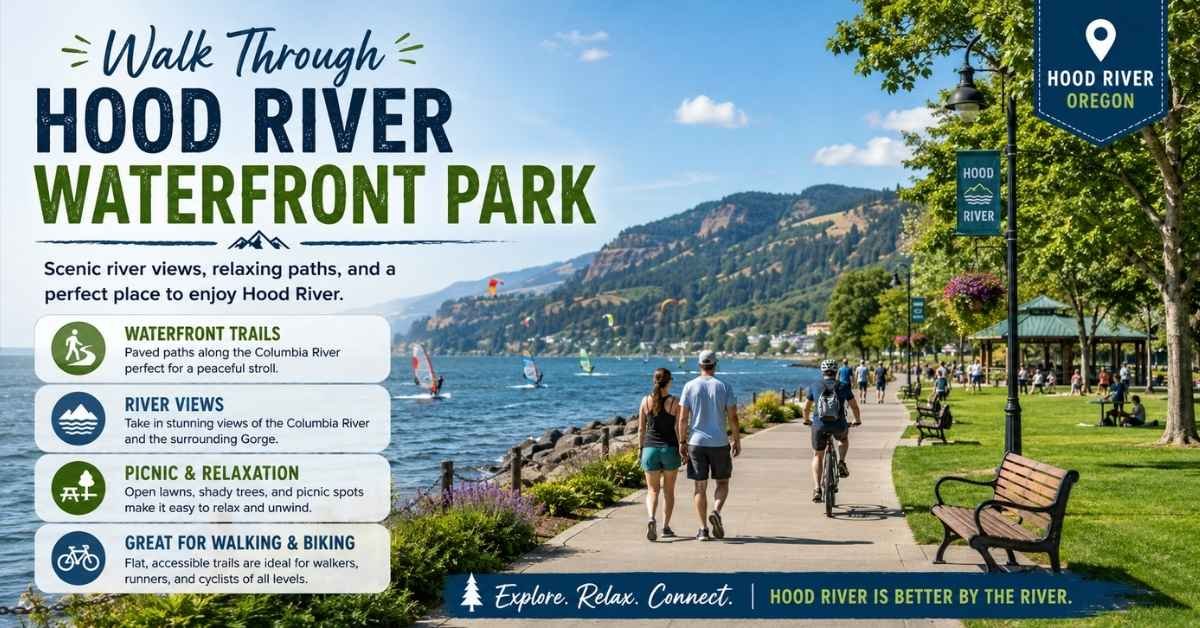
Hood River Waterfront Park is an easy first stop, especially after driving from Portland. A paved path follows the Columbia River past picnic areas, grassy spaces, a playground and places to watch river traffic.
The park works well for families because children can play while adults enjoy views across the Columbia River Gorge. Food, coffee and local breweries are also available around the waterfront district.
- Best for: Families, first-time visitors and relaxed walks
- Time needed: One to two hours
- Cost: Free
- Best season: Spring through fall
The waterfront can become windy even when downtown feels comfortable. Bring a light layer and keep loose picnic items secured.
2. Watch the Windsurfers and Kiteboarders
Hood River is internationally associated with windsurfing, kiteboarding and wingfoiling. Watching experienced riders race across the Columbia is one of the best free things to do in Hood River.
The Event Site and surrounding waterfront areas provide good viewing opportunities. Stay outside equipment-rigging and launch areas, where athletes need room to control large kites and boards.
- Best for: All ages and budget travelers
- Time needed: Thirty minutes to two hours
- Cost: Free
- Best conditions: Warm, windy summer afternoons
Sunset can produce beautiful river light, but wind often becomes part of the experience rather than a minor inconvenience.
3. Take a Windsurfing, Kiteboarding or Wingfoiling Lesson
Watching from shore is easy; entering the Columbia River is a more serious commitment. Beginners should book a lesson with a qualified local instructor rather than renting equipment and attempting to learn independently.
Windsurfing uses a sail attached to the board. Kiteboarding uses a large controllable kite, while wingfoiling combines a handheld wing with a hydrofoil board. Your instructor can help determine which sport matches your balance, fitness and comfort in the water.
- Best for: Active teenagers and adults
- Time needed: Half-day or multiple lessons
- Cost: Premium
- Reservation: Required or strongly recommended
- Best season: Generally late spring through summer
Lesson schedules depend on wind conditions. Keep part of your day flexible in case the instructor needs to adjust the start time or location.
4. Paddle or Kayak in Nichols Basin
Nichols Basin offers a more protected setting for kayaks, paddleboards and other small non-motorized watercraft. It is a more approachable starting point than paddling directly into the open Columbia River.
Protected does not mean risk-free. Cold water, wind, underwater hazards and changing conditions remain important. Wear a properly fitted life jacket and follow local launch rules.
- Best for: Paddleboarders, kayakers and active families
- Time needed: One to three hours
- Cost: Free with your own gear; moderate with rentals
- Reservation: Recommended for equipment rentals
Avoid jumping or diving from seawalls and pilings. Water depth and submerged objects are not always visible from shore.
Best Things to Do in Downtown Hood River
5. Explore Oak Street and Downtown Hood River
Downtown Hood River is small enough to explore without a strict plan. Walk along Oak Street, browse independent shops and stop for coffee, pastries or locally made products.
The streets rise away from the river, creating occasional views but also steeper walking. Comfortable shoes matter if you want to explore several blocks.
- Best for: Shopping, dining and an easy evening
- Time needed: Two to three hours
- Cost: Free to explore
- Best time: Late afternoon through dinner
Downtown is worth visiting, but it probably will not occupy an entire day. Combine it with the waterfront, a museum or Fruit Loop drive.
6. Visit the History Museum of Hood River County
The History Museum of Hood River County adds useful context to the region’s scenery. Exhibits explore Indigenous history, agriculture, transportation and the communities that developed along the Columbia River.
Understanding the county’s orchard and railroad history makes later visits to the Fruit Loop and Mount Hood Railroad more meaningful.
- Best for: History enthusiasts, families and rainy days
- Time needed: One to two hours
- Cost: Low
- Important: Confirm current opening days
The museum is a strong choice when rain or smoke makes a long outdoor activity less appealing.
7. Ride the Mount Hood Railroad
The Mount Hood Railroad departs from Hood River and travels through sections of the valley’s orchard and forest landscape. Available experiences can include scenic trains, rail-biking and seasonal event journeys.
Routes, durations and departure schedules vary. Some rides focus on traditional rail travel, while special excursions are designed around holidays or seasonal celebrations.
- Best for: Families, couples and train enthusiasts
- Time needed: Several hours
- Cost: Moderate to premium
- Reservation: Recommended
- Best season: Depends on the selected excursion
Check exactly what your ticket includes. The name may suggest a journey to Mount Hood, but excursion routes and mountain proximity differ by product.
8. Explore WAAAM
The Western Antique Aeroplane & Automobile Museum, commonly called WAAAM, contains an extensive collection of historic aircraft, automobiles, motorcycles and other transportation artifacts.
Many of the museum’s vehicles remain operational, giving it a different character from a collection of static replicas. Special demonstration days can provide an even more engaging experience.
- Best for: Families, aviation fans and multigenerational groups
- Time needed: Two to four hours
- Cost: Moderate
- Best use: Rainy, smoky or very hot days
WAAAM is arguably Hood River’s strongest indoor attraction and deserves more than a rushed 30-minute visit.
Best Things to Do Along the Hood River Fruit Loop
9. Drive the Hood River Fruit Loop
The Hood River Fruit Loop is a self-guided scenic route connecting orchards, farms, vineyards, cideries, bakeries and seasonal flower fields. The complete loop covers approximately 35 miles, but stopping at several businesses can easily fill a day.
Do not attempt to visit every location. Choose three to five stops based on what is in season and what your group actually enjoys.
A sensible Fruit Loop plan might include:
- A scenic viewpoint
- A U-pick orchard or farm stand
- A lunch stop
- A lavender farm or winery
- A final cider, dessert or produce stop
- Best for: Families, couples and food-focused travelers
- Time needed: Half-day to full day
- Cost: Driving is free; purchases and tastings cost extra
- Best seasons: Spring blossoms through fall harvest
Each farm operates independently. Confirm its hours, U-pick availability, pet policy and picnic rules before arriving.
10. Take in the View From Panorama Point

Panorama Point provides an accessible view across Hood River Valley toward Mount Hood. It is a short driving detour rather than a hike, making it suitable for visitors with limited time or mobility.
Clear weather matters. Cloud cover or wildfire smoke can hide the mountain and reduce the value of the stop.
- Best for: Photographers, families and easy sightseeing
- Time needed: Fifteen to thirty minutes
- Cost: Free
- Best time: Clear morning or late-afternoon light
Panorama Point fits naturally at the beginning or end of a Fruit Loop drive.
11. Pick Fruit at a Hood River Orchard
Fruit picking connects visitors directly with the valley’s agricultural character. Depending on the season, farms may offer cherries, apples, pears, berries or other produce.
U-pick availability can change quickly due to weather, demand and crop conditions. A farm listed as open may not necessarily have the fruit you want available that day.
- Best for: Families and food lovers
- Time needed: One to two hours
- Cost: Based on farm entry and produce purchased
- Reservation: Sometimes required for events or large groups
Wear closed or supportive shoes, bring sun protection and follow signs around working areas. Not every orchard allows visitors to picnic, bring pets or enter all crop sections.
Hood River Harvest Calendar
| Period | Typical experience |
|---|---|
| Late March through May | Orchard blossoms, depending on weather |
| Early summer | Berries and cherries |
| Mid-to-late summer | More fruit, flowers and farm stands |
| September and October | Apples, pears and harvest events |
| Winter | Reduced farm operations |
Treat this as a planning guide, not a guaranteed harvest schedule.
12. Walk Through a Lavender Farm
Lavender farms bring color and fragrance to the Hood River Valley during summer. Some locations offer U-pick flowers, farm-made products, photography areas or encounters with animals.
The bloom period is relatively short and weather-dependent. A lavender farm that looks spectacular in July may offer a very different experience earlier or later in the year.
- Best for: Couples, families and photographers
- Time needed: Thirty minutes to ninety minutes
- Cost: Free to moderate
- Best season: Usually summer
Check pet policies before visiting. Working farms may prohibit dogs even when other Fruit Loop stops welcome them.
13. Visit a Hood River Winery
Hood River Valley’s wineries combine cool-climate wine with views of vineyards, orchards and Cascade peaks. Some tasting rooms sit close to downtown, while others require a longer Fruit Loop drive.
Choose a winery based on the experience you want:
- Mountain view
- Quiet garden
- Food service
- Family-friendly seating
- Dog-friendly patio
- Formal guided tasting
- Casual glass of wine
- Best for: Couples and adult groups
- Time needed: One to two hours
- Cost: Moderate
- Reservation: Recommended on busy weekends
If you plan several tasting stops, assign a designated driver or arrange transportation.
14. Sample Hood River’s Craft Beer
Hood River has played an important role in Oregon’s craft-brewing culture. Downtown and waterfront breweries make it easy to finish a hike or river day with local beer and food.
Many breweries have patios and relaxed menus, but family and pet policies vary. Popular locations may become busy around dinner.
- Best for: Adult groups and casual evenings
- Time needed: One to two hours
- Cost: Moderate
One brewery can complement the day. A general Hood River itinerary does not need to become an extended brewery crawl unless that is your primary interest.
15. Try Local Cider or a Non-Alcoholic Tasting
The valley’s apples and pears naturally support a strong cider industry. Tastings can help you compare sweet, dry and fruit-forward styles while connecting the drink to the orchards you have just visited.
Hood River also has options for visitors who want a tasting-room atmosphere without alcohol. Look for non-alcoholic botanical drinks, local juice, coffee, kombucha or seasonal fruit products.
- Best for: Couples, food travelers and non-wine drinkers
- Time needed: One hour
- Cost: Low to moderate
This is one of the easiest ways to create a Hood River itinerary without wineries while still enjoying the valley’s agricultural culture.
16. Eat a Farm-to-Table Meal
Hood River’s orchards and farms influence its restaurant menus. Seasonal fruit, vegetables, meat and locally made drinks appear in downtown restaurants, food carts, bakeries and Fruit Loop cafés.
Rather than selecting a restaurant based only on popularity, consider where it fits into your route. A downtown dinner works well after the waterfront, while a farm lunch can prevent unnecessary driving during the Fruit Loop.
- Best for: Every traveler
- Time needed: One to two hours
- Cost: Budget to premium
Farmers markets can provide another direct connection to Hood River County producers. Verify current market days before building one into your itinerary.
Best Hiking and Biking Near Hood River
17. Walk the Hood River Pipeline Trail
The Hood River Pipeline Trail provides a short outdoor experience close to town. River, forest and infrastructure views give it a different character from the Gorge’s more famous waterfall hikes.
Local trail access and conditions can change, so verify the current route before leaving.
- Best for: Short outings and active families
- Time needed: One to two hours
- Cost: Free
- Difficulty: Easy to moderate, depending on the section
Choose this trail when you want some nature without spending half the day driving to a major trailhead.
18. Walk or Cycle Through the Twin Tunnels
The Historic Columbia River Highway State Trail connects Hood River and Mosier through the restored Twin Tunnels. The route offers Gorge views, historical context and a paved surface suitable for walking and cycling.
You do not need to complete the entire route. Turn around when your available time or fitness requires it.
- Best for: Cyclists, walkers and families with older children
- Time needed: Two to four hours
- Cost: Low; parking fees may apply
- Difficulty: Moderate due to distance and grades
Summer can become hot, particularly toward Mosier. Begin earlier and carry more water than you expect to need.
19. Mountain Bike in Post Canyon
Post Canyon is one of the region’s most important mountain-biking areas. Its trail network includes cross-country routes, technical descents and freeride features.
Beginners should select a suitable route or book local guidance. A trail recommendation from an experienced rider may be inappropriate for someone new to mountain biking.
- Best for: Intermediate and advanced riders, plus prepared beginners
- Time needed: Half-day or full day
- Cost: Free with your own bike; moderate to premium with rentals or guidance
- Difficulty: Varies considerably
Check trail conditions and seasonal closures. Riding muddy trails can damage them and create unnecessary maintenance work.
20. See Rowena Crest and Eastern Gorge Wildflowers
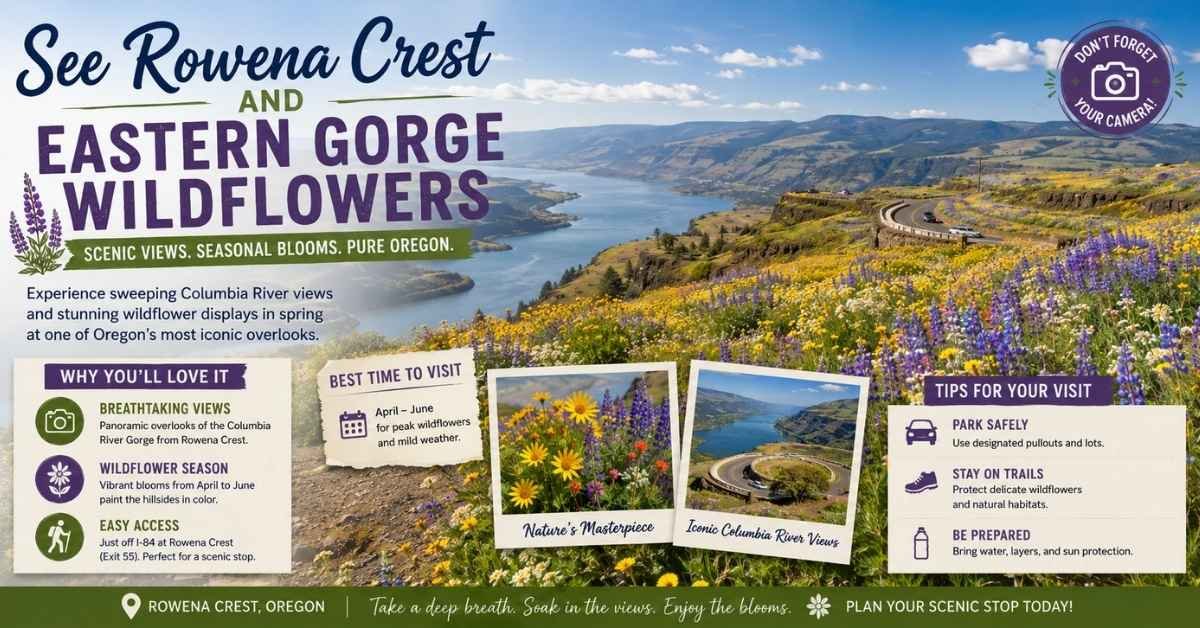
Rowena Crest lies east of Hood River and provides sweeping views over the Columbia River Gorge. The historic highway curves below the viewpoint, creating one of the area’s most recognizable road-trip scenes.
Spring brings wildflowers to nearby areas, while summer can become hot and exposed. Remain on established trails to protect sensitive plants.
- Best for: Scenic driving, photography and spring wildflowers
- Time needed: One to three hours from Hood River
- Cost: Free
- Best season: Spring for flowers; clear days year-round
Rowena Crest and Panorama Point are not interchangeable. Panorama overlooks Hood River Valley and Mount Hood, while Rowena looks across the Gorge.
21. Choose One Columbia Gorge Waterfall Hike
A Hood River trip can easily include a waterfall, but the best choice depends on your route and fitness.
For an easy waterfall stop
Choose a roadside or short-walk waterfall along the western Gorge. These stops are accessible but often crowded.
For a moderate hike
Select a trail that combines forest, waterfall views and a few miles of walking. Check elevation gain rather than choosing solely by distance.
For a longer adventure
Experienced hikers can select a longer waterfall loop or Gorge climb, provided conditions and permits allow.
Before leaving, verify:
- Trail closure
- Parking
- Permit requirements
- Mileage
- Elevation gain
- Heat and exposure
- Dog rules
- Wildfire alerts
Popular locations such as Multnomah Falls are west of Hood River and may require timed access or additional planning during busy periods.
Best Day Trips Near Hood River
22. Raft the White Salmon River
The White Salmon River in Washington offers guided whitewater rafting within reach of Hood River. Trips vary by season, water conditions and route difficulty.
Professional outfitters normally provide essential equipment and safety instruction. Minimum ages can change according to water level and the selected section.
- Best for: Adventure travelers and older families
- Time needed: Half-day
- Cost: Premium
- Reservation: Required
Include the Hood River–White Salmon Bridge and transportation time in your schedule. Rafting is better as the day’s main activity than as a minor addition.
23. Spend a Day at Lost Lake
Lost Lake sits within Mount Hood National Forest and offers mountain views, paddling, swimming, fishing, day-use areas and camping.
The drive generally takes around 45 minutes from Hood River, depending on traffic and road conditions. Once you include equipment rentals and time by the water, it becomes a half-day or full-day trip.
- Best for: Families, paddlers and photographers
- Time needed: Half-day to full day
- Cost: Day-use and rental costs may apply
- Best season: Summer through early fall
Bring insect protection, food, water and an extra layer. Mountain weather can feel cooler than conditions in Hood River.
24. Take a Mount Hood Day Trip
Hood River makes a useful base for exploring Mount Hood’s northern and eastern approaches. Highway 35 passes through orchard country toward mountain trails, ski areas and alpine recreation.
A Mount Hood day can include:
- Parkdale
- Scenic viewpoints
- Hiking
- Mount Hood Meadows
- Forest recreation
- Snow activities
- A longer scenic driving loop
- Best for: Hikers, winter-sports visitors and road-trippers
- Time needed: Full day
- Cost: Depends on activities and parking permits
Do not attempt Mount Hood, the full Fruit Loop and several Gorge waterfalls in one rushed day. Choose one geographical focus and enjoy it properly.
25. Ski, Snowshoe or Nordic Ski Near Mount Hood

Winter turns Hood River into a base for recreation around Mount Hood. Depending on conditions, visitors can go downhill skiing, cross-country skiing, snowshoeing or sledding.
Managed ski areas are the best choice for downhill recreation. Snowshoeing and Nordic skiing may require Sno-Park permits, suitable equipment and current route knowledge.
- Best for: Winter visitors and outdoor enthusiasts
- Time needed: Half-day to full day
- Cost: Low to premium
- Important: Check weather and road conditions
Carry traction devices or chains when required. Outside managed areas, winter travel may involve avalanche terrain and should not be approached casually.
Free Things to Do in Hood River
You can experience Hood River without purchasing a tour or tasting.
The best free activities include:
- Walking Hood River Waterfront Park
- Watching windsurfers and kiteboarders
- Exploring downtown Hood River
- Visiting Panorama Point
- Driving parts of the Fruit Loop
- Walking a local trail
- Photographing Mount Hood from public viewpoints
- Attending selected community events
- Picnicking beside the river
- Browsing seasonal markets
Some free activities still involve fuel, parking or permit expenses.
Learn More: 18 Best Things to Do in Lake Las Vegas in 2026
Hood River With Kids
Hood River is a strong family destination when you balance active experiences with food, rest and flexible timing.
Best Activities for Young Children
- Hood River Waterfront Park
- WAAAM
- Mount Hood Railroad
- Farm animals
- Fruit picking
- Short waterfront walks
- Easy picnic stops
Best Activities for Older Children and Teenagers
- Paddleboarding
- Beginner windsurfing lessons
- Mountain biking
- Whitewater rafting
- Twin Tunnels cycling
- Longer Gorge hikes
- Rail-biking
A Realistic Family Day
A manageable family itinerary could include:
- Waterfront Park in the morning
- Early lunch near downtown
- WAAAM or Mount Hood Railroad
- One orchard stop
- An early dinner
Avoid asking children to complete a full Fruit Loop day with six or seven tasting-focused stops.
Things to Do in Hood River Without Drinking
Hood River remains worth visiting if you do not drink alcohol. Build your trip around:
- Waterfront Park
- Fruit picking
- Farm stands
- Panorama Point
- WAAAM
- History Museum
- Mount Hood Railroad
- Kiteboarding or windsurfing lessons
- Mountain biking
- Gorge hikes
- Lost Lake
- Mount Hood
- Coffee shops and bakeries
- Non-alcoholic tastings
A sober Hood River weekend can be just as varied as one centered on wineries or breweries.
What to Do in Hood River When It Rains
Rain does not have to ruin the trip, but it may change your activity order.
Visit WAAAM
This is the best option when you want several hours indoors.
Explore the History Museum
Choose the museum for a shorter activity close to the city.
Spend Time Downtown
Coffee shops, galleries, stores and restaurants allow you to wait for a weather window.
Book a Covered Tasting or Long Lunch
Select wine, cider, food or non-alcoholic options according to your group.
Check the Scenic Train
A train excursion may work in light rain, but verify operations and visibility before booking.
If wildfire smoke affects the Gorge, check current air quality and reduce strenuous outdoor activity. A trail may remain technically open while still being unpleasant or unhealthy.
Hood River Itineraries That Work
One Day in Hood River
Morning
Begin at Hood River Waterfront Park. Walk beside the Columbia and watch the wind sports.
Late Morning and Lunch
Explore downtown Hood River and have lunch near Oak Street.
Afternoon
Drive to Panorama Point, then choose two or three Fruit Loop stops.
Evening
Return downtown or to the waterfront for dinner.
Do not add Mount Hood or a distant western Gorge excursion unless you remove part of this itinerary.
Two-Day Hood River Weekend
Day One: River and Town
- Waterfront Park
- Kiteboarding observation or lesson
- WAAAM or History Museum
- Downtown shopping
- Dinner and local drink
Day Two: Valley and Fruit Loop
- Panorama Point
- Orchard or U-pick farm
- Farm lunch
- Lavender, winery, cidery or non-alcoholic stop
- Scenic sunset drive
This is the best itinerary for a first visit because it separates the city and valley logically.
Three-Day Adventure Itinerary
Use the first two days above, then dedicate day three to one major experience:
- White Salmon River rafting
- Post Canyon mountain biking
- Mount Hood
- Lost Lake
- A longer Columbia Gorge hike
Choosing one premium adventure creates a stronger trip than rushing through several.
Hood River Day Trip From Portland
Leave Portland early and travel east through the Columbia River Gorge. Begin at the waterfront, explore downtown and select either the Fruit Loop or one Gorge attraction for the afternoon.
Trying to combine Multnomah Falls, downtown Hood River, the complete Fruit Loop and Mount Hood in one day creates too much driving.
Return traffic and road conditions can extend the journey, particularly on busy weekends or during construction.
Best Time to Visit Hood River
| Season | Best for | Main limitation |
|---|---|---|
| Spring | Blossoms, waterfalls and wildflowers | Rain and variable bloom dates |
| Summer | Water sports, lavender and farms | Crowds, heat and wind |
| Fall | Apples, pears and harvest events | Busy orchard weekends |
| Winter | Mount Hood snow sports and museums | Reduced farm hours and winter driving |
Best Season for First-Time Visitors
Late spring through early fall provides the widest range of Hood River activities. Summer offers the greatest variety, while early fall combines good weather with orchard harvests.
Best Time for the Fruit Loop
Visit in spring for blossoms, early summer for cherries, midsummer for lavender and autumn for apples and pears. Exact timing changes with the weather.
Best Time for Water Sports
Late spring through summer generally offers the strongest water-sports culture. Lessons remain dependent on suitable wind, water and instructor availability.
What to Reserve Before Visiting
Reserve Early
- Kiteboarding or windsurfing lessons
- Whitewater rafting
- Mount Hood Railroad
- Peak-weekend lodging
- Popular dinner reservations
- Selected winery tastings
- Guided mountain-biking experiences
Check Shortly Before Arrival
- Fruit Loop business hours
- U-pick availability
- Trail permits
- Wildfire alerts
- Air quality
- River conditions
- Mount Hood weather
- Highway and road conditions
Keep Flexible
- Waterfront walks
- Downtown exploration
- Panorama Point
- Scenic drives
- Free community events
- Self-guided farm stops
Practical Hood River Travel Tips
Bring a Car for the Valley and Gorge
Downtown is walkable, and the waterfront is close by. However, a vehicle is the easiest way to reach the Fruit Loop, waterfalls, Post Canyon, Lost Lake and Mount Hood.
Expect Wind
The wind is not merely a feature for athletes. It can also affect paddling, picnics, temperatures and comfort along the waterfront.
Start Outdoor Activities Early
Morning starts help you avoid heat, parking problems and afternoon crowds. This is particularly important for summer hikes and popular Fruit Loop weekends.
Confirm Every Farm Individually
Fruit Loop members operate independently. Hours, produce, U-pick access, food service and pet policies vary.
Take River Safety Seriously
The Columbia River can involve:
- Cold water
- Strong currents
- Wind
- Commercial traffic
- Underwater hazards
- Changing sandbar depth
Wear a life jacket, use appropriate launch areas and take professional lessons when learning a wind sport.
Respect Farms and Trails
Follow farm boundaries, picnic rules and pet policies. Stay on designated trails, pack out waste and obey fire restrictions.
Hood River Planning Mistakes to Avoid
- Treating the Fruit Loop as a quick scenic drive
- Attempting too many farm stops
- Assuming every orchard offers U-pick
- Forgetting to confirm seasonal hours
- Describing Mount Hood as a downtown attraction
- Underestimating wind and river currents
- Trying kiteboarding without instruction
- Ignoring Gorge permits and closures
- Reaching popular trailheads too late
- Building the entire trip around alcohol
- Having no rain or smoke backup
- Attempting Hood River, the Gorge and Mount Hood in one day
- Assuming downtown alone will fill a weekend
- Forgetting a designated driver
- Relying on old farm or restaurant lists
Frequently Asked Questions
What is Hood River best known for?
Hood River is best known for windsurfing, kiteboarding, the Hood River Fruit Loop, Columbia River Gorge scenery, orchards, local wine, cider and craft beer.
Is Hood River worth visiting?
Yes. Hood River is worth visiting for a day or weekend, particularly if you enjoy outdoor recreation, local food, farms and scenic drives.
Is one day enough in Hood River?
One day is enough for the waterfront, downtown and several Fruit Loop stops. You need two or three days for rafting, mountain biking, Mount Hood or longer Gorge hikes.
Is Hood River walkable?
Downtown Hood River is walkable, although its streets are hilly. You can also walk around the waterfront, but exploring the Fruit Loop and wider Gorge requires transportation.
Do you need a car in Hood River?
A car is not essential for a downtown-focused stay, but it is strongly recommended for the Fruit Loop, trailheads, Mount Hood and regional day trips.
How long does it take to drive the Fruit Loop?
Driving without stopping does not take an entire day, but that misses the purpose. Allow at least half a day for three or four stops and a full day for a more relaxed agricultural experience.
What can non-drinkers do in Hood River?
Non-drinkers can enjoy the waterfront, Fruit Loop farms, orchards, museums, scenic train, mountain biking, wind sports, hiking, rafting and Mount Hood.
Is Hood River good for families?
Yes. Waterfront Park, WAAAM, Mount Hood Railroad, orchards and easy walking routes make Hood River a practical family destination.
Can beginners try kiteboarding?
Beginners can try kiteboarding through a professional lesson. The Columbia River’s wind, currents and equipment requirements make independent learning inappropriate.
Can you swim at the Hood River waterfront?
Swimming suitability depends on the specific area and current conditions. Use designated recreation zones, wear appropriate safety equipment and avoid jumping near seawalls or pilings.
What can you do in Hood River when it rains?
Visit WAAAM, the History Museum, downtown shops, cafés, covered tasting rooms or restaurants. A scenic train may also operate, depending on the schedule.
What is open in Hood River during winter?
Downtown restaurants, museums and selected train experiences may remain available. Nearby Mount Hood offers skiing, snowshoeing and Nordic recreation.
How far is Hood River from Portland?
Hood River is roughly 60 miles east of Portland, and the drive generally takes about one hour without heavy traffic, construction or poor weather.
Build Your Hood River Trip Around What You Enjoy
The best Hood River itinerary combines one city experience, one valley experience and one outdoor activity. Start with the waterfront and downtown, then choose the Fruit Loop, Gorge or Mount Hood according to your season and interests.
Reserve weather-dependent adventures early, but keep a backup plan. Limit the Fruit Loop to a few meaningful stops, verify current operating information and leave enough time to enjoy the river and mountain views without turning the trip into a race.
With that approach, the best things to do in Hood River become a practical, memorable journey through one of Oregon’s most distinctive adventure and agricultural destinations.