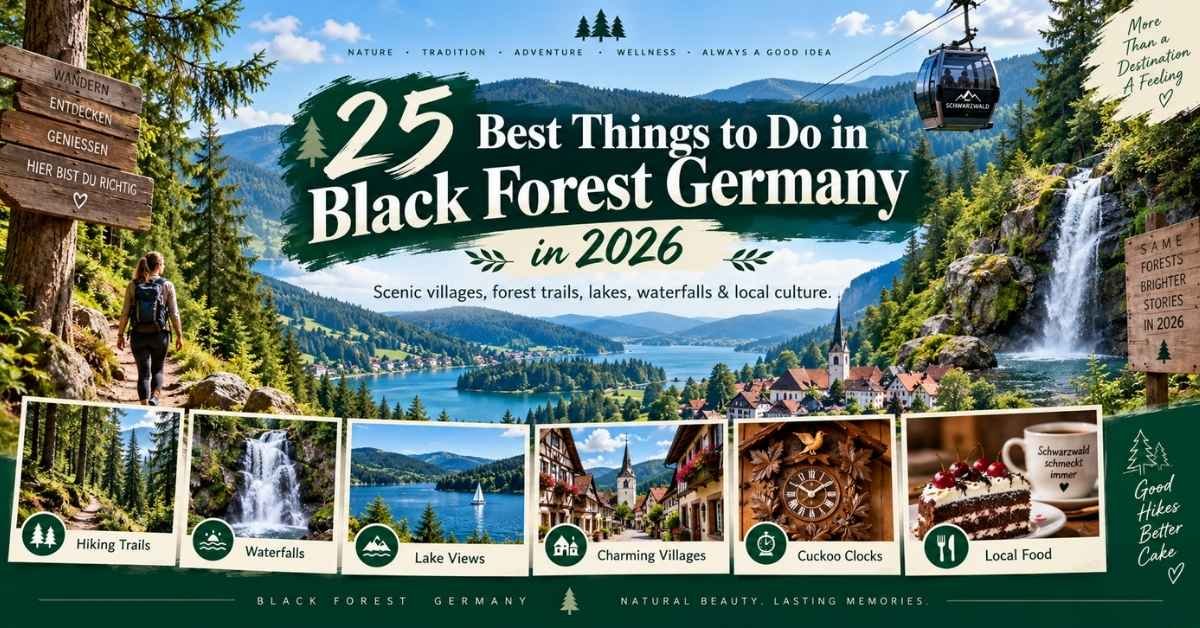
things to do in black forest germany range from hiking through deep evergreen valleys and visiting Triberg Waterfalls to relaxing in Baden-Baden’s thermal baths, exploring Freiburg’s medieval old town, driving the Black Forest High Road, and enjoying lakes such as Titisee and Schluchsee. For the best first trip, combine one traditional village, one scenic hike, one waterfall, a regional meal, and either a spa or mountain viewpoint.
The challenge is distance. The Black Forest is a large region in southwest Germany, not a single town or national park. Trying to see Baden-Baden, Triberg, Freiburg, Feldberg, and Lake Constance in one day creates more driving than sightseeing.
This guide divides the region into northern, central, and southern Black Forest, helping you choose experiences that work together. It also includes car-free options, family activities, seasonal advice, places to stay, realistic itineraries, and honest guidance on which popular attractions deserve your time.
Black Forest Germany at a Glance
| Experience | Best place | Time needed | Best for |
|---|---|---|---|
| Historic city | Freiburg | Half to full day | First-time visitors |
| Thermal spa | Baden-Baden | Half day | Couples and wellness trips |
| Scenic road trip | Black Forest High Road | Full day | Drivers and photographers |
| Famous waterfall | Triberg Waterfalls | 2–3 hours | Families and short visits |
| Highest mountain | Feldberg | Half to full day | Hikers and winter travelers |
| Traditional villages | Gengenbach and Schiltach | Half day each | Culture and photography |
| Lakeside relaxation | Titisee or Schluchsee | Half to full day | Families and couples |
| Dramatic hike | Wutach Gorge | Full day | Experienced walkers |
| Cultural museum | Vogtsbauernhof | 3–5 hours | History and family travel |
| Scenic train journey | Black Forest Railway | Half day | Car-free travelers |
Where Is the Black Forest?
The Black Forest, or Schwarzwald, lies in the German state of Baden-Württemberg, close to France and Switzerland. It stretches roughly from Pforzheim in the north to the Swiss border in the south.
Its landscape changes noticeably from one area to another.
Northern Black Forest
The northern region is known for Baden-Baden, forested mountain roads, wellness hotels, the Black Forest National Park, and towns such as Baiersbronn, Freudenstadt, and Bad Wildbad.
Choose this area for:
- Thermal baths
- Scenic drives
- Luxury accommodation
- Forest walks
- Fine dining
- Easy access from Frankfurt or Stuttgart
Central Black Forest
The central region offers the most recognizable version of the Black Forest: half-timbered villages, cuckoo clocks, waterfalls, farmhouses, and wooded valleys.
Its main destinations include Triberg, Gengenbach, Schiltach, Haslach, and the Kinzig Valley.
Choose this area for:
- Traditional villages
- Cultural attractions
- Cuckoo-clock workshops
- Waterfalls
- Scenic railway journeys
- A classic Black Forest road trip
Southern Black Forest
The south contains the region’s highest mountains and several of its best outdoor attractions. Major bases include Freiburg, Titisee, Hinterzarten, Schluchsee, and Feldberg.
Choose this area for:
- Mountain hiking
- Lakes and swimming
- Freiburg sightseeing
- Winter sports
- Family attractions
- Car-free travel
Best Things to Do in the Northern Black Forest
1. Explore Baden-Baden
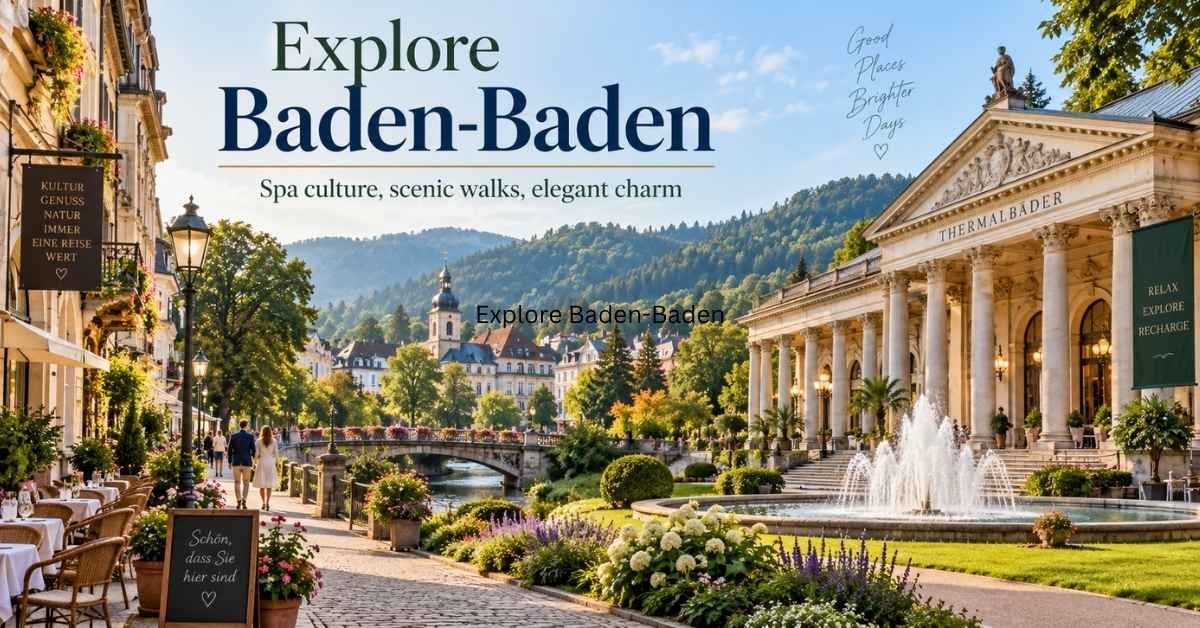
Baden-Baden is a sophisticated spa town at the northern edge of the Black Forest. Its elegant buildings, landscaped gardens, thermal waters, museums, and historic casino create a very different atmosphere from the region’s rural villages.
Walk along the Lichtentaler Allee, a park-lined promenade beside the River Oos. Continue toward the old town, where steep streets lead to viewpoints, cafés, and historic buildings.
Art lovers can visit the Museum Frieder Burda, while architecture enthusiasts should see the Kurhaus and its famous casino complex.
Allow: Half to one full day Best for: Couples, culture, architecture and wellness Practical tip: Baden-Baden works well without a car, although the railway station is outside the historic center.
2. Relax in Baden-Baden’s Thermal Baths
The town’s thermal springs have attracted visitors for centuries. Today, its two best-known bathing complexes offer very different experiences.
Caracalla Spa is the easier option for most visitors. It has indoor and outdoor thermal pools, saunas, whirlpools, and relaxation areas.
Friedrichsbad offers a structured Roman-Irish bathing experience inside an ornate historic building. Its atmosphere is quieter and more traditional. Swimwear and nudity rules may differ by area or session, so check the current policy before booking.
Choose Caracalla for flexibility and modern facilities. Choose Friedrichsbad for history, ritual, and a distinctive cultural experience.
3. Drive the Black Forest High Road
The Black Forest High Road, or Schwarzwaldhochstraße, is one of Germany’s most scenic drives. It follows the B500 between Baden-Baden and Freudenstadt, passing forest viewpoints, hiking paths, mountain lakes, and roadside restaurants.
Useful stops include:
- Bühlerhöhe
- Mummelsee
- Hornisgrinde
- Ruhestein
- Black Forest National Park viewpoints
The route itself is not the whole experience. Its value comes from stopping for short walks, panoramic views, and lunch rather than driving from one end to the other without leaving the car.
Start early during summer weekends. Fog, snow, roadworks, and winter conditions can affect visibility and driving times.
4. Walk Through Black Forest National Park
Black Forest National Park protects forests, mountain ridges, wetlands, and wildlife habitats in the northern Black Forest. It is one of the best places to understand how the region’s ecosystem is changing as sections of managed woodland return to a more natural state.
Begin at the National Park Centre at Ruhestein. Exhibitions explain the forest’s plants, animals, geology, and conservation work.
Walking routes range from gentle nature trails to longer hikes. Some paths cross uneven ground, exposed ridges, or areas affected by fallen trees.
This is not a manicured theme park. That is precisely its appeal: the landscape feels wilder than many of the Black Forest’s busier attractions.
5. Visit Mummelsee and Climb Hornisgrinde
Mummelsee is a small glacial lake beside the Black Forest High Road. It is highly accessible, photogenic, and easy to combine with other northern Black Forest attractions.
A short loop follows the edge of the lake. For a more rewarding experience, hike toward Hornisgrinde, the highest mountain in the northern Black Forest.
Mummelsee can become crowded with tour groups and day-trippers. Arrive early or stay later in the afternoon if you want a quieter walk.
Worth knowing: The lake is convenient rather than remote. Travelers expecting untouched wilderness may prefer one of the surrounding trails.
6. Walk Above the Forest in Bad Wildbad
The Black Forest Treetop Walk at Bad Wildbad rises through the forest canopy before reaching a spiral observation tower. The gradual incline makes the main walkway accessible to many visitors who cannot manage a steep mountain hike.
On a clear day, the tower provides wide views over the northern Black Forest. The nearby Wildline suspension bridge offers a more dramatic experience for visitors comfortable with heights.
Bad Wildbad also has thermal baths, walking trails, and the Sommerberg funicular, making it a strong family day-trip destination.
7. Combine Hiking and Food in Baiersbronn
Baiersbronn is known for two things that do not always appear together: serious hiking and ambitious food.
Its network of marked trails passes streams, forest shelters, waterfalls, and mountain viewpoints. Several routes incorporate refreshment stops or culinary themes, allowing visitors to pair a woodland walk with regional dishes.
The town and surrounding communities also have a strong restaurant culture. Reservations are advisable for well-known dining rooms, particularly on weekends.
Baiersbronn suits travelers who want a quieter base than Baden-Baden while keeping access to the national park and northern hiking routes.
Best Things to Do in the Central Black Forest
8. See Triberg Waterfalls
Triberg Waterfalls are among the most famous natural attractions in the Black Forest. Water from the Gutach River descends approximately 163 metres across seven main cascades.
Several paths provide access to different viewpoints. The lower sections are the easiest to reach, while the upper paths involve more climbing.
Triberg is often advertised as having Germany’s highest waterfall. That claim depends on how waterfalls are classified. It is safer to describe Triberg as one of Germany’s highest and best-known accessible cascading waterfalls.
The experience is most impressive after rain or during periods of strong water flow. Summer afternoons can be crowded, so visit in the morning when possible.
Allow time for the town itself, but do not expect an untouched mountain village. Triberg is tourism-oriented, with souvenir shops and cuckoo-clock displays.
9. Discover Black Forest Clockmaking
The cuckoo clock has become one of the Black Forest’s most recognizable symbols. However, quality varies significantly between mass-produced souvenirs and clocks made using traditional techniques.
For historical context, visit the German Clock Museum in Furtwangen. Its collections explain the development of timekeeping, regional craft traditions, and the Black Forest clock industry.
You can also visit workshops and clockmakers around Triberg, Schonach, and the surrounding valleys.
When buying a cuckoo clock, ask:
- Where was it made?
- Is the movement mechanical or quartz?
- Which parts were made locally?
- Does it include a certificate?
- Who can service it in your country?
A large roadside clock can be an amusing photo stop, but a working craft workshop usually offers more cultural value.
10. Visit the Black Forest Open-Air Museum
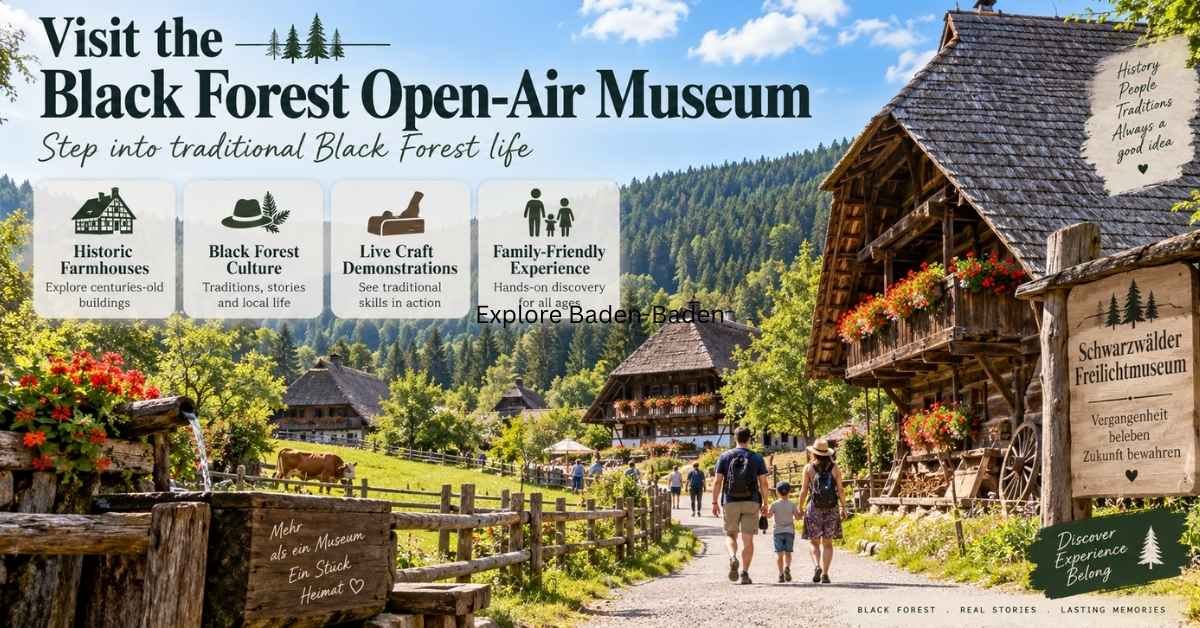
The Black Forest Open-Air Museum Vogtsbauernhof near Gutach preserves historic farmhouses, mills, workshops, gardens, and rural buildings from different parts of the region.
Rather than displaying objects in glass cases, the museum allows visitors to walk through the buildings and see how families once lived and worked. Demonstrations and seasonal activities may cover traditional cooking, woodworking, farming, textiles, or local customs.
This is one of the best things to do in the Black Forest with children, but it is equally useful for adults interested in architecture and social history.
Plan at least three hours. Families can easily spend most of a day here.
11. Wander Through Gengenbach
Gengenbach is one of the most attractive towns in the Black Forest. Its old center features cobbled lanes, towers, flower-filled façades, and carefully preserved half-timbered houses.
Start at the main square, walk through the old gates, and then leave the busiest streets. The quieter lanes behind the center reveal more of the town’s everyday character.
In December, Gengenbach’s town hall becomes a giant Advent calendar, with a different window illuminated each evening.
The town is easy to reach by train and works particularly well for travelers following a car-free Black Forest itinerary.
12. Choose Between Schiltach and Haslach
Both Schiltach and Haslach im Kinzigtal offer traditional architecture without the same volume of tourism found in Triberg.
Schiltach is smaller and especially photogenic. Half-timbered houses cluster around a sloping market square near the Kinzig and Schiltach rivers.
Haslach feels more like a functioning regional town. It has a larger center, local shops, cultural museums, and convenient railway connections.
Choose Schiltach for photography and atmosphere. Choose Haslach for local life, transport connections, and a broader range of services.
13. Ride the Black Forest Railway
The Black Forest Railway, or Schwarzwaldbahn, is one of Germany’s most impressive railway routes. The line passes through the mountains using tunnels, curves, bridges, and steep gradients.
The section around Hornberg, Triberg, and St. Georgen is particularly scenic.
This journey is more than transportation. It is one of the best Black Forest activities for visitors without a car, especially when combined with a stop in Triberg or the Kinzig Valley.
Sit near a window, travel during daylight, and avoid rushing between connections. Service patterns can change during engineering works, so check the current timetable before departure.
14. Explore Allerheiligen Abbey and Waterfalls
The ruins of Allerheiligen Abbey stand in a wooded valley near a series of waterfalls. The combination of stone ruins, forest paths, and rushing water creates one of the northern-central region’s most atmospheric short excursions.
A stepped trail connects the abbey area with the cascades. Although it is not a long expedition, the path can be slippery after rain.
Wear shoes with good grip and allow extra time for photographs. The site combines naturally with the Black Forest High Road or nearby national park trails.
Best Things to Do in the Southern Black Forest
15. Explore Freiburg’s Old Town
Freiburg im Breisgau is the best all-round base for many first-time visitors. It combines reliable rail connections, restaurants, historic streets, cultural attractions, and easy access to the southern Black Forest.
The city’s centerpiece is Freiburg Minster, a Gothic cathedral overlooking Münsterplatz. Visit the morning market, explore the surrounding lanes, and watch for the narrow water channels known as Bächle.
Walk up Schlossberg for views over the rooftops, surrounding vineyards, and distant Black Forest hills.
Freiburg is a gateway to the region rather than a remote forest settlement. That makes it especially useful for travelers who want nature during the day and restaurants or city life in the evening.
16. Ride Up Schauinsland
Schauinsland rises above Freiburg and offers one of the easiest ways to reach a high Black Forest viewpoint. A cable car carries visitors toward the summit area, where several walking routes begin.
On a clear day, views may extend across the Rhine Valley toward the Vosges and, under favorable conditions, the Alps.
The weather at the top can be colder and windier than in Freiburg. Carry an extra layer even when the city feels warm.
Strong walkers can explore longer trails, while casual visitors can enjoy the viewpoint and a short mountain walk.
17. Spend Time at Lake Titisee
Lake Titisee is one of the most popular places to visit in the Black Forest. Visitors come for lakeside walks, boat trips, cafés, swimming, and easy access by train.
The main waterfront is convenient but commercial. Souvenir shops and tour groups can make it feel busy during summer.
For a quieter experience, walk beyond the central promenade or visit early in the day. You can also use Titisee as the starting point for trails toward Hinterzarten and the surrounding forest.
Titisee is best for convenience, public transport, and short stays. It is less suitable for travelers seeking complete solitude.
18. Slow Down at Schluchsee
Schluchsee is larger and generally feels more spacious than Titisee. It is a better choice for longer walks, cycling, swimming, paddleboarding, and quiet lakeside breaks.
Several communities sit around the lake, connected by road and rail. This makes it possible to walk part of the shoreline and return by public transport.
Choose Titisee if you have limited time and want cafés and easy sightseeing. Choose Schluchsee if you value space, outdoor activity, and a more relaxed atmosphere.
Water conditions and supervised swimming areas vary, so follow local signs before entering the lake.
19. Reach the Top of Feldberg
At 1,493 metres, Feldberg is the highest mountain in the Black Forest and the highest point in Baden-Württemberg.
In summer, it offers hiking trails, open views, alpine vegetation, and access to protected natural areas. In winter, it becomes the region’s main center for skiing, snowboarding, sledding, and snowshoeing.
You do not need to be an experienced mountaineer to enjoy Feldberg, but you should respect mountain weather. Fog, wind, rain, and temperature changes can arrive quickly.
Stay on marked trails, carry water, and check local conditions before beginning a longer route.
20. Hike Through Wutach Gorge
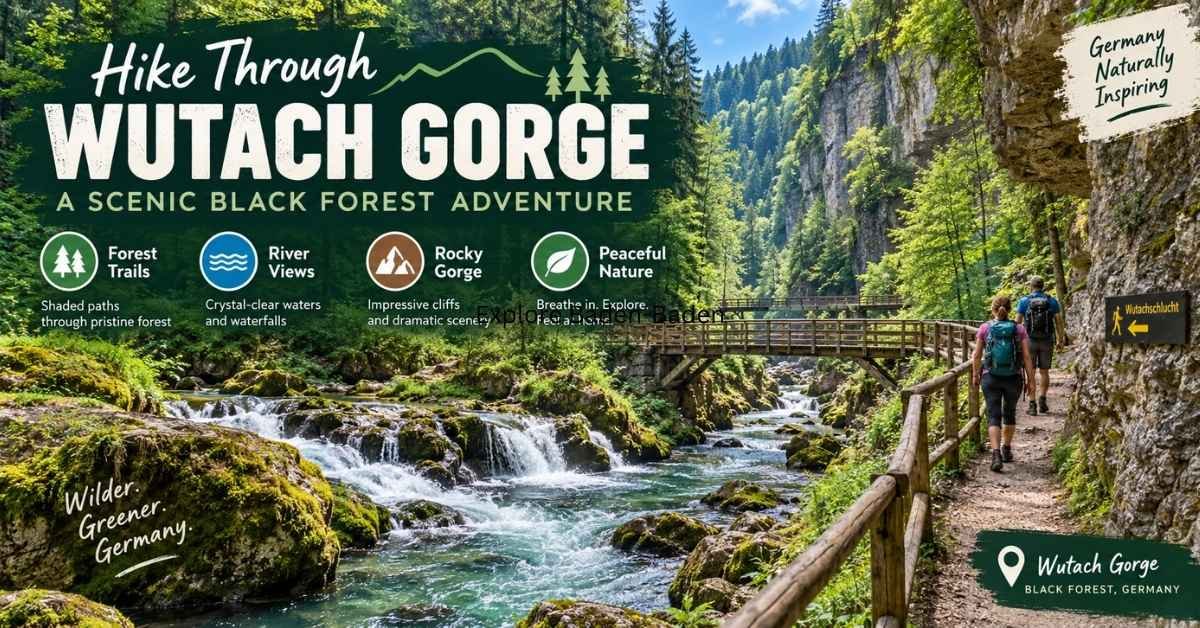
Wutach Gorge, known as the Wutachschlucht, is one of the finest hiking areas in southwest Germany. Trails pass steep rock walls, river bends, woodland, and narrow sections of the gorge.
This is not a casual paved walk. Roots, mud, slippery rocks, exposed edges, and elevation changes require proper footwear and reasonable fitness.
The biggest planning issue is transport. Many routes are linear rather than circular, so hikers must arrange a return bus, shuttle, second vehicle, or carefully timed rail connection.
Do not enter during unsafe weather or trail closures. The gorge rewards preparation, but it punishes rushed planning.
21. Visit Ravenna Gorge
Ravenna Gorge lies beneath an impressive railway viaduct near Hinterzarten and Breitnau. Forest paths follow the stream past mills, rocks, and small cascades.
The gorge is beautiful throughout the walking season, but it becomes particularly famous during the Ravenna Gorge Christmas Market. Wooden stalls and lights sit beneath the illuminated viaduct, producing one of Germany’s most dramatic festive settings.
Christmas-market access is controlled and highly popular. Tickets, timed entry, parking, and shuttle arrangements should be booked well in advance.
Outside the festive period, check trail conditions before walking through the gorge after heavy rain or winter weather.
22. See Todtnau Waterfall and the BLACKFORESTLINE
Todtnau Waterfall drops through a forested valley near the town of Todtnau. A short trail reaches viewpoints around the cascade.
Nearby, the BLACKFORESTLINE suspension bridge crosses high above the valley. The bridge provides broad views and a strong sense of height, but it may not suit visitors with vertigo.
The waterfall, bridge, and surrounding trails can be combined into a half-day trip. Wear stable footwear because the forest paths may remain damp even in dry weather.
23. Step Inside St. Blasien Cathedral
The vast dome of St. Blasien Cathedral feels unexpected in a small Black Forest town. Its bright interior and monumental proportions contrast sharply with the wooded landscape outside.
A visit does not take long, but the building adds architectural variety to an itinerary dominated by lakes and hiking.
St. Blasien combines well with Schluchsee, Feldberg, or a drive through the southern valleys. Visitors should behave respectfully because the building remains a religious site.
24. Enjoy a Rainy Day at Badeparadies Schwarzwald
Bad weather does not have to ruin a Black Forest trip. Badeparadies Schwarzwald, near Titisee, provides indoor pools, warm-water areas, slides, wellness facilities, and relaxation spaces.
Different zones cater to families, adults, and spa visitors. Age restrictions and access rules can vary between sections.
This is a useful option after several days of hiking or during persistent rain. Advance booking may be necessary during weekends, school holidays, and winter.
25. Add Europa-Park or Rulantica

Europa-Park is one of Europe’s best-known theme parks, while Rulantica is a large water park in the same resort area near Rust.
Neither attraction lies deep inside the Black Forest, but both are close enough to include in a wider regional trip. Families may want to dedicate one or two complete days to the resort rather than treating it as a brief roadside stop.
Europa-Park is best for rides, themed areas, and shows. Rulantica works well for water slides and indoor family entertainment.
Book tickets and accommodation early during holidays and peak summer periods.
Learn More: 25 Best Things to Do in Keystone Colorado in 2026
More Places Worth Visiting
If you have additional time, consider these quieter or more specialized destinations:
- Freudenstadt: A large market square and a convenient northern base.
- Calw: A historic town associated with writer Hermann Hesse.
- Donaueschingen: Traditionally linked with the source of the Danube.
- Staufen: A compact wine town with castle ruins above the center.
- Belchen: A quieter mountain alternative to Feldberg.
- Rottweil: Medieval architecture and a striking modern observation tower.
- Villingen-Schwenningen: Historic gates, museums, and regional city life.
- Rothaus: Known for its Black Forest brewery.
- Gertelbach Waterfalls: A rewarding forest walk near Bühlertal.
- The source of the Breg: Part of the geographical story behind the Danube.
- Sasbachwalden: Vineyards, half-timbered houses, and nearby waterfalls.
Best Black Forest Activities for Different Travelers
Things to Do with Children
Families should prioritize attractions that combine activity with simple logistics:
- Vogtsbauernhof Open-Air Museum
- Triberg Waterfalls
- Bad Wildbad Treetop Walk
- Lake Titisee boat trips
- Badeparadies Schwarzwald
- Europa-Park and Rulantica
- Short Feldberg walks
- Black Forest Railway
Avoid packing several distant attractions into one day. Children usually enjoy the region more when a museum or town visit is paired with a lake, playground, short walk, or swim.
Romantic Things to Do for Couples
For a slower and more romantic trip, combine:
- A thermal spa in Baden-Baden
- Sunset on Freiburg’s Schlossberg
- A quiet stay near Schluchsee
- Dinner in Baiersbronn
- Wine tasting near Freiburg
- A walk through Gengenbach
- A winter visit to Ravenna Gorge
- A scenic drive on the B500
The strongest couples’ itinerary balances outdoor time with one comfortable hotel, spa, or memorable meal.
Free Things to Do
Many of the Black Forest’s best experiences cost little or nothing:
- Walk through Freiburg’s old town
- Explore Gengenbach or Schiltach
- Hike marked forest trails
- Visit lake viewpoints
- Walk around Schluchsee
- Explore Staufen
- See churches and village squares
- Follow short waterfall trails where access is unrestricted
Parking, cable cars, museums, and maintained attractions may still charge fees.
Best Activities for Non-Hikers
You can enjoy the Black Forest without completing demanding trails. Good options include:
- Black Forest Railway
- Freiburg sightseeing
- Baden-Baden spas
- Vogtsbauernhof
- Lake cruises
- Scenic drives
- Cuckoo-clock workshops
- St. Blasien Cathedral
- Cable-car journeys
- Gengenbach and Schiltach
What to Do When It Rains
Rain is common and contributes to the region’s rich forests. Keep these alternatives ready:
- German Clock Museum
- Museum Frieder Burda
- Baden-Baden thermal baths
- Badeparadies Schwarzwald
- Freiburg museums and cathedral
- Vogtsbauernhof’s covered buildings
- Clockmaking demonstrations
- A long regional lunch or cake stop
Avoid gorges, exposed ridges, and slippery waterfall paths during severe weather.
Best Time to Visit the Black Forest
| Season | Conditions | Best experiences | Main drawback |
|---|---|---|---|
| Spring | Cool, green and changeable | Waterfalls, towns, lower trails | Mud and unpredictable weather |
| Summer | Warm with long daylight | Hiking, lakes, cycling, family trips | Crowds and higher prices |
| Autumn | Cooler with changing foliage | Road trips, hiking, photography | Shorter days |
| Winter | Snow possible at higher elevations | Christmas markets, spas, skiing | Road and trail disruption |
May, June, September, and early October often provide a good balance between comfortable weather and manageable crowds.
July and August suit swimming and long hikes, but popular places such as Titisee and Triberg can become busy.
December is ideal for Christmas markets, although snow at lower elevations is never guaranteed.
Where to Stay in the Black Forest
Freiburg: Best Overall Base
Choose Freiburg for restaurants, trains, nightlife, and day trips into the southern Black Forest. It is the most practical option for first-time visitors without a car.
Baden-Baden: Best for Wellness
Stay in Baden-Baden for spas, luxury hotels, museums, and access to the northern Black Forest. Prices can be higher than in smaller towns.
Triberg: Best for Famous Sights
Triberg provides convenient access to its waterfalls, clock shops, and the Black Forest Railway. It works for a short stay, although the center feels more commercial than nearby villages.
Gengenbach: Best for Traditional Atmosphere
Gengenbach combines beautiful architecture with useful rail connections. It is a strong base for travelers who prefer a small historic town.
Titisee: Best for Convenience
Titisee has accommodation, restaurants, lake activities, trains, and family facilities. It is convenient but busy during peak periods.
Schluchsee: Best for a Quiet Lake Stay
Choose Schluchsee for water activities, walking, and a calmer atmosphere. It suits travelers staying several nights rather than racing between attractions.
Baiersbronn: Best for Food and Hiking
Baiersbronn offers immediate trail access and an unusually strong dining scene. A car provides more flexibility, although regional rail and buses serve parts of the area.
How to Get to the Black Forest
The most useful arrival airports depend on which part of the region you plan to visit.
- Frankfurt Airport: Useful for the northern and central Black Forest.
- Stuttgart Airport: Convenient for northern destinations.
- EuroAirport Basel-Mulhouse-Freiburg: Strong choice for Freiburg and the south.
- Strasbourg Airport: Useful for the western side and cross-border trips.
- Zurich Airport: A possible gateway to the southern Black Forest.
Major railway gateways include Freiburg, Karlsruhe, Baden-Baden, Offenburg, and Basel.
Getting Around by Car
A car provides the greatest freedom for reaching remote trailheads, small villages, scenic roads, and dispersed accommodation.
However, driving times can be deceptive. Mountain roads are slower than motorways, and a destination that looks close on a map may require a long valley-to-valley journey.
Build each day around one compact area. Avoid combining the far north and far south unless you are relocating between hotels.
Winter tires, road conditions, parking restrictions, and environmental zones may affect your journey.
Exploring the Black Forest Without a Car
A car-free Black Forest holiday is realistic if you choose the right base.
Freiburg, Gengenbach, Triberg, Hinterzarten, Titisee, and Schluchsee have useful railway connections. Buses reach many mountain attractions, although weekend and seasonal schedules may be limited.
The KONUS Guest Card can provide qualifying overnight visitors with local and regional public transport benefits. It is available through participating accommodation providers, not automatically to every traveler.
KONUS generally covers eligible second-class regional buses and trains within its network. It does not mean unlimited use of every train, cable car, or attraction, and it normally excludes long-distance services such as ICE, IC, and EC trains.
The Hochschwarzwald Card is different. It focuses mainly on admission or discounts at participating attractions in the Black Forest Highlands. Benefits and qualification rules can change, so check what your accommodation includes before booking.
Suggested Black Forest Itineraries
One Day from Freiburg Without a Car
- Explore Freiburg’s old town in the morning.
- Take public transport toward Titisee.
- Walk beside the lake or continue to Hinterzarten.
- Return to Freiburg for dinner.
- Walk up Schlossberg before sunset if daylight allows.
This route is simple, varied, and does not depend on a rental car.
One Day Around Triberg
- Arrive early at Triberg Waterfalls.
- Walk to several waterfall viewpoints.
- Visit a local clock shop or workshop.
- Continue to the German Clock Museum in Furtwangen, if transport allows.
- Finish in Gengenbach or ride part of the Black Forest Railway.
Do not spend the entire day comparing souvenir shops. The waterfall, railway landscape, and clockmaking history provide the real substance.
One Day in the Northern Black Forest
- Begin in Baden-Baden.
- Walk along Lichtentaler Allee.
- Drive the Black Forest High Road.
- Stop at Mummelsee.
- Walk toward Hornisgrinde or visit Ruhestein.
- Return for an evening spa session.
Three-Day Black Forest Itinerary
Day one: Freiburg, its cathedral, Bächle, market, and Schlossberg.
Day two: Titisee, Feldberg, and Schluchsee.
And Day three: Triberg Waterfalls, Vogtsbauernhof, and Gengenbach.
This itinerary covers a city, mountains, lakes, cultural history, villages, and a major waterfall without crossing the entire region.
Three Days Without a Car
The Day one: Freiburg old town and Schauinsland.
Day two: Titisee, Hinterzarten, or Schluchsee by regional train.
Day three: Ride the Black Forest Railway to Triberg and explore the waterfalls.
Check the last return connection before starting any evening walk.
Five-Day Black Forest Road Trip
The Day one: Baden-Baden and a thermal spa.
Next Day two: Black Forest High Road, Mummelsee, and the national park.
Further Day three: Gengenbach, Vogtsbauernhof, and Triberg.
Day four: Freiburg and Schauinsland.
And Day five: Feldberg, Titisee, and Schluchsee.
This north-to-south route minimizes backtracking. Consider staying in two or three bases instead of using one hotel for the entire journey.
See More: 20 Best Things to Do in Kings Mountain NC in 2026
What to Eat in the Black Forest
Black Forest Cake
Authentic Black Forest cake, or Schwarzwälder Kirschtorte, combines chocolate sponge, cream, cherries, and cherry brandy known as Kirschwasser.
Quality varies. Look for a bakery or café that makes it fresh rather than choosing the first slice displayed beside a major attraction.
Black Forest Ham
Schwarzwälder Schinken is cured and smoked ham with protected regional status. It commonly appears on breakfast boards, sandwiches, and cold platters.
Regional Savory Dishes
Look for:
- Spätzle: Soft egg noodles served with meat, cheese, or sauce
- Maultaschen: Filled pasta pockets associated with Swabian cuisine
- Flammkuchen: Thin, crisp dough with savory toppings
- Fresh trout: Common in areas with clean mountain streams
- Local cheese: Often sold at farm shops and markets
- White asparagus: A seasonal specialty in spring
- Game dishes: Found in traditional forest inns
The western edge of the Black Forest also borders wine-producing areas. Local wines, fruit brandies, and farm-made products add an important culinary layer to the trip.
Black Forest Culture: What Is Authentic?
The Bollenhut
The red pompom hat known as the Bollenhut is widely marketed as a symbol of the entire Black Forest. In reality, it belongs to traditional dress associated with a small number of Protestant villages, particularly around Gutach.
Historically, red pompoms indicated an unmarried woman, while black was associated with married women.
Understanding that local context makes the symbol more meaningful than treating it as a general costume worn throughout the region.
Farmhouses and Rural Life
Traditional Black Forest farmhouses often placed living quarters, livestock, storage, and working areas beneath one broad roof. Their design responded directly to snow, rain, steep terrain, and agricultural life.
Vogtsbauernhof provides the clearest introduction, but historic farm buildings also appear across the region.
Did the Brothers Grimm Base Their Stories Here?
The Black Forest is often connected with Grimm fairy tales because its dark woodland suits their atmosphere. However, most stories collected by the Brothers Grimm did not originate specifically in the Black Forest.
The association is cultural and imaginative rather than a simple historical fact.
Forest Conservation
The modern Black Forest is not one continuous ancient wilderness. It contains protected habitats, commercial forests, farms, settlements, and tourism infrastructure.
The national park and regional nature parks help protect ecosystems while supporting responsible recreation. Visitors can help by staying on marked trails, taking litter away, and respecting wildlife zones.
Practical Tips Before You Go
Do Not Underestimate Distances
Baden-Baden and Feldberg belong to the same broad region, but they are not convenient neighboring attractions. Use a map to group each day geographically.
Reserve Popular Experiences
Advance reservations may be necessary for:
- Ravenna Gorge Christmas Market
- Well-known restaurants
- Europa-Park accommodation
- Spa treatments
- Popular holiday hotels
- Guided outdoor activities
Prepare for Changing Weather
Carry a light waterproof layer even on a promising day. Mountain temperatures can be significantly lower than conditions in Freiburg or the Rhine Valley.
Wear Proper Shoes
Waterfall paths, gorges, and forest trails can be wet and uneven. Trainers may be adequate for towns and simple paths, but longer hikes require footwear with reliable grip.
Download Offline Maps
Mobile coverage can weaken in valleys and remote forest areas. Download your route before leaving town and carry enough battery power.
Check Current Opening Information
Cable cars, museums, mountain roads, attractions, and seasonal buses may close for maintenance or bad weather. Confirm official hours and trail conditions shortly before traveling.
Respect Trail Closures
A closed gorge or forest route is not an invitation to find a way around the barrier. Falling trees, flooding, ice, erosion, and rockfall can create serious danger.
Common Black Forest Planning Mistakes
Trying to See Everything in One Day
A hurried itinerary produces photographs but little connection with the destination. One mountain, lake, village, and meal usually create a better day than six rushed stops.
Staying Too Far from Planned Activities
A cheap hotel can become expensive in time and fuel when it adds two hours of driving each day. Select the base after choosing your main experiences.
Assuming Every Guest Card Is the Same
KONUS and the Hochschwarzwald Card serve different purposes. Ask your accommodation exactly what is included.
Visiting Only Triberg and Titisee
Both are convenient and famous, but neither represents the entire Black Forest. Add a quieter town, proper forest trail, cultural museum, or local restaurant.
Treating the Region as a Theme Park
Cuckoo clocks and cake are part of the Black Forest’s identity, but so are forestry, farming, engineering, regional dialects, thermal culture, and modern conservation.
See More: 15 Best Things to Do in North End Boston: 2026 Guide
Frequently Asked Questions
What are the best things to do in the Black Forest for first-time visitors?
The best first-time experiences are Freiburg, Triberg Waterfalls, a traditional village such as Gengenbach, Lake Titisee or Schluchsee, Feldberg, and either the Black Forest High Road or a scenic railway journey.
How many days do you need in the Black Forest?
Allow at least three days for one part of the region. Five to seven days provides enough time to combine the northern, central, and southern areas without rushing.
What is the most beautiful part of the Black Forest?
Beauty depends on the experience you want. The southern Black Forest offers the most dramatic mountains and lakes. The central region has the most picturesque villages, while the north excels at scenic roads, spas, and protected forest.
Is Triberg worth visiting?
Triberg is worth visiting for its waterfalls, railway landscape, and clockmaking connections. It can feel commercial, so combine it with a quieter destination such as Gengenbach, Schiltach, or Vogtsbauernhof.
Is Titisee or Schluchsee better?
Choose Titisee for convenience, cafés, trains, and a short visit. Choose Schluchsee for more space, longer walks, swimming, and a quieter stay.
Can you visit the Black Forest without a car?
Yes. Base yourself in Freiburg, Gengenbach, Triberg, Hinterzarten, Titisee, or Schluchsee and use regional trains and buses. A car becomes more useful for isolated trailheads and small rural villages.
What is the best town to stay in?
Freiburg is the best overall base for first-time visitors. Baden-Baden suits spa trips, Gengenbach offers traditional charm, and Schluchsee works well for a peaceful nature holiday.
Is the Black Forest expensive?
Costs vary. Baden-Baden’s luxury hotels and major family attractions can be expensive, but hiking, village walks, viewpoints, and many natural experiences are free. Guest cards and regional transport can reduce costs when used carefully.
Is the Black Forest suitable for families?
Yes. Family-friendly attractions include Vogtsbauernhof, Triberg Waterfalls, Titisee, the Bad Wildbad Treetop Walk, Badeparadies Schwarzwald, Europa-Park, and short mountain trails.
Is the Black Forest safe?
The region is generally safe, but natural environments require care. Weather, slippery paths, gorge conditions, winter roads, and poor mobile coverage are more relevant risks than urban crime.
What should you not miss in the Black Forest?
Do not miss at least one real forest walk, one historic town, a regional meal, and a mountain or lake landscape. Those experiences reveal more about the area than souvenir stops alone.
Final Thoughts
The best things to do in Black Forest Germany are not simply the attractions with the largest signs or busiest car parks. The region becomes memorable when you slow down: hearing water move through a gorge, walking between centuries-old farmhouses, watching evening light settle over a lake, or eating warm cake in a village café after a forest hike.
For a first visit, use Freiburg as your southern base, explore Triberg and a quieter central village, then add either Baden-Baden and the Black Forest High Road or Feldberg and Schluchsee. This creates a balanced trip filled with nature, culture, food, and genuine regional character—without spending most of your holiday in the car.