
Best free things to do in San Francisco include walking across the Golden Gate Bridge, exploring Presidio Tunnel Tops, hiking Lands End, seeing the Pier 39 sea lions, visiting the Cable Car Museum and following the Mission District’s colourful mural trails. You can also enjoy beaches, gardens, observation decks and waterfront parks without paying admission.
The important word, however, is admission. Parking, public transport, food and optional activities may still cost money. This guide clearly explains what is genuinely free, where conditions apply and which attractions you can combine to avoid wasting time travelling across the city.
Information checked: August 2026. Opening hours, free museum days and eligibility rules can change, so verify conditional offers before visiting.
Best Free San Francisco Experiences at a Glance
Not sure where to begin? These are the strongest choices for different types of trips.
| What you want | Best free experience | Free status | Time needed |
|---|---|---|---|
| Best overall experience | Golden Gate Bridge and Presidio | Always free | 3–4 hours |
| Best bridge view | Crissy Field | Always free | 1–2 hours |
| Best coastal walk | Lands End | Always free | 2–3 hours |
| Best with children | Presidio Tunnel Tops | Always free | 2–3 hours |
| Best free museum | Cable Car Museum | Always free | 45–60 minutes |
| Best cultural experience | Mission mural walk | Always free | 1–2 hours |
| Best wildlife stop | Pier 39 sea lions | Always free | 30–60 minutes |
| Best indoor viewpoint | de Young Observation Tower | Free tower access | 30–45 minutes |
| Best picnic location | Palace of Fine Arts | Free grounds | 1–2 hours |
| Best neighbourhood walk | Chinatown | Free to explore | 1–3 hours |
What Does “Free” Mean in This Guide?
Not every free attraction works in the same way. Look for these descriptions when planning your visit:
- Always free: No standard admission charge for residents or tourists.
- Free at selected times: Admission is waived during a limited period.
- Free for residents: Proof of a San Francisco address may be required.
- Eligibility-based: Age, benefits or another condition determines admission.
- Free entry, paid extras: You can enter without paying, but some activities cost money.
- Free with a reservation: No admission fee, although booking is required.
- Suggested donation: There is no fixed ticket price, but contributions are encouraged.
- Seasonal event: The experience is free only on particular dates.
This distinction matters. A public park may be free while its parking lot is paid. A museum may waive general admission but charge for a special exhibition. A free tour may expect a tip.
Golden Gate Bridge and Presidio
This cluster offers the biggest visual reward for a first-time visitor. You can see the bridge, explore a national park site, visit a historic fort and relax beside the bay without paying attraction admission.
1. Walk Across the Golden Gate Bridge
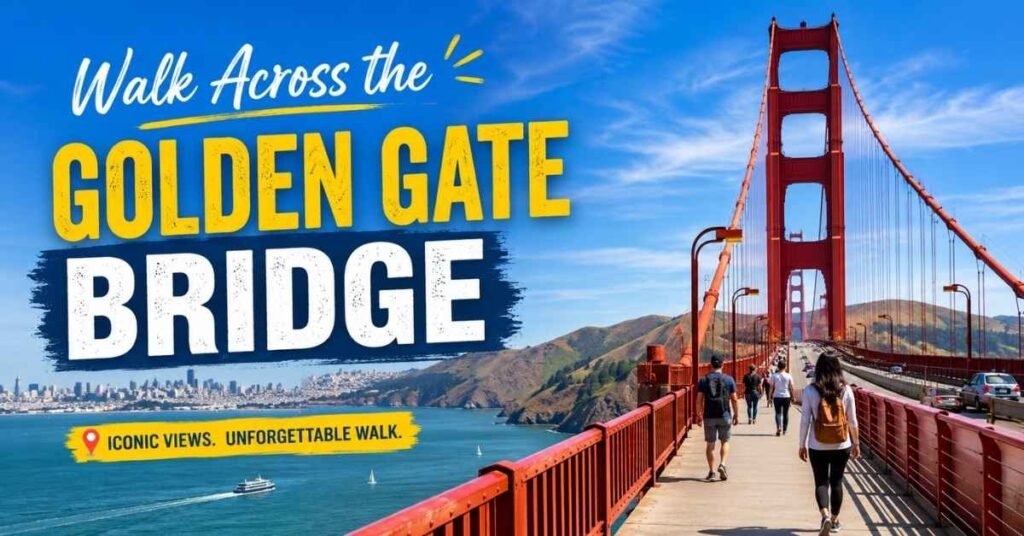
Free status: Always free for pedestrians
Walking the Golden Gate Bridge is one of the most memorable free activities in San Francisco. The bridge is approximately 1.7 miles long, and a complete one-way crossing usually takes around 45 to 60 minutes at an easy pace.
You do not have to walk the entire span. Going partway gives you the experience, views and photographs without leaving you nearly two miles from your starting point. A full out-and-back walk covers roughly 3.4 miles.
The pedestrian pavement is generally available between sunrise and sunset, but access hours can change. Expect stronger wind and colder temperatures on the bridge than in central neighbourhoods.
Know before you go:
- Walking is free, but parking and transport may cost money.
- Pedestrians normally use the eastern pavement.
- Dress in layers, even during summer.
- Heavy fog can completely change the view.
- Cyclists and pedestrians must follow the posted pavement rules.
- Allow 30 minutes for a partial walk or up to two hours for a return crossing.
Best nearby pairing: Fort Point, Crissy Field or Presidio Tunnel Tops.
2. Stand Beneath the Bridge at Fort Point
Free status: Always free when open
Fort Point sits directly below the southern end of the Golden Gate Bridge. The brick fort was built to defend San Francisco Bay, but its location now provides one of the city’s most dramatic bridge perspectives.
Inside, exhibitions introduce the site’s military history. You can also climb through different levels of the fort, although stairs and changing surfaces make some areas less accessible.
Fort Point is particularly useful on a windy day because part of the experience is indoors. Opening days and hours can be more limited than those of surrounding outdoor areas.
Allow: 45–90 minutes.
Best nearby pairing: Walk along the waterfront to Crissy Field.
3. Walk and Picnic at Crissy Field
Free status: Always free
Crissy Field combines an easy waterfront walk with open lawns, restored wetlands and excellent Golden Gate Bridge views. Compared with many San Francisco walks, the promenade is relatively flat and manageable for families, wheelchairs and pushchairs.
The beach is good for sitting, walking and watching the bay, but the water is cold. Wind can also arrive quickly, so bring a layer even when the sky looks clear.
Public access is free. Parking spaces around Crissy Field may charge by the hour, especially during busy periods.
Best for: Picnics, photography, children and travellers seeking a low-hill route.
4. Explore Presidio Tunnel Tops
Free status: Always free; no ticket required
Built over the Presidio Parkway tunnels, Presidio Tunnel Tops links the Main Post with the Crissy Field waterfront. It offers lawns, picnic tables, gardens and wide views towards the Golden Gate Bridge.
Families should make time for the Outpost, a two-acre nature play area with climbing and exploration features. The main park is open daily, while individual facilities follow separate hours.
Accessible restrooms and wheelchair-friendly picnic tables are available. The location is served by Muni and Presidio shuttle services, although nearby parking is paid.
Why it stands out: This is not simply another viewpoint. It is a place where you can spend several hours without feeling pressured to purchase anything.
5. Discover the Presidio Field Station
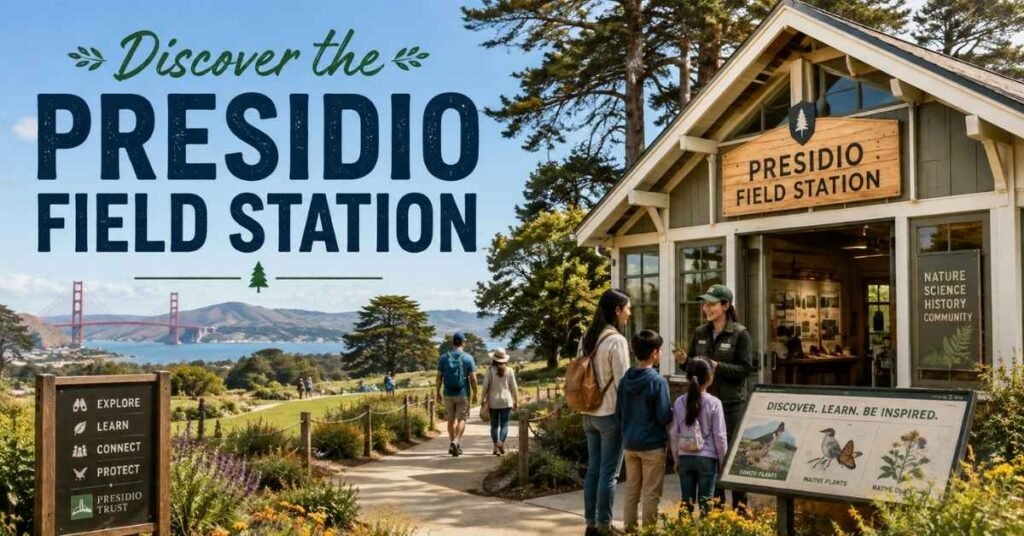
Free status: Always free during opening hours
Beside the Outpost playground, the Presidio Field Station is a hands-on curiosity lab filled with natural specimens, maps, tools and historical objects. Its exhibits change throughout the year, which gives local families a reason to return.
As of August 2026, it operates Wednesday to Friday from 11 a.m. to 4 p.m. and Saturday and Sunday from 10 a.m. to 5 p.m. It is closed on Monday and Tuesday.
No ticket or reservation is normally required. The building is wheelchair accessible, and accessible restrooms are nearby.
Allow: 20–45 minutes, or longer if children become absorbed in the activities.
6. Photograph the Palace of Fine Arts
Free status: Outdoor grounds are always free
The Palace of Fine Arts looks like a fragment of ancient Europe set beside a calm lagoon. Its towering rotunda, curved colonnades and reflections make it one of San Francisco’s finest free photography locations.
The outdoor paths are largely flat, making this an easier stop for visitors who want impressive architecture without a steep walk. The grounds are free, but performances and private events inside the theatre may require tickets.
Visit early for fewer people or near sunset for warmer light. Give yourself 45 minutes, or bring food and turn the stop into a picnic.
Best nearby pairing: Crissy Field and Presidio Tunnel Tops.
Fisherman’s Wharf, Pier 39 and North Beach
Fisherman’s Wharf is highly commercial, but you do not need to buy an attraction ticket to enjoy its best-known sights.
7. See the Pier 39 Sea Lions
Free status: Always free
The California sea lions at Pier 39 have occupied the floating docks since 1990. Their barking, sleeping and arguments over platform space create one of the city’s most entertaining wildlife experiences.
The main viewing area is at K-Dock. Numbers change with the season because the animals travel along the coast, so do not expect the same crowd on every visit. The official live camera can help you check activity before travelling.
Morning usually offers cooler conditions and active animals. Late afternoon can provide attractive light, although the viewing area may be busier.
Watching the sea lions is free, but Pier 39 is designed to encourage spending on food, shops and entertainment.
Allow: 30–60 minutes.
8. Browse the Machines at Musée Mécanique
Free status: Free entry; games cost money
Located at Pier 45, Musée Mécanique contains antique arcade machines, mechanical games, music boxes and coin-operated curiosities.
You can walk through the collection without paying admission. If you want to operate a machine, however, you will need coins. That makes this a classic example of free to enter, pay to play.
The museum works particularly well on a rainy or foggy day. Children may find the machines fascinating, but parents should decide on a game budget before going inside.
Allow: 30–60 minutes.
9. Walk From Pier 39 to Aquatic Park
Free status: Always free
Instead of treating Fisherman’s Wharf as a collection of shops, use it as the beginning of a waterfront walk.
A route from Pier 39 towards Pier 45, Hyde Street and Aquatic Park provides bay views, fishing boats, street activity and glimpses of Alcatraz. The principal waterfront paths are comparatively flat, with seating available in several places.
Starting early allows you to enjoy the area before its busiest hours. Food, souvenirs and attractions are optional expenses rather than necessary parts of the walk.
10. Climb Lombard Street
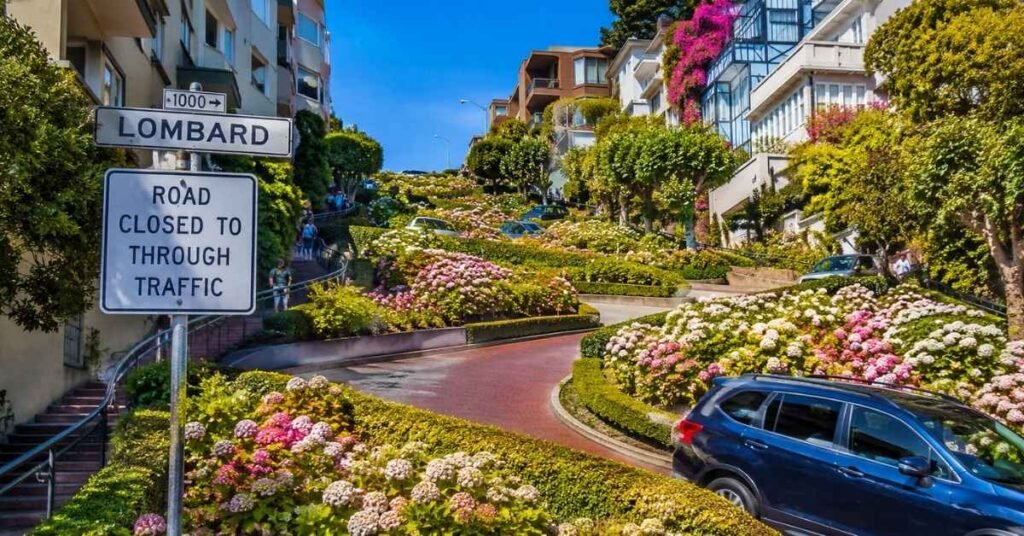
Free status: Always free
The famous crooked section of Lombard Street lies between Hyde and Leavenworth streets. Walking beside its eight tight turns is free and usually more interesting than driving down them.
The hill is steep. Stairs run alongside the road, but they can be tiring for visitors with mobility difficulties. Be considerate when taking photographs because people live in the surrounding houses.
Lombard Street is worth seeing when you are already exploring Russian Hill, North Beach or Fisherman’s Wharf. It rarely justifies a long journey by itself.
Allow: 20–30 minutes.
11. Visit the Cable Car Museum
Free status: Always free; donations welcomed
The Cable Car Museum is one of the best free museums in San Francisco. More importantly, it is not simply a room filled with static objects. Visitors can watch the enormous working wheels that pull the city’s cable cars through underground cables.
Exhibits explain how the system developed and why it remains such an important San Francisco landmark. Historic cars, mechanical equipment and photographs provide enough detail for transport enthusiasts without making the visit difficult for children.
As of August 2026, the museum opens Tuesday through Thursday from 10 a.m. to 4 p.m. and Friday through Sunday from 10 a.m. to 5 p.m. It is closed on Monday.
Remember that museum admission is free, but riding a cable car is not.
12. Experience North Beach Without Buying Anything
Free status: Free to explore
North Beach is best experienced slowly. Browse the shelves at City Lights Booksellers, walk past Vesuvio Cafe and rest in Washington Square beneath Saints Peter and Paul Church.
City Lights has deep connections with the Beat literary movement and regularly hosts readings and cultural events. Browsing is free, although purchasing a book is an appealing way to support the independent shop.
Washington Square offers benches, grass and a convenient place to rest between Chinatown, Coit Tower and Fisherman’s Wharf.
Golden Gate Park and Western San Francisco
Golden Gate Park is free to enter, but several museums and gardens inside it have separate ticket policies. Plan the public spaces and conditional attractions as two different categories.
13. Walk the Car-Free JFK Promenade
Free status: Always free
The JFK Promenade provides a car-free route through part of Golden Gate Park. Along the way, you can encounter public art, gardens, seating areas and people walking, skating and cycling.
It is one of the easiest ways to experience the park without committing to a museum ticket. Families appreciate the extra space, while visitors with limited mobility benefit from avoiding vehicle traffic.
The promenade also links several major park attractions, including the de Young, Conservatory of Flowers area and nearby public gardens.
14. See the View From the de Young Observation Tower
Free status: Tower access is free; museum galleries require admission
You do not need a museum ticket to enter the Hamon Observation Tower at the de Young. A lift carries visitors to an enclosed viewing level with broad views over Golden Gate Park and the city.
The tower is particularly valuable when the weather is cool or windy because the viewpoint is indoors. Fog may limit the distance you can see, but the close view over the park can still be worthwhile.
As of August 2026, the tower generally opens Tuesday through Sunday from 9:30 a.m. to 4:30 p.m. Hours can change for maintenance or special events.
Allow: 20–40 minutes.
15. Walk Around Blue Heron Lake
Free status: Always free
Previously known as Stow Lake, Blue Heron Lake offers waterside paths, bridges, birdwatching and places to pause beneath the trees.
Walking around the lake costs nothing. Boat rentals are optional and paid, so you can enjoy the setting without joining the queue at the boathouse.
Some paths are easier than others, particularly around bridges and Strawberry Hill. Observe birds and other wildlife without feeding them; bread and processed food can harm animals and the surrounding habitat.
16. Find the Park’s Free Outdoor Gardens
Free status: Always-free public areas and conditional formal gardens
You can enjoy several colourful parts of Golden Gate Park without entering a ticketed garden. The Rose Garden, seasonal flower displays and outdoor public art are good places to start.
The Japanese Tea Garden, Botanical Garden and Conservatory of Flowers have separate admission policies. San Francisco residents and eligible visitors may receive free entry, while tourists may need to use selected free days or hours.
Do not assume that everything inside a public park is automatically free.
17. Watch the Sunset at Ocean Beach
Free status: Always free
Ocean Beach stretches along San Francisco’s western edge and offers plenty of room for walking, watching surfers and seeing the sun sink over the Pacific.
This is not a warm swimming beach. The water is cold, and currents can be dangerous. Enjoy it from the sand unless you have the necessary knowledge and experience.
Fog and wind are common, including during summer. Check the conditions before crossing the city specifically for sunset.
Best nearby pairing: Golden Gate Park, Sunset Dunes or Sutro Baths.
18. Walk or Cycle Through Sunset Dunes
Free status: Always free
The former Upper Great Highway has become Sunset Dunes, a coastal public space designed for walking, cycling and community use.
It offers a long, open route beside Ocean Beach without normal vehicle traffic. Families, runners and cyclists can use it as an extension of a Golden Gate Park or beach visit.
The route is exposed to Pacific wind and fog, so it is more enjoyable with a jacket and realistic weather expectations.
Lands End and Sutro Baths
For natural scenery, this is one of the strongest collections of free outdoor activities in San Francisco.
19. Hike the Lands End Coastal Trail
Free status: Always free
The Lands End Trail follows San Francisco’s rugged northwestern coastline through cypress trees and coastal scrub. On a clear day, the route reveals ocean, headland and Golden Gate Bridge views.
The popular Coastal Trail is approximately 2.9 miles out and back from the Merrie Way trailhead. The first portion towards Mile Rock Overlook is wheelchair accessible, but other sections include stairs, uneven ground and steeper changes in elevation.
Stay on official trails and away from cliff edges. Visit during daylight, bring water and allow extra time for viewpoints.
The Merrie Way lot has historically offered free parking, accessible spaces, restrooms and visitor facilities, but spaces can fill. Leave nothing visible in your vehicle.
20. Explore the Sutro Baths Ruins
Free status: Always free
Opened in 1896, the enormous Sutro Baths complex once contained seven swimming pools beneath a vast glass structure. The pools are gone, but their concrete foundations remain beside the Pacific.
You can view the ruins from above or descend towards them. The lower route is steep, and surfaces can become slippery. Visitors with limited mobility may prefer the overlook near Lands End Lookout.
Large waves can reach exposed areas unexpectedly. Keep a safe distance from the water and avoid climbing where access is discouraged.
Best plan: Combine the ruins with a shorter section of the Lands End Trail rather than treating them as separate journeys.
Learn More: 25 Fun Things to Do in Curacao for Every Traveller
Mission District Murals and Local Culture
The Mission’s murals are more than attractive backgrounds. Many address immigration, civil rights, community identity, labour and political struggles.
21. Walk Through Clarion Alley
Free status: Always free
Clarion Alley is a narrow passage between Mission and Valencia streets. Its walls carry frequently changing murals created by local artists and community projects.
Because the art evolves, the alley can look different from one visit to the next. Read the text within the murals instead of treating them only as colourful photographs.
Visit during daylight and remember that the surrounding Mission District is a living neighbourhood.
22. See the Murals of Balmy Alley
Free status: Always free
Balmy Alley contains one of the densest groups of murals in San Francisco. Many works reflect Latin American heritage, human rights, displacement and community history.
It is quieter and more residential than Clarion Alley. Keep noise low, avoid blocking doorways and ask permission before photographing residents.
Walking between Clarion Alley and Balmy Alley creates a more complete self-guided Mission mural tour.
23. Visit the Women’s Building Mural
Free status: Exterior viewing is free
The MaestraPeace mural covers the exterior of the Women’s Building with images of women’s history, cultural identity and social change.
Its scale and detail reward more than a quick photograph. Walk around the building, examine the individual figures and consider how the artwork connects with the Mission’s wider mural tradition.
The building sits naturally between Clarion Alley, Balmy Alley and Mission Dolores Park.
24. Picnic at Mission Dolores Park
Free status: Always free
Mission Dolores Park is one of the city’s best places for people-watching, picnics and skyline views. It often feels noticeably warmer than neighbourhoods closer to the Pacific.
The park becomes busy on sunny weekends. Arrive earlier if you want more space or a quieter atmosphere.
Some sections are steep, although accessible approaches are available. Shops and cafés surround the park, but bringing your own food keeps the visit genuinely inexpensive.
Chinatown, Downtown and the Embarcadero
These locations are particularly useful for visitors exploring San Francisco without a car.
25. Explore Chinatown on Foot
Free status: Free to explore
Begin near the Dragon Gate, but do not stop at the tourist-facing section of Grant Avenue. Continue towards Stockton Street to see produce markets, bakeries and the everyday rhythm of one of North America’s most established Chinese communities.
Look for temple architecture, historic alleyways and public art. Be respectful around places of worship and avoid treating working markets as staged attractions.
Exploring is free; food and souvenirs are optional. Chinatown connects easily with North Beach, the Cable Car Museum and the Financial District.
26. Walk Through the Ferry Building
Free status: Free to enter
The Ferry Building combines historic architecture, waterfront views and a busy food marketplace. You can admire the building, walk along the Embarcadero and experience the farmers-market atmosphere without purchasing anything.
Food is the obvious temptation. If you are following a strict budget, visit after eating or bring a snack for the waterfront.
The building is well connected by Muni, BART and ferry services, although those transport options are not necessarily free.
27. Relax at Salesforce Park
Free status: Always free during opening hours
Salesforce Park is a 5.4-acre rooftop public park above the Salesforce Transit Center. Its curved path passes gardens, lawns, fountains, seating and a children’s play area.
Lifts and escalators make the park more accessible than many hilltop viewpoints. Free concerts, exercise classes and children’s programmes are also offered throughout the year.
As of August 2026, park hours are generally:
- May through October: 6 a.m. to 9 p.m.
- November through April: 6 a.m. to 8 p.m.
Hours and individual programmes can change.
28. Admire San Francisco City Hall
Free status: Public areas are generally free during opening periods
Known as the People’s Palace, San Francisco City Hall contains marble interiors, a sweeping staircase and a dome taller than the one on the United States Capitol.
Public access is subject to government hours, security screening and official events. Group and private-tour rules differ, so do not assume that every organised tour is free.
Even when access is limited, the exterior and Civic Center plaza provide excellent architectural views. Weekdays are usually the most practical time to visit.
29. Listen to the Wave Organ
Free status: Always free
The Wave Organ is an acoustic sculpture built into a jetty in the Marina District. Pipes interact with the movement of the bay, producing subtle gurgles, knocks and watery sounds.
The effect depends on tides and conditions, and it can be quieter than first-time visitors expect. This is not an attraction that everyone should cross the city to see.
It becomes much more worthwhile when paired with the Palace of Fine Arts, Marina Green or Crissy Field. The jetty is exposed, and parts of the approach may be difficult for visitors with limited mobility.
Free Museums and Gardens With Conditions
San Francisco has valuable free-admission programmes, but many are not universally free.
Free Museum Days for Visitors
Some museums waive general admission on selected dates. These days can be available to everyone, but the rules differ by institution.
Before travelling, confirm:
- Whether the offer is open to tourists
- Whether advance booking is required
- When tickets become available
- Whether special exhibitions are included
- Whether the programme is still operating
Do not rely on an old list. For example, programmes can be paused, replaced or restricted with relatively little notice.
Free Admission for San Francisco Residents
Residents often receive more generous access to museums and the Gardens of Golden Gate Park. A valid photo ID or another document showing a San Francisco address may be required.
Do not confuse San Francisco residency with living elsewhere in the Bay Area. Some institutions accept residents from all nine Bay Area counties, while others limit benefits to people living within San Francisco.
Museums for All
Museums for All offers free or reduced admission at participating institutions to eligible visitors receiving specified benefits.
Bring the required benefits card and identification. Guest limits and exhibition access can differ between venues.
This programme is valuable, but it should never be promoted as unrestricted free admission for every visitor.
Japanese Tea Garden Free Hours
The Japanese Tea Garden normally charges admission to many non-resident visitors. Current Gardens of Golden Gate Park policies include a free hour from 9 a.m. to 10 a.m. on Monday, Wednesday and Friday, as well as selected free days.
San Francisco residents and other eligible groups may receive broader free access. Arrive before the free window begins so that queues do not consume the limited entry period.
Free Seasonal Festivals and Concerts
San Francisco’s calendar regularly includes free cultural events such as:
- Stern Grove Festival
- Hardly Strictly Bluegrass
- Yerba Buena Gardens Festival
- Outdoor films
- Neighbourhood festivals
- Library events
- Salesforce Park programmes
- Presidio performances
“Free” does not always mean “walk in whenever you want.” Some events use reservations, ticket releases or lotteries to control capacity.
Which Free Experience Is Right for You?
| Type of visitor | Best choices |
|---|---|
| First-time visitor | Golden Gate Bridge, Presidio, Pier 39 and Chinatown |
| Family with children | Tunnel Tops, Field Station, Cable Car Museum and Crissy Field |
| Couple | Palace of Fine Arts, Lands End and Dolores Park |
| Solo traveller | Mission murals, Chinatown and Golden Gate Park |
| Rainy-day visitor | Cable Car Museum, Ferry Building and a verified museum offer |
| Limited-mobility visitor | Crissy Field, Tunnel Tops, Salesforce Park and Palace grounds |
| Photographer | Golden Gate Bridge, Palace of Fine Arts and Mission murals |
| San Francisco resident | Resident garden and museum programmes |
| Visitor without a car | Waterfront, Chinatown, North Beach and downtown |
| Sunset seeker | Ocean Beach, Lands End or Crissy Field |
Four Free San Francisco Itineraries
The attractions below have free admission. Your transport, parking and meals may still create costs.
Half-Day Golden Gate and Presidio Route
Follow this order:
- Palace of Fine Arts
- Crissy Field
- Presidio Tunnel Tops
- Fort Point
- Golden Gate Bridge
Allow four to five hours. The route involves several miles of walking, but you can shorten it with Muni or a Presidio shuttle.
Begin at the Palace of Fine Arts, follow the waterfront through Crissy Field and climb towards Tunnel Tops. Continue to Fort Point before finishing with a partial bridge walk.
One-Day Free Itinerary for First-Time Visitors
A practical route is:
- Ferry Building
- Chinatown
- Cable Car Museum
- Lombard Street
- Fisherman’s Wharf
- Pier 39 sea lions
- Palace of Fine Arts or Crissy Field
This route delivers architecture, neighbourhood culture, history, wildlife and bridge views. It is possible to pay $0 in attraction admission, although using public transport between distant stops is usually worth the cost.
See More: 35 Cheap Things to Do in New York City Under $20
Free Family Day
Plan the day around:
- Presidio Tunnel Tops
- Outpost nature playground
- Presidio Field Station
- Crissy Field
- Palace of Fine Arts
Bring a picnic and refillable water bottles. Tunnel Tops has accessible restrooms and picnic areas, while the Field Station provides an indoor break.
The schedule avoids constantly moving children between neighbourhoods and can comfortably fill half a day.
Rainy-Day Free Itinerary
Try this sequence:
- Cable Car Museum
- Chinatown
- Ferry Building
- San Francisco City Hall
- A verified free museum programme
The Ferry Building and Chinatown still involve outdoor walking, but each provides quick access to covered spaces. Keep a backup option in case City Hall access or a museum programme changes.
Hidden Costs Behind “Free” Attractions
Public Transport
Walking costs nothing, but San Francisco’s hills and scattered neighbourhoods make an entirely pedestrian itinerary difficult.
Muni buses and light rail are usually more economical than repeated rideshares. Cable cars are historic attractions as well as transport, and they use a different fare structure from a standard bus journey.
Parking
Many major free attractions have paid parking nearby. This includes areas around the Presidio, waterfront and Golden Gate Park.
Moving a car between every attraction can cost more than using public transport. If you drive, choose one geographical cluster and explore it on foot.
Never leave luggage, electronics or shopping bags visible inside a parked vehicle.
Food and Drinks
Pier 39, Fisherman’s Wharf and the Ferry Building make optional spending particularly tempting. Bringing water, snacks or a picnic helps keep your day affordable.
Donations and Paid Extras
Remember:
- Musée Mécanique is free to enter, but games cost money.
- Free walking tours may encourage tips.
- Museum special exhibitions can require separate tickets.
- Seasonal festivals may sell food and premium experiences.
- Bike rentals are not included with free bridge access.
Reservations
A zero-dollar ticket can still require planning. Popular museum days, festivals and concerts may release reservations weeks in advance.
Check the cancellation rules and return unwanted tickets so another visitor can attend.
Local Tips for Enjoying San Francisco on a Budget
Carry a Jacket in Every Season
San Francisco contains several microclimates. The Mission can feel warm while the bridge and western shoreline are covered by cold fog.
A light, wind-resistant layer is more useful than relying on the season printed on your calendar.
Do Not Build the Day Around Perfect Bridge Weather
Fog is part of San Francisco. If it hides the Golden Gate Bridge, switch to Tunnel Tops, the Cable Car Museum, Chinatown or another neighbourhood activity.
Waiting several hours for the view to clear is rarely the best use of a short visit.
Take the Hills Seriously
A destination may look close on a map but involve a demanding climb. Lombard Street, Twin Peaks and parts of the Mission, Nob Hill and Lands End can be tiring.
Check elevation as well as distance, particularly when travelling with young children or anyone with limited mobility.
Use Geographic Clusters
The easiest way to save time and money is to choose one area:
- Golden Gate Bridge and Presidio
- Fisherman’s Wharf and North Beach
- Golden Gate Park and Ocean Beach
- Mission District murals
- Chinatown and downtown
Three nearby attractions usually create a better day than six attractions scattered across the city.
Plan Coastal Walks During Daylight
Lands End and Sutro Baths are most enjoyable when you can see the trail, ocean and cliff edges clearly. Remain on marked paths and avoid exposed areas during dangerous surf or severe weather.
Is a Completely Free Day in San Francisco Possible?
Yes, you can spend an entire day in San Francisco without paying attraction admission. Walking the Golden Gate Bridge, exploring Presidio Tunnel Tops, visiting the Cable Car Museum and seeing the Pier 39 sea lions can all be included in a zero-admission itinerary.
However, a genuinely zero-cost day becomes harder when you include transport, parking and food. Visitors staying in a central, walkable neighbourhood have an advantage.
For the lowest possible cost:
- Choose one neighbourhood cluster.
- Walk between nearby attractions.
- Bring water and a picnic.
- Use free shuttles where available.
- Avoid moving a car throughout the day.
- Verify conditional admission before leaving.
Frequently Asked Questions
What Are the Best Free Things to Do in San Francisco?
The best free things to do in San Francisco include walking the Golden Gate Bridge, visiting Presidio Tunnel Tops, hiking Lands End, watching the Pier 39 sea lions, exploring the Cable Car Museum, seeing the Mission murals and enjoying the Palace of Fine Arts.
Can You Walk Across the Golden Gate Bridge for Free?
Yes. Pedestrians can walk across the Golden Gate Bridge for free during posted pavement hours. Parking, public transport and bike rental are separate expenses.
Is Golden Gate Park Free?
Golden Gate Park is free to enter. Public paths, lawns, playgrounds and many outdoor gardens cost nothing. Museums, formal gardens and special attractions inside the park may charge admission or offer conditional free entry.
Is Pier 39 Free to Visit?
Pier 39 has no general entrance charge. Watching the sea lions is free, but shops, restaurants, games and individual attractions cost money.
Is the Cable Car Museum Free?
Yes, the Cable Car Museum offers free admission. Donations are welcomed. Riding one of San Francisco’s cable cars requires a paid fare.
Which San Francisco Museums Are Free?
The Cable Car Museum is always free. The de Young’s Hamon Observation Tower is also free without gallery admission. Other museums offer selected free days, resident programmes or eligibility-based admission.
Are Free Museum Days Available to Tourists?
Some free museum days are open to everyone, while others are limited to San Francisco residents, Bay Area residents or eligible benefits recipients. Check the exact policy before visiting.
Is the Japanese Tea Garden Free?
The Japanese Tea Garden offers limited free hours and selected free days. San Francisco residents and eligible groups may receive additional free access. Other visitors normally pay admission outside those periods.
What Are the Best Free Things to Do With Children?
Top family choices include Presidio Tunnel Tops, the Outpost playground, Presidio Field Station, Crissy Field, the Cable Car Museum and the Pier 39 sea lions.
What Can You Do for Free When It Rains?
Good free indoor options include the Cable Car Museum, Presidio Field Station, Ferry Building, de Young Observation Tower and museum programmes offering verified free admission.
Can You Explore San Francisco Without a Car?
Yes. The waterfront, Chinatown, North Beach, downtown and parts of the Presidio are accessible by Muni and on foot. Public transport is generally easier than finding and paying for parking at every attraction.
Where Can You See the Golden Gate Bridge for Free?
Excellent free viewpoints include Crissy Field, Fort Point, Presidio Tunnel Tops, Baker Beach and sections of Lands End. The best location depends on fog, wind and the amount of walking you want to do.
Plan Your Free Day in San Francisco
The best free things to do in San Francisco are not second-rate substitutes for paid attractions. The Golden Gate Bridge, Presidio, Lands End, Mission murals and waterfront are central parts of the city’s identity.
Choose one neighbourhood, select an essential attraction and add two or three nearby stops. Then confirm opening hours, check the weather and calculate transport costs.
With that simple approach, you can experience San Francisco’s landscapes, architecture, neighbourhoods and history while paying nothing in attraction admission—and avoiding unpleasant surprises.










2 thoughts on “29 Best Free Things to Do in San Francisco in 2026”