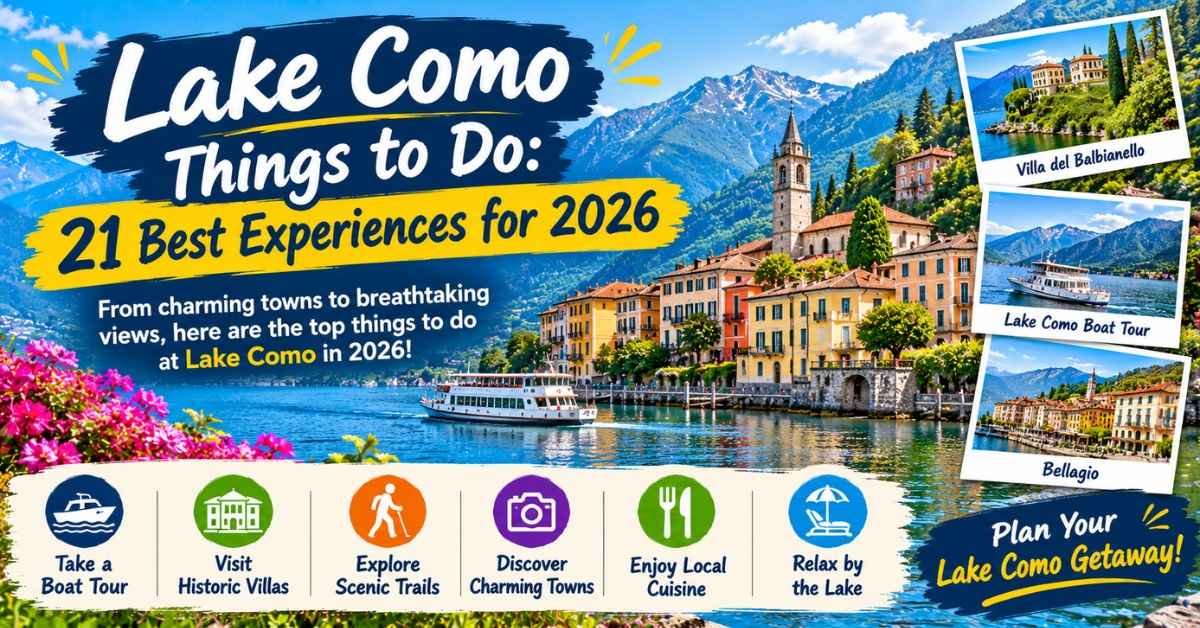
lake como things to do range from crossing the water by ferry and exploring romantic villas to hiking above Varenna, swimming beneath the mountains, and eating risotto in a quiet lakeside village. For a first visit, prioritize a boat journey, one historic villa, and two contrasting towns—usually Bellagio and Varenna—then add Como, Brunate, a garden, or a trail as time allows. This guide shows you what is genuinely worth doing, how to group nearby sights, and which experiences suit your schedule, budget, and travel style.
Lake Como—also called Lago di Como or Lario—is not one compact resort. It is a long, inverted-Y-shaped lake surrounded by steep mountains and dozens of communities. That geography is part of the beauty, but it also causes the planning mistakes behind many disappointing trips: choosing the wrong base, underestimating ferry time, driving where parking is scarce, or trying to visit too many towns in one day.
Use this guide to build a realistic trip rather than a checklist. Opening hours, ferry schedules, lake conditions, and access rules can change, so confirm time-sensitive details with the official operator before you travel.
Lake Como at a Glance
| If you want… | Best choice | Allow | Main caveat |
|---|---|---|---|
| A classic first visit | Bellagio + Varenna by ferry | Full day | Busy in peak season |
| Grand villas and gardens | Tremezzina | Half to full day | Timed admission may be needed |
| Easy arrival from Milan | Como or Varenna | 1–2 days | Como is far from the central-lake triangle |
| Romance | Varenna, Bellagio, Lenno | 2–3 days | Waterfront rooms cost more |
| A car-free trip | Varenna, Como, Menaggio | 2–4 days | Plan around the final ferry |
| Hiking | Varenna, Lecco, northern lake | Half to full day | Trails can be steep and exposed |
| Fewer crowds | Dongo, Gravedona, Colico | 2–3 days | Fewer late-evening connections |
| Family-friendly variety | Menaggio or Como | 2–4 days | Strollers meet cobbles and steps |
| One day from Milan | Varenna + Bellagio | 10–12 hours | Leave buffer for trains and ferries |
First, Understand the Lake’s Geography
Lake Como is easier to plan when you divide it into five zones.
Como and the southwestern arm
Como is the largest city on the lake and a major rail gateway from Milan. It offers the cathedral, museums, shops, a broad waterfront, and the Como–Brunate Funicular. It is convenient and lively, but it is not next door to Bellagio or Varenna. Treat travel between Como and the central lake as a meaningful part of the day, not a quick transfer.
The central-lake triangle
Bellagio, Varenna, and Menaggio form the most useful sightseeing triangle. Frequent connections, famous views, attractive promenades, and nearby villas make this the strongest area for a first trip. If you have only one or two days, concentrate here rather than covering the entire lake.
Tremezzina and the western shore
The western mid-lake shore includes Lenno, Tremezzo, Cadenabbia, and Ossuccio. Come here for Villa del Balbianello, Villa Carlotta, the Greenway del Lago di Como, and access to Isola Comacina. It suits travelers who want gardens, villas, walking, and a calmer base.
Varenna, Lecco, and the eastern shore
The eastern side has strong rail access. Varenna is the obvious tourism hub, while Lecco feels more like a working Italian city. The shore also connects with stretches of the Sentiero del Viandante, a historic walking route with high lake views.
The northern lake
Dongo, Gravedona, and Colico receive fewer short-stay visitors. The landscape opens up, winds become useful for water sports, and the mood grows quieter. This area rewards longer stays, outdoor travelers, and people willing to trade famous landmarks for space.
Where Should You Stay on Lake Como?
Your base affects the trip more than any individual attraction.
| Base | Best for | Strengths | Trade-offs |
|---|---|---|---|
| Como | First or last night, city culture, rail access | Direct Milan connections, dining, museums, funicular | Farther from central-lake icons |
| Bellagio | Classic scenery and romance | Central position, elegant lanes, gardens | Crowded, costly, no railway station |
| Varenna | Car-free couples and short trips | Train station, ferries, compact waterfront | Steps, limited rooms, busy midday |
| Menaggio | Families and a relaxed center | Flat waterfront, piazza, useful ferry hub | Less cinematic than Varenna |
| Tremezzina | Villas, walking, slower travel | Balbianello, Carlotta, Greenway | Scattered villages; buses may be useful |
| North lake | Water sports, value, fewer crowds | Open views, beaches, space | Longer transfers and fewer connections |
If you are torn between Bellagio or Varenna, choose Varenna for train convenience and an intimate village atmosphere; choose Bellagio for a broader selection of shops, hotels, restaurants, and central ferry routes. For a family or anyone who prefers flatter ground, Menaggio deserves more attention than most listicles give it.
Best Things to Do in Lake Como
1. See the Lake from the Water

The most important Lake Como experience is not a building—it is the journey between them. From the water, you understand how villages sit between mountain and shore, why roads are slow, and how villas were designed to face the lake.
You have two main choices:
- Public ferry: best value, useful for point-to-point travel, and part of the local experience.
- Private boat tour: best for privacy, swimming stops, flexible photography, and seeing villas from the water without building your day around a timetable.
For most first-time visitors, use the ferry for transport and book a private boat only if the lake itself is a priority or you are celebrating something. A short tour in the central lake can feel more rewarding than a long ride that leaves little time ashore.
Official schedules change by date and season. Navigazione Laghi also warns that queues can form in summer and on holidays, and services may change in poor weather, so check the current timetable and arrive early. ([Navigazione Laghi][1])
Best for: everyone Allow: 1 hour to a full day Smart pairing: Bellagio, Varenna, and Menaggio
2. Explore Bellagio Beyond the Famous Staircase
Bellagio sits where the lake divides into two arms. Its steep lanes, stone passages, silk shops, lakefront arcades, and mountain views explain its enduring popularity. Salita Serbelloni, the photographed staircase, is worth seeing—but it is a five-minute sight, not the whole town.
Walk away from the busiest central lanes toward Punta Spartivento, where the three branches of the lake meet. Browse the quieter streets of Pescallo on the opposite shore. Pause in a café only after you move beyond the most congested waterfront tables.
Bellagio works best in the early morning or late afternoon. Midday day-trippers can make its small center feel more commercial than romantic.
Best for: first-time visitors, couples, photographers Allow: 2–4 hours without a villa Watch for: steep cobbles and premium waterfront prices
3. Walk Varenna’s Waterfront
Varenna feels smaller and softer than Bellagio. The short Passeggiata degli Innamorati, often called the Lovers’ Walk, connects the ferry area with the old center beside the water. Continue to the church square, small lanes, and modest beaches.
The village’s appeal is not a long list of attractions. It is the sequence of red and ochre houses, glimpses through stone arches, boats shifting in the harbor, and mountains rising across the lake. Give yourself permission to linger.
Varenna is particularly useful for a day trip from Milan because it has a railway station. However, the route between the station, ferry terminal, and upper streets includes slopes and uneven surfaces.
Best for: car-free travelers, couples, relaxed lunches Allow: 2–3 hours; longer with Villa Monastero or Vezio Castle
4. Visit Villa del Balbianello
Set on a wooded peninsula near Lenno, Villa del Balbianello delivers one of Lake Como’s most composed views: formal terraces, sculpted trees, stone balustrades, and water on multiple sides. Film connections help its fame, but the architecture and setting justify the visit without them.
Do not treat access as an afterthought. The villa is reached on foot by routes of different difficulty or, when operating, by boat service. Reserve ahead when demand is high. A full official ticket includes a guided interior visit of about 50 minutes plus independent access to the gardens, terraces, and Loggia Durini. ([fondoambiente.it][2])
The experience is strongest if you enjoy both historic interiors and designed landscapes. If your schedule is tight and you care mainly about flowers, Villa Carlotta may fit more easily with the ferry network.
Best for: architecture, gardens, film locations, proposals Allow: 2–3 hours plus access time Book ahead: strongly recommended in busy periods
5. Wander Through Villa Carlotta’s Gardens
Across the water from Bellagio, Villa Carlotta combines art-filled rooms with a large botanical garden known for seasonal color. Its location near the Tremezzo ferry stop makes it relatively easy to integrate into a central-lake day.
Come in spring for exuberant flowering displays, but remember that a garden changes with weather and season. The hillside layout includes inclines and steps; choose comfortable shoes and allow more time than a quick photo stop.
Villa Carlotta is an efficient choice when you want one major villa without a complicated detour. Pair it with Menaggio, Bellagio, or a section of the Greenway. Check the official site for current opening dates and ticket rules before setting out.
Best for: botany, art, families with older children Allow: 2–3 hours
6. Combine Villa Monastero with Varenna
Villa Monastero stretches along the Varenna shoreline. Its biggest advantage is logistical: you can walk there from the village and combine the visit with lunch, the ferry, and the railway station.
The official property includes a museum house and a botanical garden extending for almost two kilometers beside the lake. That length creates changing views and gives visitors more breathing room than the compact village center. ([Varenna][3])
If you have one day split between Varenna and Bellagio, choose the garden rather than forcing in multiple villas. If you have two or three days, add the interiors and nearby Castello di Vezio.
Best for: easy villa access, gardens, photography Allow: 1.5–3 hours
7. Slow Down in the Gardens of Villa Melzi
The Gardens of Villa Melzi offer a calmer counterpoint to Bellagio’s crowded lanes. Landscaped paths, lakeside trees, sculpture, and long water views make this less about rushing between exhibits and more about walking slowly.
It is an especially good choice for couples, garden lovers, and travelers who want a beautiful experience without adding another ferry connection. Since it is in Bellagio, it can turn a brief town visit into a satisfying half-day.
Seasonal opening matters. Confirm current dates before building your itinerary around it.
Best for: peaceful walks, couples, low-key sightseeing Allow: 1–2 hours
8. Ride the Como–Brunate Funicular
The Como–Brunate Funicular climbs from the lakefront to Brunate, opening views over Como and the southern basin. The official journey takes about seven minutes, making it a high-reward addition to a day in Como. ([funicolarecomo.it][4])
The funicular ride is only the start. Walk through Brunate, find panoramic terraces, or continue toward the Volta Lighthouse if time, conditions, and mobility allow. The lighthouse walk is more demanding than casual “quick viewpoint” descriptions suggest.
Cloud can erase the panorama, and queues can be long at popular times. On a clear day, go early. On a hazy or rainy day, spend that time in Como’s historic center instead.
Best for: views, families, short stays in Como Allow: 1.5–3 hours
9. Explore Como’s Historic Center
Como is more than a transport gateway. Begin at Como Cathedral, wander through the medieval street grid, and walk the lakefront. Add the Tempio Voltiano if you are interested in Alessandro Volta and the scientific history behind the electrical volt.
The city also gives you something the smaller villages cannot: a wider choice of restaurants, shops, indoor attractions, and evening life. It is one of the best answers to what to do in Lake Como when it rains.
Italian tourism guidance highlights the cathedral, Volta connections, Varenna, Bellagio, and the lake’s major villas as core cultural anchors of the region. ([www.italia.it][5])
Best for: culture, rainy days, rail travelers Allow: half to full day
10. Climb to Castello di Vezio
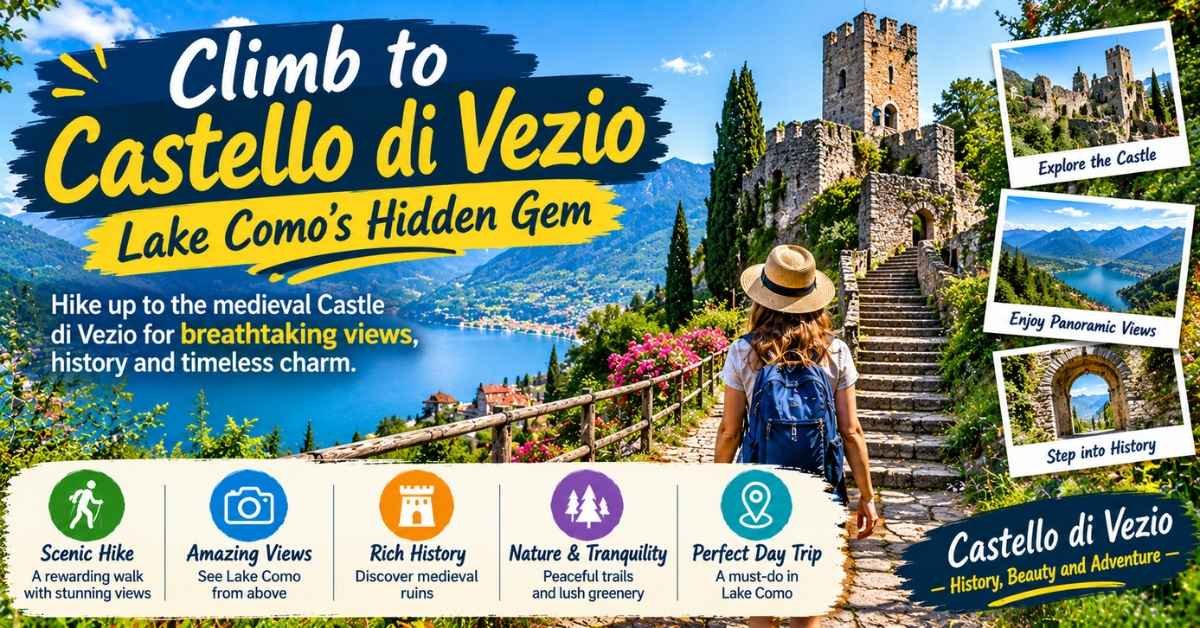
Above Varenna, Castello di Vezio provides broad views over the central lake. The climb separates it from easier waterfront sights; that is precisely why it can feel more memorable.
The route is steep in places, and opening can be seasonal or weather-dependent. Wear shoes with grip, carry water, and do not squeeze the castle into a tight train-to-ferry transfer. Visitors with limited mobility should choose a lakeside garden or boat ride instead.
Best for: views, history, active travelers Allow: 2–3 hours from Varenna and back
11. Walk the Greenway del Lago di Como
The Greenway del Lago di Como links villages, church squares, old lanes, gardens, and waterfront segments along the western shore. You do not need to walk the entire route. A selected section can reveal more local texture than another crowded town center.
The path is not a perfectly flat promenade. Expect road crossings, inclines, cobbles, and occasional stairs. Start with a map, decide where you will stop, and identify the return bus or ferry before walking.
Pair a section around Lenno and Ossuccio with Villa del Balbianello or Isola Comacina. This creates a richer day than treating each as a disconnected attraction.
Best for: slow travel, free activities, village life Allow: 2 hours to a full day
12. Enter the Orrido di Bellano
At Orrido di Bellano, water has carved a narrow gorge behind the eastern-shore town. Walkways bring you close to dark rock walls and rushing water, offering a dramatic change from villas and polished promenades.
This is a useful half-day option from Varenna, especially for families with school-age children or travelers who want a natural attraction accessible by train. Wet surfaces can be slippery, and sensitive children may find the sound and enclosed atmosphere intense.
Best for: families, geology, a short excursion Allow: 1–2 hours plus travel
13. Hike the Sentiero del Viandante
The Sentiero del Viandante follows the eastern side of the lake in sections, linking villages and historic routes above the water. It is one of the best Lake Como activities for travelers who want landscape rather than luxury.
Choose a segment based on elevation, shade, railway access, and your actual fitness—not simply the distance. Summer heat can make exposed climbs punishing. Carry water, download a map, and leave room for missed turns or photo stops.
The railway makes point-to-point hiking practical: walk one section, then return from another station. Conditions and closures can change, so verify your intended stretch locally.
Best for: hikers, repeat visitors, panoramic views Allow: half or full day
14. Cross to Isola Comacina
Isola Comacina is the lake’s only island. Its archaeological remains, church, wooded paths, and views add layers of Roman and medieval history to a landscape often marketed only through glamour.
Boat access is seasonal, and the island is best combined with Ossuccio or the Greenway. It will not suit someone seeking a packed attraction, but it appeals to curious travelers who value a quiet walk and a sense of place.
Best for: history, archaeology, slower itineraries Allow: half day with shore connections
Learn More: 25 Best Things to Do in Vermont in Summer (2026 Guide)
15. Swim or Spend an Afternoon at a Lido
Lake Como is visually inviting, but not every shoreline is a practical swimming beach. Access may be rocky, water can deepen quickly, and boat traffic matters. Public beaches and lidos provide clearer entry points; some offer loungers, changing facilities, pools, or food service.
Check local water-quality notices and on-site safety information. Water is often cold outside midsummer. Bring water shoes for pebble entries, supervise children closely, and never assume an empty patch of shore is safe or public.
An unhurried swim afternoon can improve a multi-day itinerary. It prevents every day from becoming a race between villages.
Best for: summer stays, families, slow travel Allow: 2–4 hours
16. Enjoy Menaggio’s Easygoing Waterfront
Menaggio is frequently reduced to a ferry interchange, which misses its value. The town has an attractive piazza, a flatter promenade, mountain views, cafés, and access to walks and beaches.
It is a practical pause between more demanding days. Families appreciate the relative ease of moving around, while couples may prefer it in the evening after day-trippers leave. Menaggio also makes a useful base for reaching the western shore and the central triangle.
Best for: families, a calmer base, café time Allow: 2–4 hours
17. See the Gorge and Waterfall at Nesso
Nesso is known for the Orrido di Nesso, where water drops through a steep cleft near the village. The stone bridge and clustered buildings create a striking composition—but reaching the lower viewpoint involves many steps.
This is not an efficient “quick stop” if you have luggage, a stroller, or a tightly timed bus. Transport is less forgiving than in the central triangle. Visit because you want the village and descent, not just a social-media photograph.
Best for: photographers, repeat visitors, waterfall scenery Allow: 2–3 hours plus transport
18. Discover Como’s Silk Heritage
Como has been associated with silk production and design for centuries. Look beyond souvenir scarves by visiting a specialist museum or choosing shops that explain where and how their products were made.
This theme connects landscape, trade, craft, fashion, and the city’s economic history. It is also an excellent rainy-day alternative and a more original souvenir route than buying the first item beside the ferry terminal.
Best for: design, fashion, cultural history Allow: 1–3 hours
19. Explore the Lake’s Wartime History Around Dongo
Lake Como’s beauty can obscure its difficult twentieth-century history. Dongo is associated with the final days of Benito Mussolini and the Italian Resistance. Local museums and memorial sites add historical depth to a northern-lake journey.
Approach the subject as history rather than spectacle. This stop is most meaningful for travelers already heading north or staying several days; it is too far from the standard triangle to bolt onto a rushed first-day itinerary.
Best for: modern history, northern-lake stays Allow: half day
20. Try Water Sports on the Northern Lake
The broader northern basin around Colico is well suited to wind-dependent activities such as sailing, windsurfing, and kitesurfing. Kayaking and paddleboarding are available in several areas around the lake, but conditions can shift quickly.
Beginners should use a reputable local operator, wear the recommended safety equipment, and understand wind and boat lanes. Morning conditions may differ greatly from the afternoon.
Colico can also be combined with Piona Abbey, Fort Fuentes, or a relaxed lakeshore ride. It is a strong choice for active travelers who find villa-heavy itineraries repetitive.
Best for: adventure, teens, longer stays Allow: half to full day
21. Eat the Food of the Lake and Mountains

Lake Como cuisine is not simply generic Italian food with a view. Look for risotto with perch, polenta, freshwater fish, local cheeses, cured meats, and regional wines. Menus vary by area and season.
Choose restaurants for cooking and hospitality, not only their terrace. A beautiful table can still deliver an indifferent meal. Read the menu before sitting, check whether a cover charge applies, and reserve well-known small restaurants in busy periods.
For an easy local ritual, order an aperitivo in the early evening and watch the water traffic slow. A cooking class, market visit, or food-focused walk can add welcome human connection to a sightseeing-heavy trip.
Best for: everyone Allow: as long as the meal deserves
Which Lake Como Villa Should You Visit?
You do not need to see every villa. After two grand gardens, details begin to blur unless architecture or horticulture is a major interest.
| Villa | Choose it for | Location advantage | Main consideration |
|---|---|---|---|
| Villa del Balbianello | Iconic peninsula, interiors, film locations | Near Lenno | Access and reservations require planning |
| Villa Carlotta | Botanical variety and art | Near Tremezzo ferry | Large sloping garden |
| Villa Monastero | Long lakeside garden | Walkable from Varenna | Easy to combine, so it can be busy |
| Villa Melzi Gardens | Peaceful landscaping | In Bellagio | Primarily a garden experience |
For one day, pick one villa. For three days, two contrasting properties are reasonable: Balbianello for architecture and drama, then Monastero or Carlotta for a longer botanical walk.
How to Use Lake Como Ferries Without Losing Half the Day
Know the service types
Passenger boats connect communities around the lake, while faster services make fewer stops. Vehicle ferries operate only on designated routes and stops. Do not assume every boat accepts a car or every ticket works for every service.
The central vehicle-ferry loop among Bellagio, Varenna, Menaggio, and Cadenabbia is particularly useful. If you are traveling on foot, it also provides straightforward cross-lake connections.
Read the timetable by date, not by memory
Schedules change by season and sometimes by specific date range. Confirm the day’s service, direction, boat type, and final return. Official guidance recommends reaching a staffed ticket office around 20 minutes before departure, with extra caution during summer and holidays. ([Navigazione Laghi][1])
Public ferry or private boat?
| Question | Public ferry | Private boat |
|---|---|---|
| Best for | Transport and value | Experience and flexibility |
| Route | Fixed | Custom within booked limits |
| Stops | Scheduled ports | Agreed pickup and stops |
| Privacy | Shared | Private group |
| Swimming | Usually no | Often possible when conditions allow |
| Cost | Lower | Significantly higher |
| Weather impact | Delays or suspension possible | Operator decides based on safety |
Ferry rules that save stress
- Keep a screenshot or paper copy of the relevant timetable.
- Arrive early; a sold-out or missed boat can disrupt the entire route.
- Build a buffer before dinner reservations, trains, or flights.
- Check the final connection before you settle into an evening meal.
- Do not plan six towns merely because lines connect them on a map.
- If starting at an unstaffed landing, follow posted ticket instructions; onboard purchase may be possible on applicable services.
- Expect strollers, wheelchairs, bicycles, and luggage to require extra coordination depending on the vessel and landing.
Realistic Lake Como Itineraries
One Day: Varenna and Bellagio from Milan
This is the best first-day plan if you want classic scenery without a car.
- Take an early train from Milan to Varenna-Esino.
- Walk Varenna’s waterfront before the main crowds.
- Choose Villa Monastero or Castello di Vezio—not both unless you move quickly.
- Take the ferry to Bellagio.
- Have lunch away from the busiest landing area.
- Explore the lanes, Punta Spartivento, and perhaps Villa Melzi’s gardens.
- Ferry back to Varenna with a generous train buffer.
This itinerary is better than adding Como. Como lies on a different branch and creates unnecessary transit in a single day.
One Day: Como and Brunate
Choose this alternative when weather is uncertain, you prefer culture, or you want the simplest rail logistics.
- Explore Como Cathedral and the historic center.
- Visit the Tempio Voltiano or a silk-related museum.
- Ride the funicular to Brunate if visibility is good.
- Finish with a waterfront walk and aperitivo.
Two Days: The Central-Lake Essentials
Day 1: Varenna, Villa Monastero, and Bellagio. Day 2: Menaggio plus Villa Carlotta, or Lenno plus Villa del Balbianello.
Stay in Varenna for rail convenience, Bellagio for atmosphere, or Menaggio for a calmer and flatter base. Make day two villa-led: reserve Balbianello first, then fit the rest around that commitment.
Three Days: Scenery, Culture, and a Slower Shore
Day 1: Varenna and Bellagio. Day 2: Tremezzina—Balbianello or Carlotta, plus a Greenway section And Day 3: Como and Brunate, or Sentiero del Viandante for an active alternative.
This schedule introduces three different versions of the lake: iconic villages, villa country, and either urban culture or mountain walking.
Four or Five Days: Go Beyond the Famous Triangle
Keep the three-day framework, then add:
- Bellano and its gorge with an eastern-shore train journey.
- Colico, Dongo, or Gravedona for a quieter northern day.
- A dedicated lido or water-sports afternoon.
- A private boat trip timed for early morning or late afternoon.
- A second hike, garden, cooking class, or long lunch rather than another frantic town circuit.
Best Things to Do by Travel Style
For couples
Combine a morning boat ride, one elegant garden, and an evening in Varenna or Bellagio after day-trippers leave. Villa del Balbianello is visually romantic, but an unhurried aperitivo or lakeside walk can feel more personal than a crowded landmark.
With children
Match the day to age and energy.
- Toddlers: Menaggio promenade, short ferry rides, open squares, and a lido. Minimize steep villages and repeated folding of strollers.
- School-age children: Orrido di Bellano, boat trips, castles, swimming, and the funicular.
- Teens: kayaking, northern-lake water sports, a point-to-point hike, photography, and time to choose their own lunch or shopping stop.
Do not build a family day around three formal villas. Alternate a cultural visit with water, food, or movement.
Free things to do
Some of the best free things to do in Lake Como are walking Varenna’s waterfront, exploring Bellagio’s lanes, visiting church squares, following a section of the Greenway, relaxing beside the lake, and hiking public trails. Transport, parking, food, and some trail access logistics still cost money, so “free” does not mean a costless day.
On a budget
Stay near a railway station, use public ferries, choose one paid villa, fill a bottle where permitted, and picnic responsibly. Como, Lecco, and some northern towns often provide better-value food and lodging than the marquee villages.
For a luxury trip
Spend on experiences where privacy changes the quality: a well-reviewed private boat, a room with direct lake access, an excellent guide, or a chef-led meal. Luxury is not seeing more places. It is reducing friction and creating time.
Things to Do in Lake Como When It Rains
Rain does not ruin the lake, but it should change the plan.
- Explore Como Cathedral, museums, and silk heritage.
- Tour an open villa interior rather than only its garden.
- Book a cooking class or long regional lunch.
- Visit churches and covered historic streets.
- Use short train journeys on the eastern shore.
- Save exposed viewpoints, boat tours, gorges, and steep trails for stable weather.
Boat services can change in strong wind or waves, and stone paths become slippery. Keep one indoor half-day ready instead of trying to force the original schedule.
Accessibility and Mobility: What Many Guides Leave Out
Lake Como’s historic character creates real barriers. Varenna, Bellagio, Nesso, Brunate, villas, and hiking routes may involve cobbles, stairs, steep lanes, gravel, or uneven landings.
Travelers with limited mobility should:
- Ask hotels about steps between the station, landing, street, and room—not only whether the building has a lift.
- Confirm accessibility with individual villas and boat operators before booking.
- Favor Como and Menaggio for more level public areas.
- Leave extra time for boarding and transfers.
- Avoid assuming a “short walk” is flat.
- Arrange accessible transport when the last section cannot be managed comfortably.
Families with strollers face many of the same constraints. A lightweight folding stroller or carrier can be more practical in steep villages.
Best Time to Visit Lake Como
Spring
Spring brings flowering gardens, green slopes, and increasing ferry service. Weather can change quickly, but this is one of the strongest seasons for villas and walking.
Summer
Summer offers long days, swimming, water sports, and the fullest tourism infrastructure. It also brings heat, crowds, ferry queues, high room rates, and busy roads. Start early and reserve key experiences.
Autumn
Early autumn can combine warm light, comfortable walking, and fewer visitors. Later in the season, transport and attraction schedules reduce, and rain becomes a greater planning factor.
Winter
Lake Como in winter is quiet and atmospheric, particularly in Como. However, many villas, gardens, hotels, restaurants, and boat routes operate on reduced schedules or close. Build a winter trip around open cultural sites, scenery, food, and realistic transport—not a summer checklist.
There is no universal best month. Choose spring for gardens, summer for swimming and maximum choice, early autumn for balance, or winter for solitude.
How Much Does a Lake Como Trip Cost?
Costs vary sharply by season and travel style. Instead of relying on a fixed figure that will date quickly, budget by category:
- Transport: trains, ferries, buses, funicular, taxis, parking, or boat hire.
- Attractions: one or two villa entries, museums, gardens, and guided tours.
- Food: takeaway picnic, casual trattoria, aperitivo, or destination dining.
- Accommodation: inland rooms, town-center hotels, or premium waterfront properties.
- Contingency: taxis after missed connections, weather changes, and baggage storage.
A good-value day might use trains and ferries with one paid garden and a casual lunch. A private boat and waterfront dinner can multiply the total quickly. Compare value by time saved and experience gained, not price alone.
See More: 17 Best Things to Do Big Sur: Complete 2026 Travel Guide
What Should You Book in Advance?
Prioritize the reservations that control the rest of the itinerary:
- Accommodation, especially central-lake rooms in peak season.
- Villa del Balbianello or another timed, high-demand villa visit.
- A reputable private boat tour.
- Special restaurants, cooking classes, and guided hikes.
- Airport or late-night transfers where public transport is limited.
Do not lock every hour. Ferries, weather, and the pleasure of stopping for a view reward some flexibility.
Common Lake Como Mistakes—and What to Do Instead
Trying to see the whole lake in one day
Focus on one zone. The central triangle alone can fill a rewarding day.
Treating ferries like an urban subway
They are scheduled transport affected by demand and conditions. Check the date, arrive early, and know the last return.
Bringing a car into every famous village
Narrow roads, traffic, and limited parking can erase the supposed convenience. Use rail and ferries when your route allows.
Visiting too many villas
Choose one property for a day trip or two contrasting ones over several days. Give each enough time to register.
Staying far from transport to save money
A cheaper room can become expensive if you need repeated taxis or lose hours reaching ferry landings. Calculate door-to-door effort.
Ignoring steps, heat, and luggage
Lake views are often earned by climbing. Pack light, wear reliable shoes, and verify the final approach to your lodging.
Choosing restaurants only for the view
Read the menu, recent reviews, and pricing first. The lake will still be there after a better meal one street back.
Expecting every village to stay lively late
Some communities quiet down quickly. Check dinner options and transport before returning from a day trip.
Is Lake Como Worth Visiting?
Yes—Lake Como is worth visiting if you value mountain scenery, historic villas, beautiful boat journeys, Italian food, and slow walks through small towns. It is less suitable if you want sandy beaches, constant nightlife, bargain prices in peak summer, or a destination where every attraction sits within walking distance.
The lake is at its best when you resist the urge to collect locations. One ferry crossing, one garden, one village explored after the crowds leave, and one memorable meal can deliver more than a ten-stop itinerary.
Frequently Asked Questions
What are the absolute best things to do in Lake Como?
Take a boat or ferry, visit one major villa, explore Bellagio and Varenna, and see the lake from above. Add Como, a hike, Menaggio, or a northern-lake activity according to your interests.
How many days do you need in Lake Como?
Three days is ideal for most first visits. One day covers a small part of the lake; two days handle the central highlights; four or five days let you add hiking, Como, Tremezzina, and quieter northern towns.
Can you visit Lake Como on a day trip from Milan?
Yes. Take an early train to Varenna for Varenna and Bellagio, or travel to Como for the city and Brunate. Do not try to combine Como, Bellagio, and Varenna in a relaxed single day.
Is Bellagio or Varenna better?
Varenna is better for rail access, intimacy, and a compact romantic stay. Bellagio offers more shopping, dining, accommodations, and central ferry connections. Visit both if you have a full day.
Can you explore Lake Como without a car?
Yes. Trains serve Como, Lecco, Varenna, Bellano, and Colico, while boats and buses connect many other communities. Base yourself near a station or ferry landing and plan around operating hours.
Is a car useful at Lake Como?
A car helps with remote lodging and areas away from ferry routes, but it can be a burden in famous villages because of traffic, narrow roads, and parking. For a classic Como–Varenna–Bellagio trip, public transport is often easier.
Is a private boat tour worth it?
It is worth it for privacy, flexible viewpoints, swimming stops, or a celebration. It is not essential for budget travelers because public ferries still provide beautiful views.
Which villa is best for a first visit?
Choose Villa del Balbianello for the most dramatic setting, Villa Carlotta for botanical variety, Villa Monastero for easy access from Varenna, or Villa Melzi for a peaceful Bellagio garden.
Are there free things to do at Lake Como?
Yes. Explore historic streets, walk promenades, hike public paths, visit churches, relax by the water, and follow part of the Greenway. Transport and food remain separate expenses.
Can you swim in Lake Como?
Yes, at appropriate public beaches and lidos when conditions and local guidance allow. Use designated access, check water information, expect cold or deep water, and supervise children.
What can families do at Lake Como?
Take short ferry rides, visit Orrido di Bellano, ride the Brunate funicular, swim at a managed lido, explore a castle, or try a suitable water activity. Avoid overloading children with formal villas.
What is there to do at Lake Como for couples?
Take an early or sunset boat ride, visit a garden, stay in Varenna or Bellagio, walk the waterfront, and reserve a thoughtful dinner. Leave unscheduled time—the setting creates much of the romance.
What should I do if it rains?
Explore Como’s cathedral, museums, silk heritage, open villa interiors, churches, shops, cooking classes, and restaurants. Avoid exposed hikes and keep checking transport conditions.
Is Lake Como expensive?
It can be, especially for waterfront hotels, private boats, and peak-season dining. It is manageable on a moderate budget with trains, ferries, inland accommodation, one paid villa, and casual meals.
When is Lake Como least crowded?
Late autumn through winter is quietest, but many attractions and services reduce their hours. Spring and early autumn generally offer a better balance of access and crowd levels than midsummer.
Where should first-time visitors stay?
Stay in Varenna for easy rail access, Bellagio for the classic resort experience, Menaggio for a relaxed central base, or Como for city amenities and simple Milan connections.
Is Lake Como suitable for travelers with limited mobility?
It can be, with careful planning. Como and parts of Menaggio are easier than steep villages, but boats, historic properties, cobbles, and stairs vary. Confirm exact access with hotels and attractions.
What should you skip at Lake Como?
Skip distant detours that exist only for one photograph, multiple similar villas in a single day, and restaurants selected solely for their waterfront table. Also skip any route that depends on an impossibly tight ferry or train connection.
Final Planning Advice
The best Lake Como itinerary is built around geography, not a viral checklist. Choose a convenient base, group sights on the same shore, confirm ferry times, and protect space for the unplanned moments that make the lake memorable.
For a first visit, the winning formula is simple: Varenna and Bellagio, one villa, one meaningful boat journey, and enough time to enjoy the view without watching the clock. Add Como, Brunate, Tremezzina, hiking, swimming, or the northern lake only when your schedule genuinely supports it.