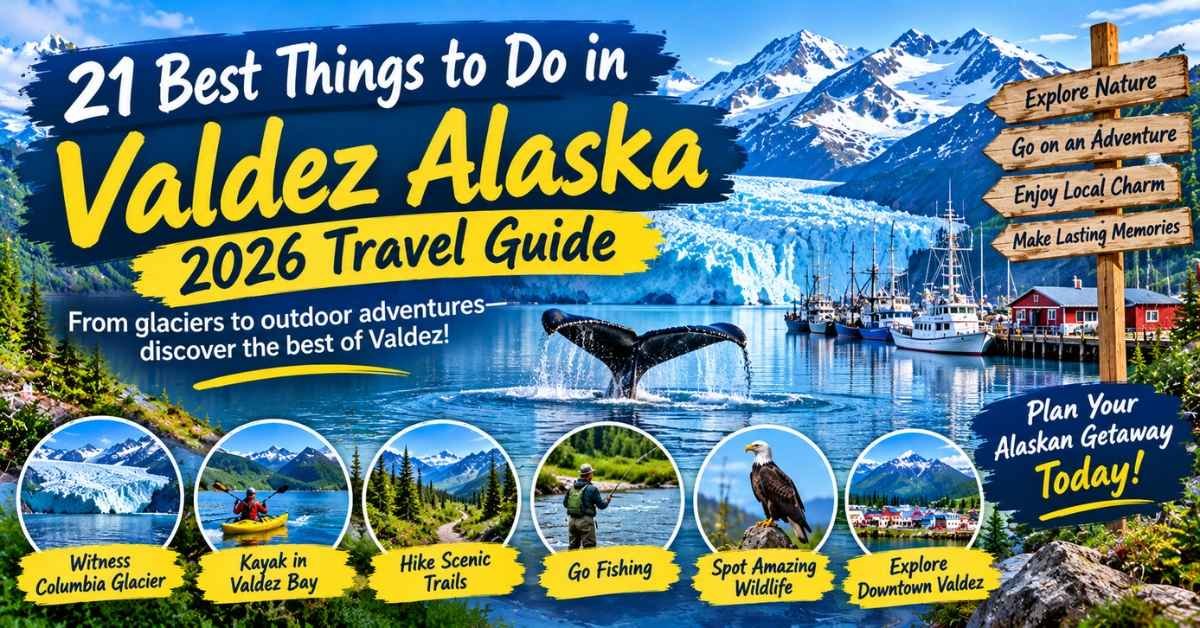
Things to do in Valdez Alaska range from cruising past icebergs and kayaking near glaciers to watching salmon, hiking through the Chugach Mountains, and driving beneath the waterfalls of Keystone Canyon. For your first visit, prioritize a Prince William Sound glacier cruise, Thompson Pass, Keystone Canyon, Solomon Gulch Fish Hatchery, Valdez Glacier Lake, and Valdez Harbor. Two full days cover the essentials, but three days provide valuable flexibility when Alaska’s weather changes your plans.
Valdez is not a polished resort town centered around one famous attraction. It is a small working port surrounded by steep mountains, waterfalls, tidewater glaciers, and cold coastal water. That combination makes it one of Southcentral Alaska’s most rewarding destinations—provided you plan around distances, seasonal access, and unpredictable weather.
The Best Valdez Experiences at a Glance
| Experience | Best for | Time needed | Cost level | Weather sensitivity | Priority |
|---|---|---|---|---|---|
| Prince William Sound glacier cruise | First-time visitors and photographers | Most of a day | High | Moderate | Essential |
| Columbia or Meares Glacier | Ice scenery and marine landscapes | Most of a day | High | Moderate | Essential |
| Keystone Canyon | Waterfalls and road-trip scenery | 1–2 hours | Free | Low to moderate | Essential |
| Thompson Pass | Alpine views and photography | 1–3 hours | Free | High | Essential |
| Solomon Gulch Fish Hatchery | Salmon and possible wildlife | 45–90 minutes | Free | Low | Recommended |
| Valdez Glacier Lake | Accessible glacial scenery | 1–2 hours | Free to moderate | Moderate | Recommended |
| Dock Point Trail | Easy walking and harbor views | About 1 hour | Free | Low | Recommended |
| Valdez Museum | History and rainy-day activity | 1–2 hours | Low | None | Recommended |
| Guided glacier kayaking | Active adventure | Half or full day | High | High | Interest-specific |
| Fishing charter | Anglers and small groups | Half or full day | High | High | Interest-specific |
| Flightseeing | Aerial glacier views | 1–2 hours | Premium | Very high | Interest-specific |
Planning tip: Reserve only one major weather-dependent activity per day. A tightly packed itinerary can become stressful when wind, visibility, or sea conditions alter a tour.
1. Cruise Through Prince William Sound
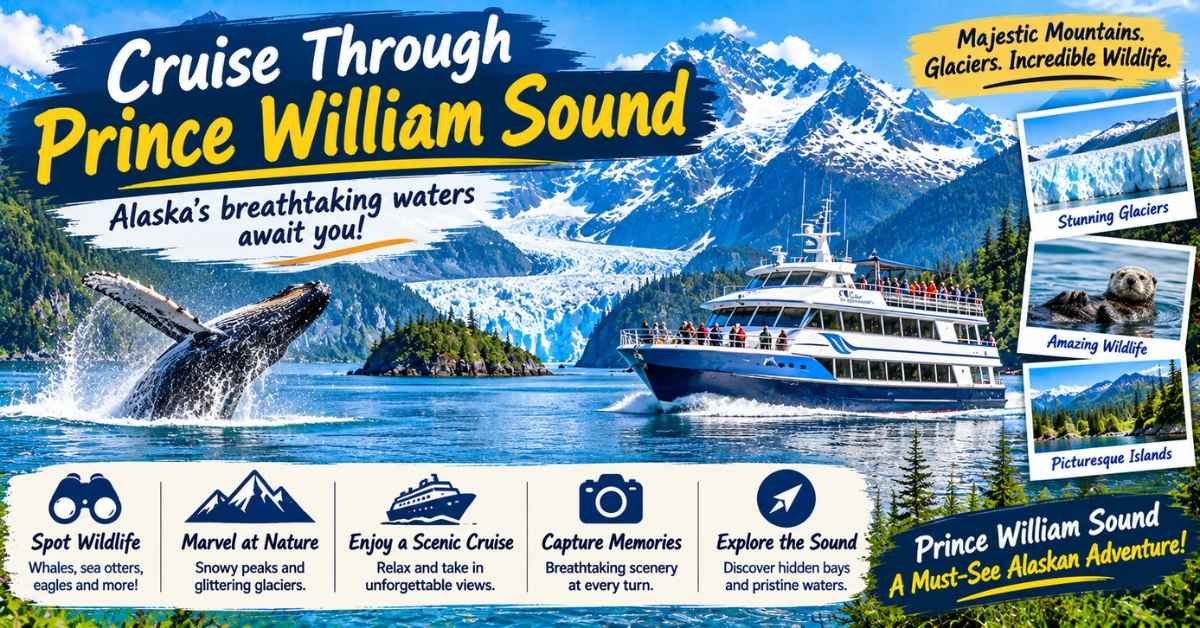
A glacier and wildlife cruise is the strongest choice if you can pay for only one guided experience. The journey is part of the attraction. Waterfalls spill from mountain walls, icebergs drift through protected water, and the coastline feels increasingly remote as your boat leaves Port Valdez.
Depending on the route and conditions, you might see seals, sea otters, sea lions, eagles, porpoises, or whales. Treat each wildlife encounter as a possibility rather than a promise. Ethical operators cannot control where wild animals appear, and a trip can still be exceptional without checking every species off a list.
Most excursions require a large portion of the day. Bring a waterproof outer layer, insulated midlayer, warm hat, gloves, sunglasses, and camera protection, even during midsummer. The open deck can feel considerably colder than downtown Valdez.
When comparing cruises, look beyond the advertised glacier. Check the trip length, vessel size, indoor seating, outdoor viewing space, accessibility, meal arrangements, route flexibility, and cancellation terms.
2. Choose Between Columbia Glacier and Meares Glacier
The real question is not which glacier is universally better. It is which experience better matches your interests and the conditions during your visit.
| Glacier | What distinguishes it | Best for | Typical experience |
|---|---|---|---|
| Columbia Glacier | Immense scale, floating ice, and a dramatic retreating-glacier landscape | Icebergs, photography, and first-time glacier travelers | Cruise or guided boat-assisted kayaking |
| Meares Glacier | A tidewater glacier in a quieter marine setting | Travelers wanting a classic glacier face | Full-day marine excursion |
| Shoup Glacier | More intimate backcountry setting | Active travelers | Guided kayaking or boat-assisted adventure |
| Valdez Glacier | Accessible lake environment near town | Short visits and independent sightseeing | Shoreline viewing or guided paddling |
| Worthington Glacier | Road-accessible alpine glacier outside Valdez | Richardson Highway road-trippers | Scenic stop and condition-dependent walking |
Choose Columbia Glacier if floating ice and the scale of the landscape matter most. Consider Meares Glacier if you prefer a tidewater-glacier-focused cruise. Routes can change because of ice, weather, and sea conditions, so confirm what your operator realistically expects to reach.
3. Kayak in Glacial Water—with a Qualified Guide
Glacier kayaking offers a quieter and more intimate relationship with the landscape than a larger cruise. Possible destinations include Valdez Glacier Lake, Shoup Glacier, and boat-assisted routes toward Columbia Glacier.
This is not ordinary recreational paddling. Glacial water is dangerously cold, floating ice can roll without warning, and wind can transform an easy return into a serious challenge. Ice caves, blue arches, and freshly exposed formations may look irresistible in photographs, but their shape and stability can change quickly.
Choose a guided trip that supplies cold-water equipment, a detailed safety briefing, and a route suitable for the day’s conditions. Ask about paddling difficulty, minimum ages, group size, supplied clothing, toilet access, and what happens if weather prevents the advertised route.
4. Walk Around Valdez Harbor
The harbor is one of the easiest free things to do in Valdez and a natural first stop after arriving. Fishing boats, charter vessels, pleasure craft, and tour boats share a mountain-ringed waterfront. You may spot sea otters or eagles, but the real pleasure comes from watching a working Alaska port move through its day.
Walk here early for quieter photographs or return in the evening as fishing and sightseeing boats arrive. The harbor also pairs naturally with downtown restaurants, shops, Dock Point, and the Valdez Museum.
5. Follow the Dock Point Trail
Dock Point Trail provides a short introduction to Valdez’s coastal environment without consuming half a day. The route passes through wooded and wetland scenery while providing views of the harbor and surrounding mountains.
It suits families, casual walkers, and travelers looking to stretch their legs after a long drive. Expect roots, mud, mosquitoes, and slippery surfaces following rain. Conditions and accessibility can change, so check locally if anyone in your group uses a stroller, wheelchair, or mobility aid.
6. Watch the Salmon at Solomon Gulch Fish Hatchery
The Solomon Gulch Fish Hatchery is one of the best-known places near Valdez to observe salmon returning from Prince William Sound. The experience changes throughout the season. On an active day, the water may appear packed with fish. During another visit, activity may be much quieter.
Salmon can attract sea lions, eagles, and bears. That does not make wildlife sightings guaranteed—or safe at close range. Remain in designated areas, keep children beside you, never approach a bear, and respect temporary closures. Checking recent local conditions can prevent you from arriving during a quiet period or closure.
The area also provides views across Port Valdez toward the industrial landscape associated with the Trans-Alaska Pipeline System’s marine terminal. Do not enter restricted areas or stop where parking is prohibited.
7. See Valdez Glacier Lake
At Valdez Glacier Lake, milky water, mountain walls, and floating ice create one of the area’s most accessible glacial landscapes. It remains an impressive stop even when the glacier itself is not clearly visible from every viewpoint.
Stay cautious. The water is extremely cold, ice can shift or overturn, and conditions shown in older photographs may no longer exist. Do not climb on floating ice or enter ice caves. If you want to paddle, use a knowledgeable local guide equipped for cold-water conditions.
Combine the lake with the Old Valdez Townsite to connect the modern landscape with the community’s earthquake history.
8. Visit the Old Valdez Townsite
The original community stood on unstable ground close to the waterfront. After the 1964 Great Alaska Earthquake caused catastrophic damage, Valdez was rebuilt in a safer location several miles away.
The Old Valdez site is understated rather than theatrical. Interpretive information and the open landscape help visitors understand how geography shaped the town’s fate. Give yourself time to absorb the story instead of expecting a conventional attraction filled with reconstructed buildings.
9. Drive Through Keystone Canyon
The Richardson Highway squeezes between rock walls and the Lowe River inside Keystone Canyon, transforming the approach to Valdez into one of Alaska’s most memorable drives.
The main landmarks are Bridal Veil Falls and Horsetail Falls, but the narrow canyon, river, and abandoned railroad history make the entire corridor worth exploring.
Use designated pullouts. Never stop in a traffic lane or step into the highway for a photograph. Waterfall flow, parking access, visibility, and road conditions can vary.
Bridal Veil Falls
Bridal Veil Falls descends in a tall, narrow ribbon beside the highway. It is particularly photogenic following rain or during strong seasonal runoff. View it from established stopping areas and remain aware of passing vehicles.
Horsetail Falls
Horsetail Falls spreads across the rock in a broader pattern and makes an easy companion stop. Visiting both waterfalls takes little time, but slippery ground and roadside traffic deserve more attention than many travel lists suggest.
Look for the Unfinished Railroad Story
Keystone Canyon preserves traces of an early-20th-century struggle to establish a rail route from Alaska’s coast toward the interior. The unfinished infrastructure adds a human layer to a landscape normally described only in scenic terms.
10. Cross Thompson Pass
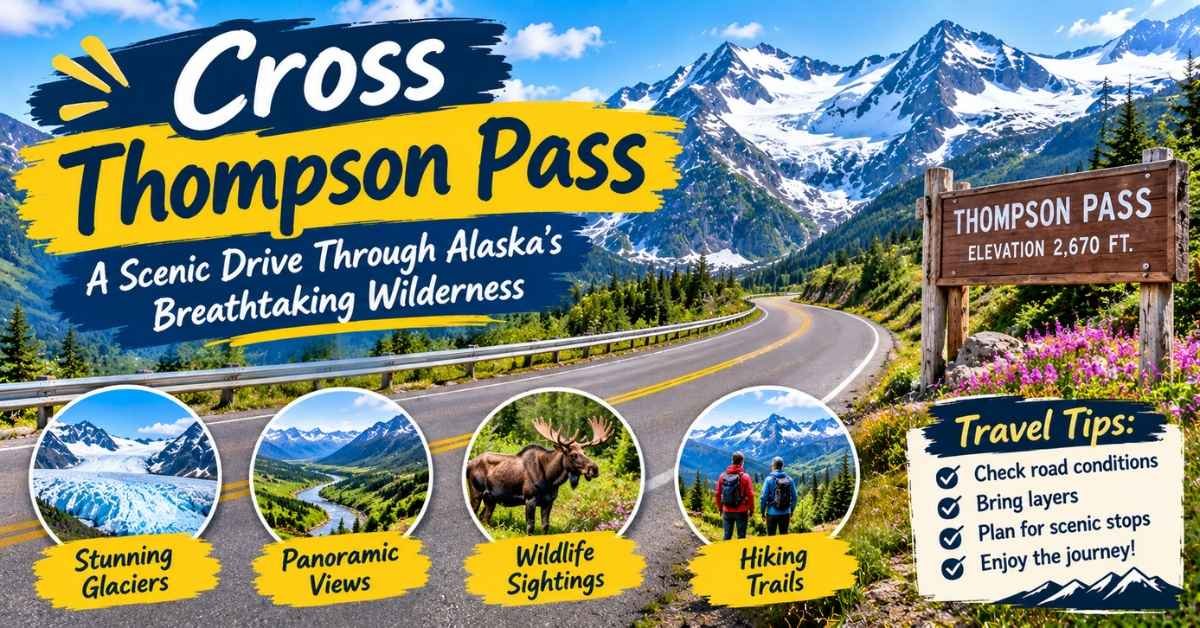
Thompson Pass is not simply a section of road between Glennallen and Valdez. It is an alpine attraction in its own right. Snowfields, tundra, peaks, waterfalls, and broad viewpoints make it one of the finest sections of the Richardson Highway.
Fog can erase the view quickly, and conditions at the pass may bear little resemblance to the weather in town. Build additional time into your journey, use marked pullouts, and avoid rushing to meet a tightly scheduled check-in or tour departure.
11. Stop at Worthington Glacier
North of Thompson Pass, Worthington Glacier is a convenient roadside glacier stop for travelers approaching Valdez. Its appeal lies in its visual accessibility from the Richardson Highway rather than any promise that every visitor can safely walk onto the ice.
Trail access and viewing conditions can change. Wet rock, loose material, steep sections, and glacial hazards require sturdy footwear and conservative judgment. Never cross a closure or assume a route seen on social media remains safe.
12. Hike Mineral Creek and Other Local Trails
Valdez hiking ranges from quick waterfront walks to remote routes where navigation skills and weather judgment matter.
Mineral Creek is a popular area for mountain, waterfall, and historic mining scenery. Current road and trail conditions can determine how far you can comfortably travel. Easier options include Dock Point and waterfront walks, while longer routes toward Shoup Bay or alpine terrain require more planning.
Before hiking, verify:
- Current trail and road access
- Distance and elevation gain
- Stream crossings or exposed terrain
- Bear activity and closures
- Cell-service limitations
- A realistic turnaround time
Carry rain protection, insulation, food, water, and an offline map. Tell someone where you are going. In Valdez, a short-looking trail can become slow once mud, thick vegetation, or weather enters the equation.
13. Book a Valdez Fishing Charter
Valdez has a strong fishing identity. Charter trips may target halibut, salmon, rockfish, or a combination of species, depending on current regulations and seasonal conditions.
Before paying a deposit, ask which species the trip targets, how long the boat may travel, which licenses you need, what equipment is included, and how fish cleaning, processing, shipping, and gratuities work. Confirm the cancellation policy and whether the experience is appropriate for children or non-anglers.
Travelers susceptible to motion sickness should discuss expected conditions and prepare before departure.
Learn More: 21 Best Things to Do in Stanley Idaho: 2026 Travel Guide
14. See Valdez from the Air
Flightseeing reveals how glaciers, mountains, river valleys, and Prince William Sound connect at a scale that is difficult to appreciate from the ground. Depending on availability, excursions may use a helicopter or fixed-wing aircraft.
This is a premium activity and one of the most weather-sensitive. Avoid scheduling it immediately before an essential flight or ferry departure. Ask about seating, passenger weight policies, minimum passenger numbers, route changes, photography, and refunds before booking.
15. Visit the Valdez Museum
The Valdez Museum gives context to almost everything outside its doors. Exhibits address Indigenous history, early settlement, transportation, the 1964 earthquake, the town’s relocation, industry, and community life.
Visit early in your stay if you want the surrounding landscape to make more sense. It is also one of the strongest rainy-day things to do in Valdez, particularly for families and anyone needing a break from cold, wet conditions.
16. Explore the Maxine & Jesse Whitney Museum
The Maxine & Jesse Whitney Museum complements the town museum with Alaska art, artifacts, cultural collections, and natural-history material.
Travelers with limited time can choose the Valdez Museum for a focused community narrative and the Whitney Museum for a broader collection-based experience. Verify current opening days and hours before building either into a fixed itinerary.
17. Understand the Trans-Alaska Pipeline Connection
The Trans-Alaska Pipeline ends at the Valdez Marine Terminal across Port Valdez. Its location reflects the importance of the area’s deep, ice-free port and access to Prince William Sound.
The terminal is an industrial facility, not a casual tourist attraction. Learn about it through museum interpretation and legal public viewpoints rather than approaching restricted infrastructure.
The region’s oil history also includes the Exxon Valdez oil spill. The tanker grounded at Bligh Reef in Prince William Sound in 1989—not in downtown Valdez. Accurate geography matters when understanding the disaster and its environmental legacy.
18. Take a Guided Rafting, ATV, or Backcountry Trip
Travelers looking beyond glacier cruises can investigate seasonal rafting, ATV, helicopter-supported, or guided backcountry excursions. Availability changes, so consider these interest-specific additions rather than essential parts of every itinerary.
Compare the actual activity time, group size, physical requirements, protective equipment, transportation, and weather policy. A shorter excursion suited to your abilities usually provides more value than an ambitious trip selected only because it looks dramatic online.
19. Photograph Valdez’s Waterfalls
Keystone Canyon contains the best-known waterfalls, but Valdez’s wet coastal climate creates cascades throughout the surrounding mountains. Following rain, temporary waterfalls can appear along cliffs visible from roads and the harbor.
Use a lens cloth, protect your equipment from spray, and photograph from designated pullouts. Overcast weather can soften harsh highlights on white water, making rainy conditions surprisingly productive.
20. Enjoy Valdez on a Rainy Day
Rain is normal in this coastal environment. It does not automatically ruin a trip. Light rain can strengthen waterfall flow and intensify the greens along the highway.
Strong wet-weather options include:
- The Valdez Museum
- The Maxine & Jesse Whitney Museum
- Harbor watching between showers
- Solomon Gulch Fish Hatchery when access is open
- Keystone Canyon waterfall stops
- Local cafés, galleries, and shops
Wind, visibility, sea state, and trail conditions matter more than rain alone. Include one flexible indoor block in your itinerary and avoid scheduling every memorable experience for the same day.
21. Slow Down at the Waterfront
It is easy to treat every hour in Alaska as something that must be optimized. Valdez rewards the opposite instinct. Leave room to watch clouds move over the Chugach Mountains, observe boats returning to the harbor, or wait for evening light across Port Valdez.
That unstructured time is not a wasted gap between attractions. It is often when the destination feels most distinct from a checklist assembled online.
Free Things to Do in Valdez
You can experience much of the area without purchasing a tour. The best free or inexpensive options include:
- Walking around Valdez Harbor
- Following the Dock Point Trail
- Visiting Solomon Gulch Fish Hatchery
- Viewing Valdez Glacier Lake from safe public areas
- Exploring the Old Valdez Townsite
- Driving through Keystone Canyon
- Photographing Bridal Veil Falls and Horsetail Falls
- Crossing Thompson Pass
- Stopping at Worthington Glacier
- Exploring waterfront and local walking routes
Remember that “free” does not always mean costless. Fuel, parking, food, rain gear, and transportation still affect your daily budget.
Things to Do in Valdez with Kids
Families should match activities to attention span rather than trying to complete an adult itinerary at a faster pace.
Young children often enjoy the harbor, short walks, waterfalls, and selected museum exhibits. School-age children may connect more deeply with salmon at the hatchery, glacier ice, wildlife spotting, and the earthquake story. Teenagers may prefer kayaking, fishing, hiking, or flightseeing.
Before booking a long cruise, confirm indoor seating, restroom access, food arrangements, duration, and your child’s tolerance for cold wind and boat movement. Carry more snacks and warm layers than you think you need. Close supervision is essential around glacial water, docks, roads, and wildlife.
The Best Time to Visit Valdez
Summer provides the widest selection of marine excursions, hiking access, fishing charters, and long daylight hours.
- May: Quieter, with lingering snow and fewer tour departures.
- June: Extremely long days and strong sightseeing potential, although marine air remains cold.
- July: Peak activity availability and greater demand for rooms and tours.
- August: Strong fishing and wildlife interest, with increasing rain and shortening days.
- September: Fewer crowds but reduced services, cooler conditions, and schedules requiring careful verification.
If the Northern Lights are your priority, summer is the wrong season. Long daylight generally makes the sky too bright. Darker nights from fall through early spring produce better aurora opportunities, although clouds and solar activity still determine visibility.
See More: 21 Best Things to Do Lake Placid: 2026 Travel Guide
How Many Days Do You Need in Valdez?
Allow two full days at minimum if you want one marine excursion plus the major land-based attractions. Three days is better because it creates room for changing weather and a specialized activity.
One Day in Valdez
If you have only one day, choose between two realistic plans.
Glacier-first plan: Spend most of the day on a Prince William Sound cruise, followed by an evening harbor walk.
Land-based plan: Visit Solomon Gulch Fish Hatchery, Valdez Glacier Lake, Old Valdez, Dock Point, and one museum.
Do not attempt a full-day cruise and every roadside attraction on the same day.
Two Days in Valdez
Day 1: Take a Columbia or Meares Glacier cruise. Explore the harbor afterward if your energy and daylight allow.
Day 2: Visit the hatchery, Valdez Glacier Lake, Old Valdez, Dock Point, and one museum. Add Mineral Creek if conditions and time permit.
Three Days in Valdez
Day 1: Enjoy the Richardson Highway, Worthington Glacier, Thompson Pass, Keystone Canyon, Bridal Veil Falls, and Horsetail Falls while traveling into town.
Day 2: Take a glacier and wildlife cruise.
The Day 3: Choose kayaking, fishing, hiking, flightseeing, museums, or a relaxed land-based circuit according to your interests and the weather.
If you have a fourth day, keep it flexible. It can rescue a canceled excursion or become an unhurried adventure day.
How to Get to Valdez
Driving from Anchorage
Valdez is approximately 300 road miles from Anchorage, and the journey deserves a full travel day if you want to stop for scenery. The route passes through the Matanuska and Copper River regions before joining the Richardson Highway.
Fuel up when convenient and allow additional time for road construction, weather, wildlife, and photography.
Driving from Fairbanks
The road distance from Fairbanks is longer than many visitors anticipate. Divide the journey if necessary, and avoid treating an ideal map estimate as a deadline. Experience the final approach over Thompson Pass and through Keystone Canyon during daylight when possible.
Traveling by Ferry
The Alaska Marine Highway can connect Valdez with other coastal communities, but routes and sailing frequency change. Vehicle spaces may sell out. Verify the current timetable directly, reserve early, and leave flexibility around your onward journey.
Flying to Valdez
Flying can reduce travel time, but coastal weather may cause delays. Confirm baggage restrictions, airport transportation, and how you will reach outlying attractions before arriving.
Getting Around Town
Downtown and the harbor are relatively compact, but a vehicle is valuable for reaching the hatchery, Old Valdez, Glacier Lake, Keystone Canyon, and Thompson Pass.
Travelers without a car should confirm whether their accommodations or tour operator provides transportation instead of assuming taxis or rideshares will always be available.
Where to Stay in Valdez
Stay near downtown or the harbor if you value walkability, restaurants, and convenient access to tour departures. Campgrounds and RV parks suit road-trippers who prioritize flexibility. Outlying accommodations may provide more space or scenery but work best when you have a vehicle.
Reserve early for peak summer dates. Favor flexible cancellation terms because weather can affect roads, ferries, and flights.
What to Pack for Valdez in Summer
Valdez rewards layered clothing. Pack:
- Waterproof and wind-resistant shell
- Fleece or insulated midlayer
- Quick-drying trousers and base layers
- Water-resistant footwear with good traction
- Warm hat and light gloves
- Daypack and reusable water bottle
- Sunglasses and sunscreen
- Insect repellent
- Binoculars
- Dry bag or waterproof phone case
- Camera protection and lens cloth
- Motion-sickness medication for boat trips
Layers work better than one heavy coat because conditions can shift between a sheltered downtown street, an exposed boat deck, and a windy alpine pass.
Safety Advice Visitors Should Not Skip
Around Glaciers and Cold Water
Never climb on floating ice or enter an ice cave without qualified local guidance. Remain clear of unstable formations and potential calving zones. Glacial water can incapacitate a person within minutes.
Around Bears and Other Wildlife
Maintain a safe distance, control food, keep children close, and follow all closures. Never crowd a bear for a photograph or stand between an animal and its travel route. Learn how to carry and use bear spray where appropriate.
On Trails
Download maps before leaving town, carry insulating layers, and establish a turnaround time. Wet rock, mud, thick vegetation, stream levels, and fog can turn a modest walk into a demanding excursion.
On the Road
Stop only inside safe pullouts. Fog, rain, wildlife, road work, and slow vehicles can affect the Richardson Highway. Allow enough time that you never feel pressured to speed between attractions.
How to Book Valdez Tours Without Wasting Money
Ask these questions before paying:
- What happens if weather changes or cancels the trip?
- Is transportation from town included?
- What clothing, safety equipment, food, and gear are provided?
- Are taxes, permits, licenses, and gratuities included?
- What is the minimum age and required fitness level?
- How large is the group?
- Can the route change because of ice or weather?
- Is the experience suitable for limited mobility?
- When does the deposit become nonrefundable?
Reserve accommodations first, followed by your highest-priority glacier cruise, kayaking excursion, fishing charter, or flightseeing trip. Keep free attractions flexible so you can move them around the weather.
Valdez vs. Seward vs. Whittier
| Destination | Strongest reason to visit | Best trip style | Main tradeoff |
|---|---|---|---|
| Valdez | Waterfalls, fishing, glaciers, and a dramatic road approach | Two- to four-day road trip | Longer drive from Anchorage |
| Seward | Kenai Fjords access and extensive visitor services | Classic first-time Alaska itinerary | Busier during peak periods |
| Whittier | Convenient Prince William Sound access | Day trip or short stay | Smaller range of land attractions |
Choose Valdez if the journey through Thompson Pass and Keystone Canyon, fishing culture, waterfalls, and quieter port-town atmosphere appeal to you. Choose Seward for Kenai Fjords and easier inclusion in many Anchorage itineraries. And Choose Whittier when time is limited and marine access is your main objective.
Frequently Asked Questions
Is Valdez, Alaska, worth visiting?
Yes. Valdez is worth visiting for Prince William Sound glaciers, waterfalls, fishing, wildlife opportunities, mountain scenery, and the spectacular Richardson Highway approach. It is most rewarding when you stay at least two nights.
What are the best things to do in Valdez without a tour?
Walk around Valdez Harbor, follow Dock Point Trail, visit Solomon Gulch Fish Hatchery, explore Old Valdez, see Valdez Glacier Lake, tour the museums, and drive through Keystone Canyon and Thompson Pass.
Which glaciers can you see near Valdez?
Travelers can experience Columbia, Meares, Shoup, Valdez, and Worthington glaciers in different ways. Columbia and Meares generally require boat excursions, while Valdez Glacier Lake and Worthington Glacier provide road-accessible environments.
Can you walk on Valdez Glacier?
Do not attempt to walk on a glacier, climb onto floating ice, or enter an ice cave without qualified guidance and current local knowledge. Glacier conditions change rapidly, and apparently solid ice can be unstable.
When can you see salmon in Valdez?
Salmon timing varies by species, weather, and annual conditions. Summer—particularly later in the season—is commonly associated with stronger activity around the hatchery, but check current reports instead of relying on a fixed date.
Do you need a car in Valdez?
You can walk around downtown and the harbor, but a car makes the trip considerably easier. Several major attractions lie beyond the compact town center.
Can you see the Northern Lights in Valdez during summer?
Usually not. Summer skies remain too bright for dependable aurora viewing. Dark nights from fall through early spring provide better opportunities, subject to cloud cover and solar activity.
What can you do in Valdez when it rains?
Visit the Valdez Museum and Whitney Museum, watch the harbor between showers, photograph waterfalls, or visit the fish hatchery when access is open. Rain alone does not cancel every outdoor activity, although wind and visibility may affect marine and flight tours.
Final Thoughts
The best Valdez itinerary is built around one unforgettable anchor experience, not an exhausting collection of reservations. Select a glacier cruise, guided kayaking trip, fishing charter, or flightseeing excursion. Then surround it with flexible stops such as the harbor, hatchery, museums, Glacier Lake, and Old Valdez.
Plan for at least two nights, keep a weather buffer when possible, and treat the drive past Worthington Glacier, Thompson Pass, and Keystone Canyon as part of the adventure. Valdez becomes most memorable when you leave enough room for Alaska—not a rigid schedule—to shape your day.