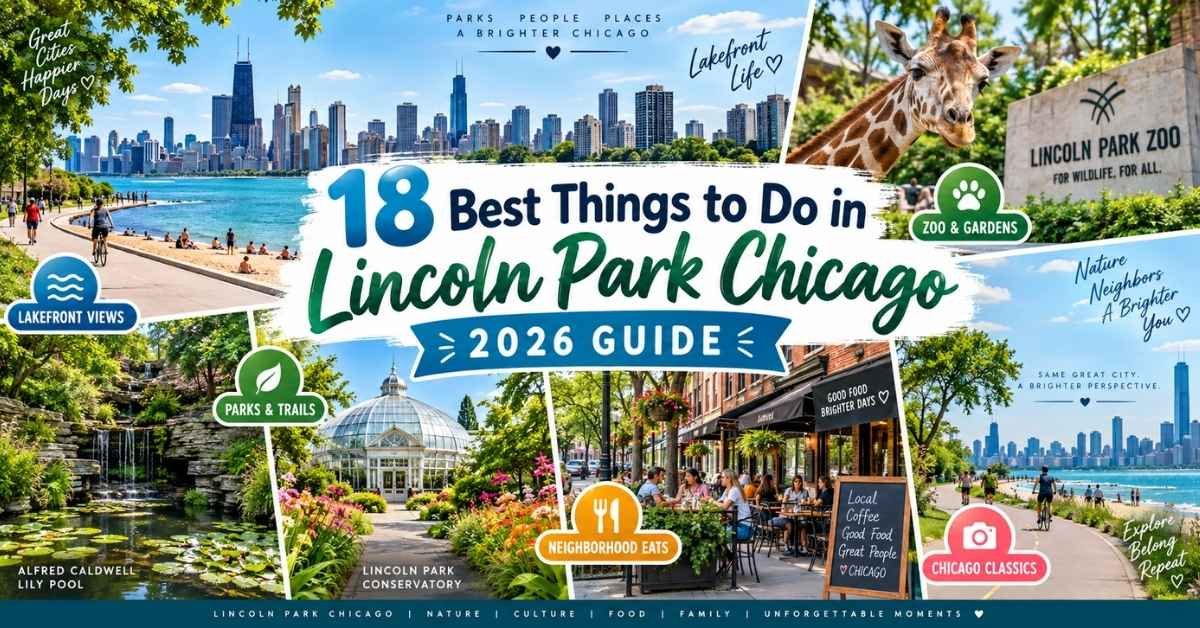
things to do in Lincoln Park Chicago range from visiting the free Lincoln Park Zoo and wandering through a Victorian conservatory to walking beside Lake Michigan, exploring local history, shopping along Armitage Avenue, and seeing live theatre. For a first visit, the best combination is Lincoln Park Zoo, Lincoln Park Conservatory, Alfred Caldwell Lily Pool, Nature Boardwalk, and either the Nature Museum or Chicago History Museum. These attractions sit close enough to combine without turning your day into a race across the city.
Lincoln Park rewards visitors who plan by location and energy, not by the number of attractions they can collect. The lakefront side is filled with wildlife, gardens, beaches, museums, and skyline views. Farther west, the neighborhood shifts into historic residential streets, independent shops, restaurants, theatres, and nightlife. This guide will help you choose what is genuinely worth your time, understand the real costs, and build a route that still leaves room to enjoy the neighborhood.
Planning note: Opening hours, admission prices, timed-entry rules, performances, and seasonal access can change. Check the relevant attraction’s official calendar before leaving, especially for the Conservatory, museums, markets, special zoo events, and evening venues.
Lincoln Park’s Best Experiences at a Glance
| Experience | Best for | Time to allow | Typical cost | Reservation |
|---|---|---|---|---|
| Lincoln Park Zoo | First-timers and families | 2–3 hours | Free admission | Not normally required |
| Lincoln Park Conservatory | Plants and poor-weather days | 30–60 minutes | Free | Timed entry currently used |
| Alfred Caldwell Lily Pool | Couples and quiet walks | 30–45 minutes | Free | Usually not required |
| Nature Boardwalk and South Pond | Skyline views and photography | 30–60 minutes | Free | No |
| Peggy Notebaert Nature Museum | Families and interactive science | 1.5–2 hours | Paid | Recommended at busy times |
| Chicago History Museum | Culture and local history | 1.5–2.5 hours | Paid | Usually optional |
| North Avenue Beach | Summer relaxation | 1–3 hours | Free | No |
| Armitage Avenue | Shopping, coffee, and local atmosphere | 1–2 hours | Varies | No |
| Steppenwolf Theatre | Evening culture | 2–3 hours | Paid | Recommended |
First, Know Which Lincoln Park You Mean
“Lincoln Park” can describe three connected but different places. Understanding the distinction prevents one of the most common Chicago planning mistakes.
Lincoln Park the neighborhood is a North Side community known for tree-lined streets, historic homes, DePaul University, boutiques, restaurants, theatres, and easy access to the lakefront. Lincoln Park the park is a much larger public space stretching for miles along Lake Michigan. Lincoln Park Zoo is one major attraction inside that park.
You cannot sensibly explore the full lakefront park in a single day. For sightseeing, think in two clusters:
- The lakefront cluster includes the Zoo, Conservatory, Lily Pool, Nature Boardwalk, North Pond, Nature Museum, Lakefront Trail, North Avenue Beach, and Chicago History Museum.
- The neighborhood cluster includes Oz Park, Armitage Avenue, DePaul-area streets, shops, restaurants, theatres, cinema, and live music.
If you have only a few hours, stay in the lakefront cluster. With a full day, spend the morning and early afternoon by the park, then move west for shopping, dinner, and a performance.
1. Explore Lincoln Park Zoo Without Rushing
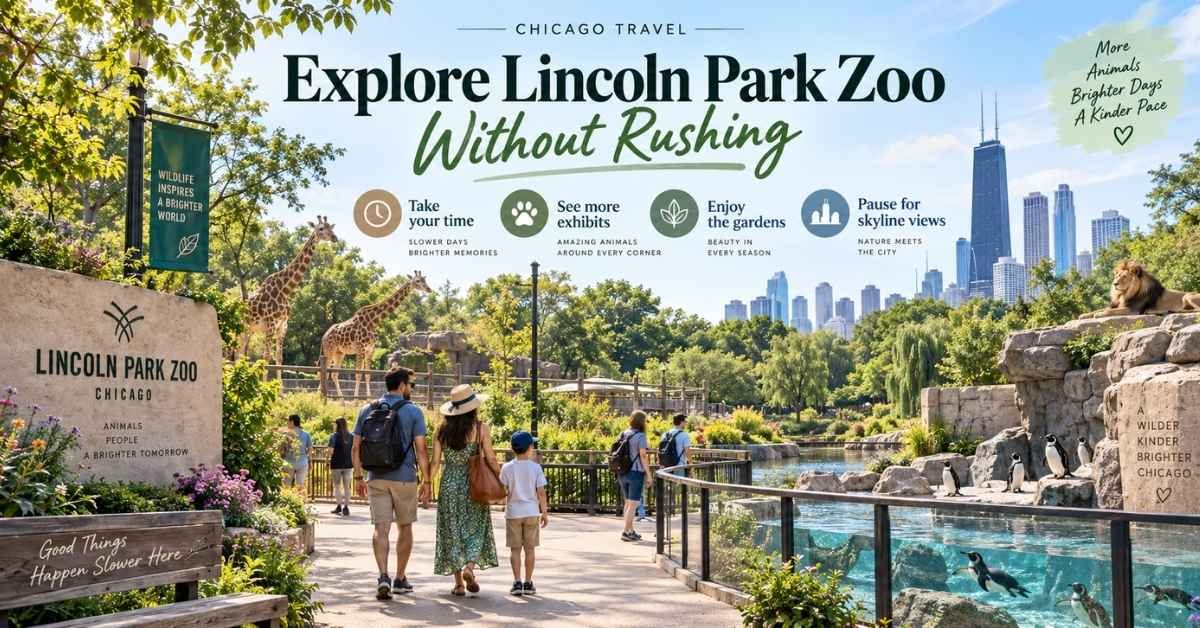
Lincoln Park Zoo is the natural starting point for most first-time visitors. Admission is free, the zoo operates year-round, and its lakefront setting makes it easy to combine with several other top Lincoln Park attractions. It is not a small roadside zoo that you can finish in 30 minutes. The grounds cover a substantial area, and animal buildings may open later than the exterior gates.
Families should prioritize Farm-in-the-Zoo, indoor animal houses, and any scheduled feeding or care demonstrations that match their arrival time. Adults visiting without children may prefer a tighter route through the great ape, big cat, penguin, primate, and garden areas before continuing to South Pond.
Allow two to three hours for a comfortable first visit. Ninety minutes can work if you select a few exhibits in advance, but trying to see everything that quickly usually means more walking than watching. Use the zoo’s current map and daily schedule rather than relying on an old blog itinerary because exhibits, animal access, and programming change.
Free admission does not make the entire visit free. Food, carousel rides, animal encounters, ticketed events, souvenirs, and parking can add substantially to the cost. If you are staying downtown or near a CTA line, public transportation is often better value than driving.
Best for: First-time visitors, families, wildlife enthusiasts, and budget travelers Allow: Two to three hours Pair with: Lincoln Park Conservatory and Nature Boardwalk Skip or shorten it if: You have visited before and want less familiar neighborhood experiences
2. Step Inside Lincoln Park Conservatory
The Lincoln Park Conservatory is one of the easiest attractions to pair with the Zoo. This historic glasshouse contains four distinct display spaces: the Palm House, Fern Room, Orchid House, and Show House. The experience is compact, atmospheric, and especially valuable when Chicago is cold, rainy, windy, or oppressively hot.
The Palm House delivers the grandest first impression, while the Fern Room feels denser and more secluded. Orchid lovers should slow down in the Orchid House, and the Show House changes with seasonal exhibitions. You do not need a horticulture background to enjoy it; the contrast between tropical plants and the surrounding city is the point.
Admission is free, but the Conservatory currently uses timed entry, and its operating days are more limited than the Zoo’s. Reserve before your visit rather than assuming you can walk in at any hour. Most visitors need 30 to 60 minutes, making this an ideal indoor stop between larger outdoor attractions.
Best for: Plant lovers, architecture enthusiasts, couples, and bad-weather visits Allow: 30–60 minutes Pair with: The Zoo, formal gardens, or Alfred Caldwell Lily Pool Practical insight: Book this first, then build the flexible parts of your day around the reservation
3. Slow Down at Alfred Caldwell Lily Pool
The Alfred Caldwell Lily Pool is one of the most peaceful places in Lincoln Park. It is not a formal flower garden designed for a quick photo and departure. The stone paths, layered planting, water, pavilion, and enclosed feeling create a quiet transition away from the surrounding streets and attractions.
Landscape architect Alfred Caldwell transformed the site using principles associated with the Prairie style, allowing stone, native-looking planting, water, and built structures to appear connected. The result feels natural even though every view has been carefully shaped. After a major pavilion restoration, the site reopened in 2025, making older closure warnings obsolete.
Come earlier in the day for a calmer walk, or visit later when softer light improves the atmosphere and photography. Paths and surfaces may not suit every mobility need equally, so visitors who require a fully step-free route should verify current access before arriving.
Best for: Couples, solo travelers, photographers, and anyone needing a quiet break Allow: 30–45 minutes Pair with: The Conservatory or North Pond Nature Sanctuary Skip if: Severe weather or temporary path restrictions would prevent you from enjoying the outdoor setting
4. See the Skyline From Nature Boardwalk and South Pond
The Nature Boardwalk at South Pond offers one of the best free views in Lincoln Park. The boardwalk curves around a restored urban habitat where native plants support birds, insects, fish, frogs, and turtles. Across the water, Chicago’s skyline rises behind the park, producing a city-and-nature composition that has become one of the area’s signature photographs.
The sculptural Peoples Gas Education Pavilion adds architectural interest, but the boardwalk is more than a photo location. It demonstrates how ecological habitat can exist beside a major urban attraction. Move slowly, watch the waterline, and give runners and other pedestrians room on narrower sections.
Morning is quieter and better for wildlife observation. Late afternoon and early evening often provide more dramatic skyline light. You can enjoy the boardwalk without entering the Zoo, so it remains useful when you have limited time or arrive after the animal exhibits begin closing.
Best for: Photography, free sightseeing, architecture, and short visits Allow: 30–60 minutes Pair with: Zoo highlights or a walk toward North Avenue Beach
5. Meet Butterflies at the Peggy Notebaert Nature Museum
The Peggy Notebaert Nature Museum, operated by the Chicago Academy of Sciences, is the strongest Lincoln Park choice for families seeking interactive indoor exhibits. Its best-known feature is the Judy Istock Butterfly Haven, where free-flying butterflies inhabit a warm greenhouse environment.
The museum works particularly well for younger children because it turns regional ecology and natural science into hands-on experiences. It is also a dependable alternative when rain, winter cold, or summer heat makes a long park day uncomfortable. Allow at least 90 minutes, and closer to two hours if your children engage deeply with the exhibits.
The museum charges admission. In 2026, Butterfly Haven access became a separate add-on for non-members, and ticket transactions may include a service fee. Illinois resident free days and other discounts may reduce the basic admission cost, but those offers have conditions and do not necessarily include the butterfly exhibit. Check the current ticket page rather than assuming every part of the museum is covered.
Amenities such as stroller storage, nursing support, and a quiet or lactation space make the museum easier for families than many small cultural attractions.
Choose the Nature Museum if: You want hands-on learning, butterflies, and a longer family activity Choose the Conservatory if: You want a shorter, quieter, free botanical experience
6. Walk Around North Pond Nature Sanctuary
North Pond offers a quieter form of urban nature than the Zoo or beach. The surrounding habitat attracts resident and migratory birds, while the water, trees, and skyline create a calm walking loop close to the Nature Museum and Lily Pool.
This is not an attraction that demands a ticket or fixed schedule. Its value lies in slowing the pace of the day. Birders should bring binoculars during spring and fall migration, while casual visitors can use the pond as a restorative link between nearby stops.
North Pond is especially good for repeat Chicago visitors who have already seen the headline attractions. Allow 30 to 60 minutes, wear comfortable shoes, and expect the experience to change with weather and season.
7. Spend a Summer Afternoon at North Avenue Beach
North Avenue Beach is where Lincoln Park meets one of Chicago’s liveliest summer scenes. On a warm day, visitors come for swimming, volleyball, sunbathing, cycling, people-watching, and unobstructed views along Lake Michigan.
The beach is free, but summer weekends can bring crowded sand, busy paths, and difficult parking. Arrive earlier if the beach is a priority. Check swimming conditions and lifeguard information before entering the water; Lake Michigan should never be treated like a small, predictable lake.
You do not need to spend half a day here. A short walk onto the beach can be enough if your main goal is the lake and skyline. During cold, windy, or grey weather, the nearby lakefront path may offer a better experience than sitting on the sand.
Best for: Summer visitors, active travelers, and lake views Allow: One to three hours Pair with: Lakefront Trail or southern Lincoln Park attractions Skip if: The weather, water conditions, or crowds undermine the reason you wanted to visit
8. Walk, Run, or Cycle the Lakefront Trail
The Lakefront Trail connects Lincoln Park with a much larger stretch of Chicago’s shoreline. Rather than trying to cover the entire route, choose a scenic segment near the Zoo, South Pond, or North Avenue Beach.
Walking gives you time to notice the skyline and park landscape. Cycling covers more ground but requires closer attention to faster traffic, path divisions, and busy crossings. Divvy bikes and local rentals can work well for confident city riders, although first-time visitors should avoid learning the system during the trail’s busiest period.
Conditions beside Lake Michigan can feel cooler and windier than streets only a few blocks inland. Carry a light layer outside midsummer and check the forecast before committing to a long ride. Sunrise provides a peaceful atmosphere; late afternoon is livelier and often better for combining the trail with dinner elsewhere in the neighborhood.
9. Understand Chicago at the Chicago History Museum
The Chicago History Museum is the best Lincoln Park attraction for visitors who want the city to make more sense. Its exhibitions explore subjects such as the Great Chicago Fire, transportation, neighborhood development, music, civil rights, and daily life.
This is a paid museum, so it competes for time and budget with the Nature Museum. Choose it if your group includes adults, older children, architecture enthusiasts, or travelers visiting Chicago for the first time. Families with younger children may get more immediate value from the Nature Museum.
Allow 90 minutes to two-and-a-half hours, depending on your interest in temporary exhibitions. The museum sits toward the southern end of the park, making it easier to combine with nearby monuments, Old Town, or an evening meal than with the northern end of the Lincoln Park neighborhood.
Best for: History, culture, architecture, and first-time Chicago context Pair with: A southern park walk, dinner, or an evening performance Skip if: You have very young children who primarily want interactive nature exhibits
10. Follow the Wizard of Oz Characters Through Oz Park

Oz Park is a neighborhood park with a playful literary theme. Sculptures of Dorothy and Toto, the Tin Man, Scarecrow, and Cowardly Lion reference The Wonderful Wizard of Oz author L. Frank Baum, who lived in Chicago.
Families will get the most from this stop because the park also includes Dorothy’s Playlot, open lawns, and recreational facilities. Adults without children may enjoy the statues and residential surroundings, but Oz Park is better treated as a pleasant neighborhood pause than an essential citywide attraction.
Allow 30 to 60 minutes. Pair it with Armitage Avenue so that the stop fits naturally into a western Lincoln Park route.
11. Eat and Browse at Green City Market
Green City Market provides something many attraction lists miss: a chance to experience a local Chicago routine. Depending on the season and operating schedule, vendors sell regional produce, baked goods, prepared food, and specialty products.
Use the market as breakfast or lunch instead of squeezing it between meals. Arrive earlier for a wider selection and bring a reusable bag if you plan to shop. The market is weather- and schedule-dependent, so verify the location and date before building an itinerary around it.
This is a strong choice for food-focused travelers and repeat visitors. It is less useful if your available day does not match the market calendar.
12. Shop Along Armitage Avenue
Armitage Avenue reveals the neighborhood beyond its public attractions. Around the Armitage-Halsted area, historic streets and attractive architecture frame independent boutiques, cafés, gift shops, dessert stops, and larger retailers.
Give yourself one hour for casual browsing or two hours if shopping is a priority. The Armitage CTA station makes this area a convenient beginning or ending point, particularly when you want to transition from daytime sightseeing to dinner.
Avoid choosing shops solely because they appear in an old guide. Retail changes quickly. Build your route around categories—bookstores, locally made gifts, clothing, coffee, or desserts—and verify the businesses that matter most on the day you visit.
Best for: Couples, shopping, coffee breaks, and local atmosphere Pair with: Oz Park, dinner, or an evening performance
13. Experience Art and Architecture at Wrightwood 659
Wrightwood 659 is an exhibition space inside a transformed 1920s building designed by architect Tadao Ando. Its concrete forms, controlled natural light, and spatial drama make the building part of the experience rather than a neutral container for art.
The exhibitions change, and access may be limited to specific dates or ticketed time slots. Check what is showing before making the trip. This is an excellent option for visitors interested in architecture, design, photography, and thoughtful contemporary exhibitions, but it is not a spontaneous everyday museum in the same sense as the larger institutions.
Learn More: 22 Best Things to Do in Boston With Teens: 2026 Guide
14. See a Play at Steppenwolf Theatre
An evening at Steppenwolf Theatre introduces visitors to the performance culture that has shaped Chicago’s national reputation. Productions change throughout the year, ranging from new work to contemporary interpretations and major ensemble performances.
Check running time, age guidance, and ticket availability before choosing a show. Reserve dinner with enough buffer to reach the theatre without rushing. A performance typically turns the western or southern neighborhood into the better place to end your day, so avoid planning a late lakefront activity immediately beforehand.
Theatre offers a more distinctive night than simply visiting another bar. It also gives cold-weather travelers a reason to stay in Lincoln Park after outdoor attractions close.
15. Add Comedy to Your Evening
Chicago’s comedy reputation makes an improv or stand-up show a natural addition to a Lincoln Park night. Venue boundaries can be confusing: some widely associated comedy clubs sit in nearby Old Town, Goose Island, or Lakeview rather than squarely inside Lincoln Park. Treat travel articles that place every North Side venue in one neighborhood with caution.
Before booking, check the exact address, age restriction, performance length, ticket fees, and any food or drink minimum. A good evening sequence is early dinner, a scheduled show, then one nearby drink or dessert. This is more realistic than crossing the neighborhood multiple times after dark.
16. Listen to Live Blues at Kingston Mines
For an adults-oriented night, Kingston Mines offers a long-running Chicago blues experience with live performances and an energetic late-night atmosphere. Its format traditionally allows music to continue across multiple sets or stages, making it more immersive than a quick drink at a generic bar.
Confirm current opening nights, cover charges, show times, and age rules. If you expect to stay late, decide in advance whether you will use transit or rideshare for the return journey. This is best for visitors who want music to be the main event, not background entertainment during dinner.
17. Watch an Independent Film at FACETS Film Forum
FACETS Film Forum gives film lovers an alternative to mainstream cinemas. Programming can include independent, international, documentary, restored, and cult films, sometimes accompanied by discussions or special events.
Because the experience depends entirely on the current calendar, FACETS is not a fixed sightseeing stop. It is, however, one of the more original things to do in Lincoln Park for repeat Chicago visitors and travelers interested in local cultural institutions. Check the schedule first, then build dinner around the screening time.
18. Make Dinner Part of the Experience

Lincoln Park’s dining scene deserves more thought than a random list of popular restaurants. Choose by occasion and route.
For a romantic dinner, prioritize atmosphere and proximity to your final afternoon stop or theatre. For a family meal, look for faster service, straightforward menus, room for a stroller, and easy access from the Zoo. If you want Chicago-style food, check expected waits and whether a deep-dish restaurant accepts advance orders. For a quick lunch, counter service or market food will preserve more sightseeing time than a long seated meal.
Popular restaurants can book out, particularly on Friday and Saturday. Reserve only after confirming your final daytime attraction, because a dinner across the neighborhood can turn a relaxed afternoon into a transportation problem.
How to Spend Two Hours in Lincoln Park
With two hours, do not attempt a museum, the full Zoo, the beach, and neighborhood shopping. Choose a compact introduction:
- Reserve a Lincoln Park Conservatory time.
- Spend 30–45 minutes inside its four display houses.
- Walk through selected Zoo exhibits for about an hour.
- Finish at Nature Boardwalk and South Pond for the skyline view.
If the Conservatory is unavailable, replace it with Alfred Caldwell Lily Pool in suitable weather. Families may instead spend the entire two hours at the Zoo.
A Half-Day Lincoln Park Itinerary
A first-time half day works best as a north-to-south or south-to-north route:
- Lincoln Park Zoo: Two hours
- Lincoln Park Conservatory: 30–45 minutes
- Alfred Caldwell Lily Pool: 30 minutes
- North Pond: Short walk or coffee break
Families can replace the Lily Pool and pond with the Nature Museum. History enthusiasts can shorten the Zoo and finish at the Chicago History Museum, but that creates a more demanding schedule.
A Full Day in Lincoln Park
For a balanced day, combine nature, culture, food, and one evening experience:
- Begin at Lincoln Park Zoo when the grounds are quieter.
- Visit the Conservatory at your reserved time.
- Walk through the Lily Pool or around North Pond.
- Stop for lunch rather than eating while walking.
- Choose one paid afternoon attraction: the Nature Museum for families or the Chicago History Museum for city context.
- Travel west to browse Armitage Avenue.
- Finish with dinner and theatre, comedy, film, or live blues.
The key word is “choose.” Visiting both major museums, the full Zoo, every garden, the beach, shopping, and a show in one day is possible only if enjoyment is not the goal.
Free Things to Do in Lincoln Park Chicago
Lincoln Park is one of Chicago’s strongest areas for budget sightseeing. A free day can include:
- Lincoln Park Zoo
- Lincoln Park Conservatory
- Alfred Caldwell Lily Pool
- Nature Boardwalk and South Pond
- North Pond Nature Sanctuary
- Lakefront Trail
- North Avenue Beach
- Oz Park
- Public art, monuments, gardens, and skyline viewpoints
A practical route is Oz Park → Zoo → Conservatory → Nature Boardwalk → Lakefront Trail. Admission can remain at zero, but budget for transportation, lunch, drinks, paid parking, special events, or optional zoo experiences.
Things to Do in Lincoln Park Chicago With Kids
For young children, a successful day needs fewer transitions and more recovery time. Start with Farm-in-the-Zoo and a small number of animal buildings. Eat before everyone becomes tired, then decide whether the group has enough energy for the Conservatory or Nature Museum.
The Nature Museum is particularly valuable when the weather changes because children can remain active indoors. Oz Park and Dorothy’s Playlot work well on a separate neighborhood day or as a low-pressure stop after shopping.
Bring a refillable water bottle, check stroller policies, locate restrooms early, and identify an indoor backup before arriving. A three-stop family day that remains enjoyable is better than a seven-stop itinerary that ends in exhaustion.
A Romantic Lincoln Park Afternoon and Evening
Begin with the Alfred Caldwell Lily Pool, then walk around North Pond or toward a skyline viewpoint. Move west for coffee or shopping along Armitage Avenue before dinner. End the evening with a play, independent film, comedy show, or live music.
This route works because the atmosphere changes naturally: quiet landscape, neighborhood streets, a relaxed meal, then a scheduled performance. Book the performance first, reserve dinner second, and leave the earlier outdoor portion flexible around weather.
What to Do in Lincoln Park When It Rains or Snows
Chicago weather does not need to cancel the day. Use the Conservatory as a short botanical escape, then choose the Nature Museum or Chicago History Museum for a longer indoor anchor. Add a café, early dinner, cinema, theatre, or comedy show.
Some Zoo buildings are indoors, but moving between them still requires outdoor walking. The lakefront can feel colder and windier than inland streets, so a forecast that seems manageable downtown may be uncomfortable beside the water.
Things to Do in Lincoln Park Chicago at Night
Most nature attractions close before Lincoln Park’s evening begins. After dark, shift toward:
- Steppenwolf Theatre and other performances
- Independent film at FACETS
- Improv or stand-up comedy
- Live blues at Kingston Mines
- Dinner and cocktails
- Seasonal ticketed events at Lincoln Park Zoo
- Evening walks in active, well-trafficked areas
Check age rules and performance schedules, and do not assume late-night transit will follow the same frequency as daytime service. Choose venues that sit near one another and plan your journey home before the show.
See More: Top Things to Do in Egypt: 25 Unforgettable Experiences
What a Lincoln Park Day Really Costs
| Type of day | Admission | Other likely costs | Overall budget |
|---|---|---|---|
| Free park day | $0 | CTA, food, optional activities | Low |
| Family day | Zoo free; museum/add-ons paid | Food, transport, stroller-related needs | Moderate |
| Couple’s day | Mostly free daytime stops | Dinner, drinks, performance | Moderate to high |
| Culture day | Museum and show tickets | Meals and transport | High |
Driving can make a free-attraction day unexpectedly expensive because official and commercial parking rates fluctuate. CTA is generally the better-value choice for visitors who are comfortable walking. Museum add-ons, online service fees, and seasonal events can also change the total.
Getting to Lincoln Park From Downtown Chicago
Lincoln Park is easy to reach without a car, but the best route depends on which side you want to visit.
CTA trains are useful for the western neighborhood. Fullerton station works well for DePaul and provides a reasonable approach to the northern attraction cluster, although reaching the lakefront still requires walking or a bus connection. Armitage station is better for boutiques, cafés, Oz Park, and the southern neighborhood.
Buses using Clark, Stockton, Fullerton, Broadway, or nearby lakefront corridors may leave you closer to the Zoo and museums than a train. Rideshare is convenient for groups or limited-mobility visitors but can slow during traffic. Cycling works best for confident riders who understand busy city paths and intersections.
Parking Near Lincoln Park Zoo
Official zoo parking is convenient but can become one of the largest expenses of the day. Rates vary, and demand rises on summer weekends and during special events. Limited street parking comes with restrictions, permit zones, meters, and competition from residents and other visitors.
If you must drive, confirm the exact parking entrance and current rate before leaving. Otherwise, compare the total parking cost with CTA fares or a rideshare shared among your group. Free zoo admission does not automatically make driving the cheapest option.
Reservations to Check Before You Leave
Before finalizing your Lincoln Park itinerary, verify:
- Conservatory timed entry
- Nature Museum or Chicago History Museum tickets
- Wrightwood 659 exhibition dates and entry
- Theatre, comedy, film, or music tickets
- Popular dinner reservations
- Seasonal zoo events and paid experiences
- Green City Market schedule
- Group-visit and accessibility arrangements
Treat the Zoo and outdoor public spaces as flexible stops. Build the day around whichever attraction has the strictest entry time.
Accessibility, Strollers, and Rest Breaks
The Zoo and major museums publish dedicated accessibility information, but conditions vary across gardens, pond paths, beaches, and older buildings. Visitors who need step-free access should verify entrances, elevators, accessible parking, drop-off points, and surface conditions for each stop.
Families should confirm stroller policies and locate restrooms before beginning a long park route. Indoor attractions provide better access to seating, nursing facilities, climate control, and quiet breaks than many outdoor paths. Benches and shade are not evenly distributed, so do not wait until someone is exhausted to plan a rest.
For a mobility-conscious visit, choose one compact cluster, reduce unnecessary crossings, and keep an indoor alternative available.
The Best Time to Visit Lincoln Park
Spring brings flowers, fresh planting, and migratory birds, although rain and rapidly changing temperatures are common. Summer is best for North Avenue Beach, markets, patios, and long lakefront evenings, but it also produces the largest crowds and toughest parking.
Fall offers comfortable walking weather, changing foliage, theatre programming, and seasonal zoo events. Winter shifts the emphasis toward the Conservatory, museums, restaurants, performances, and scheduled holiday experiences.
Early morning is best for quieter nature walks and easier photography. Midday gives you the widest access to indoor attractions. Late afternoon works well for skyline views, while evenings belong to dining and live entertainment.
Mistakes to Avoid in Lincoln Park
- Confusing the neighborhood, lakefront park, and Zoo
- Trying to explore the entire park in one day
- Arriving at the Conservatory without checking timed entry
- Assuming every part of a “free” day costs nothing
- Underestimating walking distances
- Driving without checking parking rates and restrictions
- Planning an entirely outdoor itinerary
- Ignoring lakefront wind and temperature changes
- Using an old article for current prices or opening hours
- Booking dinner far from the final daytime stop
- Treating Wrigley Field, Lakeview, and Old Town as if they were all inside Lincoln Park
Frequently Asked Questions
How should you spend a day in Lincoln Park?
Start at Lincoln Park Zoo, visit the Conservatory at a reserved time, and walk through the Lily Pool or Nature Boardwalk. After lunch, choose the Nature Museum or Chicago History Museum. Finish with Armitage Avenue, dinner, and a theatre, comedy, film, or music performance.
Is Lincoln Park worth visiting in Chicago?
Yes. Lincoln Park is worth visiting for its combination of free attractions, Lake Michigan scenery, museums, gardens, family activities, shopping, restaurants, and nightlife. It is particularly valuable for families, couples, nature lovers, first-time visitors, and travelers seeking a less expensive day outside downtown.
What are the main attractions in Lincoln Park?
The main attractions are Lincoln Park Zoo, Lincoln Park Conservatory, Alfred Caldwell Lily Pool, Nature Boardwalk, Peggy Notebaert Nature Museum, Chicago History Museum, North Avenue Beach, Lakefront Trail, North Pond, and the shops and restaurants around Armitage Avenue.
What are the best free things to do in Lincoln Park?
The best free activities include the Zoo, Conservatory, Lily Pool, Nature Boardwalk, North Pond, Lakefront Trail, North Avenue Beach, Oz Park, public gardens, monuments, and skyline viewpoints. Some free venues require timed entry or charge for parking, food, events, or add-ons.
How much time do you need in Lincoln Park?
Allow at least half a day for the Zoo, Conservatory, and one nearby garden. A full day lets you add a museum, neighborhood shopping, dinner, and entertainment. With two hours, remain in the Zoo-Conservatory-South Pond cluster.
Can you visit Lincoln Park Zoo and the Conservatory together?
Yes. They are close enough to visit during the same outing. Allow two to three hours for the Zoo and 30–60 minutes for the Conservatory. The Zoo normally allows walk-in entry, while the Conservatory currently uses timed reservations.
What can adults do in Lincoln Park besides visiting the Zoo?
Adults can explore the Lily Pool, Chicago History Museum, Wrightwood 659, North Pond, lakefront, Armitage boutiques, restaurants, Steppenwolf Theatre, FACETS Film Forum, comedy venues, and live blues at Kingston Mines.
Is Lincoln Park walkable?
Lincoln Park is highly walkable, but attractions are more spread out than they appear on a simple list. Group the lakefront attractions together and explore Armitage Avenue, Oz Park, restaurants, and theatres as a second cluster.
Do you need a car in Lincoln Park?
No. CTA trains, buses, walking, cycling, and rideshare make it possible to visit without a car. Public transportation is often cheaper and easier than dealing with lakefront parking during weekends or special events.
What can you do in Lincoln Park when it rains?
Visit the Conservatory, Peggy Notebaert Nature Museum, or Chicago History Museum. Later, choose a café, restaurant, independent film, theatre performance, or comedy show. Some Zoo exhibits are indoors, but walking between buildings still exposes you to the weather.
What is there to do in Lincoln Park at night?
Evening options include theatre, comedy, independent cinema, live blues, restaurants, cocktail bars, and seasonal zoo events. Check performance times, age restrictions, and late-night transportation before booking.
Is Lincoln Park Worth Adding to Your Chicago Itinerary?
Lincoln Park deserves at least half a day if you value nature, wildlife, neighborhood character, museums, or affordable sightseeing. Few parts of Chicago let you combine a free zoo, historic conservatory, designed landscape, urban wildlife habitat, lakefront view, shopping district, and live performance so easily.
Do not treat the neighborhood as a checklist. Choose one anchor attraction and two nearby experiences, then leave enough time for a meal or unplanned walk. Reserve anything with timed entry, check the weather, and save your route before leaving. The best Lincoln Park day is not the one with the most stops; it is the one that feels varied, manageable, and unmistakably Chicago.