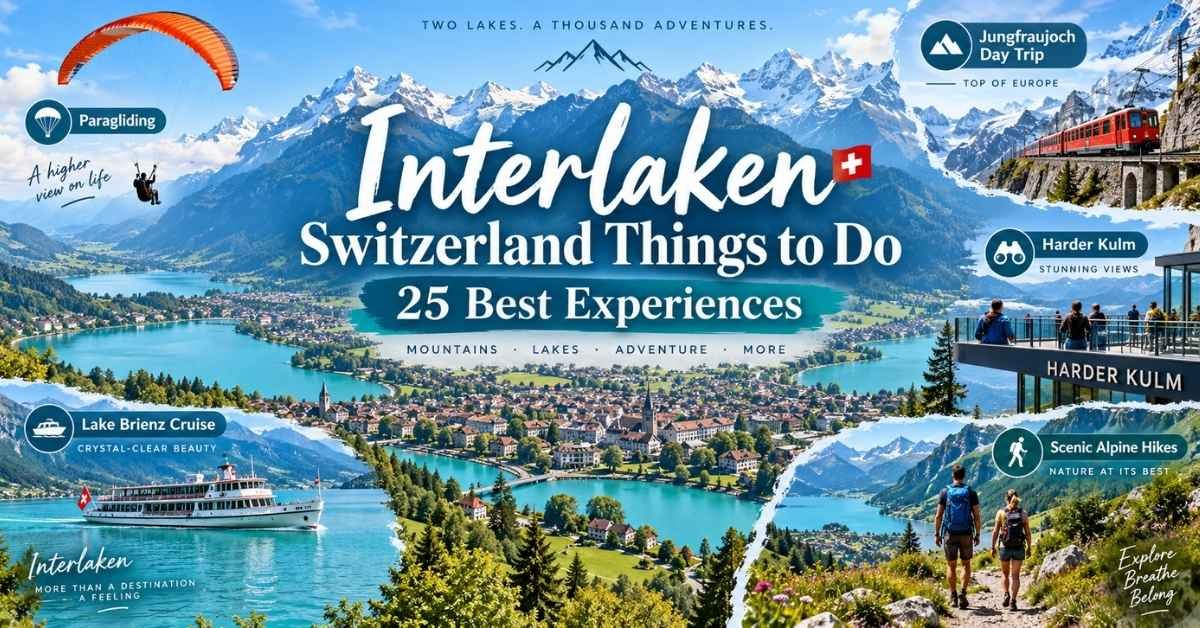
Interlaken Switzerland things to do range from cruising across turquoise lakes and riding mountain railways to paragliding over the Alps and exploring the waterfalls of Lauterbrunnen. For a rewarding first visit, combine one panoramic mountain excursion, one lake experience, one Jungfrau Region day trip, and a few hours in Interlaken or historic Unterseen. Three days is ideal, although you can see the highlights in one or two days with careful planning.
Interlaken sits between Lake Thun and Lake Brienz in Switzerland’s Bernese Oberland. Its greatest strength is not the town alone but its convenient access to Jungfraujoch, Grindelwald, Lauterbrunnen, Wengen, Mürren, and the wider Swiss Alps.
The number of possibilities can feel overwhelming, especially when mountain tickets are expensive and visibility depends on the weather. This guide separates attractions in town from regional day trips, compares the major mountain experiences, and helps you build a realistic Interlaken itinerary.
Planning note: Transport schedules, prices, trail conditions, and seasonal opening dates can change. Check official operators before making nonrefundable plans.
Interlaken at a Glance
Use this table to identify the best experience for your time and travel style.
| If you want… | Best choice | Time needed |
|---|---|---|
| A quick panoramic view | Harder Kulm | 2–3 hours |
| An iconic high-Alpine journey | Jungfraujoch | Full day |
| Waterfalls and village scenery | Lauterbrunnen | Full day |
| Mountain activities | Grindelwald First | Full day |
| A relaxing cruise | Lake Thun or Lake Brienz | Half/full day |
| A quieter mountain outing | Schynige Platte | Half/full day |
| An adrenaline rush | Paragliding or canyoning | 2–5 hours |
| A rainy-day attraction | St. Beatus Caves | Half day |
| A free local experience | Höhematte and Unterseen | 1–3 hours |
Ideal first stay: Three days Best time for the widest activity choice: June through September Main station for Jungfrau Region trips: Interlaken Ost Do you need a car? No Most important planning rule: Keep your clearest day available for a mountain excursion
Understand the Geography Before Planning
Many guides blur the difference between Interlaken and the surrounding region. Jungfraujoch, Grindelwald, Lauterbrunnen, Wengen, and Mürren are not inside Interlaken. They are separate destinations reached by train, cable car, bus, or mountain railway.
Think of the area in four practical zones:
- Inside Interlaken: Höhematte, Höheweg, Harder Kulm, the Aare and central streets
- Immediately nearby: Unterseen, Lake Thun, Lake Brienz and Wilderswil
- Half-day possibilities: St. Beatus Caves, Thun, Brienz and some lake cruises
- Full-day excursions: Jungfraujoch, Grindelwald First, Lauterbrunnen, Mürren and Schilthorn
This distinction matters. A place may look close on a map but require several transport connections.
Interlaken Ost vs Interlaken West
It has two main railway stations, and confusing them can cost valuable time.
Interlaken Ost is the principal departure point for trains toward Grindelwald, Lauterbrunnen and the Jungfrau Region. It is also convenient for Lake Brienz boat connections.
Interlaken West is closer to Unterseen, many shops and restaurants, and Lake Thun departures. Trains connect the two stations, while walking between them generally takes around 20 minutes.
If your itinerary contains early mountain excursions, accommodation near Interlaken Ost can make mornings easier. If you prioritize restaurants, evening walks and the older streets of Unterseen, the western side may feel more atmospheric.
1. Ride the Funicular to Harder Kulm
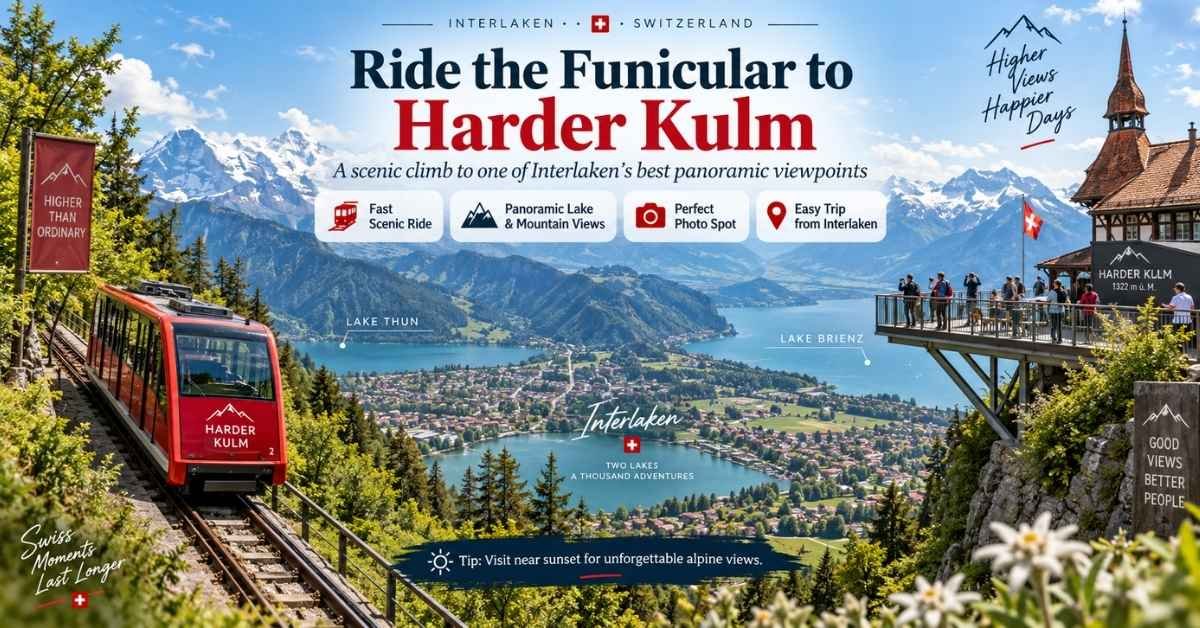
Rising directly above the town, Harder Kulm is one of the easiest ways to see Interlaken from above. The viewing platform overlooks both lakes, the valley, and the distant peaks of the Eiger, Mönch and Jungfrau.
The funicular journey is short, making Harder Kulm an excellent choice if you have only a few hours. At the top, you can enjoy the viewing platform, restaurant, and several walking paths.
Best for: First-time visitors, couples, photographers and short stays Time needed: Two to three hours Skip it if: The summit is completely covered by cloud Practical tip: Late afternoon can produce softer light, but check the final downhill departure before staying for sunset.
For the 2026 season, the funicular was scheduled to operate from early April until late November. Always confirm the day’s operating status because weather and maintenance can affect mountain transport.
Harder Kulm is efficient, but it is not a substitute for Jungfraujoch or another high-Alpine excursion. Choose it for maximum scenery with minimum travel time.
2. Watch Paragliders Land at Höhematte Park
Höhematte Park is a broad green space in central Interlaken where tandem paragliders frequently land. On clear days, you can watch colorful canopies descend against a backdrop of the Jungfrau.
The park is free and easy to reach from either station. It is a useful place to rest between activities, have a picnic, or let children run around without adding another paid attraction to the day.
Walk along the adjoining Höheweg to see grand hotels, cafés, shops and the flower-filled Japanese Garden. The area is commercial, but the open views make it worth visiting.
Best for: Families, budget travelers and easy sightseeing Time needed: 30 minutes to two hours Practical tip: Pick up lunch from a bakery or supermarket and use the park for an inexpensive picnic.
3. Walk Through Historic Unterseen
Travelers sometimes remain on Interlaken’s busy main street and miss Unterseen, the neighboring old town across the Aare River. Its historic square, traditional buildings and quieter lanes provide a more local contrast to central Interlaken.
A simple self-guided route can connect:
- Höhematte Park
- The Japanese Garden
- Interlaken Castle and the former monastery
- The Aare River
- Stadthausplatz in Unterseen
- The river path back toward Interlaken West
Allow about two hours at an easy pace. Stop at a bakery or café rather than rushing through the neighborhood as another checklist item.
Best for: Architecture, relaxed evenings and free sightseeing Time needed: One to three hours Practical tip: Visit in the morning or evening when day-tripping groups are less noticeable.
4. Cruise Across Lake Thun
Lake Thun combines broad mountain scenery with historic towns, castles and lakeside villages. Cruises depart from Interlaken West and can become either a relaxing round trip or part of a wider sightseeing route.
Popular combinations include:
- Boat to Thun, followed by the old town and castle
- Cruise plus St. Beatus Caves
- Boat to Spiez and onward travel by train
- A shorter lake journey followed by an evening in Unterseen
Lake Thun generally offers stronger year-round usefulness than Lake Brienz. However, individual sailings remain seasonal, so check the date-specific timetable.
Best for: Couples, families, seniors and slower travel Time needed: Half or full day Skip it if: You have only one clear day and have not yet taken your preferred mountain excursion Practical tip: Check whether your rail pass includes or discounts the cruise before buying a separate ticket.
5. Explore Turquoise Lake Brienz
Lake Brienz is known for its intense blue-green water, steep mountain slopes and dramatic natural scenery. It feels wilder than Lake Thun, although its boat schedule is more seasonal.
A Lake Brienz day can include:
- Brienz village
- Giessbach Falls
- The historic Giessbach funicular
- Iseltwald
- A lakeside walk
- A cruise from Interlaken Ost
For 2026, the principal Lake Brienz boating season was scheduled from early April into early December. Service frequency varies during the year.
Best for: Natural scenery, photography and waterfall trips Time needed: Half or full day Practical tip: Do not assume that a boat will be waiting when you finish at a village. Check the return schedule before getting off.
6. Enter St. Beatus Caves
Set into cliffs above Lake Thun, St. Beatus Caves combine underground chambers, waterfalls, walking paths and lake views. They are especially useful when low cloud makes a costly summit trip poor value.
The cave route involves walking, steps, cool temperatures and damp surfaces. Bring a light layer even during summer and wear shoes with reliable grip.
The site can be reached by bus, and some itineraries combine it with a Lake Thun boat journey. Check the exact seasonal transport connections before relying on that route.
Best for: Families, nature lovers and uncertain-weather days Time needed: Three to five hours including transport Skip it if: Stairs or uneven cave surfaces are difficult for you Practical tip: The attraction is not entirely indoors; you will still spend time outside reaching the entrance.
7. Paraglide Above Interlaken
Paragliding is one of the most memorable adventure activities in Interlaken. Most first-time participants take a tandem flight with a trained pilot, launching from the surrounding hills and landing near Höhematte.
A flight depends heavily on wind and visibility. The complete activity also takes longer than the time spent in the air because it includes transportation, preparation and safety instructions.
Before booking, check:
- Operator credentials
- Participant weight limits
- Weather cancellation rules
- Insurance coverage
- Clothing and footwear requirements
- Photo or video charges
- Mobility and medical restrictions
Best for: Adventure seekers and special occasions Time needed: Two to three hours Skip it if: You are uncomfortable with heights or have a condition affected by the activity Practical tip: Choose a flexible booking rather than forcing the flight into unsuitable weather.
8. Try Canyoning
Canyoning combines scrambling, swimming, sliding, jumping and rappelling through rocky gorges. Interlaken operators offer different routes, ranging from beginner-friendly outings to more demanding experiences.
Do not choose only by promotional photographs. Ask about:
- Maximum jump height
- Whether jumps can be avoided
- Swimming requirements
- Water temperature
- Fitness expectations
- Group size
- Safety equipment
- Cancellation policy
Best for: Fit travelers who want an active challenge Time needed: Half day Skip it if: Cold water, enclosed gorges or heights make you uncomfortable
Canyoning can be outstanding, but it should never be presented as universally suitable. Choose a route that matches your actual confidence and ability.
9. Go White-Water Rafting
Rafting offers group-based adventure without the repeated climbing and jumping required in canyoning. Conditions vary with water levels, season and route.
Reputable operators provide helmets, buoyancy aids, wetsuits and safety briefings. You should still disclose medical conditions and confirm whether travel insurance covers the activity.
Best for: Groups, active families with older children and first-time adventurers Time needed: Three to five hours Practical tip: Ask whether transport, equipment and changing facilities are included in the advertised price.
10. Kayak on Lake Brienz
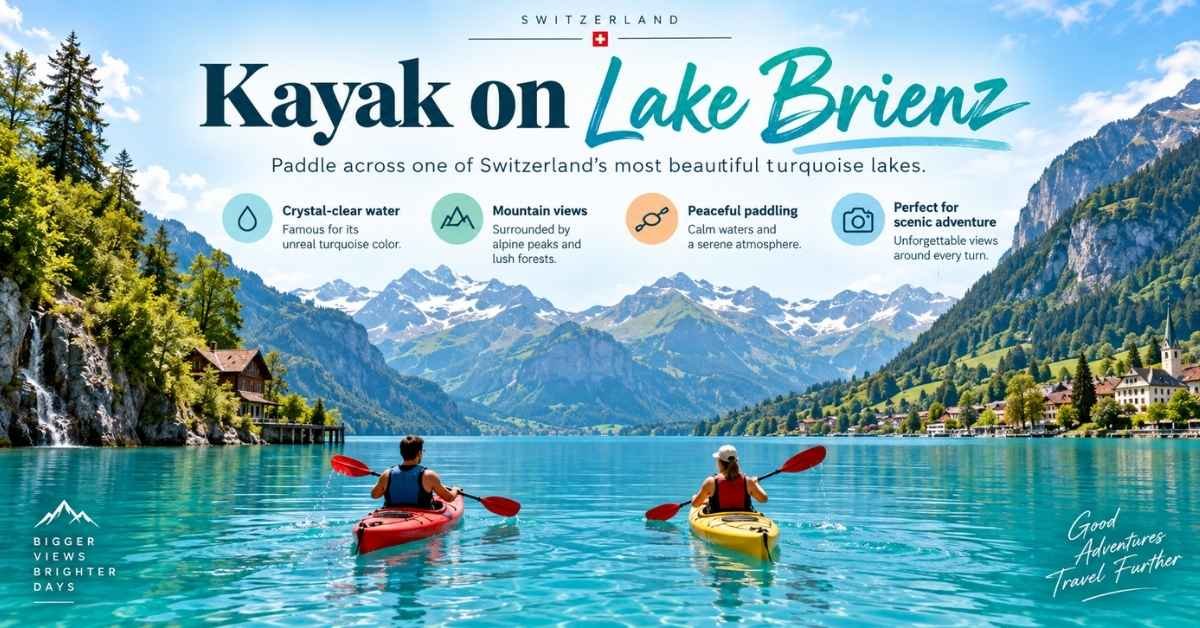
Kayaking provides a quieter way to experience the region’s water and mountain scenery. Guided outings are useful for beginners because lake temperatures, wind and changing conditions deserve respect.
Morning often brings calmer conditions, but there is no guarantee. Wear clothing appropriate for the water rather than the air temperature.
Best for: Couples, photographers and travelers wanting a slower adventure Time needed: Two to four hours Skip it if: Strong wind or storms are forecast Practical tip: A guided tour is often worth the added cost if you have limited paddling experience.
11. Cycle Along the Aare and the Lakes
Interlaken’s valley setting makes it suitable for recreational cycling. Routes follow sections of the Aare River, connect lakeside communities, and continue toward Wilderswil or nearby villages.
An e-bike can make longer distances more manageable, but it does not remove the need for traffic awareness or basic bike control. Confirm the return time and battery range before departing.
Best for: Active couples, families with confident cyclists and repeat visitors Time needed: Two hours to a full day Practical tip: Use marked cycling routes instead of relying on the shortest route suggested by a general navigation app.
12. Take the Railway to Jungfraujoch
Jungfraujoch, promoted as the Top of Europe, is the region’s most famous mountain excursion. The journey leads through the Jungfrau Railway network to a high-altitude complex overlooking the Aletsch Glacier.
Major experiences include:
- Sphinx observation area
- Aletsch Glacier views
- Ice Palace
- Snow activities when available
- High-Alpine railway engineering
- Views of surrounding peaks
This is one of the most expensive things to do near Interlaken. It is most rewarding when visibility is good and you have enough time to enjoy the journey without racing between connections.
The elevation can affect visitors who feel fine in the valley. Move slowly, stay hydrated, and do not ignore headache, dizziness or nausea.
During the applicable 2026 peak period, seat reservations were required on part of the Jungfraujoch route. Rules and fees can change, so verify them directly with Jungfrau Railways.
Best for: First-time visitors seeking an iconic Swiss Alps experience Time needed: Full day Skip it if: Visibility is extremely poor or high altitude presents a medical concern Practical tip: Check summit webcams, not only the general Interlaken forecast.
13. Combine Schilthorn With Mürren
Schilthorn provides high-mountain views and can be paired with the car-free village of Mürren. The excursion includes multiple transport stages, which become part of the experience.
At Birg, the Thrill Walk adds an exposed attraction for visitors comfortable with heights. Higher up, Schilthorn has panoramic viewing areas and a well-known James Bond connection.
The strongest version of this day is not simply riding up and down. Leave time for Mürren, where the village setting gives the journey more depth.
Best for: Mountain scenery, film fans and travelers wanting a village-summit combination Time needed: Full day Skip it if: Strong wind or dense summit cloud reduces access and visibility Practical tip: Check each cable-car segment, not just the final summit status.
14. Spend a Day at Grindelwald First
Grindelwald First mixes mountain scenery, hiking and paid adventure activities. The First Cliff Walk is the best-known attraction, while the walk to Bachalpsee provides a more natural experience.
Possible activities include:
- First Cliff Walk
- Bachalpsee hike
- First Flyer or First Glider
- Mountain carts
- Trottibike descents
- Longer hiking routes
Availability depends on weather, season and maintenance. Activity queues can also be substantial during busy summer days.
Best for: Families with older children, active travelers and mixed-interest groups Time needed: Full day Skip it if: You expect to complete every activity in a short visit Practical tip: Choose your two priorities before arriving. Attempting everything can turn the day into a queue-management exercise.
15. Ride the Historic Railway to Schynige Platte
Schynige Platte offers a slower, more traditional mountain experience. Its cogwheel railway climbs from Wilderswil to hiking trails, viewpoints and an alpine garden.
The area provides striking views toward the Eiger, Mönch and Jungfrau, as well as the lakes below. It suits travelers who value the railway journey and landscape more than thrill attractions.
Its operating season is relatively short. The 2026 schedule was planned from mid-June into late October, subject to conditions.
Best for: Hikers, photographers and railway enthusiasts Time needed: Half or full day Practical tip: Check trail length, elevation change and final train time before starting a longer walk.
16. Ride the Brienz Rothorn Railway
The Brienz Rothorn Railway is a historic steam-powered mountain journey departing from Brienz. From the upper station, visitors can enjoy broad views across Lake Brienz and the surrounding peaks.
The railway has limited seasonal operation and can sell out on desirable days. It also requires travel from Interlaken to Brienz, so treat it as a substantial outing.
Best for: Heritage railway enthusiasts and photographers Time needed: Most of a day Practical tip: Reserve only after checking the operating schedule and forecast for your date.
17. Escape to Niederhorn
Niederhorn is an appealing alternative for travelers who want mountain scenery without automatically choosing the region’s most promoted summits. Depending on the season, the area offers panoramic walking routes and the possibility of spotting alpine wildlife.
It pairs naturally with the Lake Thun side of Interlaken and can be combined with Beatenberg.
Best for: Repeat visitors, hikers and quieter scenic days Time needed: Half or full day Practical tip: Wildlife sightings are never guaranteed; treat them as a bonus rather than the main reason for going.
18. See the Waterfalls of Lauterbrunnen
The Lauterbrunnen Valley is one of the best day trips from Interlaken. Its cliffs, waterfalls, meadows and transport connections to Wengen and Mürren make it far more than a quick photo stop.
Start with Staubbach Falls, then decide whether to continue through the valley, visit Trümmelbach Falls when open, or travel upward to a mountain village.
Avoid trying to combine Lauterbrunnen, Wengen, Mürren, Schilthorn and every waterfall in one day. Although the map makes them look close, transfers and waiting times add up.
Best for: First-time visitors, families and waterfall lovers Time needed: Half day for the village; full day for the wider valley Practical tip: Arrive early and walk beyond the busiest streets to appreciate the scale of the valley.
19. Explore Grindelwald Village
You do not need to ride every cable car to enjoy Grindelwald. The village provides direct views of the Eiger, restaurants, railway connections and access to short walks.
Other possibilities include Glacier Gorge and onward travel toward Kleine Scheidegg, depending on the season and your available time.
Best for: Scenic train journeys, village views and flexible day trips Time needed: Half or full day Practical tip: If First is closed or covered in cloud, a lower-level Grindelwald visit can still work.
20. Visit Wengen and Kleine Scheidegg
Wengen is a car-free village above the Lauterbrunnen Valley. It offers a quieter atmosphere than Interlaken and direct access to mountain railways and walking routes.
Continuing toward Kleine Scheidegg brings you closer to the Eiger, Mönch and Jungfrau. The journey is especially useful for travelers who want dramatic scenery without necessarily going as high as Jungfraujoch.
Best for: Railway journeys, village atmosphere and moderate walking Time needed: Full day when combined with Kleine Scheidegg Practical tip: Sit on the appropriate side of the train for the best valley views, but do not block doors or luggage areas while changing seats.
21. Walk Through Mürren and Gimmelwald
Mürren and Gimmelwald are car-free mountain settlements on the western side of the Lauterbrunnen Valley. Mürren has more accommodation and services, while Gimmelwald is smaller and quieter.
You can connect them by cable car and walking routes, depending on conditions. The combination works best when you allow time to stop rather than treating both villages as quick photographs.
Best for: Alpine atmosphere, couples and walkers Time needed: Full day from Interlaken Practical tip: Verify whether your chosen walking path is open and appropriate for your footwear.
22. Explore Thun’s Old Town and Castle
At the western end of Lake Thun, Thun offers a medieval old town, riverside walks, covered wooden bridges and a hilltop castle. It is one of the strongest rainy-day or shoulder-season alternatives to a summit excursion.
You can reach Thun quickly by train or more slowly by boat. A useful plan is to travel one way by cruise and return by rail.
Best for: History, architecture, shopping and poor-weather days Time needed: Half or full day Practical tip: Wear shoes suitable for slopes and steps if you plan to walk up to the castle.
23. Combine Brienz With Giessbach Falls
Brienz is known for its lakeside position and woodcarving tradition. The village can be combined with Giessbach Falls, where a series of cascades descends toward Lake Brienz.
Depending on the season, visitors can arrive by boat and use the historic funicular or walk uphill. Check the last connection carefully; services are not equally frequent throughout the year.
Best for: Waterfalls, heritage and Lake Brienz scenery Time needed: Half or full day Practical tip: Build extra time into the route rather than planning an immediate boat-to-funicular transfer.
24. Visit Iseltwald Responsibly
Iseltwald became internationally famous through the television drama Crash Landing on You. Its lakeside location is attractive, but its popularity has also created crowd and traffic pressure in a very small community.
If you visit:
- Use public transport
- Follow local access rules
- Pay any applicable visitor fee
- Avoid blocking homes or private property
- Do not treat the village as a film set
- Consider visiting outside peak hours
Iseltwald is photogenic, but it is not essential for every itinerary. Travelers with limited time may gain more from a Lake Brienz cruise, Giessbach Falls or Brienz.
25. Walk Along the Aare River
For a calm, free activity, follow the Aare River between Interlaken and Unterseen. The path provides water views, local neighborhoods and an easy break from trains and ticketed attractions.
This walk works particularly well after a demanding day trip. It also provides flexibility: walk for 20 minutes or continue for several hours.
Best for: Budget travelers, evening walks and recovery days Time needed: Flexible Practical tip: Carry a light waterproof layer because valley weather can change quickly.
Which Mountain Experience Should You Choose?
You do not need to visit every summit. Selecting the right one saves both time and money.
| Experience | Best for | Time | Cost level | Weather sensitivity |
|---|---|---|---|---|
| Harder Kulm | Quick panorama | 2–3 hours | Medium | High |
| Jungfraujoch | Iconic high-Alpine journey | Full day | Very high | Very high |
| Schilthorn | Summit plus Mürren | Full day | High | Very high |
| Grindelwald First | Activities and hiking | Full day | High | High |
| Schynige Platte | Railway and trails | Half/full day | High | High |
| Niederhorn | Quieter scenery | Half/full day | Medium/high | High |
Choose Jungfraujoch if this is your first Swiss Alps trip and the iconic railway experience matters to you.
Choose Schilthorn if you want to combine a major summit with Mürren.
Grindelwald First if activities and hiking interest you more than a high-altitude railway.
Choose Schynige Platte if you prefer traditional transport and slower mountain walking.
Harder Kulm if you have limited time.
Choose Niederhorn or Brienzer Rothorn if you have already visited the major Jungfrau attractions or prefer a less obvious experience.
Learn More: Things to Do in Guatape: 21 Best Activities for 2026
Lake Thun or Lake Brienz?
Both lakes are beautiful, but they offer different experiences.
| Feature | Lake Thun | Lake Brienz |
|---|---|---|
| Character | Towns, castles and villages | Waterfalls and dramatic nature |
| Water | Deep blue | Turquoise-blue |
| Main additions | Thun, Spiez, Beatus Caves | Brienz, Giessbach, Iseltwald |
| Seasonal flexibility | Generally stronger | More limited |
| Best for | History and varied stops | Photography and natural scenery |
| Station | Interlaken West | Interlaken Ost |
Choose Lake Thun for castles, towns and broader year-round usefulness. Choose Lake Brienz for turquoise water, waterfalls and a stronger natural setting.
If you have only two days, choose one lake. If you have three to five days, both can fit without sacrificing a major mountain experience.
Things to Do in Interlaken When It Rains
Rain in the valley does not automatically mean the entire day is lost. However, dense summit cloud can make an expensive panoramic excursion disappointing.
During Light Rain or Low Cloud
Consider:
- St. Beatus Caves
- Lake Thun cruise
- Unterseen
- Thun old town
- Aare River walk
- Lauterbrunnen Valley
- A lower-level trip to Grindelwald
During Persistent Heavy Rain
Better choices include:
- Museums in Thun or nearby towns
- Indoor climbing or recreation
- A spa or wellness session
- A long Swiss lunch
- Shopping in Interlaken
- A scenic train journey if services remain normal
Use summit webcams alongside a reliable forecast. Conditions in Interlaken can differ greatly from those at Jungfraujoch, Schilthorn or First.
A practical weather strategy is simple:
- Clear peaks: Take your most important mountain excursion.
- Cloud above the valley: Explore lakes, villages and waterfalls.
- Heavy rain: Choose caves, towns, museums or wellness.
- Unstable forecast: Book flexible activities and avoid rigid itineraries.
Free and Budget-Friendly Activities
Interlaken is expensive, but not every worthwhile experience needs a mountain ticket.
The best free things to do in Interlaken include:
- Relaxing at Höhematte
- Watching paragliders
- Walking through Unterseen
- Following the Aare River
- Exploring Interlaken’s churches and gardens
- Taking a lakeside walk
- Visiting nearby villages by included local transport
- Packing a picnic for a scenic viewpoint
Your accommodation may provide an Interlaken Guest Card, which can include local public transport and discounts within its validity area. Ask for it at check-in and confirm which journeys are covered.
Remember that a free attraction can still involve transport, food or equipment costs. Plan the entire day rather than judging value by admission price alone.
Best Experiences for Different Travelers
Interlaken With Children
Families should limit each day to one major excursion. Young children often enjoy the transport as much as the attraction itself, but repeated connections, altitude and long queues can quickly become tiring.
Good family options include:
- Höhematte
- Lake cruises
- St. Beatus Caves
- Lauterbrunnen
- Short village walks
- Grindelwald First for age-appropriate activities
- Harder Kulm
- Thun
Check stroller access, child ticket rules, toilet availability and activity age limits before leaving.
Interlaken for Couples
Couples can combine a scenic experience with unstructured time rather than filling every hour.
Strong choices include:
- Late-afternoon Harder Kulm
- Lake Brienz kayaking
- Lake Thun cruise
- Mürren
- A spa afternoon
- Dinner in Unterseen
- Aare River walk
- Paragliding for an adventurous shared experience
Interlaken for Non-Hikers
You can experience the Swiss Alps without completing demanding trails. Mountain railways, funiculars, boats and cable cars provide access to many major viewpoints.
Consider:
- Jungfraujoch
- Harder Kulm
- Schilthorn
- Lake cruises
- Wengen
- Mürren
- Thun
- Short sections of Schynige Platte
“Easy access” does not always mean fully wheelchair accessible. Check step-free routes, platform changes and walking surfaces directly with operators.
Interlaken for Experienced Hikers
Advanced hikers can investigate routes around:
- Schynige Platte
- Faulhorn
- Bachalpsee
- Niederhorn
- Hardergrat
- Kleine Scheidegg
- Mürren
Hardergrat is a serious exposed ridge route, not a casual extension of Harder Kulm. It requires suitable fitness, conditions, navigation and comfort with exposure. Do not attempt an advanced trail because a general travel article describes it as scenic.
Use official trail information, local weather services and mountain authorities before setting out.
Best Time to Visit Interlaken
Spring
Spring brings powerful waterfalls, green valleys and fewer visitors. Higher trails may remain snowy, while mountain railways and boats can operate on reduced schedules.
This is a good period for Lauterbrunnen, Thun, Unterseen and lower-elevation walks. It is less reliable for visitors whose main goal is extensive Alpine hiking.
Summer
June through September generally provides the broadest range of things to do in Interlaken. Hiking trails, cruises, mountain railways and adventure activities are most widely available.
Summer also brings larger crowds and higher accommodation prices. Start early, reserve limited-capacity experiences, and leave some flexibility for weather.
Autumn
Early autumn can provide clear air, colorful landscapes and fewer visitors. As the season progresses, daylight shortens and mountain services begin closing.
Verify the final operating date of every major attraction rather than assuming that all summer transport continues through October.
Winter
Winter transforms Interlaken into a base for skiing, sledging, winter walking and snow excursions. Lake Thun, scenic rail journeys, towns and wellness activities provide alternatives for non-skiers.
Some attractions associated with summer—including specific railways, trails and Lake Brienz services—may be unavailable.
Interlaken Itineraries That Actually Work
One Day in Interlaken
If the weather is clear:
- Morning: Harder Kulm or one carefully selected mountain trip
- Afternoon: Höhematte, Interlaken and Unterseen
- Evening: Aare River walk
If weather is poor:
- Morning: St. Beatus Caves
- Afternoon: Thun or a short Lake Thun cruise
- Evening: Unterseen
Do not attempt Jungfraujoch, Lauterbrunnen, Grindelwald and both lakes in one day.
Two Days in Interlaken
Day one: Jungfraujoch, Schilthorn or Grindelwald First Day two: Lake Thun or Lake Brienz, followed by Interlaken and Unterseen
This provides one major mountain experience and one slower regional day.
Three Days in Interlaken
Day one: Interlaken, Harder Kulm and Lake Thun Day two: Lauterbrunnen with Wengen or Mürren Day three: Jungfraujoch, Grindelwald First or an adventure activity
Keep days two and three interchangeable so the better forecast goes to the more weather-sensitive excursion.
Five Days in Interlaken
- Day one: Interlaken, Unterseen and Harder Kulm
- Day two: Lauterbrunnen and Mürren
- Day three: Lake Brienz, Brienz and Giessbach Falls
- Day four: Jungfraujoch or Grindelwald First
- Day five: Paragliding, Thun or a flexible weather backup
This itinerary provides variety without changing accommodation repeatedly.
Plan With the ALPS Framework
Use four questions before booking any activity.
A — Available Time
A two-hour gap suits Höhematte, Unterseen or the Aare. A half day suits Harder Kulm or St. Beatus Caves. Jungfraujoch, Schilthorn and major Jungfrau Region combinations require a full day.
L — Live Conditions
Check visibility, wind, rain, snow, trail access, boat schedules and mountain-transport status. A clear valley does not guarantee a clear summit.
P — Pass and Price
Calculate the cost of your intended journeys before purchasing a pass. The most expensive pass is not automatically the best value.
S — Style and Stamina
Consider fitness, altitude tolerance, mobility, fear of heights, children’s ages and your preferred pace. The best itinerary is one you can enjoy without constantly rushing.
Travel Passes and Transport
Public transport is usually the easiest way to explore Interlaken and the Jungfrau Region. Trains, buses, boats, funiculars and cable cars connect most major destinations.
Passes worth comparing include:
- Swiss Travel Pass
- Swiss Half Fare Card
- Berner Oberland Pass
- Jungfrau Travel Pass
- Interlaken Guest Card
- Individual point-to-point tickets
No pass is universally best. To compare them:
- List your planned journeys.
- Check individual fares.
- Add mountain-railway tickets.
- Check lake-cruise inclusion.
- Apply relevant discounts.
- Compare the total with the pass price.
Do not overlook convenience. A pass that costs slightly more may still be valuable if it allows flexible changes during uncertain weather.
What Should You Book in Advance?
Advance booking can be useful for:
- Jungfraujoch during reservation periods
- Paragliding
- Canyoning and rafting
- Popular summer hotels
- Limited-capacity rail experiences
- Mountain restaurants for special occasions
There is a balance between availability and flexibility. Reserve experiences likely to sell out, but avoid locking every weather-dependent day into a nonrefundable schedule.
Where to Stay in Interlaken
Stay near Interlaken Ost if you prioritize early trains to Lauterbrunnen, Grindelwald and Jungfraujoch.
Stay near Interlaken West or Unterseen if you prefer restaurants, old-town atmosphere and Lake Thun connections.
Choose a mountain village instead if you want:
- Quieter evenings
- Immediate trail access
- Alpine atmosphere
- Less daily commuting to one specific area
Interlaken remains the better base when your plans cover both lakes, multiple valleys and several different mountain networks.
Common Planning Mistakes
Avoid these frequent errors:
- Treating every Bernese Oberland attraction as if it were in Interlaken
- Scheduling two major mountain trips on one day
- Buying a summit ticket without checking visibility
- Assuming all railways and boats operate year-round
- Confusing Interlaken Ost with Interlaken West
- Ignoring altitude at Jungfraujoch
- Packing only for valley temperatures
- Booking adventure activities without reading cancellation terms
- Changing hotels too frequently
- Underestimating food and transport costs
- Following viral recommendations without considering local crowd pressure
- Building an itinerary without a rainy-day alternative
Is Interlaken Worth Visiting?
Interlaken is worth visiting if you want a convenient, car-free base for exploring the Bernese Oberland. It offers excellent connections to lakes, mountain railways, adventure sports and famous destinations such as Jungfraujoch and Lauterbrunnen.
The town itself is more commercial than villages such as Mürren or Wengen. Travelers seeking an isolated Alpine atmosphere may prefer staying in a mountain village.
Interlaken’s real advantage is access and flexibility. You can adjust your day to match the weather without relocating every night.
Frequently Asked Questions
How many days do you need in Interlaken?
Three days is ideal for a first visit. It allows time for one major mountain excursion, one lake or valley day, and local sightseeing. Stay four or five days if you want hiking, adventure sports and flexibility around the weather.
Is two days enough for Interlaken?
Two days is enough for one signature mountain experience and one lake, village or valley outing. It is not enough to see the entire Jungfrau Region.
What is Interlaken famous for?
Interlaken is famous for its location between Lake Thun and Lake Brienz, access to the Jungfrau Region, mountain railways and adventure sports such as paragliding, rafting and canyoning.
Can you explore Interlaken without a car?
Yes. Interlaken and the surrounding Jungfrau Region have extensive train, bus, boat and mountain-railway connections. Several popular mountain villages are car-free.
Is Interlaken walkable?
Central Interlaken, Höhematte and Unterseen are walkable. Regional attractions require public transport or driving.
Is Jungfraujoch worth the cost?
Jungfraujoch can be worth it for first-time visitors who value the iconic railway journey, glacier scenery and high-altitude experience. It offers weaker value during dense cloud or if similar mountain excursions are already included in your itinerary.
Should you visit Jungfraujoch or Schilthorn?
Choose Jungfraujoch for the famous high-altitude railway and glacier experience. Choose Schilthorn for panoramic views, cable cars and the opportunity to combine the summit with Mürren.
Is Lake Thun or Lake Brienz better?
Lake Thun is better for towns, castles and broader seasonal flexibility. Lake Brienz is better for turquoise water, waterfalls and dramatic natural scenery.
What are the best free things to do in Interlaken?
The best free activities include Höhematte Park, Unterseen, the Aare River, lakeside walking, the Japanese Garden and watching paragliders land.
What can you do in Interlaken when it rains?
Visit St. Beatus Caves, explore Thun, take a suitable lake cruise, walk through Unterseen, enjoy a spa or travel to a lower-elevation village. Avoid expensive summit trips if webcams show no visibility.
Is Interlaken suitable for families?
Yes. Lake cruises, Höhematte, St. Beatus Caves, Lauterbrunnen and accessible mountain railways work well for families. Check age, height and weight restrictions for adventure activities.
What is the best month to visit Interlaken?
July and August provide the broadest activity choice but also attract the largest crowds. June and September often offer a better balance of operating services, hiking access and visitor numbers.
What should you reserve in advance?
Reserve popular accommodation, adventure activities and limited-capacity experiences. Check current reservation requirements for Jungfraujoch and other mountain transport before traveling.
Final Thoughts
The best Interlaken trip is not the one with the longest attraction list. It is the one that matches your time, budget, energy and the live mountain conditions.
Choose one signature mountain experience, add one lake or valley day, and keep a reliable bad-weather alternative. Leave enough time for Unterseen, the Aare and an unhurried meal between the headline excursions.
Interlaken rewards flexibility. Use it as a base, watch the forecast, verify current schedules, and let the clearest day determine when you head into the mountains.










1 thought on “Interlaken Switzerland Things to Do: 25 Best Experiences”