
things to do in amalfi italy include exploring the magnificent Duomo di Sant’Andrea, walking through the peaceful Chiostro del Paradiso, seeing traditional papermaking at the Museo della Carta, hiking into Valle delle Ferriere, wandering to nearby Atrani and viewing the coastline from a boat. If you have only one day, focus on Amalfi’s cathedral complex, historic lanes, waterfront and one experience that matches your interests—either the Paper Museum, beach, Atrani walk or a short boat tour.
Amalfi deserves more than a quick cathedral photograph and a lemon souvenir. This compact coastal town was once a powerful maritime republic, and its trading history, religious heritage, paper mills and lemon terraces remain visible if you know where to look.
This guide focuses first on Amalfi town. Attractions elsewhere on the Amalfi Coast are clearly labeled, so you will not accidentally build an itinerary that requires several hours of transportation.
Amalfi at a Glance
| Question | Quick answer |
|---|---|
| Best overall attraction | Duomo di Sant’Andrea and Chiostro del Paradiso |
| Best cultural experience | Museo della Carta |
| Best outdoor activity | Valle delle Ferriere |
| Best nearby walk | Atrani |
| Best premium experience | Small-group Amalfi Coast boat tour |
| Best free activity | Walking Amalfi’s historic center |
| Ideal time in Amalfi town | One full day or one overnight stay |
| Best way to arrive | Ferry during its operating season |
| Best time to avoid crowds | Early morning or evening |
| Do you need a car? | No—and driving often creates more problems |
| Is Amalfi worth visiting? | Yes, especially for history, food and convenient transport |
Important: Ferry schedules, attraction hours, admission prices and trail access can change. Check official information shortly before your visit.
Amalfi Town and the Amalfi Coast Are Not the Same Place
The name Amalfi causes plenty of confusion. It refers to a specific town in Campania, but it also appears in the name of the wider Amalfi Coast, a UNESCO-listed stretch of coastline containing multiple communities.
Amalfi town sits on the Gulf of Salerno and serves as one of the coast’s most useful transport hubs. Positano, Ravello, Atrani, Praiano, Maiori, Minori and Vietri sul Mare are separate places—not neighborhoods of Amalfi.
This distinction matters because many guides place Path of the Gods, Capri, Positano and Pompeii on a list of Amalfi attractions. They are worthwhile places, but none is a quick activity inside Amalfi town.
In this guide:
- Inside Amalfi: Cathedral, Paper Museum, Arsenale, beach and historic lanes
- Walkable or hikeable: Atrani, Valle dei Mulini and Valle delle Ferriere
- Short journey: Ravello, Minori, Maiori and Emerald Grotto
- Full-day excursion: Capri, Positano or Pompeii
Is Amalfi Worth Visiting?
Amalfi is worth visiting for its cathedral, medieval maritime history, traditional paper production, walkable center and direct transport connections. It is less vertically dramatic than Positano, but it offers more historical substance and is generally easier to use as a base.
Amalfi is particularly rewarding if you enjoy:
- Historic churches and architecture
- Local crafts
- Coastal food
- Boat trips
- Compact walking routes
- Nature trails
- Traveling without a car
The town is not perfect. It becomes extremely busy when ferries, buses and organized tours arrive together. Its main beach is convenient rather than secluded, and restaurants around Piazza Duomo can be expensive.
The experience changes noticeably after day-trippers leave. If your schedule allows it, spend one night in Amalfi. The quieter evening piazza and early-morning waterfront reveal a more relaxed side of the town.
How Long Do You Need in Amalfi?
- Two to three hours: Waterfront, Piazza Duomo, cathedral complex and a quick snack
- Half a day: Add the historic lanes, Arsenale or Paper Museum
- One full day: Add Atrani, the beach, valley walk or boat experience
- One night: Enjoy Amalfi before and after the day-trip crowds
- Two days: Combine town attractions with Valle delle Ferriere, Ravello or a boat tour
Choose the Right Amalfi Activities
| Experience | Best for | Time needed | Cost | Effort | Book ahead? |
|---|---|---|---|---|---|
| Cathedral complex | History and architecture | 45–75 minutes | Budget | Many steps | Usually not |
| Historic-center walk | First-time visitors | 60–90 minutes | Free | Easy to moderate | No |
| Paper Museum | Culture and rainy weather | 45–60 minutes | Budget | Slight uphill walk | Check tour times |
| Atrani walk | Views and quieter streets | 1–2 hours | Free | Moderate | No |
| Valle delle Ferriere | Nature and hiking | Half day | Free or low | Moderate | Route dependent |
| Marina Grande Beach | Relaxation | 1–4 hours | Free to moderate | Easy | Beach club optional |
| Group boat tour | Coastal scenery | 2–8 hours | Moderate | Easy | Yes in summer |
| Lemon-farm experience | Food and agriculture | 1–3 hours | Moderate | Steps and slopes | Recommended |
| Ravello | Gardens and viewpoints | Half or full day | Moderate | Walking and stairs | Attraction dependent |
1. Begin at Amalfi’s Waterfront
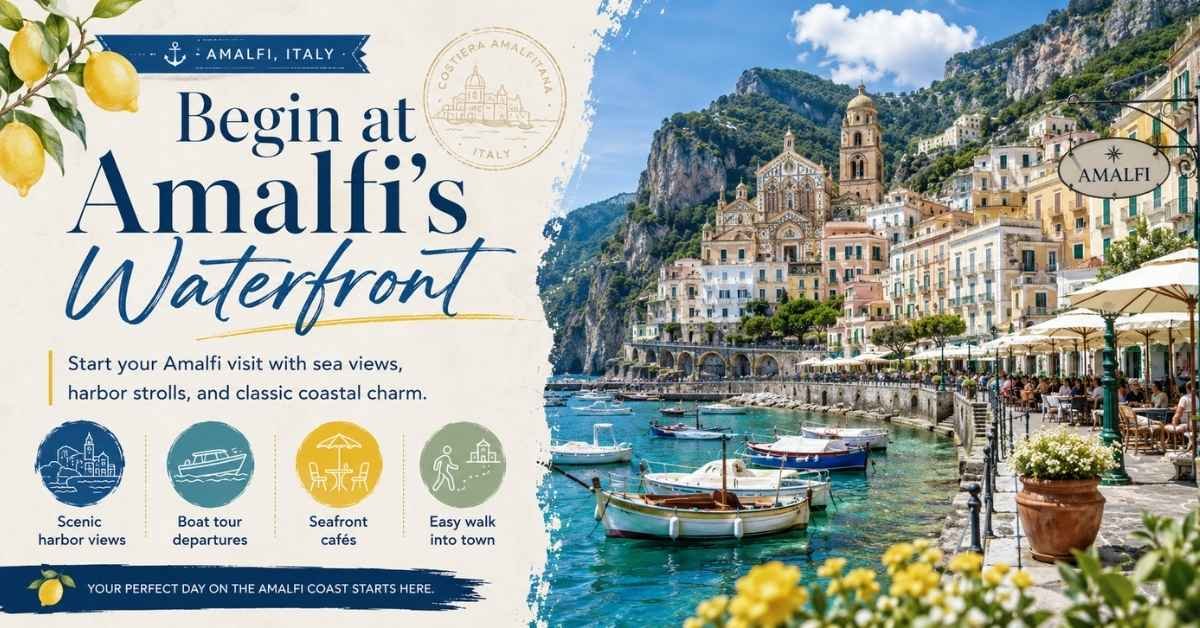
Amalfi’s waterfront is more than an arrival point. It provides one of the clearest views of the town’s unusual geography: the harbour at sea level, buildings rising into a narrow valley and the cathedral appearing above the rooftops.
Walk along the pier if access is open and look back toward the town. This is one of the best places to photograph Amalfi’s waterfront, cathedral and surrounding cliffs in a single frame.
The harbour becomes hectic when several ferries arrive close together. For a calmer experience, visit early in the morning or return later in the evening.
Good to know:
- The ferry terminal, beach, Arsenale and Piazza Duomo are close together.
- The waterfront is among the easiest parts of Amalfi for travelers with limited mobility.
- Keep clear of active boarding areas when ferries are arriving.
2. Discover Amalfi’s Maritime Past at the Arsenale
Before Amalfi became a holiday destination, it was one of medieval Italy’s great maritime republics. Its merchants traded throughout the Mediterranean, and the town developed its wealth, cultural connections and naval power through the sea.
The surviving Arsenale della Repubblica was once associated with building and maintaining the ships that supported this trade. Its stone-vaulted interior feels far removed from the bright souvenir shops outside.
Depending on current exhibitions and opening arrangements, the complex may also introduce visitors to Amalfi’s navigation, maritime law and seafaring history. Verify access locally because small museums can have seasonal or event-related schedules.
This is a relatively short stop, but it provides essential context. Without the Arsenale, Amalfi can look like a pretty harbour town; with it, you begin to understand why the entire coast carries its name.
3. Walk Through Porta della Marina Into Piazza Duomo
From the waterfront, follow the flow of pedestrians toward Porta della Marina. The street opens suddenly into Piazza Duomo, where cafés, shops, the Saint Andrew fountain and the cathedral’s staircase compete for attention.
The square is Amalfi’s social center. It works as a meeting point, breakfast stop, evening gathering place and stage for the town’s most recognizable view.
Do not rush through it. Visit during the day, then return after sunset when the cathedral is illuminated and the atmosphere becomes more local.
If the main café terraces are crowded, explore the lanes branching away from the piazza. Prices and noise levels often fall once you leave the most photographed tables.
4. Stop at the Fontana di Sant’Andrea
The Fontana di Sant’Andrea stands near the base of the cathedral steps. It represents Saint Andrew, Amalfi’s patron saint, whose relics are traditionally associated with the cathedral crypt.
The fountain only requires a few minutes, but it forms part of the square’s religious and civic identity. It also provides a useful meeting point if your group separates.
Treat it as a meaningful detail rather than a major attraction. The real value lies in understanding how the fountain, cathedral and town’s devotion to Saint Andrew connect.
5. Explore the Duomo di Sant’Andrea
The Duomo di Sant’Andrea, also called Amalfi Cathedral, is the town’s essential attraction. Its long staircase, striped façade, bell tower and mixture of architectural styles dominate Piazza Duomo.
The cathedral’s origins reach back to the medieval period, though repeated rebuilding and restoration created the complex visible today. Arab-Norman, Moorish-inspired, Gothic and Baroque elements reflect Amalfi’s long interaction with different Mediterranean cultures.
A quick visitor may photograph the exterior and move on. That misses the most rewarding parts of the cathedral complex.
What to See Inside
Depending on current access arrangements, the cathedral route can include:
- Chiostro del Paradiso
- Basilica del Crocefisso
- Diocesan museum
- Crypt of Saint Andrew
- Cathedral interior
The crypt is richly decorated and feels dramatically different from the airy cloister above. The museum and basilica add historical context, while the cathedral interior displays later Baroque detail.
Is Amalfi Cathedral Worth Entering?
Yes. If you pay for only one cultural attraction in Amalfi, make it the complete cathedral complex.
Allow approximately 45 to 75 minutes, depending on crowds and your interest in religious art. Check current visiting hours because services and religious events can affect tourist access.
The cathedral’s staircase is an important accessibility consideration. Travelers unable to manage a substantial flight of steps should enjoy the exterior from Piazza Duomo and contact the site directly about alternative access.
6. Slow Down in the Chiostro del Paradiso
The Chiostro del Paradiso, or Cloister of Paradise, is attached to the cathedral complex. Its delicate arches, marble columns, palm-filled garden and quieter atmosphere create a sharp contrast with the busy piazza below.
The cloister was originally built as a burial place for prominent Amalfi families. Today, its appeal comes from the meeting of history, architecture and stillness.
Visit early if possible. When the space is quiet, the arches frame the garden beautifully, and small architectural details become easier to notice.
Do not rush directly toward the crypt. Give the cloister ten or fifteen minutes and allow your eyes to adjust after the brightness and noise outside.
7. Follow Amalfi’s Historic Lanes
Amalfi’s center is compact, but it is not limited to the commercial street behind Piazza Duomo. Covered passages, steep staircases and narrow residential lanes climb both sides of the valley.
Walk along the historic trading route often associated with Via dei Mercanti and Ruga Nova Mercatorum, then turn into smaller passages. You may encounter religious shrines, paper shops, ceramic displays, quiet courtyards and laundry hanging above the street.
The aim is not to “get lost” for the sake of it. Follow a loose loop and keep track of the valley’s main street, which leads inland toward the Paper Museum.
Remember that many lanes are residential. Keep voices low, avoid blocking doorways and do not treat every staircase as a private photography set.
8. Try Delizia al Limone
Amalfi’s relationship with lemons extends far beyond limoncello. The coast’s famous Sfusato Amalfitano lemon is valued for its fragrance, thick peel and culinary versatility.
One of the most enjoyable ways to experience it is through Delizia al Limone, a soft sponge dessert filled and coated with lemon cream. It offers a more distinctly regional experience than buying a generic cup of gelato.
Historic pastry shops around Piazza Duomo serve versions of the dessert, including the well-known Pasticceria Andrea Pansa. Seating in the main square may cost more than eating at the counter or taking your dessert away.
If you avoid alcohol, ask whether limoncello is used in the recipe. Preparations vary.
Other lemon specialties worth trying include:
- Lemon granita
- Lemon sorbet
- Lemon pastries
- Citrus preserves
- Lemon-infused olive oil
- Limoncello spritz
9. See Traditional Papermaking at Museo della Carta
The Museo della Carta, or Amalfi Paper Museum, is one of the town’s most distinctive attractions. It occupies a historic paper mill in the valley above the center and explains a craft that shaped Amalfi’s economy for centuries.
Water from the Canneto River powered machinery used in the production process. The museum connects the valley’s natural geography with Amalfi’s trading networks and handmade paper tradition.
During a visit, you may see:
- Historic papermaking machines
- Water-powered equipment
- Traditional production techniques
- Examples of Amalfi paper
- A small shop selling stationery and handmade products
Guided demonstrations make the machinery easier to understand, so check tour times before walking uphill. The museum is also one of the best rainy-day activities in Amalfi.
From Piazza Duomo, the walk is relatively short but gradually heads inland and uphill. Allow around an hour for the museum, plus walking time.
Honest verdict: The Paper Museum is worth visiting if you have at least half a day. If you only have two hours, prioritize the cathedral and historic center.
10. Continue Into Valle dei Mulini
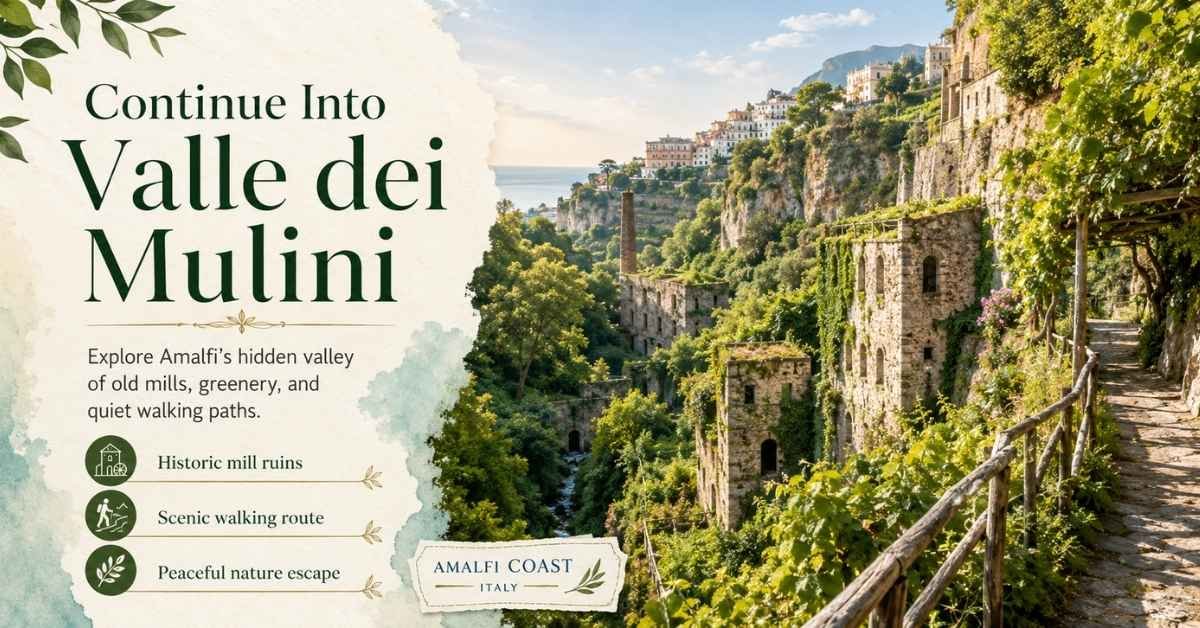
Beyond the busiest streets, Amalfi stretches into the Valle dei Mulini, or Valley of the Mills. The area contains the landscape that supported the town’s historic paper industry.
Even if you do not complete a major hike, continue beyond the Paper Museum for a short walk. The atmosphere becomes greener and quieter, and traces of old industrial structures appear among the vegetation.
This shorter experience should not be confused with completing the full Valle delle Ferriere hike. It works well for travelers who want a glimpse of Amalfi’s natural setting without committing half a day.
Wear shoes with good grip. Stone paths can become slippery after rain.
11. Visit an Amalfi Lemon Farm
Amalfi’s lemon terraces cling to steep slopes that make cultivation demanding. A good lemon-farm tour reveals how growers maintain the terraces, transport fruit and protect a regional agricultural tradition.
A worthwhile experience may include:
- Walking through a working grove
- Learning about Sfusato Amalfitano lemons
- Meeting growers or family producers
- Tasting lemon products
- Seeing traditional farming equipment
- Sampling limoncello, cake or preserves
This is more meaningful than simply purchasing a souvenir bottle in town because it connects the product with the landscape and labor behind it.
Lemon-farm visits often involve steps, steep paths and sun exposure. Wear suitable shoes, bring water and confirm accessibility before booking.
Tours have limited capacity, so this is one of the experiences worth reserving in advance during busy periods.
12. Ride Up to the Cimitero Monumentale Viewpoint
For an elevated view without completing a long mountain hike, consider the viewpoint near Amalfi’s Cimitero Monumentale. An elevator may provide access from the lower part of town, subject to current operating conditions and fees.
From above, you can see the harbour, beach, cathedral and buildings filling the valley. The perspective makes Amalfi’s geography much easier to understand.
The cemetery remains a place of remembrance. Dress and behave respectfully, remain on public paths and avoid photographing private memorials closely.
Verify elevator access before planning your day around it. If it is unavailable, reaching higher viewpoints may require substantial stairs.
13. Relax at Marina Grande Beach
Marina Grande is Amalfi’s main beach, positioned between the harbour and historic center. Its location makes it convenient for a quick swim, but it is not a secluded stretch of untouched coastline.
Much of the beach may be occupied by private establishments offering loungers, umbrellas, changing facilities and food service. A smaller public area generally allows visitors to use the beach without renting a chair, though free space can become crowded.
Is Amalfi Beach Worth Visiting?
It depends on your schedule.
- Two-hour visitor: Skip the beach unless swimming is your main priority.
- One-day visitor: Spend an hour here after sightseeing.
- Family: Convenient facilities help, but investigate water entry and crowd levels.
- Dedicated beach traveler: Consider Maiori for more space.
- Couple: A beach club can provide an easy, relaxing afternoon.
The shore consists of darker sand and pebbles rather than the wide golden sand some visitors imagine. Water shoes can make entering the sea more comfortable.
14. See the Amalfi Coast From the Water
The cliffs and villages make more sense when viewed from the sea. You can appreciate how little flat land exists and why buildings, roads and lemon terraces rise so sharply.
There are four main ways to get on the water.
Take a Public Ferry
A ferry combines transportation with scenic views. It is often the best choice for traveling between Amalfi, Positano, Salerno and other connected destinations during the operating season.
Ferries follow fixed routes and do not usually stop for swimming. Service can also be affected by weather and seasonal schedules. Current local guidance recommends combining ferries and buses rather than depending on a car for every journey. Positano.com transport guide
Join a Group Boat Tour
A small-group tour may include swimming stops, caves, drinks and commentary. It is usually more affordable than hiring a private boat.
Check the maximum group size, exact departure point and whether the published duration includes transport to the boat.
Hire a Private Boat
A private boat offers flexibility, privacy and control over swimming stops. It works best for couples, families and groups celebrating a special occasion.
Prices can rise quickly in summer. Confirm fuel, skipper, refreshments, taxes and cancellation terms before paying.
Go Kayaking
Kayaking provides a quieter, more active coastal experience. It can bring you closer to small coves and rock formations than a larger boat.
Choose a guided option if you lack sea-kayaking experience. Wind, waves and boat traffic can change conditions.
15. Return to Piazza Duomo After Sunset
Piazza Duomo can feel like two different places. During the day, it handles tour groups, shoppers and visitors moving between the port and cathedral. In the evening, the pace becomes slower.
Return after dinner or for an aperitivo. Watch the lights illuminate the cathedral façade and enjoy the square without trying to complete another attraction.
This is one of the strongest reasons to stay overnight. Day visitors see Amalfi’s landmarks; overnight visitors experience its atmosphere.
16. Walk From Amalfi to Atrani
Atrani sits immediately east of Amalfi and feels noticeably smaller. Its central square, beach, arches and residential lanes offer a quieter contrast to Amalfi’s commercial center.
Different pedestrian routes may be available, including paths involving stairs and sections near the coastal road. Conditions and access can change, so confirm the safest current route locally instead of automatically following the shortest map suggestion.
Allow at least one to two hours for the return walk and a relaxed look around. Add more time if you plan to eat or use the beach.
The route may not suit:
- Travelers with limited mobility
- Visitors carrying heavy luggage
- Families with unsuitable strollers
- Anyone uncomfortable near traffic or steep steps
Atrani is not an undiscovered village, but it often feels calmer than Amalfi during the busiest part of the day.
17. Hike Valle delle Ferriere
The Valle delle Ferriere offers a completely different side of the Amalfi Coast. Instead of exposed cliffs and pastel houses, expect shaded vegetation, waterfalls, streams and ruins connected to the area’s former mills.
The route can vary depending on the starting point, direction and access to protected areas. Research the exact trail rather than treating “Valle delle Ferriere” as one simple path.
Bring:
- Proper walking shoes
- Sufficient water
- Sun and rain protection
- Offline navigation
- A fully charged phone
- Information about current trail conditions
Valle delle Ferriere or Path of the Gods?
| Feature | Valle delle Ferriere | Path of the Gods |
|---|---|---|
| Connection to Amalfi | Reached from the valley behind Amalfi | Starts elsewhere |
| Landscape | Forest, water and mill ruins | Open mountain and coastal views |
| Shade | Generally greater | Limited |
| Main challenge | Distance and wet terrain | Exposure, stairs and transport |
| Best for | Nature and industrial history | Panoramic hiking |
Do not include both in an already crowded day. Valle delle Ferriere is the more natural choice when staying in Amalfi.
Learn More: 25 Best Things to Do Around Lava Hot Springs, Idaho
18. Hike to Torre dello Ziro
Torre dello Ziro occupies a dramatic position above Amalfi and Atrani. The surviving watchtower and surrounding viewpoints are linked with coastal defense and local legends.
This is not a casual town-center stroll. Reaching the area involves a proper walk, changes in elevation and route planning.
Choose it if you:
- Enjoy hiking
- Want elevated views
- Have enough time
- Are comfortable navigating trails
- Prefer a quieter experience to a major attraction
Skip it if you have only one day, dislike exposed terrain or are not carrying suitable footwear and water.
19. Visit Ravello for Gardens and Views
Ravello sits above the coast and is best known for elegant gardens and sweeping sea views. Its leading attractions include Villa Rufolo and Villa Cimbrone, home to the famous Terrace of Infinity.
Ravello is not walkable from central Amalfi for the average sightseeing day. Most visitors use a bus, taxi or private driver.
A half-day trip is possible, but transportation queues and traffic can reduce your available time. If combining Ravello with Amalfi, see Amalfi Cathedral and the historic center first, then dedicate the rest of the day to Ravello.
Ravello is particularly suitable for:
- Couples
- Garden lovers
- Photographers
- Architecture enthusiasts
- Travelers seeking a quieter atmosphere
20. See the Emerald Grotto
The Emerald Grotto, or Grotta dello Smeraldo, lies near Conca dei Marini rather than inside Amalfi town. Light entering the cave can produce a green-blue glow in the water.
Visitors may reach it by boat or road, depending on season, weather and current access. The cave portion of the experience is relatively short, so consider whether transportation time justifies the visit.
If you already plan to take a full coastal boat tour that includes caves and swimming, a separate Emerald Grotto trip may feel repetitive. It works better as a focused excursion for travelers who enjoy caves or need a shorter water-based activity.
21. Continue to Minori and Maiori
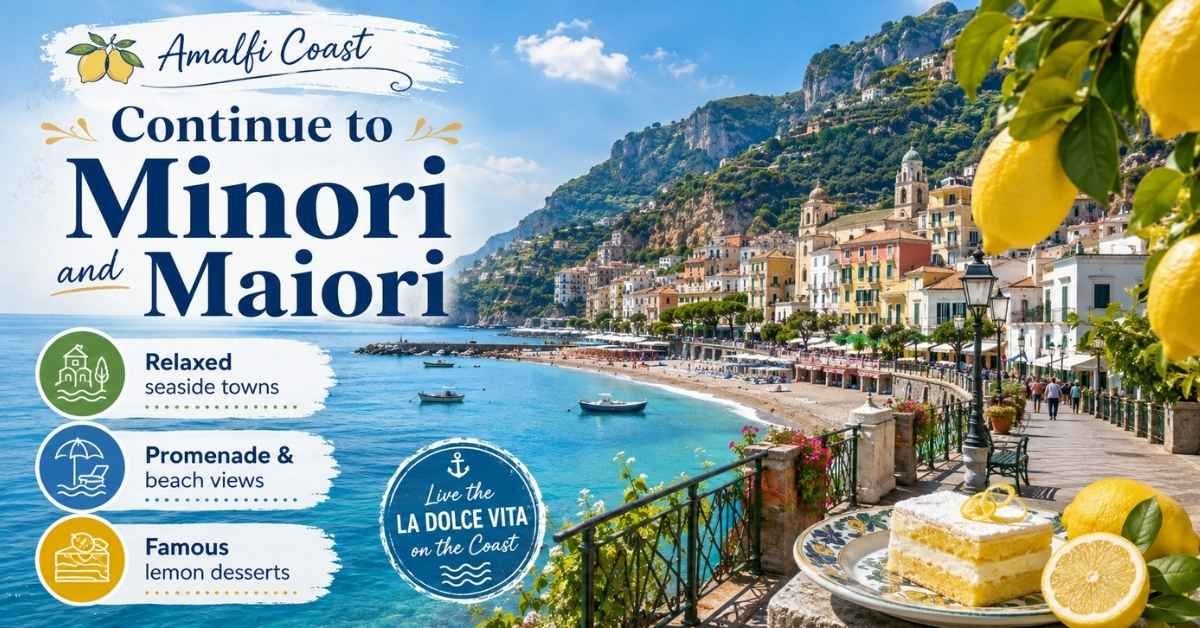
Minori and Maiori are practical alternatives to the more glamorous western side of the coast.
Maiori is particularly useful for travelers seeking a longer, more accessible beach. Minori offers food, history and access to the Sentiero dei Limoni, or Path of the Lemons.
These towns suit:
- Families
- Beach-focused visitors
- Budget-conscious travelers
- Repeat Amalfi Coast visitors
- People seeking a slower afternoon
Travel by ferry or bus when services align with your schedule. Avoid attempting Minori, Maiori, Ravello, Amalfi and Positano in one day.
Best Full-Day Trips From Amalfi
Positano
Positano delivers the coast’s most famous cliffside composition, high-end shopping and instantly recognizable photographs. Amalfi offers stronger historical attractions and generally more convenient transport connections.
Use the ferry when practical during its operating season. Allow enough time to walk from Positano’s waterfront into its steep streets.
Capri
Capri deserves a full day, not a rushed addition to an Amalfi itinerary. Check outbound and return ferries carefully, especially if you are not staying overnight in Amalfi.
Choose which Capri experiences matter before arrival. Trying to combine the Blue Grotto, Anacapri, Monte Solaro and Capri town without a plan can waste hours in queues.
Pompeii
Pompeii is a major archaeological destination, but it is not close enough to count as a casual Amalfi activity. Reaching it involves multiple transport stages or a private transfer.
Dedicate a separate day to Pompeii. If archaeology is a major priority, staying for part of your trip in Naples, Salerno or Sorrento may simplify the journey.
What to Eat and Drink in Amalfi
Delizia al Limone
This soft lemon dessert is one of the most recognizable tastes of the coast. Try it at a respected pastry shop and ask about alcohol if that affects your diet.
Scialatielli
Scialatielli is a thick, short pasta associated with the region. It is commonly served with seafood, tomatoes or other Campanian ingredients.
Fresh Seafood
Look for menus using seasonal fish and clear pricing. Waterfront restaurants provide convenience and views, but the most prominent location does not automatically guarantee the best meal.
Sfusato Amalfitano Lemon Products
The Amalfi lemon appears in:
- Limoncello
- Granita
- Sorbet
- Cakes
- Preserves
- Olive oil
- Perfume
- Soap
Check product labels. A lemon-patterned package does not guarantee that the contents were made locally.
Sfogliatella Santa Rosa
The Sfogliatella Santa Rosa is connected with nearby Conca dei Marini. It usually has a richer filling and distinctive decoration compared with the standard sfogliatella found across Campania.
Aperitivo
Choose your aperitivo setting according to budget:
- Piazza Duomo for people-watching
- Waterfront for casual sea views
- Luxury-hotel terrace for a special occasion
- Takeaway drink or snack for a lower-cost sunset
Alcohol is optional. Coffee, granita or a soft drink can provide the same pause and view.
What to Buy in Amalfi
Handmade Amalfi Paper
Paper is the town’s most historically meaningful souvenir. Consider notebooks, cards, stationery or decorative sheets from the Paper Museum or a specialist producer.
Local Ceramics
Look for information about where the piece was made. Vietri sul Mare is the coast’s best-known ceramics center, though genuine workshops and retailers operate throughout the area.
Lemon Products
Limoncello, preserves, sweets and fragrances are widely available. Read labels to confirm ingredients and production location.
What to Avoid
Be cautious with:
- Generic imported souvenirs
- Poorly labeled limoncello
- Fragile ceramics without safe packaging
- Products using Amalfi imagery but made elsewhere
- Items that are widely available for less money outside the main square
Three Hours in Amalfi
A short ferry or tour stop requires discipline.
A realistic three-hour route
- Waterfront and Arsenale: 20–30 minutes
- Piazza Duomo and fountain: 15 minutes
- Cathedral complex: 45–60 minutes
- Historic lanes: 30 minutes
- Lemon dessert or quick lunch: 30–45 minutes
- Return to the port: Leave a generous departure buffer
Do not attempt Ravello, Valle delle Ferriere or a full beach afternoon. If your arrival is delayed, remove the Arsenale or extended meal—not the cathedral.
One Day in Amalfi Without a Car
Morning
Arrive early and begin at the waterfront. Visit the Arsenale, Piazza Duomo and cathedral complex before large day-trip groups fill the square.
Late morning
Explore the historic lanes and walk to the Paper Museum. Stop for a lemon dessert or coffee on the way.
Lunch
Choose between a quick bakery meal and a slower seafood lunch. If your afternoon involves a boat, confirm its departure point before sitting down.
Afternoon
Choose only one main experience:
- Culture and nature: Valle dei Mulini
- Relaxation: Marina Grande Beach
- Scenery: Short boat tour
- Quieter streets: Atrani
- Food and agriculture: Lemon-farm visit
Evening
Take the elevator or walk to a viewpoint if conditions allow, then return to Piazza Duomo for an aperitivo or dinner after the day crowds begin to leave.
Two Days in Amalfi
Day One: History, Food and Town Life
- Waterfront
- Arsenale
- Cathedral complex
- Historic center
- Paper Museum
- Amalfi specialties
- Evening Piazza Duomo
Day Two: Choose One Major Experience
Pick one:
- Valle delle Ferriere hike
- Ravello
- Full boat tour
- Capri
- Minori and Maiori
Choosing one anchor experience produces a better day than collecting brief stops in four towns.
What to Do in Amalfi When It Rains
Rain does not automatically ruin an Amalfi visit, but it changes what is sensible.
Good rainy-day activities include:
- Museo della Carta
- Cathedral complex
- Arsenale exhibitions
- Cooking class
- Long lunch
- Paper and food shopping
- Covered historic passages
Avoid exposed hikes when trails are slippery. Boat tours and ferries can also be affected by sea conditions, so maintain a land-based backup plan.
See More: Things to Do in Colorado for Couples: 35 Romantic Ideas
Amalfi for Different Travelers
| Traveler | Best choices | Main concern |
|---|---|---|
| Families | Paper Museum, waterfront, beach and short boat trip | Stairs and stroller access |
| Couples | Evening piazza, Ravello and private boat | Premium prices |
| Solo travelers | Walking route, museum and group tours | Last transport |
| Budget travelers | Historic center, Atrani and public beach | Restaurants and beach clubs |
| History lovers | Cathedral, Arsenale and Paper Museum | Opening hours |
| Active visitors | Valle delle Ferriere and Torre dello Ziro | Heat and terrain |
| Food lovers | Lemon farm, pastries and seafood | Tourist-focused venues |
| Photographers | Harbour, cathedral, Atrani and Ravello | Midday crowds |
Visiting Amalfi With Limited Mobility
Amalfi’s waterfront and area around the harbour are relatively level, but much of the town includes stairs, slopes and uneven paving. The cathedral’s staircase and higher residential lanes can be challenging.
A lower-strain route can include:
- Waterfront
- Arsenale
- Piazza Duomo
- Fontana di Sant’Andrea
- Cathedral exterior
- Café or waterfront lunch
- Scenic ferry journey
Do not assume that “walkable” means wheelchair accessible. Contact attractions, hotels and transport providers directly about step-free entrances, elevators and assistance.
How to Get to Amalfi
From Salerno
Salerno is one of the most convenient gateways. Travelers can arrive by train and continue by ferry during the relevant season or use a bus or private transfer.
From Naples
Common routes include:
- Train to Salerno, then ferry or bus
- Train to Sorrento, then bus or seasonal ferry
- Private transfer
- Organized tour
The route that appears shortest on a map is not always the easiest.
From Sorrento
Seasonal ferries provide scenic transportation, while SITA buses operate by road. Buses can become crowded and may encounter traffic during peak periods.
From Rome
Amalfi is possible as a very long day trip, but it is rarely the most enjoyable option. High-speed rail reduces the first part of the journey, yet onward transport still requires time.
An overnight stay in Amalfi, Salerno, Sorrento or Naples creates a more realistic experience.
Getting Around Amalfi Without a Car
Ferry
Best for scenery and avoiding some road congestion. The main disadvantages are seasonal schedules and weather dependence.
SITA Bus
Affordable and useful for towns without direct ferry access, including Ravello. Expect crowds and possible queues during busy periods.
Taxi or Private Driver
Helpful when carrying luggage, visiting several inland locations or traveling with limited mobility. Agree on the price and inclusions before departure.
Walking
Ideal inside Amalfi and possible for certain routes toward Atrani and the valley. Walking alone is not practical for exploring the entire coast.
Should You Drive to Amalfi?
For most short-term visitors, driving is not the best choice.
The SS163 coastal road is narrow, busy and demanding. Parking in central destinations is limited and can be expensive, especially during summer weekends.
A car may make sense when:
- Traveling in the quieter season
- Staying somewhere with guaranteed parking
- Exploring inland communities
- Continuing to areas with limited public transport
Do not arrive during peak season assuming you will easily find central parking.
Best Time to Visit Amalfi
April to June
Spring offers comfortable walking weather, increasing ferry services and a lively atmosphere. Crowds build as summer approaches.
July and August
Expect hot weather, maximum activity availability, high accommodation prices and heavy visitor numbers. Begin early, reserve limited-capacity experiences and explore the town again in the evening.
September and October
These months can provide warm weather with a better balance of activity and crowd levels. Conditions become less predictable later in autumn.
November to March
Winter brings quieter streets and a more local atmosphere, but ferry services and seasonal businesses are reduced. Verify every attraction and transport plan.
Best Time of Day
- Before 9:00 a.m.: Quietest atmosphere
- Late morning to mid-afternoon: Heaviest day-trip activity
- Late afternoon: Crowds begin thinning
- Evening: Best atmosphere for overnight visitors
These patterns vary with ferry arrivals, weekends, events and weather.
How Much Does a Day in Amalfi Cost?
Exact prices change, but three spending styles help with planning.
Budget Day
- Bus or one ferry journey
- Free historic-center walk
- One cultural attraction
- Bakery or takeaway lunch
- Public beach or Atrani
Comfortable Day
- Ferry
- Cathedral complex
- Paper Museum
- Sit-down lunch
- Beach club or group boat experience
Premium Day
- Private transfer or boat
- Guided cultural or food experience
- Luxury-hotel aperitivo
- Fine dining
- Premium accommodation
Always confirm what a tour price includes. Fuel, transfers, entrance fees and meals may be separate.
Mistakes to Avoid in Amalfi
Trying to See the Entire Coast in One Day
Amalfi, Positano, Ravello and Capri do not belong in one sensible day. Choose one or two places and allow time for transportation.
Confusing Amalfi With the Amalfi Coast
Path of the Gods, Pompeii and Capri are not town-center attractions.
Driving Without Parking
Never base a peak-season itinerary on finding spontaneous parking.
Arriving Only at Midday
Midday brings the strongest combination of heat and visitor traffic. An early arrival changes the experience.
Ignoring the Last Ferry or Bus
Know your return options before beginning dinner or a distant excursion.
Wearing Unsuitable Shoes
Amalfi contains polished stone, stairs, steep lanes and hiking routes. Thin sandals are not suitable for every activity.
Expecting a Quiet Sandy Beach
Marina Grande is central and convenient, but it can be busy and has extensive private areas.
Booking Too Much
The cathedral, historic center, waterfront and many viewpoints are easy to experience independently.
Buying Every Lemon-Themed Product
Packaging is not proof of local production. Read labels and ask where products were made.
What to Book in Advance
| Experience | Booking advice |
|---|---|
| Historic-center walk | No reservation |
| Cathedral complex | Usually spontaneous |
| Paper Museum tour | Check scheduled tour times |
| Lemon-farm experience | Book ahead |
| Small-group boat tour | Book ahead in high season |
| Private boat | Reserve early |
| Beach club | Recommended in summer |
| Cooking class | Book ahead |
| Ferry | Consider advance tickets during busy periods |
| Ravello visit | Transport planning matters more than a tour |
Frequently Asked Questions
What Should You Not Miss in Amalfi?
Do not miss the Duomo di Sant’Andrea, Chiostro del Paradiso, historic center, waterfront and Museo della Carta. With more time, add Atrani, Valle delle Ferriere or a boat trip.
Is Amalfi Town Worth Visiting?
Yes. Amalfi combines important history, cultural attractions, food and convenient transportation in a compact center.
How Many Hours Do You Need in Amalfi?
Three hours cover the main highlights. A full day allows time for the cathedral, Paper Museum, lunch and one additional experience. Staying overnight provides the most relaxed visit.
Can You Walk Around Amalfi?
Yes, central Amalfi is compact. However, many side streets, viewpoints and trails involve stairs or slopes.
Can You Visit Amalfi Without a Car?
Yes. Ferries, buses, taxis and walking are usually more practical than driving.
Is Amalfi or Positano Better?
Choose Amalfi for history, museums and convenient connections. Choose Positano for luxury, shopping and the most famous cliffside views.
Does Amalfi Have a Free Beach?
Amalfi generally has a limited public beach area alongside private beach establishments. Space and arrangements can change seasonally.
Can You Walk From Amalfi to Atrani?
Yes, pedestrian routes connect the two towns, but they may include stairs or sections near the coastal road. Confirm the safest current route locally.
Is Amalfi Cathedral Free?
Access arrangements can vary by time and religious use. Entry to the full museum, cloister, crypt and cathedral route normally involves a modest fee. Verify current details before visiting.
Is the Paper Museum Worth Visiting?
Yes, particularly for history lovers, families and rainy-day visitors. It explains an industry that is genuinely specific to Amalfi.
Can You Visit Amalfi and Ravello in One Day?
Yes. Spend the morning in Amalfi and the afternoon in Ravello, but allow extra time for bus queues and traffic.
What Can You Do in Amalfi When It Rains?
Visit the Paper Museum, cathedral complex and Arsenale, take a cooking class, enjoy a long lunch or explore covered passages and shops.
Is Amalfi Wheelchair Accessible?
Parts of the waterfront and central area are relatively accessible, but stairs and uneven terrain create significant limitations. Confirm access directly with each attraction.
What Is Amalfi Famous For?
Amalfi is famous for its former maritime republic, cathedral, Saint Andrew relics, handmade paper, coastal scenery and Sfusato Amalfitano lemons.
When Is Amalfi Least Crowded?
Early morning and evening are normally quieter than midday. Spring and autumn generally provide a better crowd balance than July and August.
Amalfi Rewards Visitors Who Slow Down
The best things to do in Amalfi, Italy reveal how closely the town’s identity is connected to the sea, religion, papermaking and lemon cultivation. The cathedral may be its most recognizable sight, but the Arsenale, Paper Museum, valley and evening piazza turn a quick sightseeing stop into a meaningful visit.
If you only have a few hours, concentrate on the waterfront, cathedral complex and historic lanes. With a full day, add the Paper Museum and choose one experience—Atrani, the beach, a boat trip or the valley.
Before booking anything, decide how much time you genuinely have and verify your return transportation. In Amalfi, doing fewer things at a comfortable pace almost always creates the better day.










1 thought on “21 Best Things to Do in Amalfi, Italy: 2026 Travel Guide”